Boerentoren Office Conversion: Studio Libeskind’s Vision for Antwerp’s Cultural Future

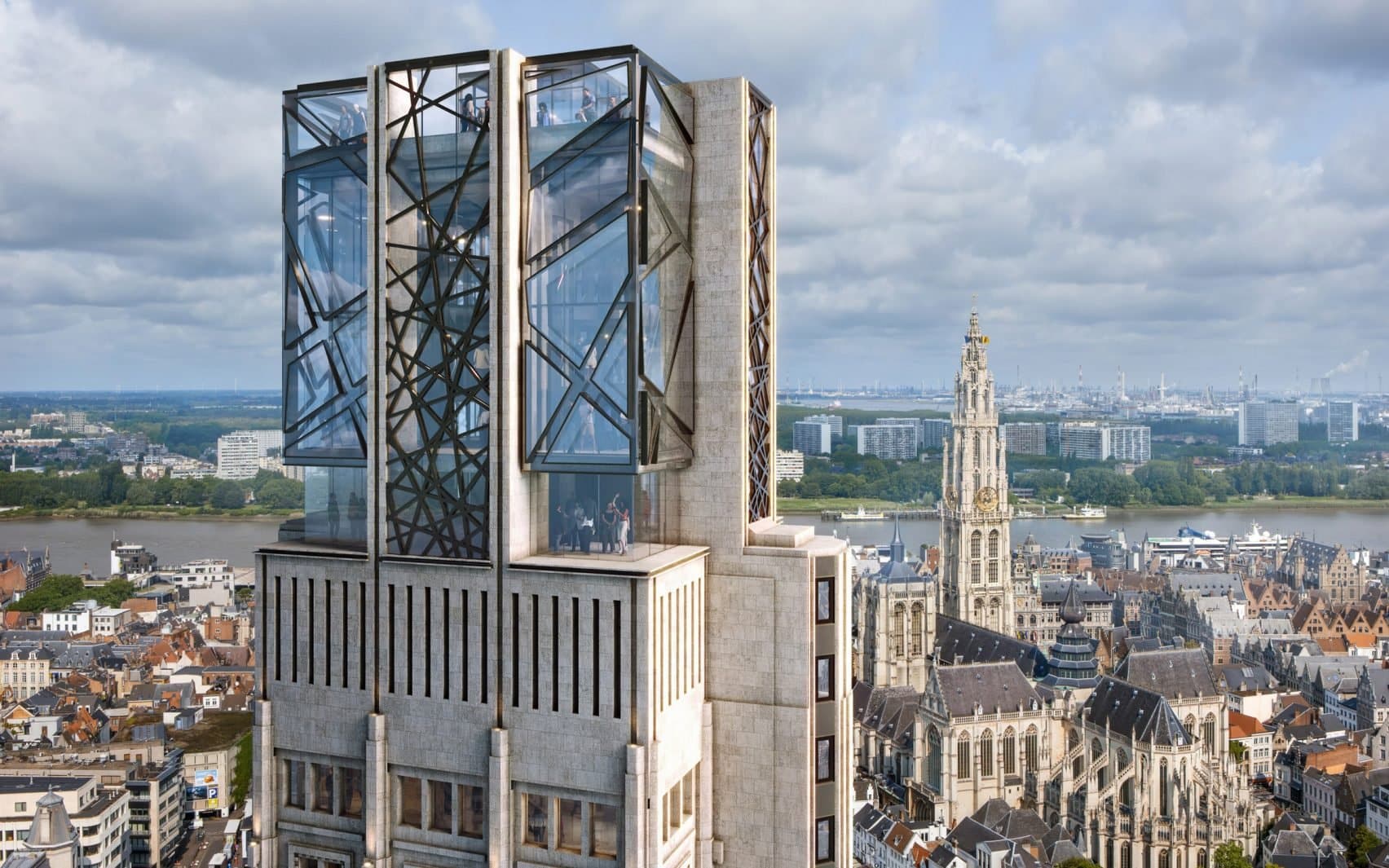
In a striking blend of heritage and contemporary architecture, Studio Libeskind has revealed an updated design for the Boerentoren office conversion in Antwerp. Originally built in 1932 and long considered a Belgian landmark, the Boerentoren (also known as the KBC Tower) will be transformed into a public cultural venue by Studio Libeskind in collaboration with local firm ELD and The Phoebus Foundation.
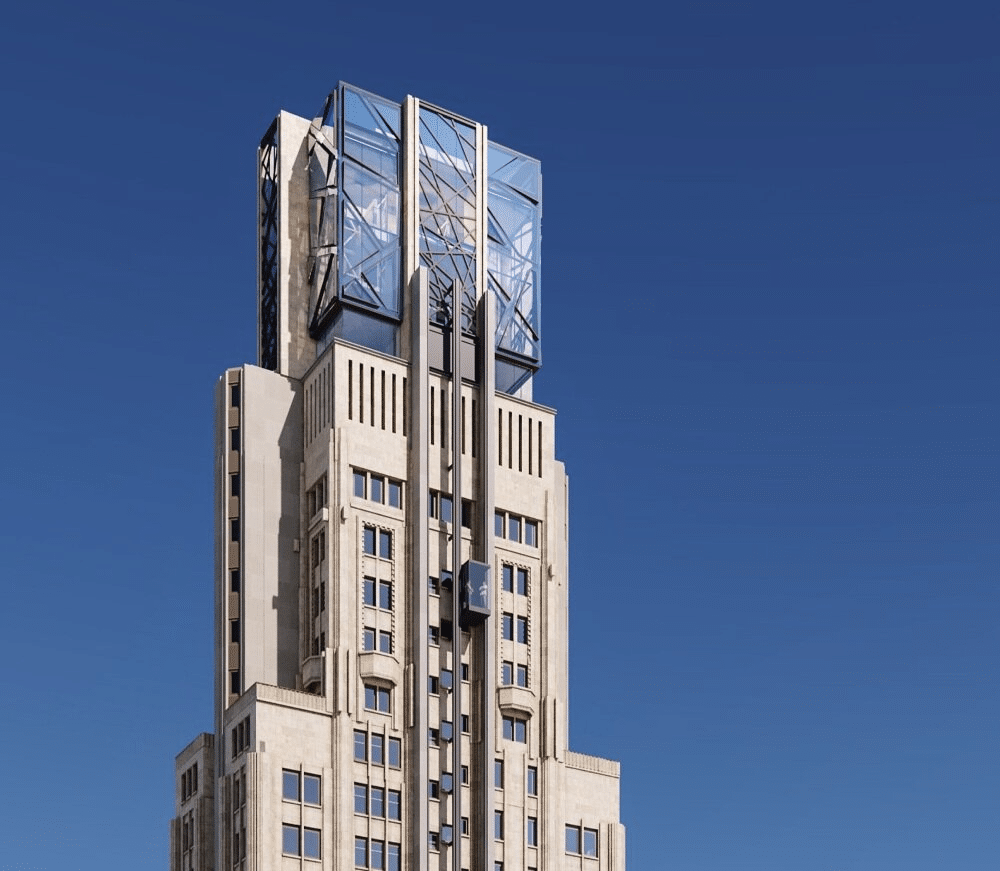
The proposal retains the tower’s original art deco character while inserting bold yet sensitive additions. Most notably, a glass observation deck will now crown the skyscraper, offering panoramic views of the city. Compared to the angular and radical concept released in 2022, the new plan is more restrained but no less ambitious. It positions the Boerentoren not just as a relic of Antwerp’s architectural history but as a living part of its cultural future.
This intervention signals a clear shift in how adaptive reuse can enrich urban identity — respecting history while opening up space for art, public engagement, and design innovation. The tower will now serve as a vertical museum and gathering place, redefining how we think of both high-rises and heritage structures.
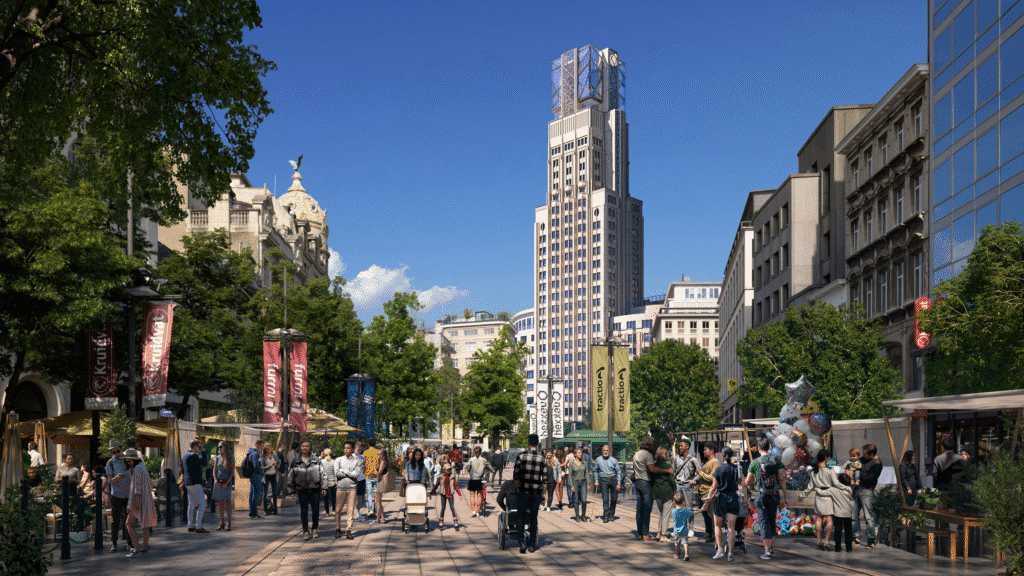
Reinventing a Landmark: Inside the Boerentoren Office Conversion
Preserving the Past with a Contemporary Purpose
The original Boerentoren was Europe’s first skyscraper, reaching completion in the early 20th century. With its triangular floorplan and art deco detailing, it stood as a symbol of progress. Libeskind’s design keeps that legacy intact by preserving the building’s envelope and structural rhythm, integrating new public uses inside.
The key move is the introduction of cultural programming. Galleries, exhibition halls, and event spaces will be housed within the building’s historic shell. Meanwhile, the top of the tower will be transformed with a crown-like glass viewing deck, accessible via new exterior elevators that elegantly trace the height of the building.
Transparent Crown and Garden Terraces
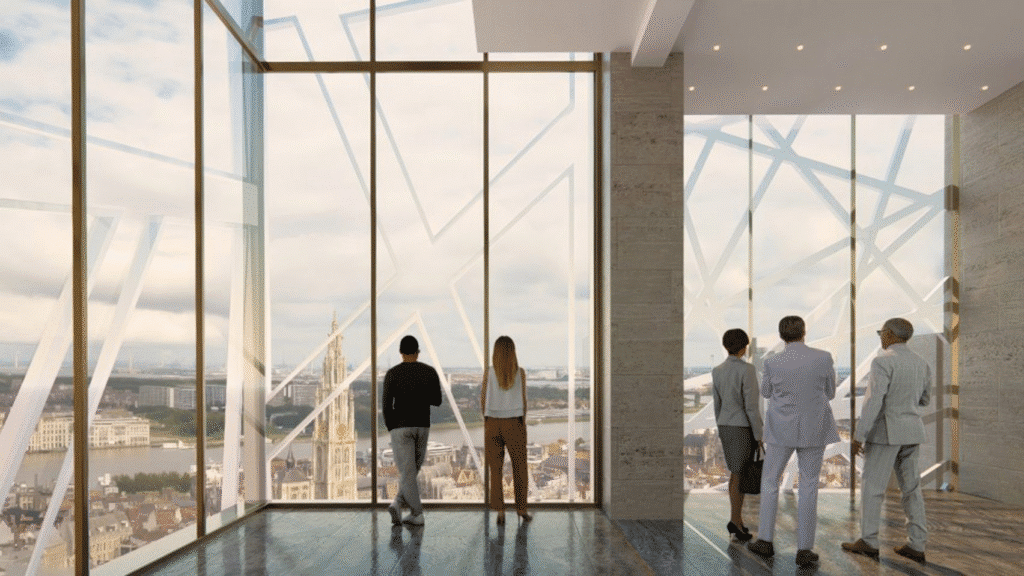
Libeskind introduces two primary architectural gestures to signal the tower’s rebirth. The first is the transparent rooftop addition — a glazed deck offering 360-degree views of Antwerp. This space is wrapped in steel detailing that echoes the geometric motifs of the original building while introducing a futuristic sensibility.
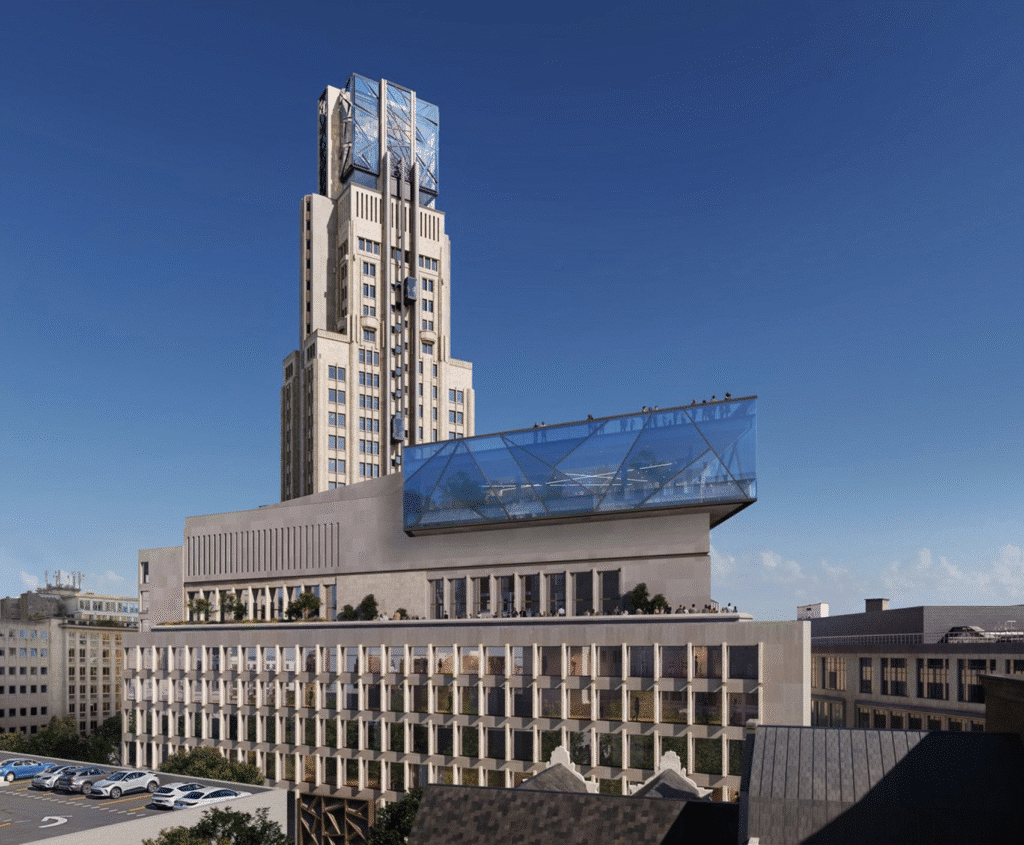
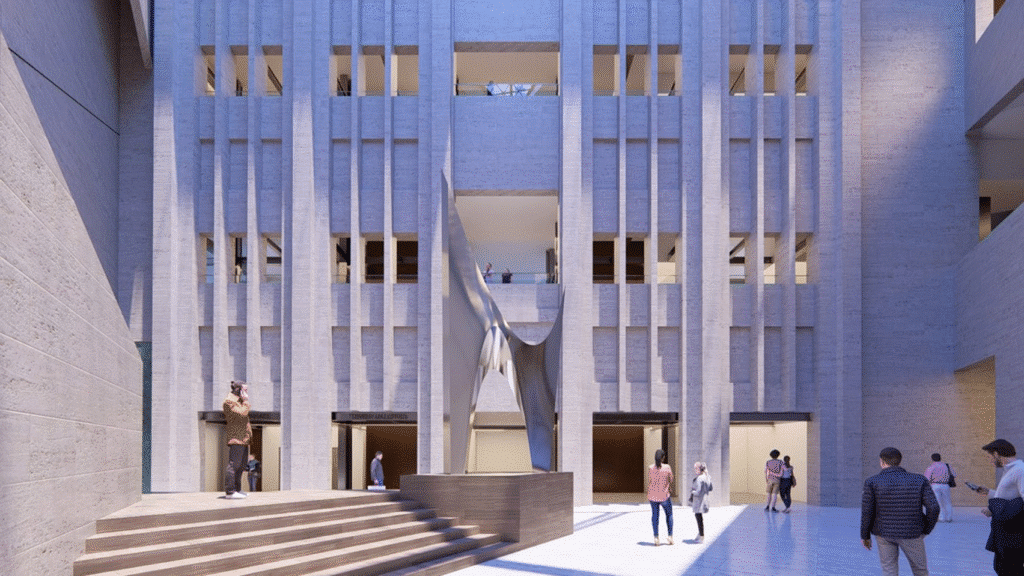
The second gesture lies at the tower’s base, where a newly raised public garden overlays a glass pavilion. This garden not only provides green space in the urban core, but also acts as a visual and spatial connection between the street level and the cultural functions within the atrium below.
Key Features
| Feature | Description |
|---|---|
| Glass Observation Deck | Wraps the top of the tower with panoramic city views |
| Exterior Glass Elevators | Public lifts provide direct access to viewing areas |
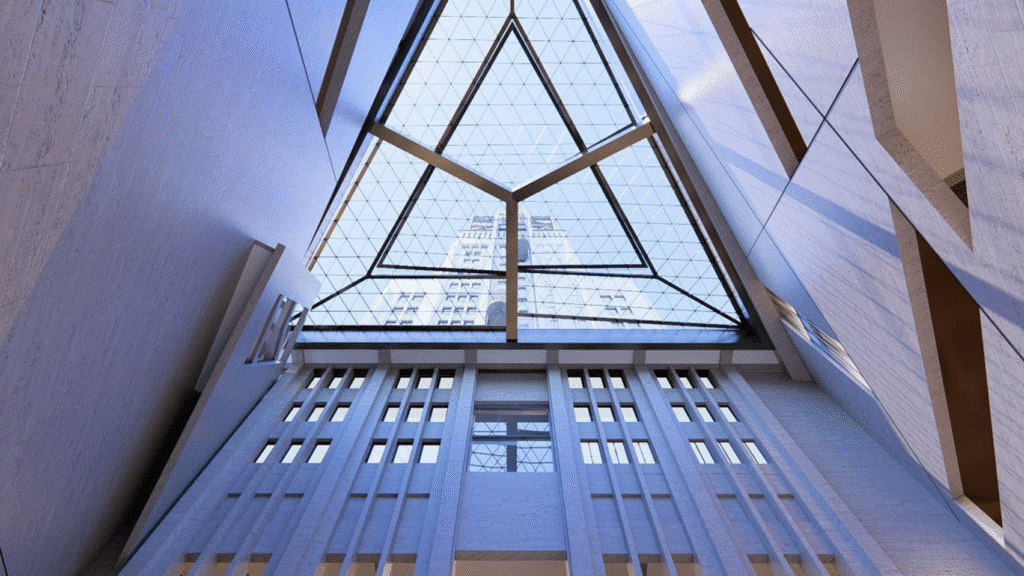
| Triangular Atrium | Central volume with natural light from skylight and visual connection to upper floors |
| Public Garden Terrace | Landscaped with angular planters; links to tower elevators |
| Tower Living Room | Museum-like open space for community gathering |
| Cultural Exhibition Spaces | Located throughout the building for flexible programming |
Architectural Analysis
Studio Libeskind’s approach to the Boerentoren office conversion is rooted in duality — balancing preservation with innovation. The retention of the triangular structural grid and art deco façade maintains the building’s historical narrative, while the addition of glass volumes and vertical circulation expands its identity into the 21st century.
Materiality is a key strategy. The existing stone and concrete are juxtaposed with steel and glass — transparent and light, both structurally and visually. This contrast amplifies the dialogue between time periods without overwriting the original building’s presence.
The glass crown is particularly expressive: a beacon of modern public use atop a private former office tower. Meanwhile, the triangulated forms introduced in the atrium and the public garden mirror the tower’s plan, creating compositional unity from top to bottom.
The elevator shafts are not hidden but exposed — celebrating verticality and inviting the public to experience the city from above. This makes the act of moving through the tower not just functional but experiential.
Project Importance
The Boerentoren office conversion is more than an adaptive reuse project; it is a critical cultural reinvention. It teaches architects and urbanists how to handle historic landmarks with respect while embedding them with future-oriented functionality. Rather than turning the Boerentoren into a museum of itself, Studio Libeskind proposes it as a platform for living culture.
The project contributes to architectural thinking by making vertical heritage structures accessible and participatory — transforming isolated office towers into community anchors. It reflects a global shift toward the democratization of tall buildings, where observation decks, gardens, and galleries replace corporate exclusivity.
Its relevance is particularly urgent today as cities seek to repurpose outdated high-rises into spaces that reflect civic values, sustainability, and public life. The Boerentoren’s new life offers an example of design that is generous, layered, and adaptable.
✦ ArchUp Editorial Insight
Studio Libeskind’s design for the Boerentoren office conversion reveals a thoughtful layering of the old and new. The glass crown, external lifts, and garden terrace introduce lightness and movement to a static, historic mass. Internally, the atrium and gallery plan energize what was once private space. However, one might question whether the added elements — particularly the crown — risk overwhelming the original building’s refined art deco silhouette. Could a more subtle intervention have allowed the legacy architecture to speak more clearly? Still, the project delivers a valuable precedent in transforming vertical monuments into active civic venues, offering both accessibility and inspiration.
Conclusion
The Boerentoren office conversion by Studio Libeskind is a compelling case study in architectural renewal. It avoids the pitfalls of over-design while introducing clear, powerful elements that expand the building’s cultural and spatial relevance.
What was once a private, corporate space will become a vertical cultural destination — offering views, exhibitions, and public gathering areas within a conserved historic framework. The intervention does not erase the Boerentoren’s past; it illuminates it, allowing the building to evolve with the needs of its city. As European cities face similar challenges of reinvention, Boerentoren sets a benchmark for how to elevate — literally and conceptually — our architectural heritage.
Explore the Latest Architecture Exhibitions & Conferences
ArchUp offers daily updates on top global architectural exhibitions, design conferences, and professional art and design forums.
Follow key architecture competitions, check official results, and stay informed through the latest architectural news worldwide.
ArchUp is your encyclopedic hub for discovering events and design-driven opportunities across the globe.