Sculpture by the Sea 2026: How Bondi’s Coastal Walk Becomes an Outdoor Gallery


The 2026 edition of Sculpture by the Sea turns a 1.25-mile section of Sydney’s Bondi coastline into a temporary public-art route. Dozens of works occupy grass, cliff edges and open views rather than a conventional sequence of rooms. The exhibition remains on view through 2 November, but its more durable design question concerns placement: how can an artwork hold attention in a landscape already defined by sea, sky, movement and crowds?
A gallery organised by walking
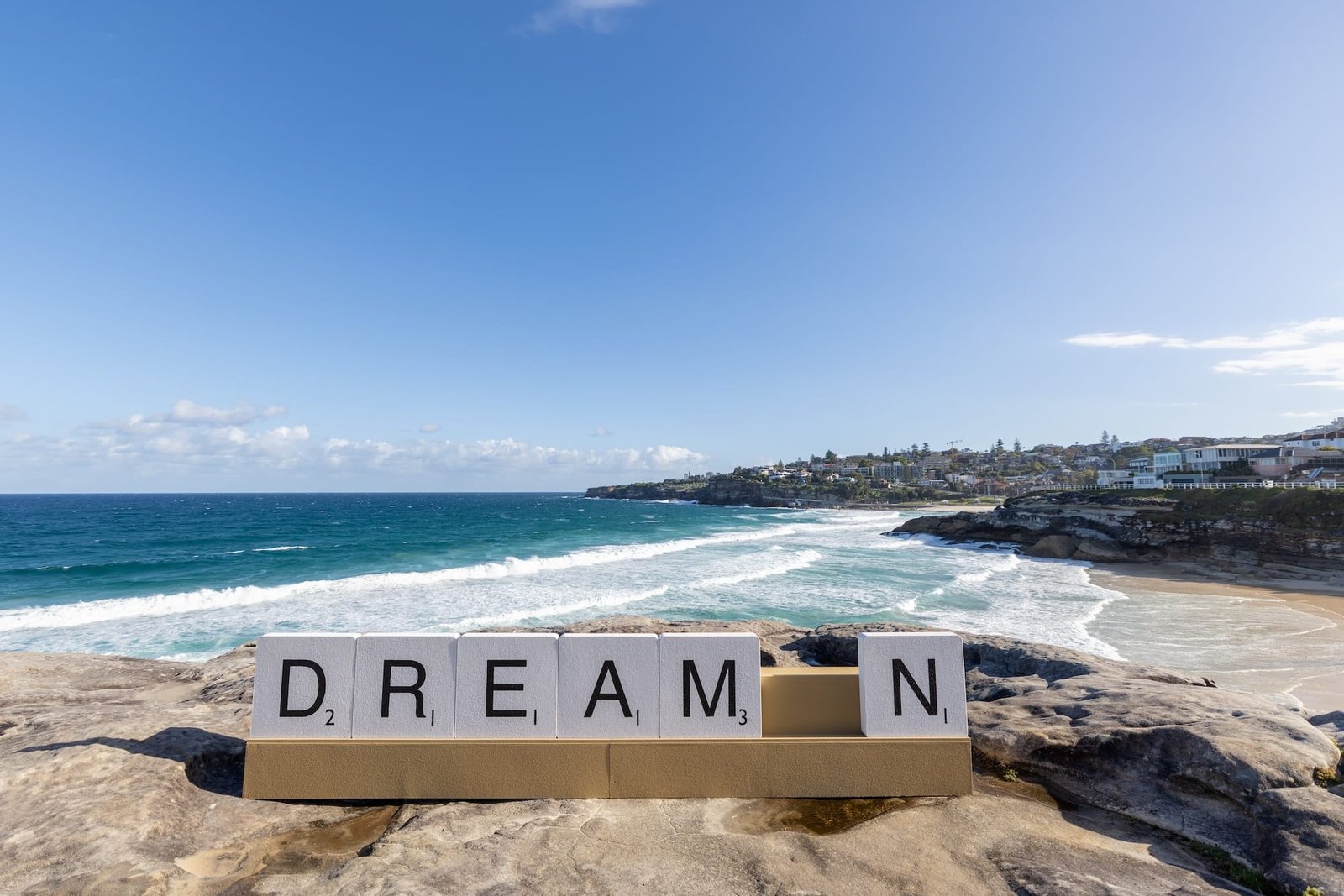
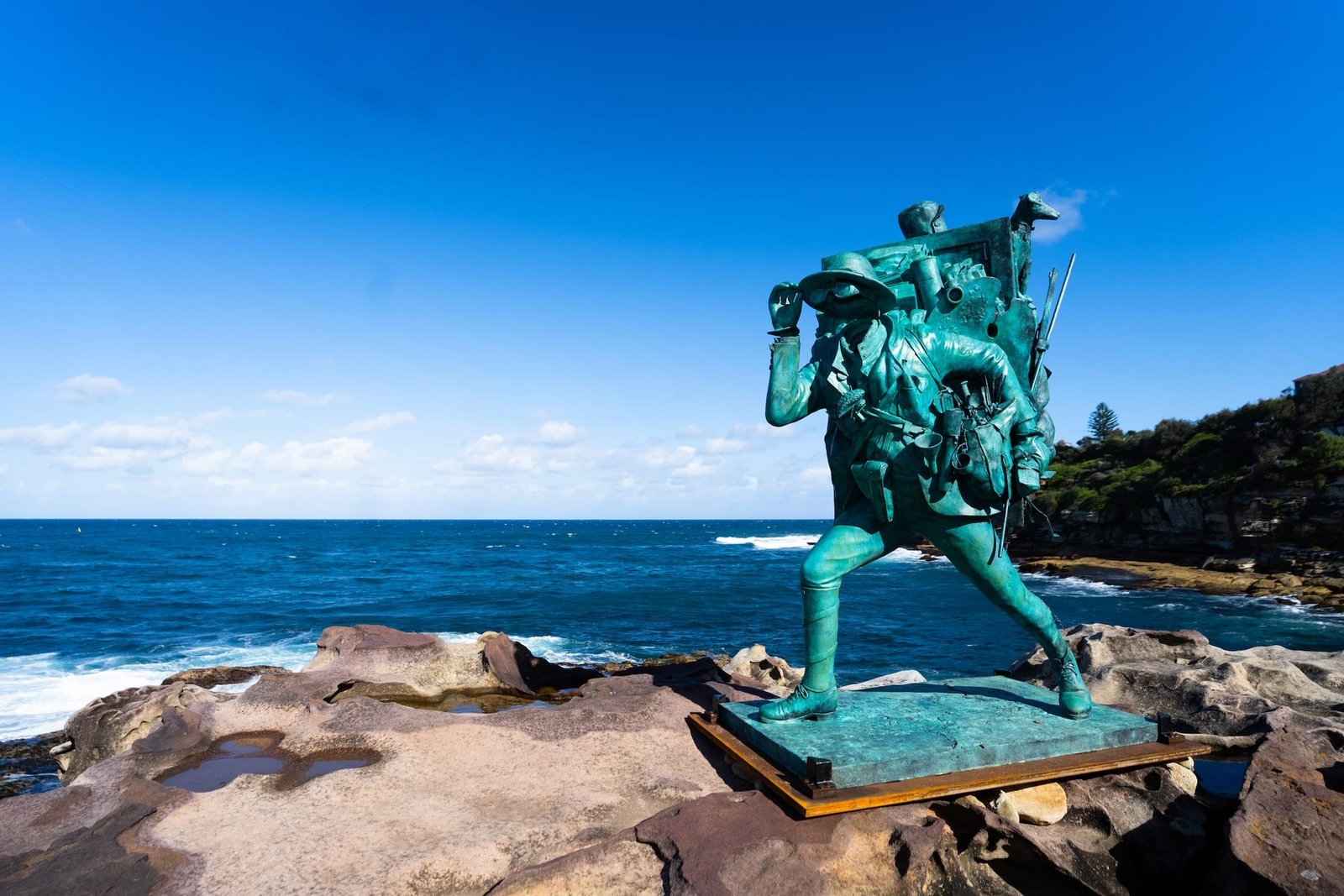
The route gives visitors no single front door or prescribed viewing order. Works emerge through approach: some announce themselves from a distance, while others rely on a closer encounter. Emma Anna’s DREAM_N uses the legibility of oversized letterforms to compete with the long horizon. Tim Storrier’s Wayfarer, by contrast, turns the walking figure back toward the people moving along the path.
Scale is read against the landscape
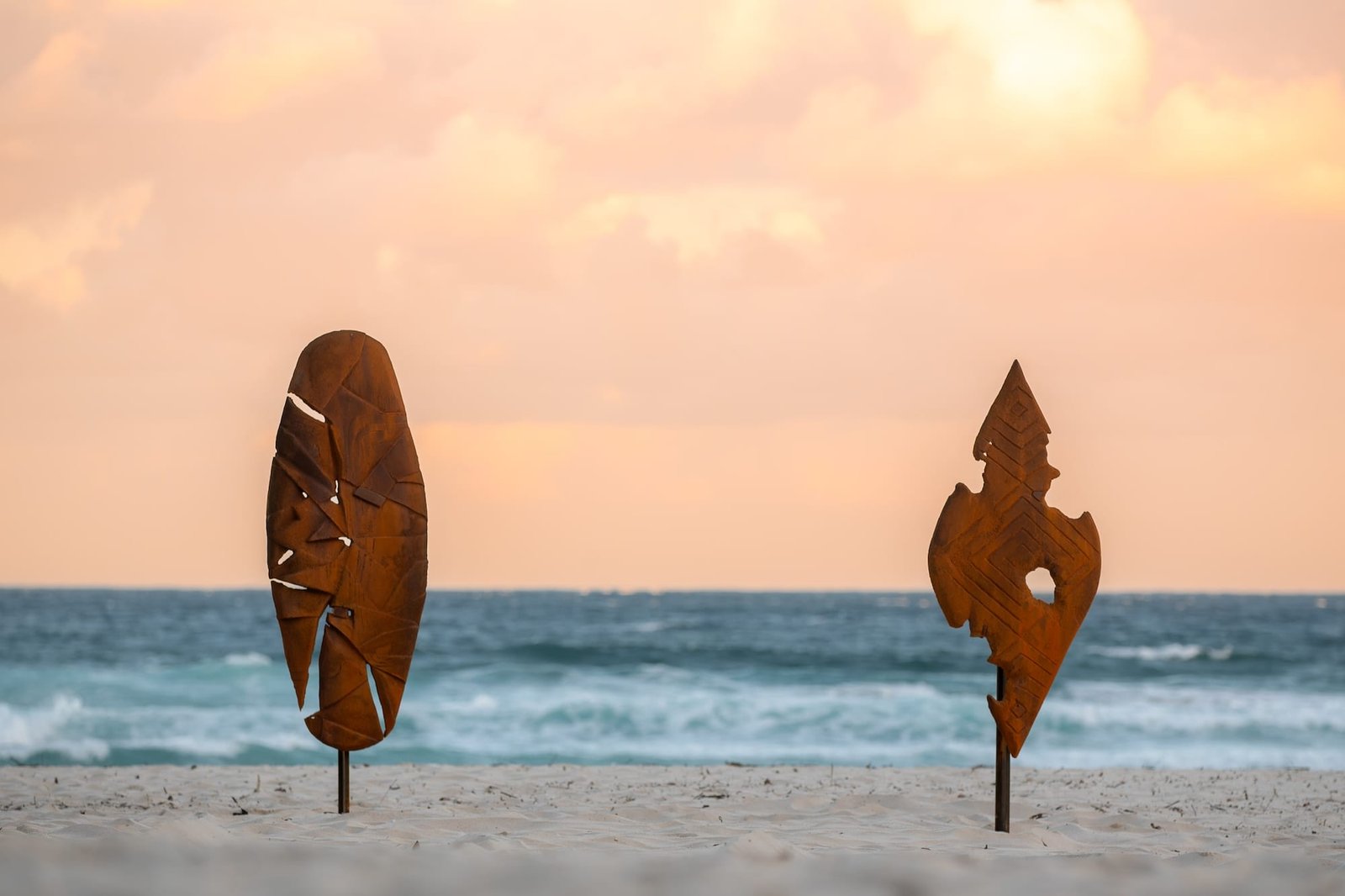
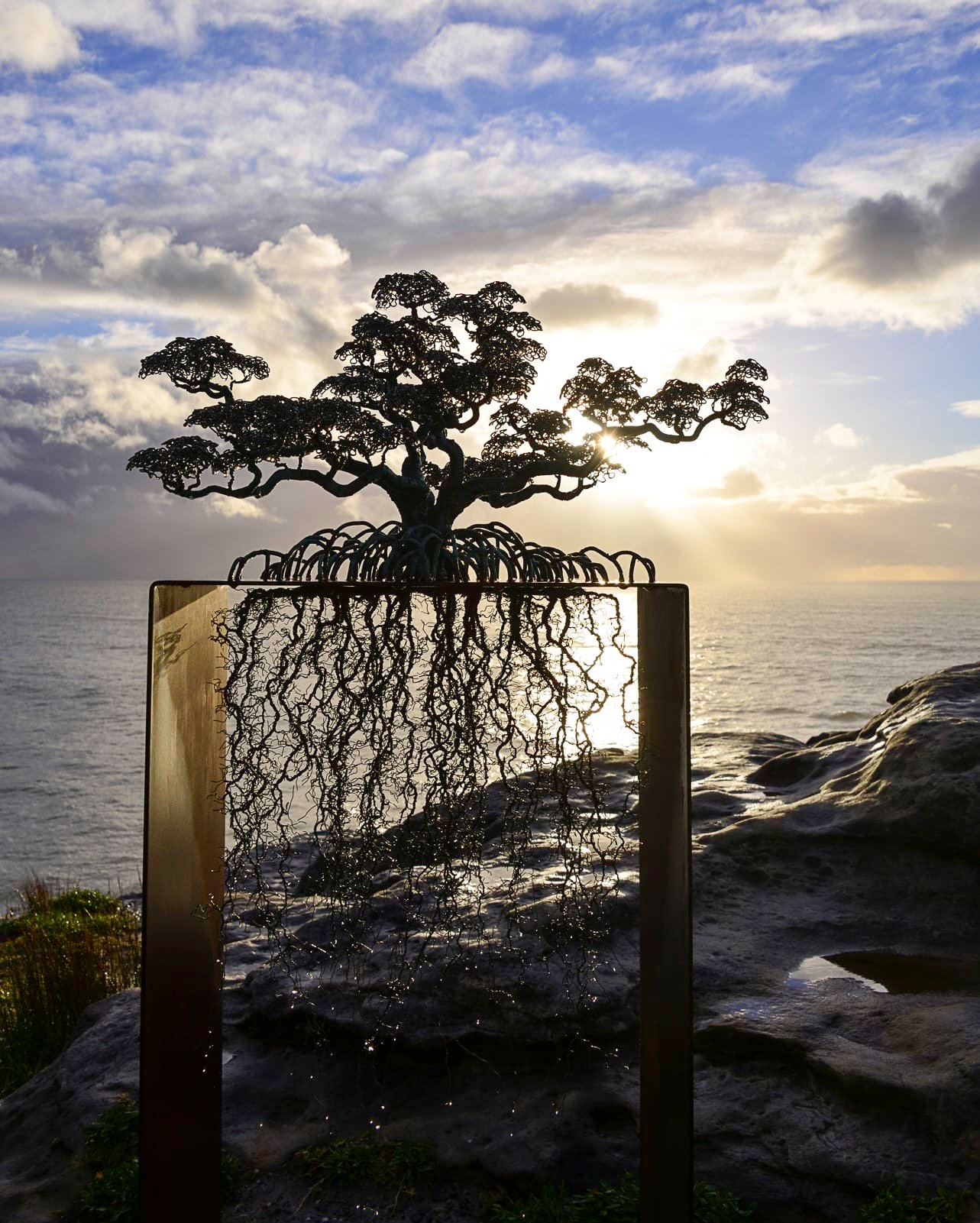
Outdoor sculpture has no white wall to stabilise scale. At Bondi, the body, cliff and horizon provide the references. David Doyle’s paired leaf forms register as sentinels because their vertical rhythm stands against open water. Ulan and Rachel’s table-scaled bonsai composition creates the opposite condition: an intimate domestic object is placed within an exposed public field, making its small scale more conspicuous.
Weather becomes part of the visual reading
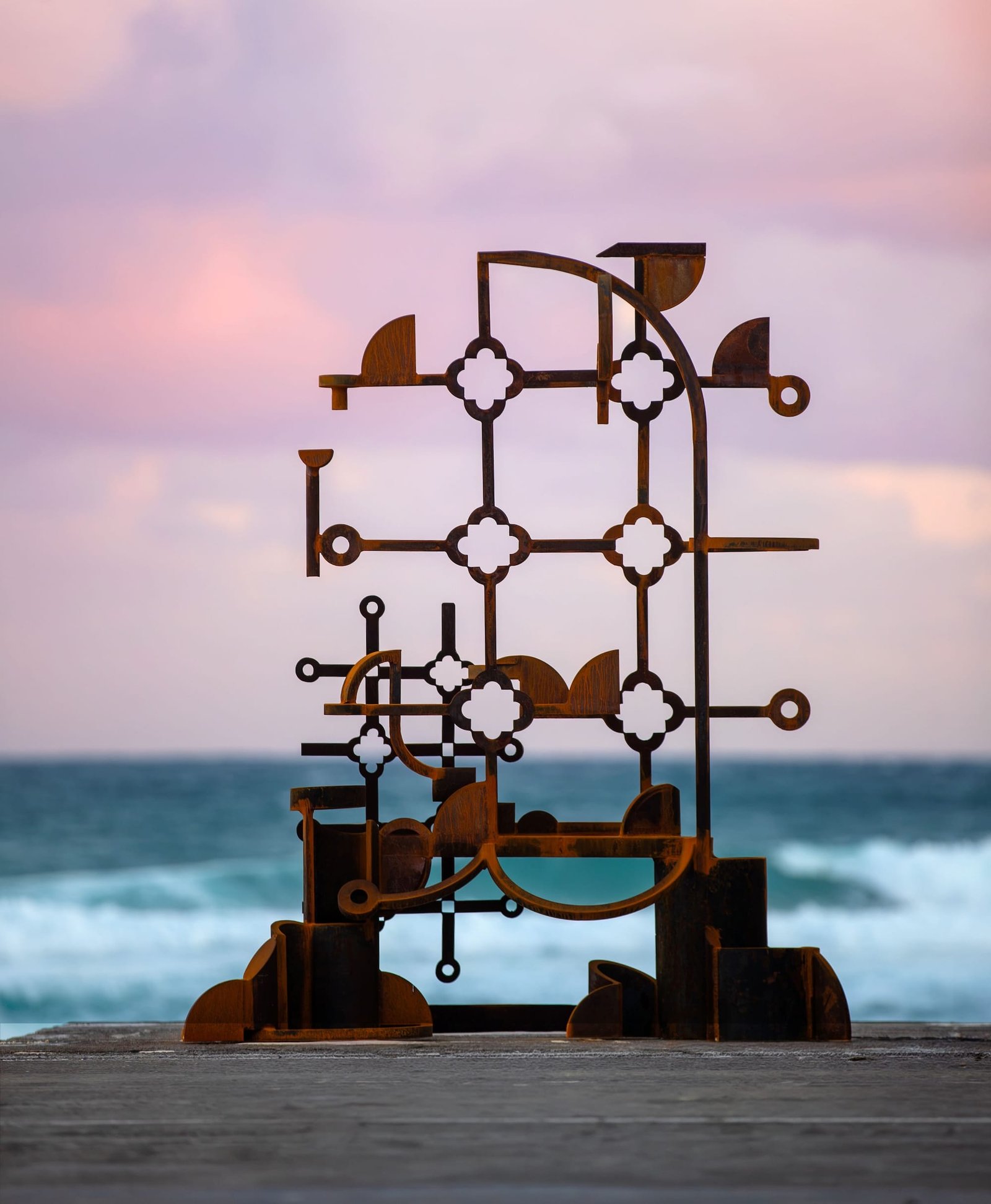
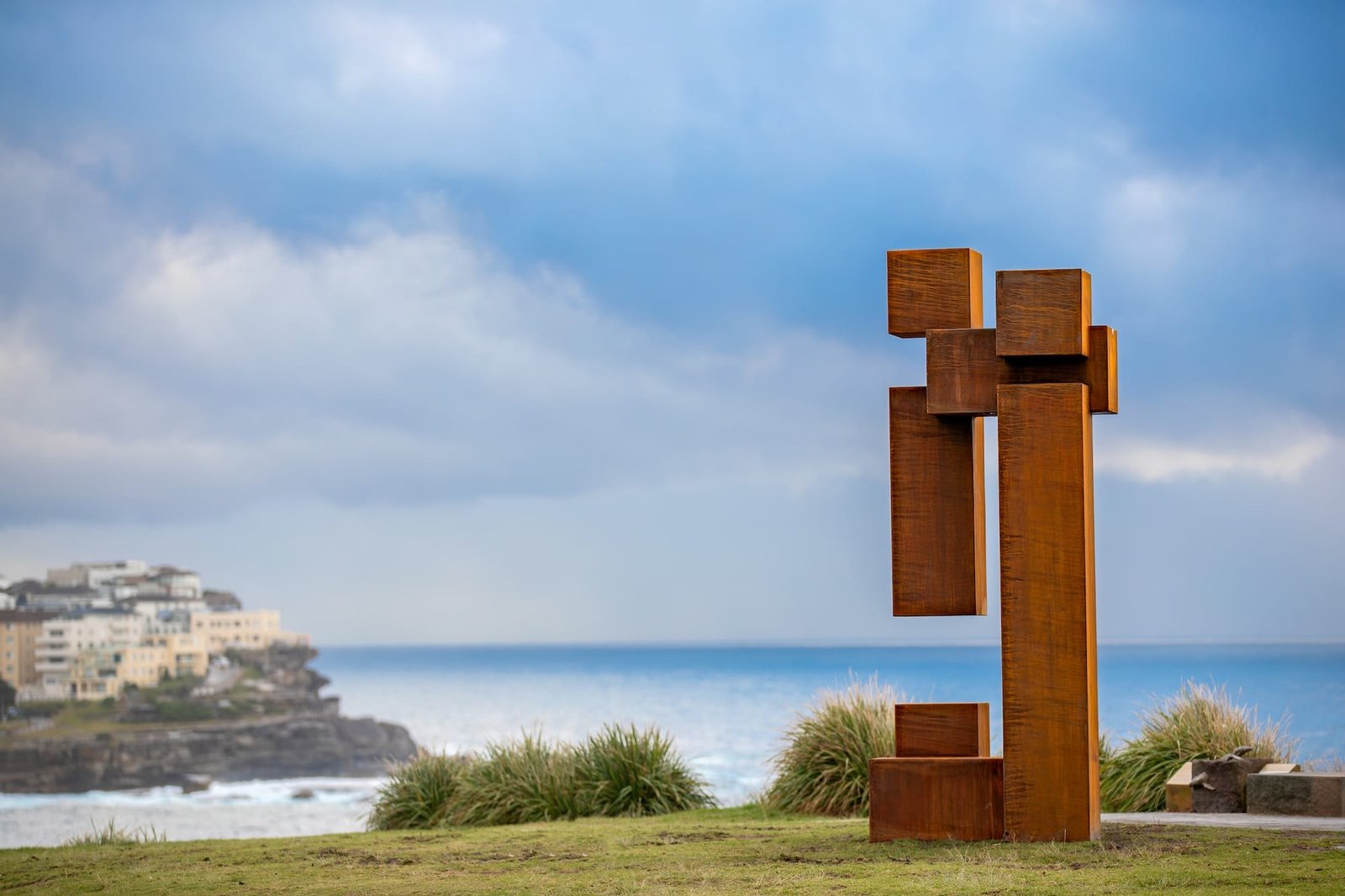
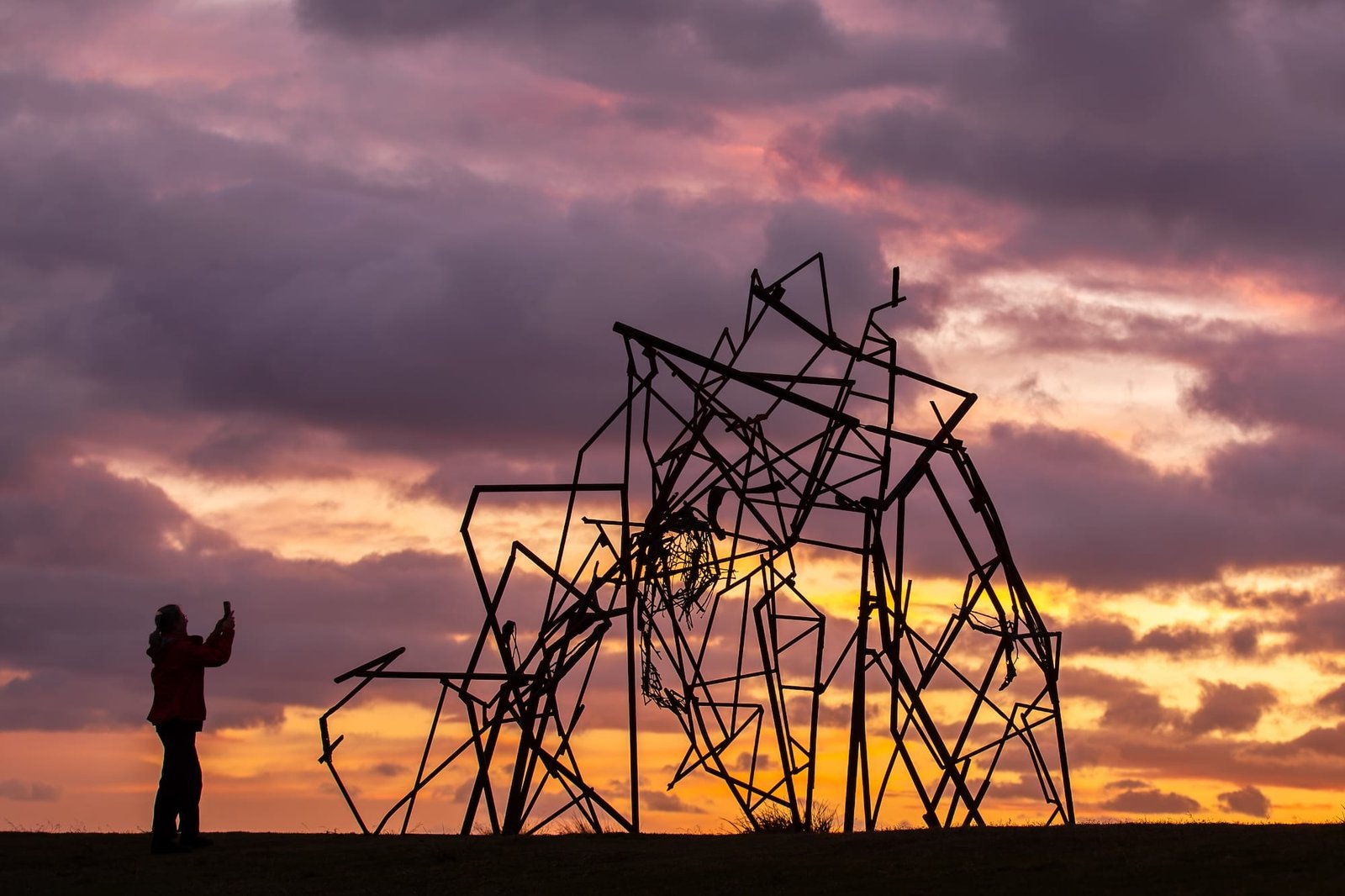
The sea supplies changing light, glare, wind and salt rather than a fixed gallery environment. David Horton’s Peace gains contrast from its silhouette and open voids, while Nenad Milovanovin’s Support IV depends on crisp geometry that remains readable from several directions. These conditions reward strong profiles, but they also increase the practical burden of anchoring, surface protection, inspection and repair during the exhibition period.
Stopping without blocking the path
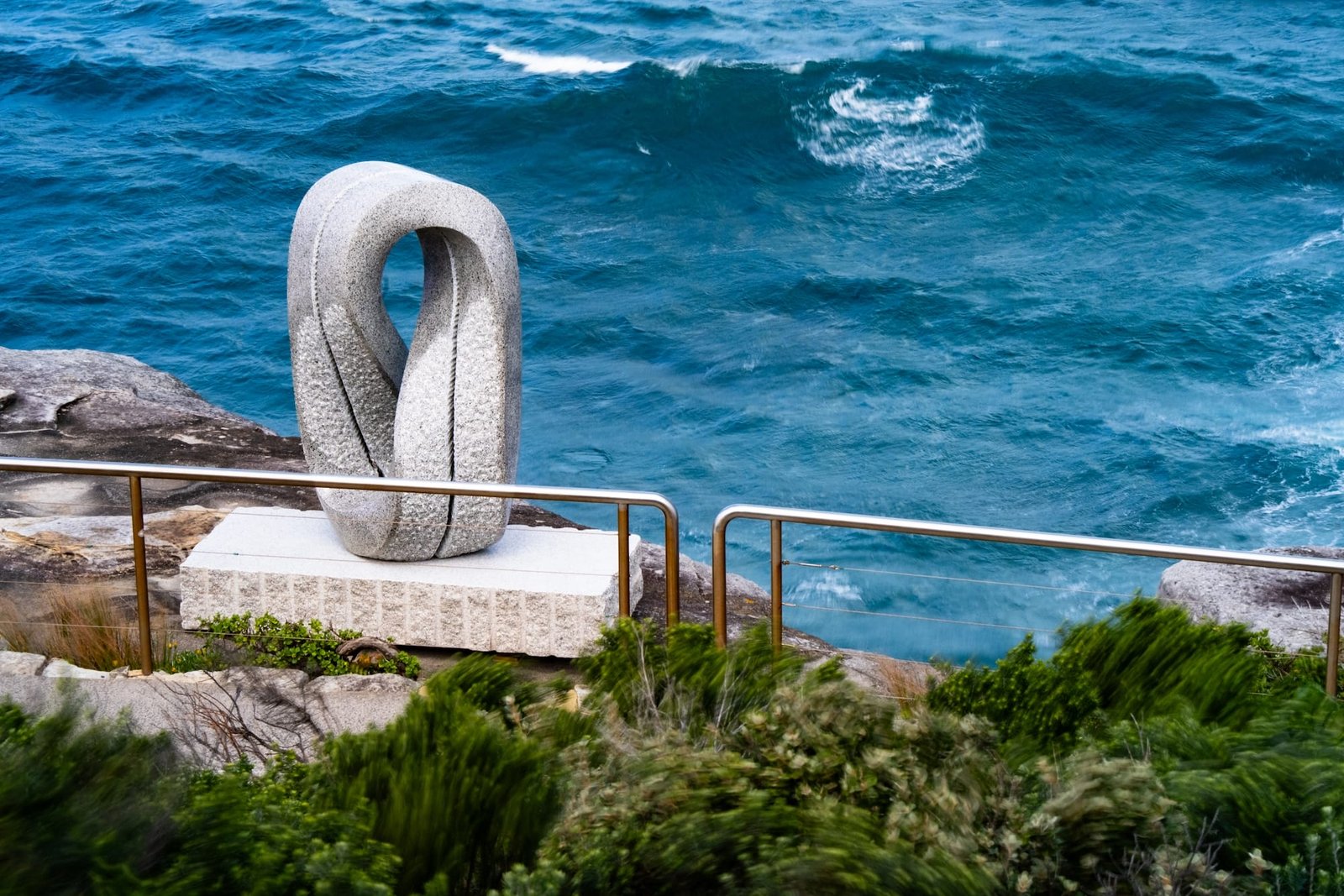
Every sculpture produces a temporary room around itself: visitors slow down, step aside, photograph and gather. That invisible footprint matters as much as the object. Keizo Ushio’s looped stone form offers several framed views through its centre, encouraging movement around it. Harrie Fasher’s linear work changes markedly in silhouette, so the preferred viewpoint shifts with the sun and the observer. Placement must therefore account for both the artwork and the crowd it is likely to generate.
Temporary installation, permanent operational questions
A free outdoor exhibition expands access, but it cannot rely on the environmental control or visitor management of an indoor museum. Foundations must resist wind without damaging the site, routes must remain usable, and inspection has to continue while the coast stays public. The strongest placements balance spectacle with restraint: the artwork is visible, yet the existing landscape and daily use of the path remain legible.
Credits
Exhibition: Sculpture by the Sea, Bondi 2026. Selected works and artists are identified in the image captions. Photography: Charlotte Curd, courtesy of Sculpture by the Sea.
✦ ArchUp Editorial Insight
The proven pressure here is spatial: an open coastal path must continue to carry walkers, runners and everyday recreation while dozens of temporary works attract stopping, photography and group viewing. The curatorial decision is not to isolate art inside a controlled precinct, but to distribute it along a 1.25-mile route where cliff edges, grass, sand and horizon become part of each encounter. That makes movement the exhibition’s main ordering device. A work is first seen at distance, then against other visitors, then against sea and sky; its reading changes as the body approaches. The gain is accessibility and repeated discovery, particularly for people who did not set out to visit an art venue. The trade-off is reduced control. Weather, glare, salt, crowd density and background activity can weaken a delicate piece or overwhelm a small one, while anchoring and maintenance must meet public-safety demands without dominating the landscape. Sculpture by the Sea succeeds most clearly when placement is treated as more than an empty patch of ground. The coastline is not a neutral backdrop; it is the gallery’s circulation, light source, scale reference and operational constraint.