Borås Getaway House: Integrating Terrain and Open Spaces

| Item | Details |
|---|---|
| Architects | Claesson Koivisto Rune |
| Area | 65 m² |
| Year | 2024 |
| Photographs | Åke E- son Lindman |
| Manufacturers | panoramah!®, Kasthall, Vola, Wastberg, Weland |
| Category | Houses |
| Lead Team | Oliver Cap |
| Office Lead Architects | Mårten Claesson |
| Design Team | Claesson Koivisto Rune Architects |
| General Contractor | HJ Bygg |
| Engineering & Consulting > Structural | Stiba, Joakim Österlund |
| City | Borås |
| Country | Sweden |
Location and First Impression
Choosing a site for building a temporary escape home is often driven by the desire to disconnect from the routine of daily life and the pressures of the city. In this case, a plot of land was purchased near the residents’ hometown, yet it possesses a distinct sense of isolation that makes it feel like a world entirely separate from its surroundings. The goal of the project was to create a space for relaxation and tranquility, a place that could be visited on weekends or during short breaks to step away from the noise of everyday life.
Topography and Access
Access to the site occurs via a narrow rural road that runs along a steep, forest-covered slope. This rugged setting adds a unique transition experience, where visitors feel as though they are leaving their familiar world behind to arrive in a completely different environment. At the far end of the land, the slopes descend toward the edge of a long lake that stretches so far that its end is difficult to perceive, enhancing the sense of mystery and openness.
The Visual Character of the Landscape
The surrounding landscape carries an almost fantastical quality. Moss-covered rocks and the still waters of the lake create an enchanting atmosphere, as if they were part of a fairy tale. This interaction between terrain and water forms a sensory experience that makes visiting the house more than simply a stay, it becomes a journey that transports the visitor into a world far removed from everyday reality. Such integration exemplifies architectural design that harmonizes with natural surroundings.
Site Challenges and Construction Constraints
The sloping terrain and difficult access posed a major architectural challenge, as building a fully functional home on a limited plot required careful design thinking and efficient use of resources. In addition, there was a clear legal restriction allowing a building area of no more than 65 square meters, with the possibility of adding only two small auxiliary structures. The challenge here lay in meeting the needs of a four-person family within these tight limits, necessitating innovative solutions to maximize the use of space.
Integrating the Building with Nature
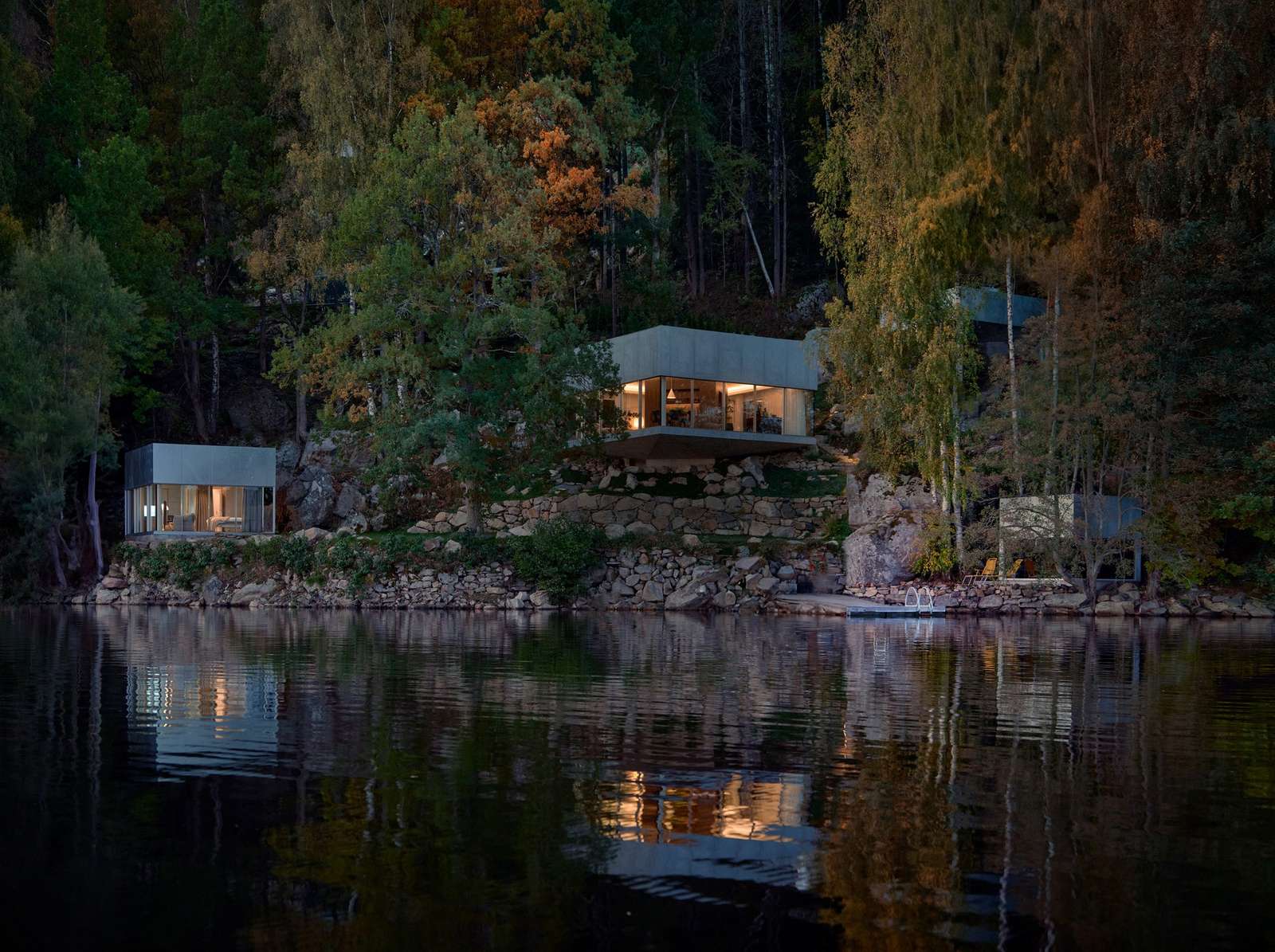
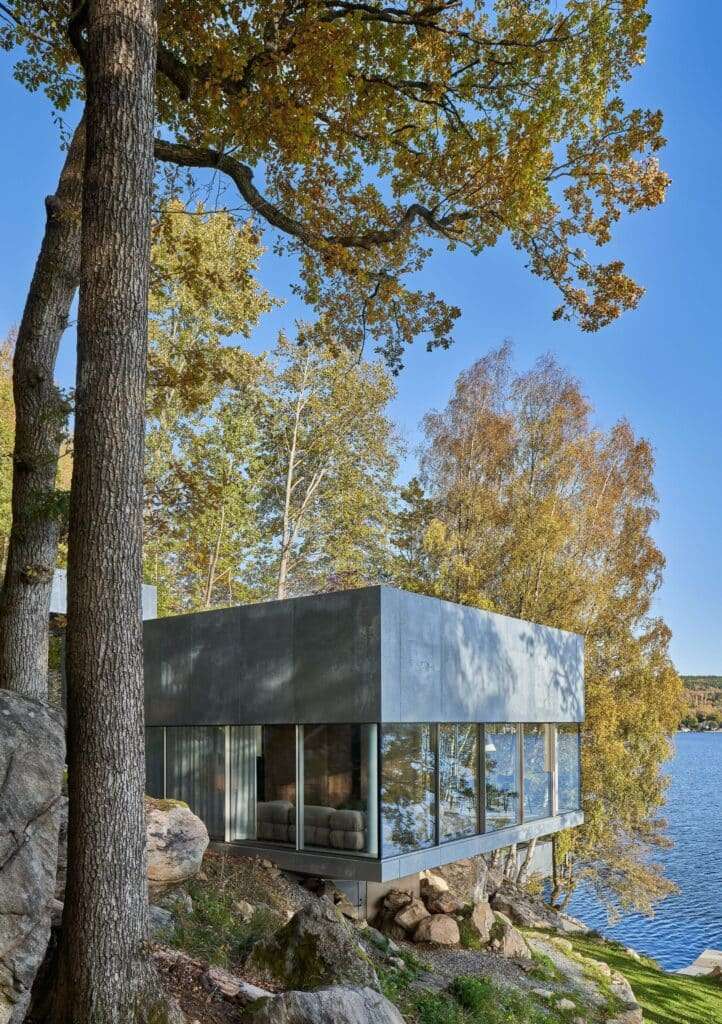
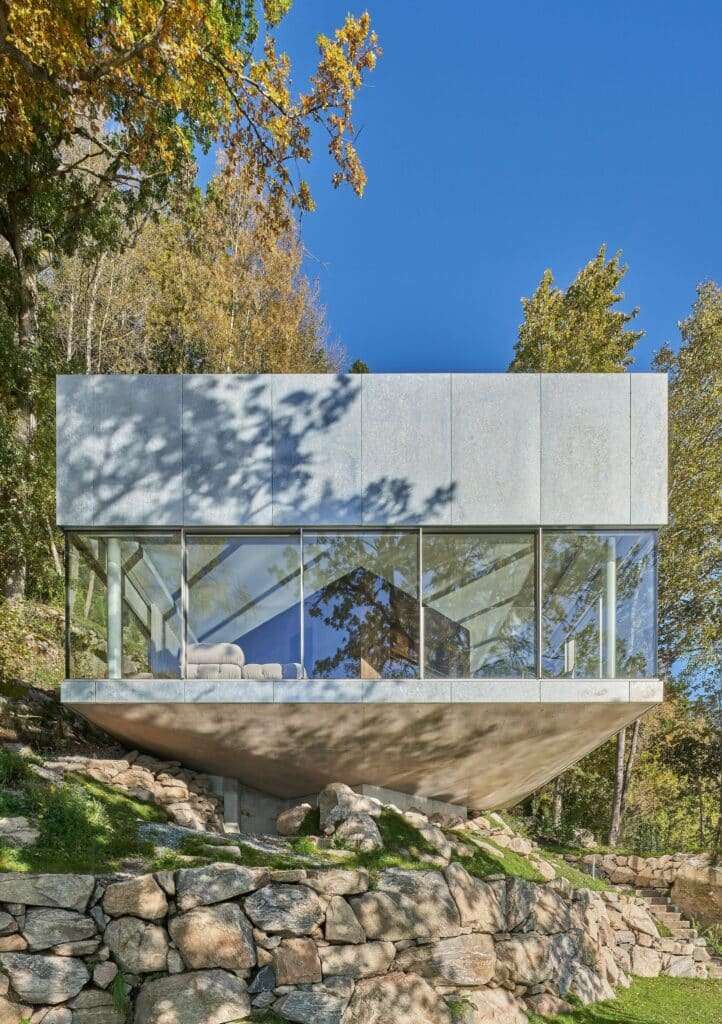
One of the core principles agreed upon from the start was to preserve the surrounding nature without drastic changes, keeping the visual impact of the building to a minimum. The concept can be imagined as rock-like crystals emerging from the hill among the trees, gently touching the ground without imposing their presence. This strategy demonstrates how modern buildings can be integrated with the landscape without causing visual or environmental disruption.
Material Selection and Its Impact
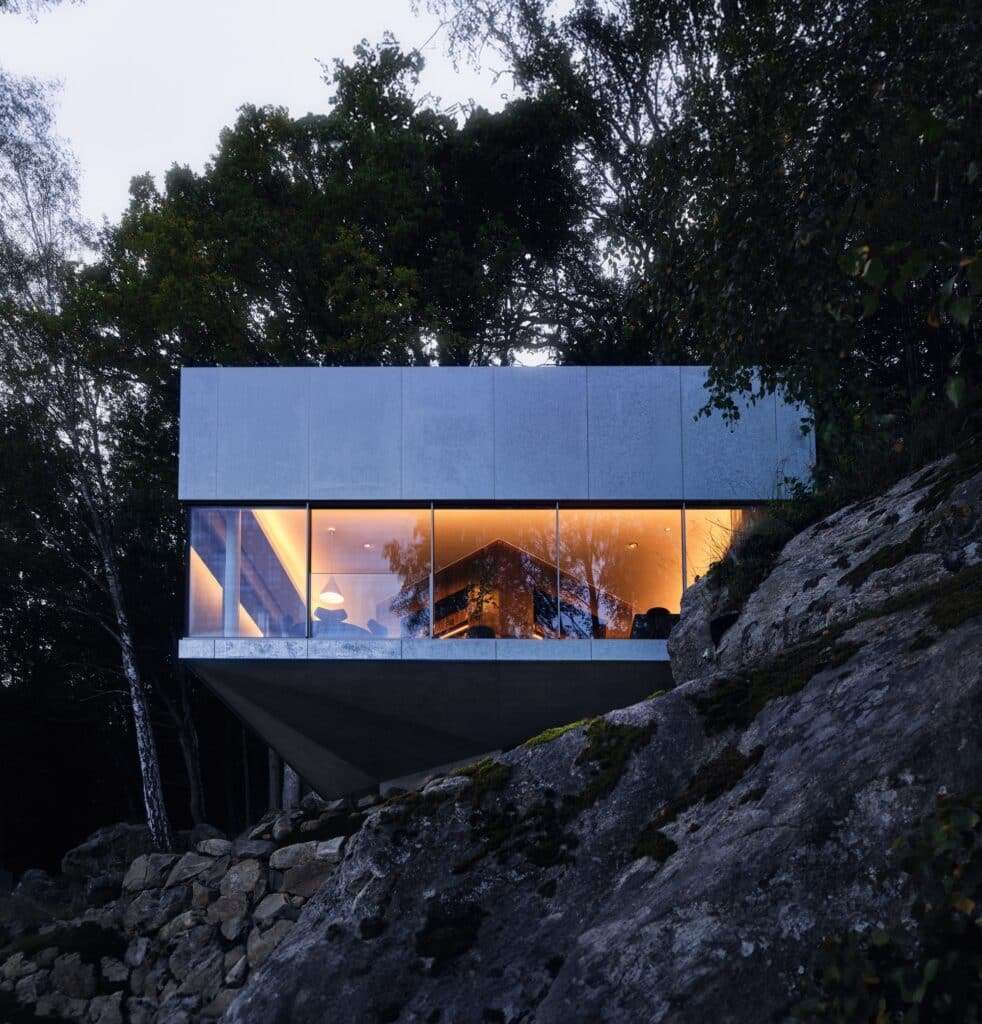
The design relied on just two primary materials: glass and galvanized steel. These were chosen for their low maintenance requirements and their ability to convey a sense of purity and material honesty. For instance, the zinc is left untreated to gradually oxidize, forming a natural patina that reflects the passage of time. This approach embodies a design philosophy rooted in respect for nature and materials, offering a spatial experience that is coherent with the surrounding environment. Detailed material datasheets further highlight these choices.
Building Layout and Orientation
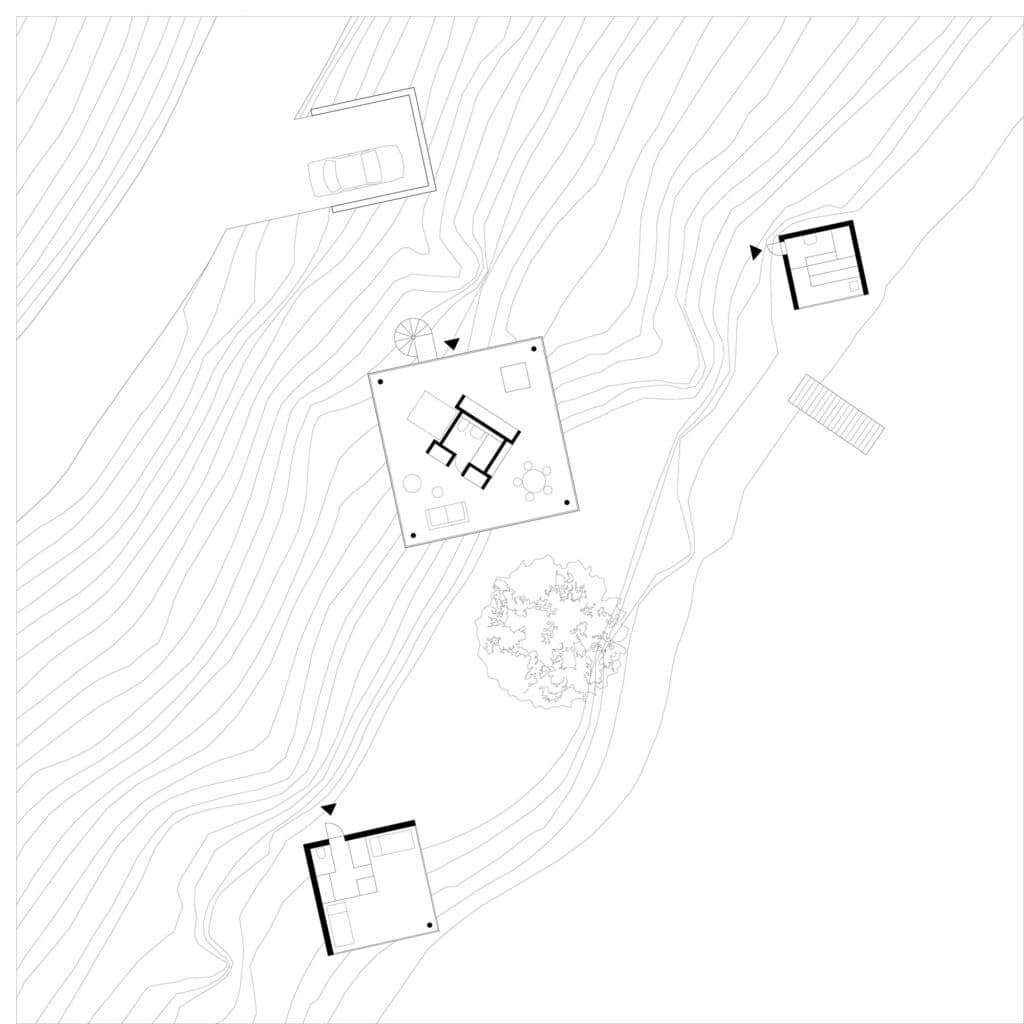
The small village consists of four separate cubic buildings: the main house, an annex containing two bedrooms, a sauna, and a carport. These cubes are arranged in a parallel formation but are rotated 45 degrees toward the lake. This strategic orientation allows each building to benefit from views on two sides instead of just one, while also reducing direct glass reflections from the lake side, preserving privacy and enhancing visual integration with the surroundings.
Cubic Design and Material Performance
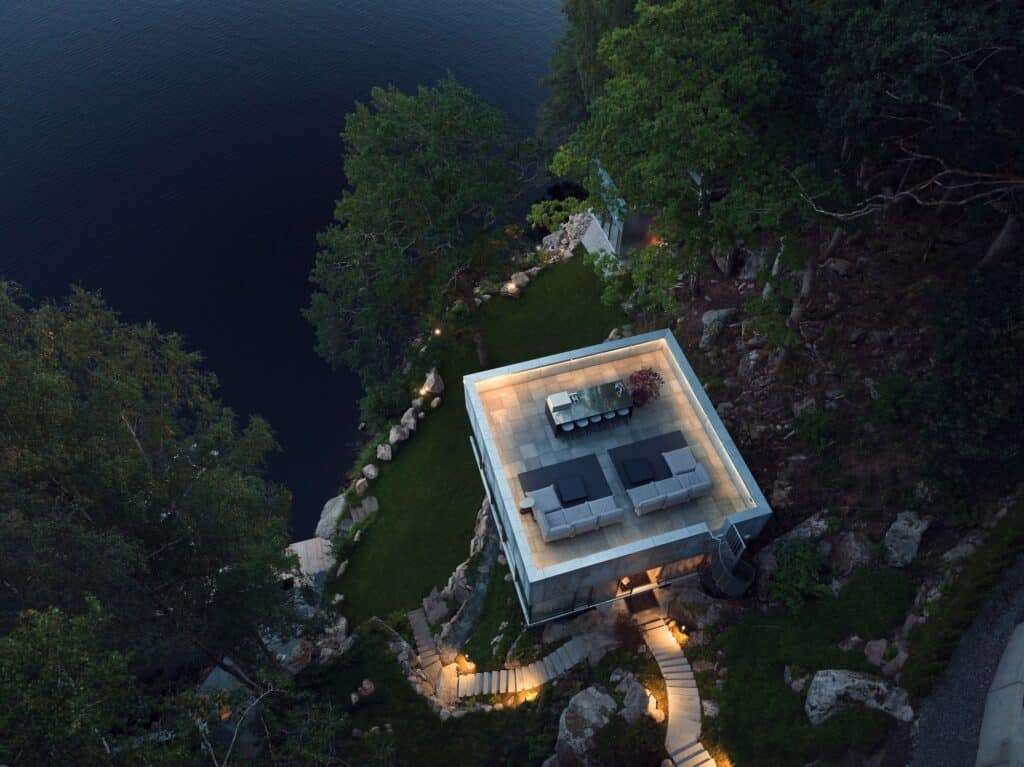
The cubes feature a visual division that balances transparency and solid mass: glass covers the lower half, while galvanized steel occupies the upper half. In the main house, the upper metal half conceals a recessed rooftop terrace accessible via a spiral staircase at the back. This design demonstrates how interior design and architectural details can expand usable space without compromising the building’s visual harmony with nature.
Maximizing Outdoor Spaces
The rooftop terrace provides a 50% increase over the available ground-level area, offering opportunities for outdoor living and efficient use of the site. Standing on the terrace, visitors feel as if they are “among the trees,” evoking a childhood treehouse experience in a refined, contemporary way. This interplay between built space and the surrounding nature enhances the sense of immersion in the environment and highlights the importance of integrating architectural design with landscape elements for a richer, more sustainable experience.
Central Core and Spatial Organization
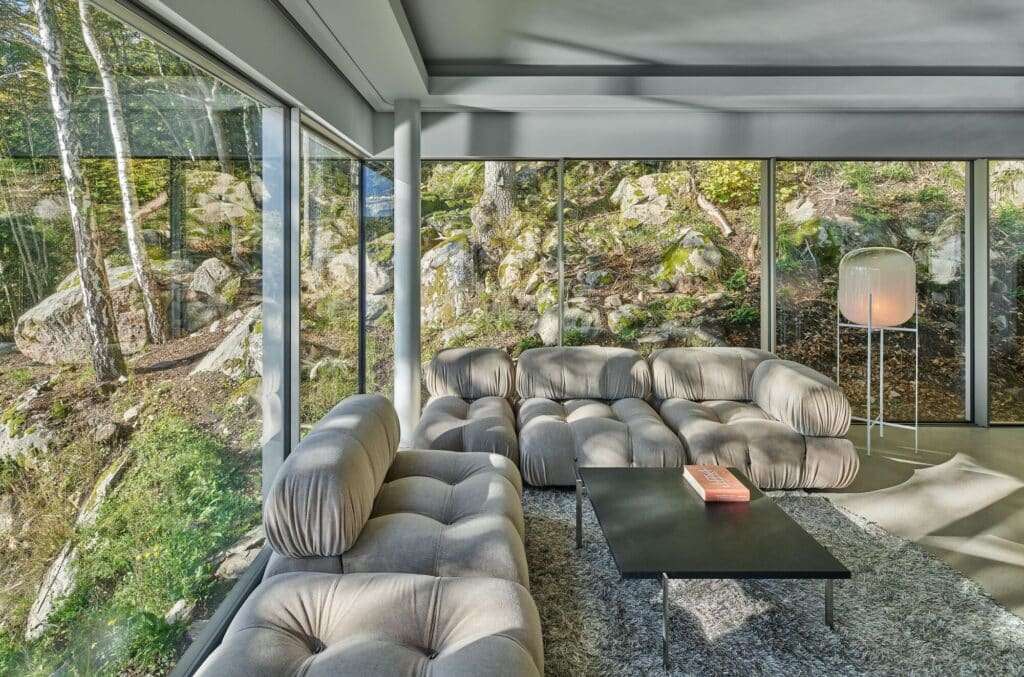
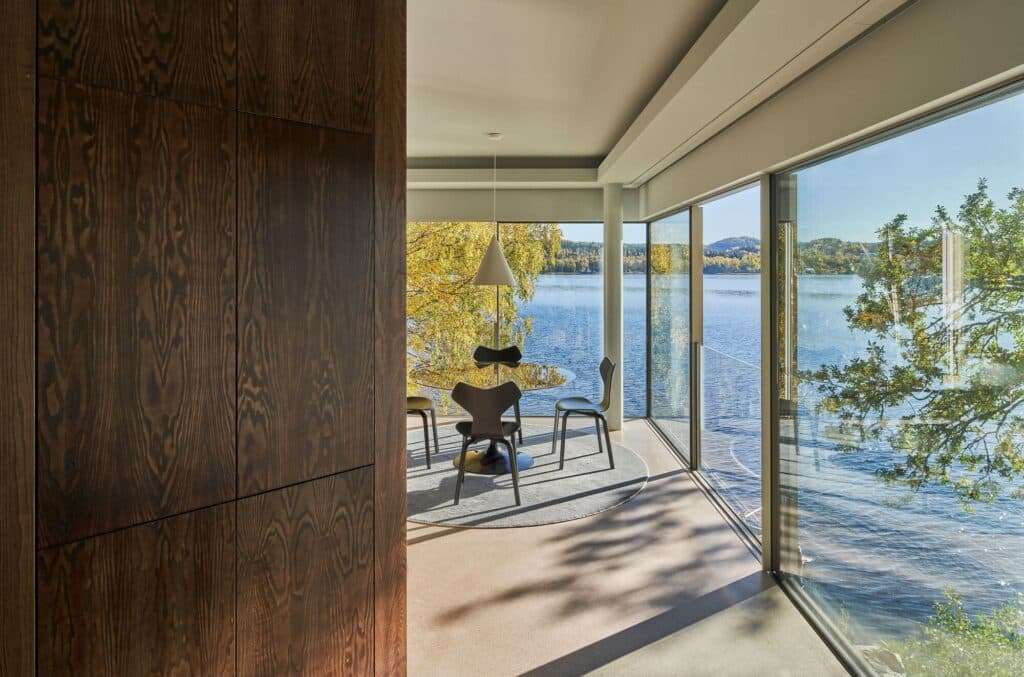
The main feature of the house lies in its interior design around a solid central core in the shape of a cube, which houses the bathroom, kitchen, and storage areas. This cube is rotated 45° within the overall house plan, creating an open and flexible space while maintaining four clearly defined zones: entrance/kitchen, dining room, living room, and bedroom. This arrangement ensures a continuous spatial flow, providing a seamless living experience despite the limited size.
Materials and Visual Impact
The entire interior cube is clad in wood, adding tangible warmth to the interior environment and balancing the visual hardness of other building materials such as concrete, glass, and steel. This combination of materials reflects a design philosophy aimed at merging durability with visual comfort while preserving a sense of warmth and intimacy within the space.
Structure and Support
Structurally, the interior cube extends beneath the house to form a central “mushroom stem,” which supports most parts of the building. This structural solution demonstrates how the central core is used not only to organize interior functions but also to provide structural support for the entire house, maintaining a light construction that harmonizes with the natural slope of the land.
✦ ArchUp Editorial Insight
Borås Getaway House appears as a spatial byproduct of intersecting regulatory, demographic, and topographical pressures. The initial impetus stems from planning restrictions that limit the building area to 65 square meters, alongside the financial consideration of using the house for weekend retreats for a four-person family, necessitating maximum efficiency within minimal space. Frictions arise from the steep site slope and narrow access road, imposing logistical constraints on material delivery, labor allocation, and structural support, effectively leading to the distribution of auxiliary units and staggered heights.
The rotated cubes, elevated platforms, and lower glass elements constitute the spatial solution that balances compliance with planning regulations and topographical division, while ensuring continuity of unit use and minimizing environmental and regulatory risks. Visually irregular assemblies act as a distraction from the underlying systematic calculations, highlighting the differentiation of assets within a strict planning framework rather than serving as a deliberate formal choice, reflecting principles often explored in architectural research and archive case studies.