
Brasília The Modernist Capital Built from Scratch

Introduction
Deep in the heart of Brazil, a city unlike any other was born. Brasília wasn’t shaped by centuries of history like most capitals — it was entirely designed and constructed from the ground up. In the 1950s, architect Oscar Niemeyer and urban planner Lúcio Costa brought a bold vision to life. They created a city that embodied the ideals of modernism, national pride, and artistic ambition. Indeed, Brasília stands today as a modern capital that continues to inspire architects worldwide.

A National Project with a Futuristic Vision
In 1956, President Juscelino Kubitschek vowed to move the capital from Rio de Janeiro to Brazil’s central plateau. This wasn’t just a logistical shift — it was a symbolic move to promote economic development in the country’s interior. It aimed to build a modern identity for Brazil. The planning and execution were set to make Brasília a modern capital. It reflected a futuristic vision for the nation.
A remote site in the highlands was chosen, and construction began on what would become the most ambitious urban planning project in the nation’s history. In less than four years, Brasília officially opened in 1960 as a modern capital with a unique layout.
A New Architectural Language: Oscar Niemeyer’s Signature
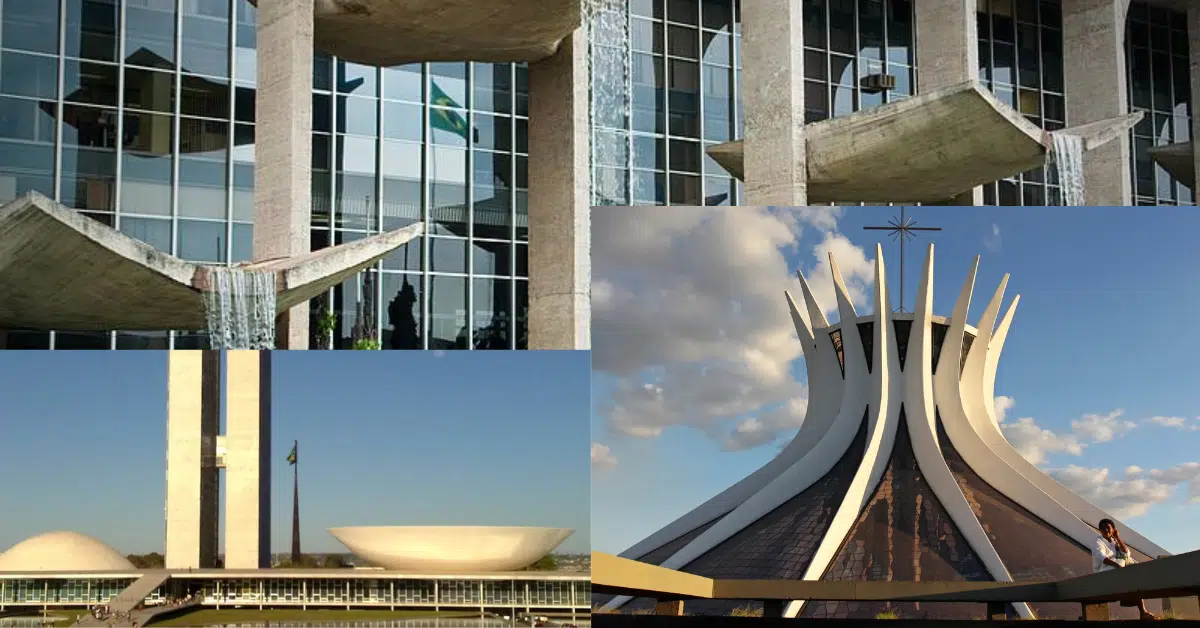
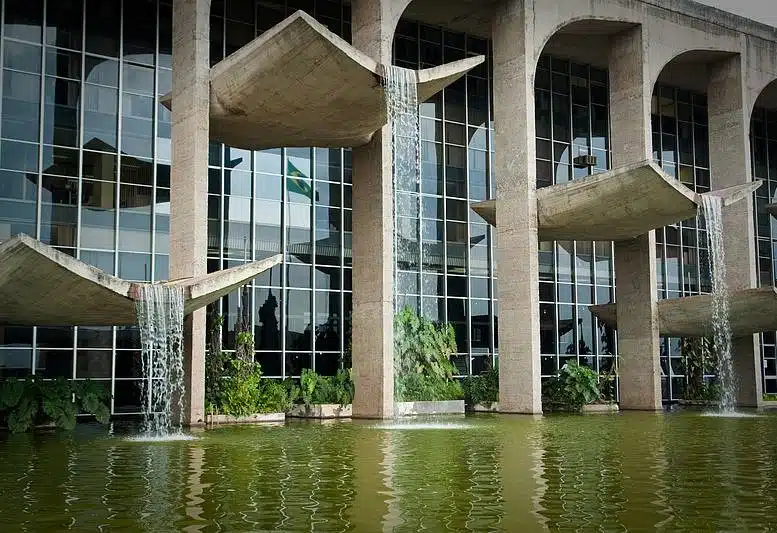
Niemeyer didn’t design conventional buildings — he created sculptural architecture. Using reinforced concrete, he shaped elegant curves and flowing lines. Rejected were rigid forms in favour of dynamic, poetic structures that defined Brasília as a modern capital setting new architectural standards.
| Building | Function | Key Architectural Features |
|---|---|---|
| Palácio da Alvorada | Presidential residence | Slender, wave-like columns with a graceful rhythm |
| Brasília Cathedral | Main cathedral | Circular glass structure resembling a crown or uplifted hands |
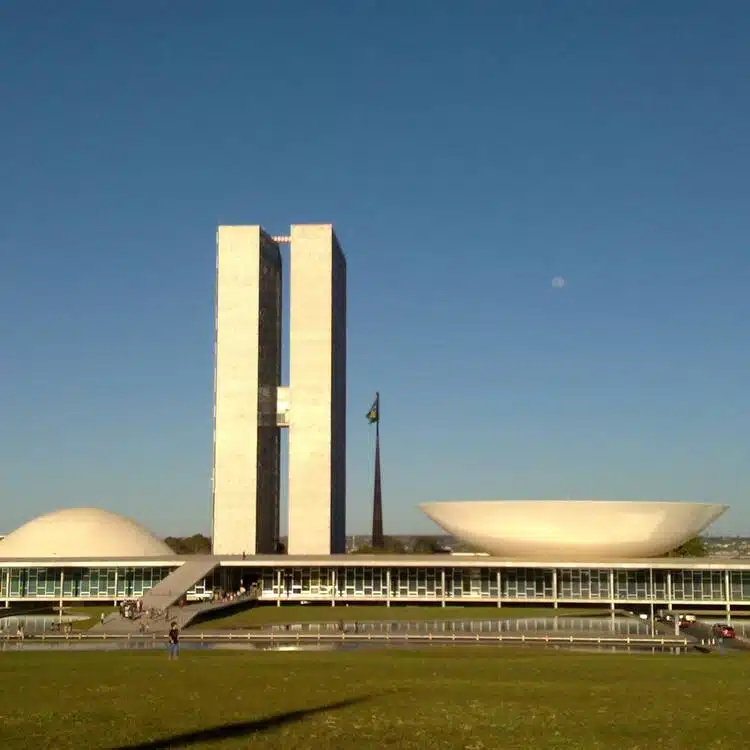
| National Congress | Legislative seat | Twin domes representing the Senate and Chamber of Deputies |
Each structure stands as a unique piece of art. They reflect Niemeyer’s belief that architecture should inspire and express emotion. This contributes to Brasília’s identity as a modern capital.
Urban Design That Broke the Mold
Lúcio Costa’s urban plan was just as visionary. Inspired by the shape of an airplane or a cross, the city was divided into clearly defined zones:
- The long axis (the fuselage) houses government buildings and ministries.
- The cross axis (the wings) contains residential blocks, schools, shops, and parks.
Brasília was built for cars more than pedestrians — a decision that would later become one of the city’s most debated features.
Strengths and Criticism
While Brasília gained worldwide recognition for its bold design, it also faced its share of criticism:
- Lack of spontaneous street life: Many visitors found the city beautiful but emotionally distant.
- Car-dependent infrastructure: Limited pedestrian pathways and public transit made daily life challenging.
- Separation of spaces: The wide gaps between work, home, and amenities often made the city feel disconnected.
Still, the city remains a landmark achievement — a physical expression of modernist ideals brought to life. Today, Brasília stands unique as a modern capital.
Brasília Today
Now home to Brazil’s federal government, Brasília is more than a political centre — it’s a UNESCO World Heritage Site recognised for its unique urban and architectural vision. It continues to be studied and admired in architecture schools around the world. As a living example of modernist planning, it exemplifies a modern capital.
Conclusion
Brasília isn’t just a city — it’s a bold experiment in urban design. Born from imagination and executed with precision, it symbolises an era of confidence in progress and creativity in defining a modern capital. While debates continue about its livability, its influence on architecture and planning is undeniable.
✦ ArchUp Editorial Insight
This article explores Brasília as a mid-century modernist capital, shaped by Oscar Niemeyer’s sculptural architecture and Lúcio Costa’s structured urban planning. The visuals highlight monumental government buildings defined by sweeping curves, elevated platforms, and a palette of white concrete against expansive blue skies. Yet, while the architectural forms are expressive, the article could delve deeper into the lived experience of the city’s spatial separation. Its car-dependent layout poses challenges. The absence of pedestrian-friendly infrastructure raises questions about long-term urban adaptability. Still, Brasília remains a significant reference in the study of modernist planning. It offers insights into bold national identity-building through design.
Explore the Latest Architecture Exhibitions & Conferences
ArchUp offers daily updates on top global architectural exhibitions, design conferences, and professional art and design forums.
Follow key architecture competitions, check official results, and stay informed through the latest architectural news worldwide.
ArchUp is your encyclopedic hub for discovering events and design-driven opportunities across the globe.


