Massive 6.0-Magnitude Earthquake Rocks Northwestern Kashmir: Assessing Architectural Damage and Future Risks

A 6.0-magnitude earthquake struck northwestern Kashmir in Pakistan early Monday morning, jolting residents across cities in Gilgit-Baltistan, Khyber Pakhtunkhwa, and Pakistan-administered Kashmir. The tremor, originating at a depth of approximately 35 kilometers, caused widespread panic, forcing residents to evacuate streets, though preliminary reports show no major casualties. While the immediate human impact appears minimal, the quake raises critical concerns about building resilience in the region’s mountainous terrain.
Architectural Damage and Vulnerabilities
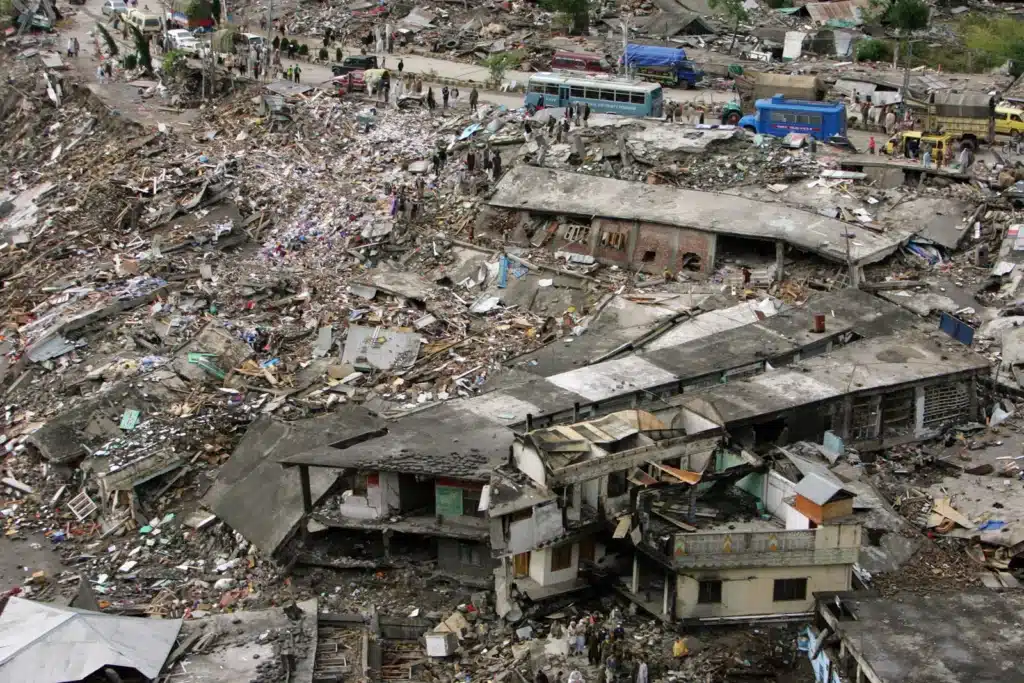
Although most structures survived without collapse, initial assessments reveal minor structural cracks, damaged facades, and potential weaknesses in older buildings. Residential homes constructed with traditional materials, such as unreinforced masonry, are particularly vulnerable. Experts warn that inadequate building materials and outdated architectural design standards could exacerbate damage in future seismic events. Public and commercial structures in remote valleys are under close scrutiny for foundation instability and slope-related hazards.

Preventing Future Architectural Damage
To mitigate long-term risks, authorities are urging the adoption of modern construction techniques, including reinforced concrete frames, flexible steel joints, and earthquake-resistant internal spaces layouts. Urban planners emphasize the importance of retrofitting older infrastructure to meet updated seismic safety codes. Site-specific risk assessments, combined with architectural research on Himalayan seismic activity, are critical to developing safer, more resilient communities.
Potential Long-Term Effects
Even moderate earthquakes can trigger cascading challenges, including landslides, road blockages, and gradual structural weakening in vulnerable zones. Over time, repeated tremors may compromise foundations, particularly in isolated mountain buildings constructed with outdated techniques. Experts predict that post-quake evaluations will lead to stricter building codes and a renewed focus on sustainable design practices. Communities that prioritize engineering innovation, strategic retrofitting, and careful site selection are likely to minimize future losses and enhance regional resilience.

As authorities continue detailed field inspections, the earthquake serves as a timely reminder of the delicate balance between natural hazards and architectural preparedness. With proactive measures, Northern Pakistan can reduce risks, protect lives, and preserve its built environment against future seismic events.

✦ ArchUp Editorial Insight
Layer 1 – Non-Architectural Data: Urban populations exhibit compressed commuting windows and dispersed consumption habits. Labor is increasingly outsourced or temporally fragmented. Capital allocation favors rapid turnover and low-risk investments, producing a predictable timeline pressure across projects.
Layer 2 – Decision Frameworks: Regulatory approvals prioritize code compliance over context-specific adaptation. Insurance logic and risk management protocols favor redundancies and standardized envelopes. Institutional procurement consolidates contractors, limiting experimentation and reinforcing formulaic processes.
Layer 3 – Architectural Outcome: The resulting structures display repetitive massing and modular layouts. Defensive measures, such as isolation of private zones and buffering of shared circulation, recur across unrelated projects. The final built environment is the logical outcome of compressed timelines + risk-averse procurement + regulatory standardization, manifesting in form as predictably repetitive buildings with limited adaptation to actual user behavior.
Patterns observed here resonate with previous architectural research noting over-reliance on template solutions under systemic pressures.