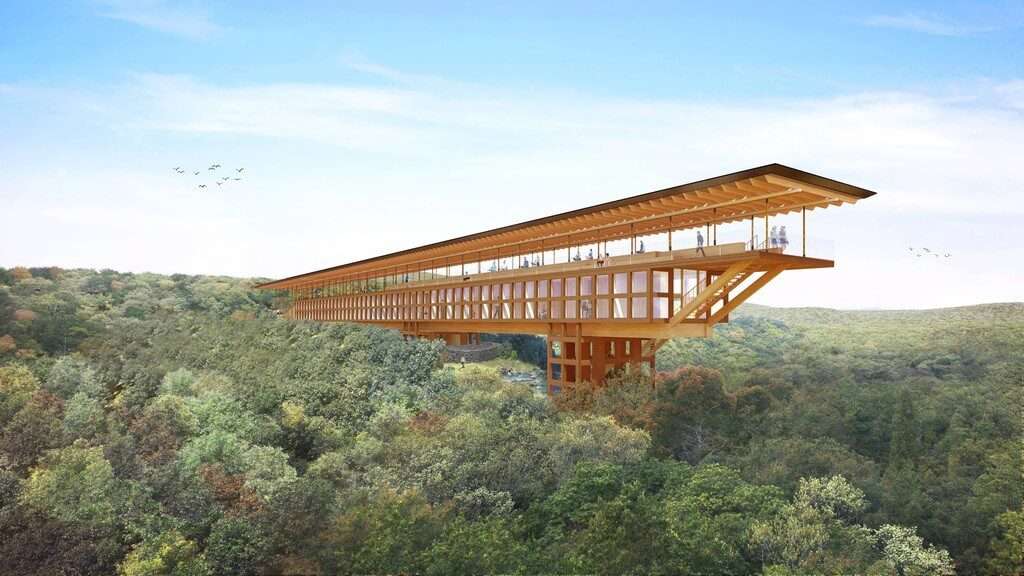
Bukhara Biennial 2025 Opens Across Restored Historic Landmarks

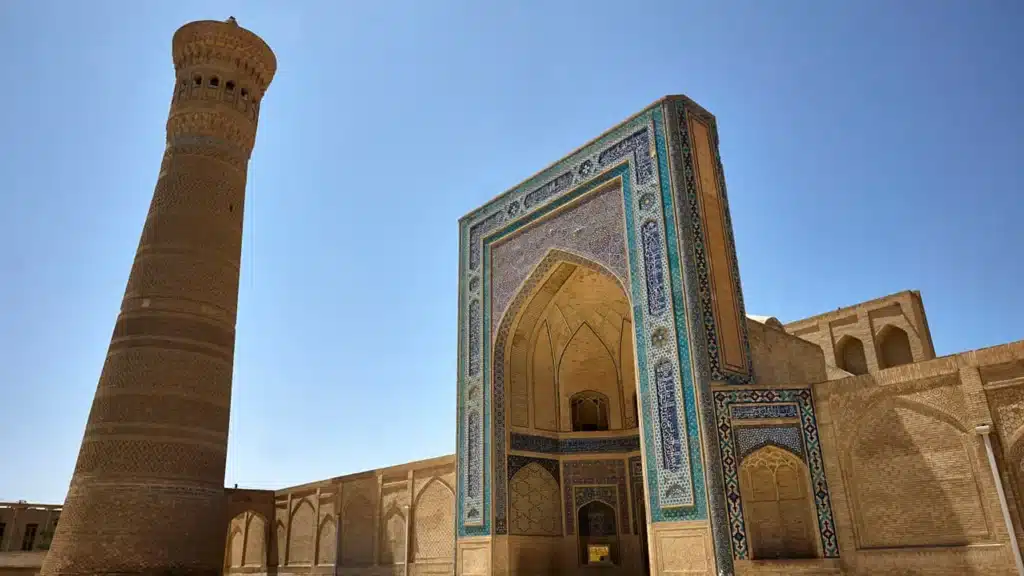
On September 5, 2025, the historic city of Bukhara in Uzbekistan inaugurated its first Biennial, a cultural event that runs until November 20. The program brings together more than 200 artists from 39 countries. They present over 70 site-specific works staged across restored madrassas, caravanserais, and mosques listed as UNESCO World Heritage Sites.
Organized by the Art and Culture Development Foundation of Uzbekistan (ACDF) under Commissioner Gayane Umerova, and with architect Wael Al Awar as Artistic and Programmatic Director, the Biennial has been described as the largest cultural event in Central Asia to date.
Beyond Temporary Exhibitions
While the Biennial has the appearance of a celebratory cultural festival, its ambition goes further. It is part of a broader plan to transform Bukhara’s historic centre into a permanent cultural district. The strategy places emphasis on restoring buildings altered during the Soviet period. Additionally, it focuses on stabilizing structures in disrepair, and reconnecting monuments with daily urban life.
Six newly defined cultural routes now weave through the city along the path of the historic Shakhrud Canal. These routes link neighbourhoods with major landmarks. Plans are also underway for a New Museum of Bukhara, designed by Wael Al Awar, to act as a long-term anchor once the Biennial concludes.
Between Heritage and Contemporary Practice
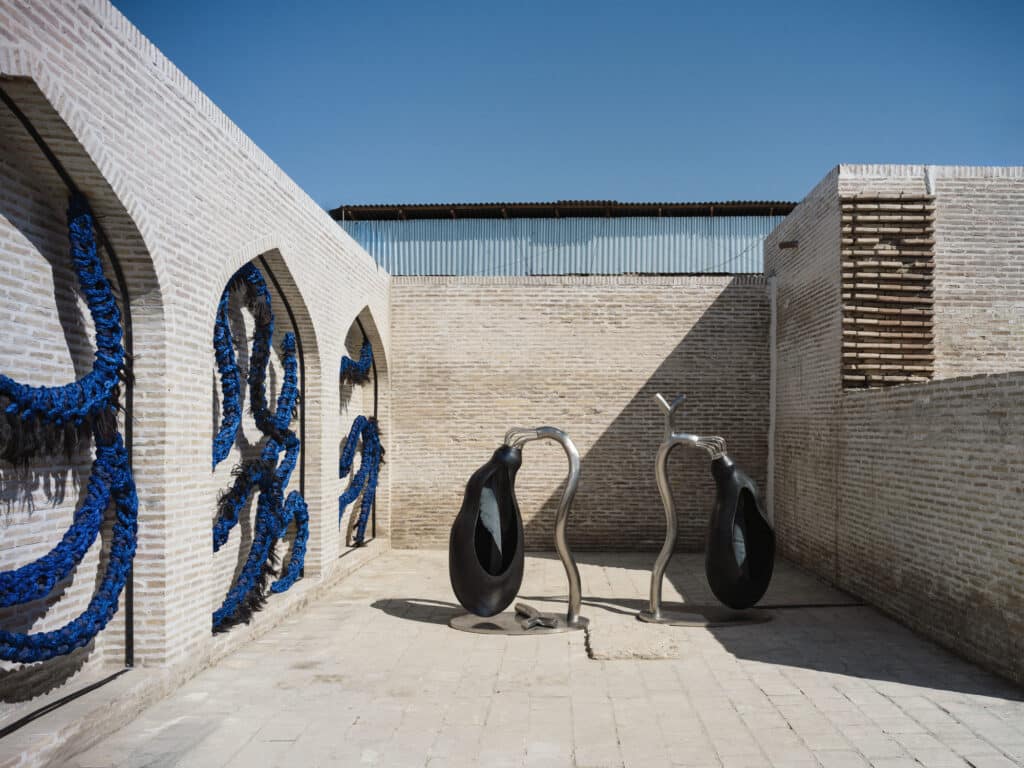
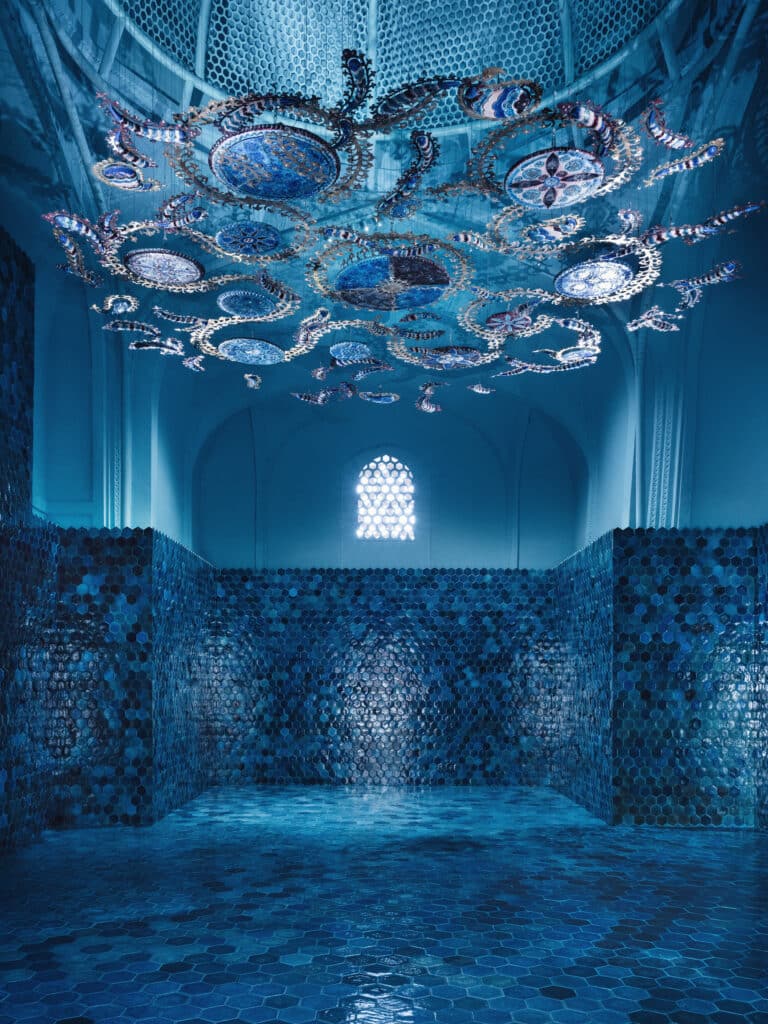
Curated by Diana Campbell under the theme “Recipes for Broken Hearts”, the Biennial sets traditional Uzbek crafts—ikat weaving, mosaic, woodcarving, and embroidery into dialogue with contemporary installations. Highlights include Antony Gormley’s labyrinth of monumental figures at the Khoja Kalon Mosque, Subodh Gupta’s collective dining dome, large-scale ikat performances evoking the shrinking Aral Sea, and contemporary mosaic works spread across six restored sites.
The program also introduces a green oasis intervention. This intervention recalls Bukhara’s Silk Road identity as a garden city, merging ecological memory with urban renewal.
A Critical Reading
The Biennial undoubtedly places Bukhara on the global cultural map. Yet the crucial question remains: will this momentum translate into sustainable preservation or remain a seasonal spectacle? Experiences from other heritage cities suggest that large-scale festivals risk becoming touristic bubbles unless supported by long-term institutions that serve local communities.
The involvement of Uzbek artisans is promising, but continuity must be ensured. Only then will knowledge pass to future generations beyond a single edition of the Biennial. Similarly, the ecological gestures are symbolically powerful but will only matter if they lead to concrete environmental policies.
Conclusion
Bukhara Biennial 2025 is a bold experiment. It aims to transform heritage sites into a laboratory for contemporary art and urban renewal. Its success will not be measured solely by visitor numbers or artistic diversity. Instead, success depends on its ability to foster a sustained dialogue between heritage, community, and contemporary culture.
✦ ArchUp Editorial Insight
The Bukhara Biennial 2025 unfolds across restored madrassas, caravanserais, and mosques. Here, traditional Uzbek materials such as carved wood and ikat textiles intersect with large-scale contemporary installations. The imagery conveys a layered dialogue between heritage and present-day cultural expression, offering spatial compositions charged with symbolic depth. Yet the question arises: does this artistic activation ensure long-term sustainability, or does it risk becoming a temporary spectacle detached from contextual relevance? The ecological gestures, like reviving Bukhara’s identity as an oasis, are compelling but require concrete implementation. Still, the Biennial establishes a valuable framework where heritage and contemporary practice converge in a living cultural laboratory.
Explore the Latest Architecture Exhibitions & Conferences
ArchUp offers daily updates on top global architectural exhibitions, design conferences, and professional art and design forums.
Follow key architecture competitions, check official results, and stay informed through the latest architectural news worldwide.
ArchUp is your encyclopedic hub for discovering events and design-driven opportunities across the globe.