Cafe Tondo in Los Angeles as a revived community cafe blending design heritage and hospitality

Café Tondo made its debut as an all-day café-bar in Los Angeles’ Chinatown, providing morning coffee, evening small plates, and late-night drinks. The project fuses a cultural goal with meticulous interior design by Aunt Studio who successfully changed a former mechanic shop and acupuncture clinic into a cozy and welcoming place. The structure and its history are treated by the designers as a basis for the creation of a new social gathering place that sounds both the past and the present.
Site and Conceptual Approach
The team retained old features like the concrete floors that were worn down, brick walls that were exposed and wooden ceilings that supported the structure while adding new design interventions. They applied earthen red plaster to the whole place to unify it and created a series of rooms that point to the building’s previous lives. Design did not cover up history but accepted it and created a narrative architecture that helped people feel comfortable, remember and hold their daily rituals.

Interior Layout and Spatial Experience
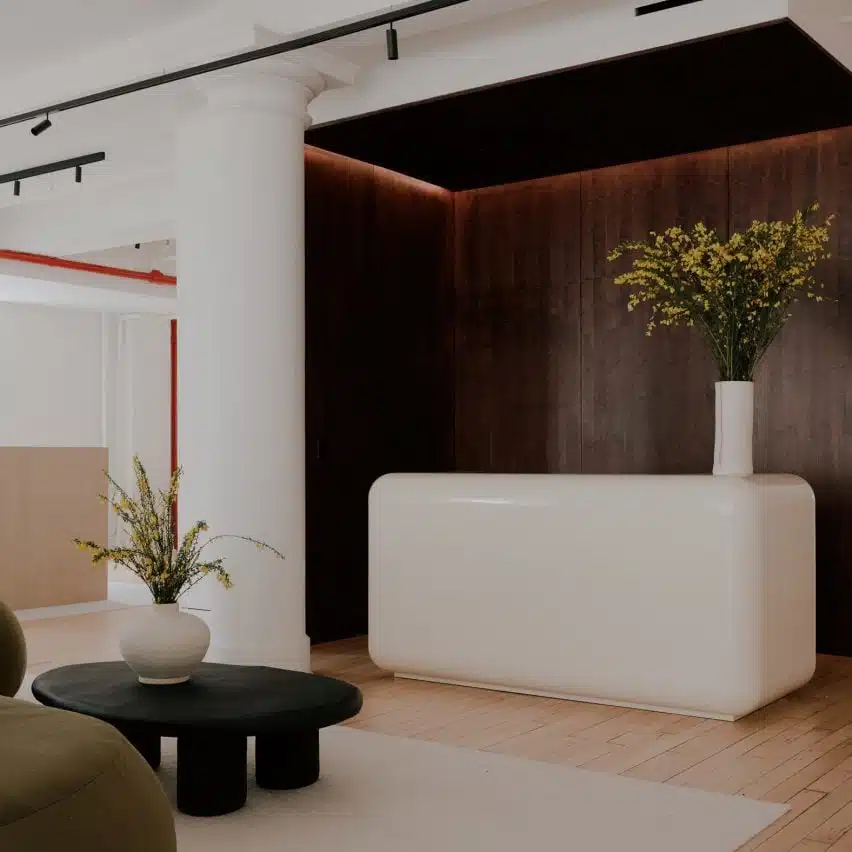
The interior layout is composed of several zones: a lounge-like café area close to the entrance, cozy seating spots, a bar, and rear rooms. Toontine sunshine comes in through huge windows that also illuminate the custom furniture made in Mexico. The ceramics and handmade cuts give the interior a personalized, human scale. The whole spatial logic takes into account the functional requirements and a social ambition, to create a spot where people stay long, meet up, and feel at home.

Material Palette and Craft Integration
The material palette incorporates a variety of elements such as, for instance, exposed brick and concrete, plaster and dark wood, and even custom-made furniture. The custom parts that form the whole are the combination of the presentable craftsmanship, the honest materials, and the warmth of touch. The mixture of ancient surfaces and modern finishes gives the area a multi-layered texture along with a feeling of time elapsed between the building’s memory and the hospitality of the present day.

Cultural Program and Social Role
The plan for Cafe Tondo is not only an inviting café but a place for the community to interact. The daily schedule of the cafe includes serving morning coffee, casual dining, drinks, and live music or DJs entertainment in the evenings. This model brings back the idea of a ‘third place’ in city life, a spot that is neither home nor work, where people meet, drink, socialize, and the community gets stronger. The project, therefore, addresses the issues of urban social fabric and the impact of architecture in forming public social space.

Architectural Insights and Lessons for Practice
| Topic | Insight |
|---|---|
| Adaptive reuse | Existing buildings can be transformed into culturally relevant spaces by acknowledging and integrating their history rather than erasing it. |
| Material honesty | Exposed surfaces and handcrafted finishes can bring warmth, texture and authenticity to hospitality spaces. |
| Flexible programming | Combining daytime café uses with evening hospitality and events extends the utility and social value of urban interiors. |
| Architecture as social infrastructure | Design can support community building by offering spaces that foster gathering, belonging and daily rituals. |
| Cultural continuity | Projects like this link memory, identity and place-making in urban settings undergoing constant change. |
✦ ArchUp Editorial Insight
The adaptive reuse and cultural continuity of Cafe Tondo has been a major factor in the reshaping of hospitality areas in modern cities. The design presents a setting of realness by using the building’s history as its foundation, with beautiful old concrete floors, exposed brick walls, and timber ceilings. This space is made not only of the earthen red plaster, handcrafted Mexican furniture, and different finishes, but also through all the human daily rituals that take place in and around it, which have now been uplifted to the level of meaningful spatial experiences. The café is more than just a place to get your caffeine fix; it is a part of the city’s social infrastructure: a versatile, all-day location for community interactions and restoring the place of the “third place” in the city’s life. It has succeeded in combining architectural memories with modern social needs, thereby providing a guiding principle on how neglected buildings can be turned into vibrant community hubs that resonate with the culture of the area.

Conclusion
Cafe Tondo exemplifies how good design, history respect, and social vision can bring a building left to one side back to life and make it an integral part of the urban context. The project, which combines material authenticity, adaptive reuse, and cultural programming, guides the way for future urban hospitality venues that appreciate both tradition and community.
The photography is by Sean Davidson.
Explore the Latest Architecture Exhibitions & Conferences
ArchUp offers daily updates on top global architectural exhibitions, design conferences, and professional art and design forums.
Follow key architecture competitions, check official results, and stay informed through the latest architectural news worldwide.
ArchUp is your encyclopedic hub for discovering events and design-driven opportunities across the globe.
Brought to you by the ArchUp Editorial Team
Inspiration starts here. Dive deeper into Architecture, Interior Design, Research, Cities, Design, and cutting-edge projects on ArchUp.