Camden Cinematic Quarter: Redefining the Architectural and Cinematic Landscape in London

Camden Cinematic Quarter transforms into a complete urban hub
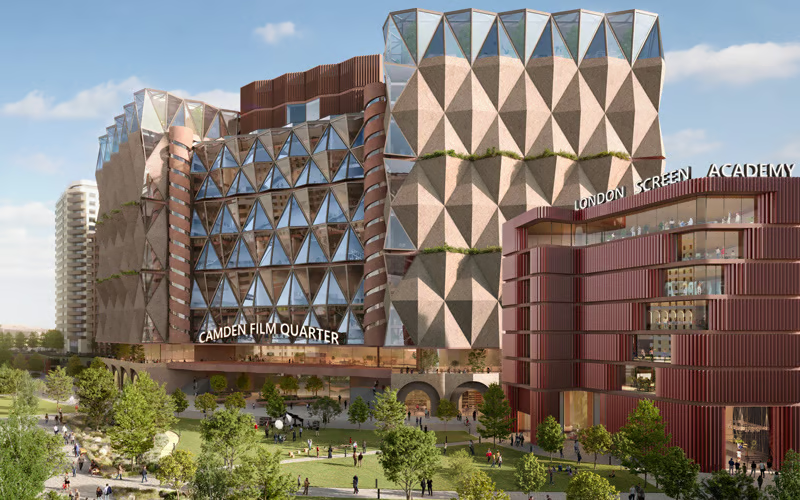
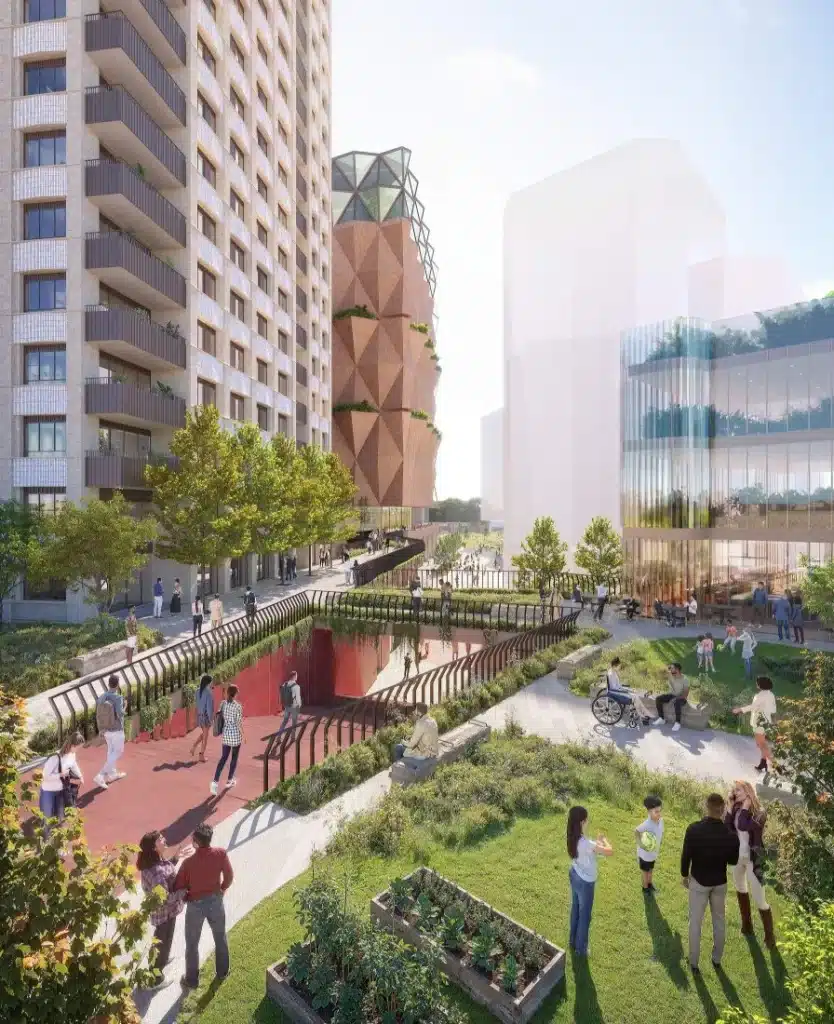
In the heart of Camden, London, United Kingdom, the Camden Cinematic Quarter creates a new district for film and television production. It also includes residences and creative workspaces. The project covers a large area of public land, guiding visitors through gardens, pathways, and educational facilities. The design balances traditional urban fabric with modern architecture. Visitors can explore freely while experiencing a cohesive and dynamic environment.
Multi-level studio design for smooth production flow
The Camden Cinematic Quarter has vertical studio arrangements. Subterranean levels accommodate large sets and equipment. Above them, main studio floors feature expansive lobbies and parking. This layout allows staff and equipment to move efficiently. Each level uses natural light and ventilation. This creates comfortable working conditions integrated with the surrounding spaces.
Public spaces and educational facilities encourage creative interaction
The project includes around 500 new residential units and creative workspaces, along with public parks and educational facilities for emerging filmmakers. Open areas are designed for free circulation, with seating and light pedestrian paths. Educational spaces link the community with the cinematic industry, enabling hands-on learning and collaborative experiences.

Construction materials and techniques
The Camden Cinematic Quarter uses modern, durable materials that ensure structural stability and environmental harmony:
- High-strength concrete: 50–60 MPa for columns and walls, supporting heavy loads and wind pressures
- Steel and metals: 17% of the structure for main frame support and seismic resistance
- Flat concrete slabs: to enhance flexible interior spaces
- Deep pile foundations: to secure buildings on soft ground
- Pre-installed plumbing and electrical systems: reduce on-site assembly time

Urban integration and global relevance
The Camden Cinematic Quarter demonstrates a successful blend of film production and urban living. Design connects studios, residences, and public spaces efficiently while maintaining the cultural identity of Camden. The project positions London among global cities with architecturally designed studios, supporting international collaboration in film and education, while offering easy access for both residents and visitors.
Visitor experience and internal circulation
Visitors can start at public gardens, move along illuminated pathways, pass through lobbies and multi-level studios, and finish at educational and residential areas. Each path ensures smooth circulation for people and equipment, maintaining harmony between interior and exterior spaces with natural light and ventilation to enhance visitor experience.

Camden Cinematic Quarter as an urban architectural model
The project exemplifies the integration of architecture with its urban context. It showcases planning that combines artistic production, housing, and education without promotional exaggeration. Every element, from concrete to gardens, focuses on functionality, sustainability, and human movement, while maintaining the global relevance of the studio and educational facilities design.
ArchUp continuously documents leading architecture exhibitions and conferences, offering verified coverage of international competitions and official results within an open-access database.
✦ ArchUp Editorial Insight
The Camden Cinematic Quarter features a cohesive visual design, combining vertical studio levels with open pathways, spacious lobbies, and interwoven public gardens. Movement across floors is organized to ease staff and equipment circulation, while natural light and ventilation enhance the user experience. From a design perspective, the project merges film production with urban life, yet balancing building density with open spaces remains challenging. Nevertheless, the development presents a practical model of urban integration and strengthens the connection between the community and the cinematic landscape, adding clear value to London’s cultural scene.