

Canal House in Phoenix: A Modern Desert Icon Blending Heritage and Innovation

Focus Keyphrase: modern desert house Phoenix
In the heart of Phoenix, where the desert meets the remnants of historic waterways, Canal House stands as a profound experiment in redefining residential architecture for arid environments. This project, designed by the local firm The Ranch Mine, doesn’t just draw inspiration from Arizona’s Mission-style heritage; it transforms it into something contemporary, warm, and organically connected to its surroundings.
A Dialogue Between Tradition and Modernity: The Design Philosophy
Canal House presents a new vision for desert living, built on respecting local heritage while embracing contemporary possibilities. The design approaches Arizona’s architectural legacy not as a rigid model, but as a vibrant source of inspiration capable of evolution.
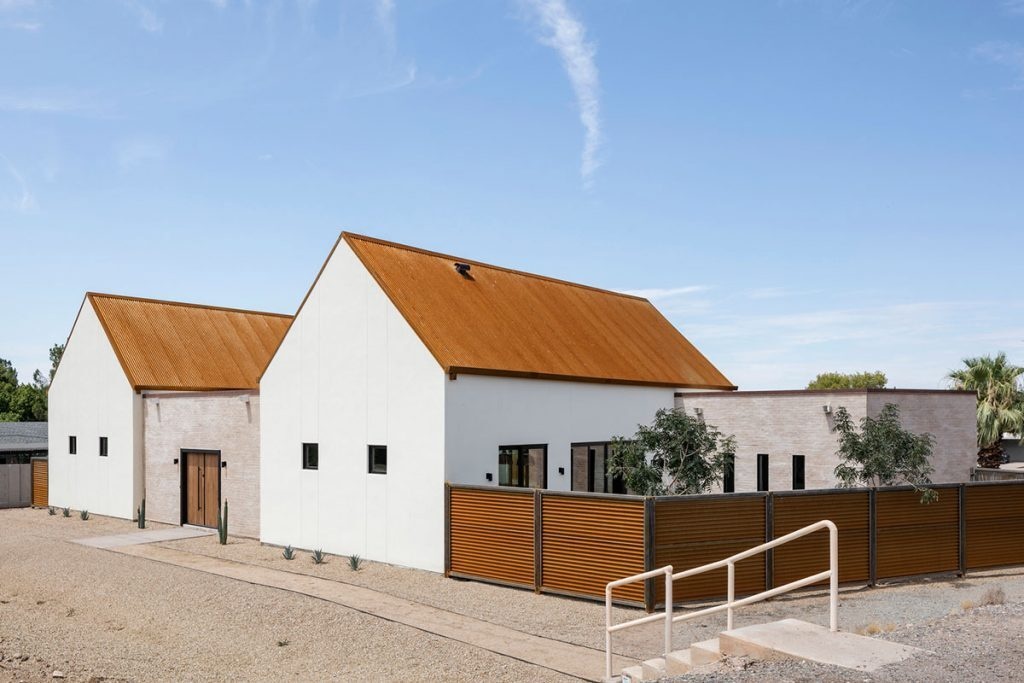
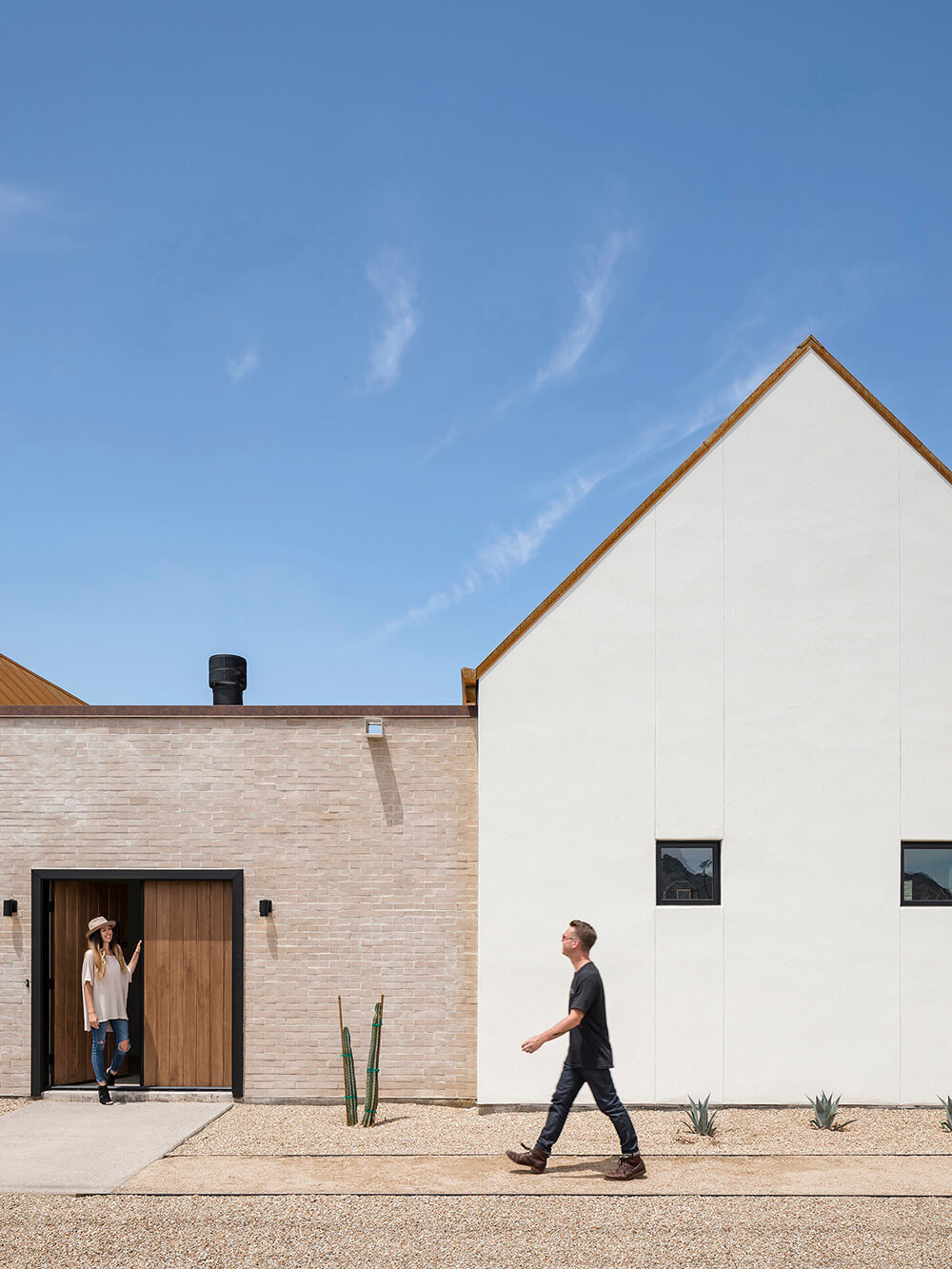
A Reading of the Façade: The Language of Materials and Meaning
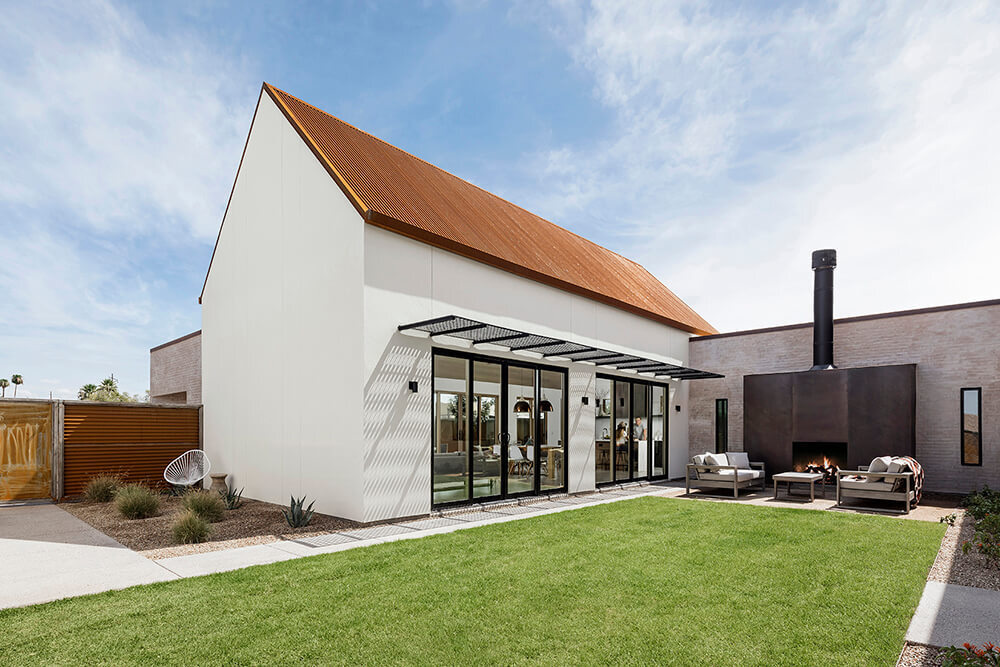
The house’s façade makes an integrated aesthetic and functional statement:
· White Brick: This choice not only effectively reflects the intense Arizona sun but also creates a visual harmony with the region’s earthy colors.
· Rusty Corrugated Metal Roof: This material tells a story of the passage of time and the impact of the elements, aging gracefully and improving aesthetically over years of exposure.
· Mission-Inspired Massing: The design reinterprets the classic forms of pitched roofs and protected openings in a distinctly modern way. I’m
Micro-Urban Planning: An Intelligent Response to the Site
The home’s location along the historic Arizona Canal was a pivotal factor in shaping the building:
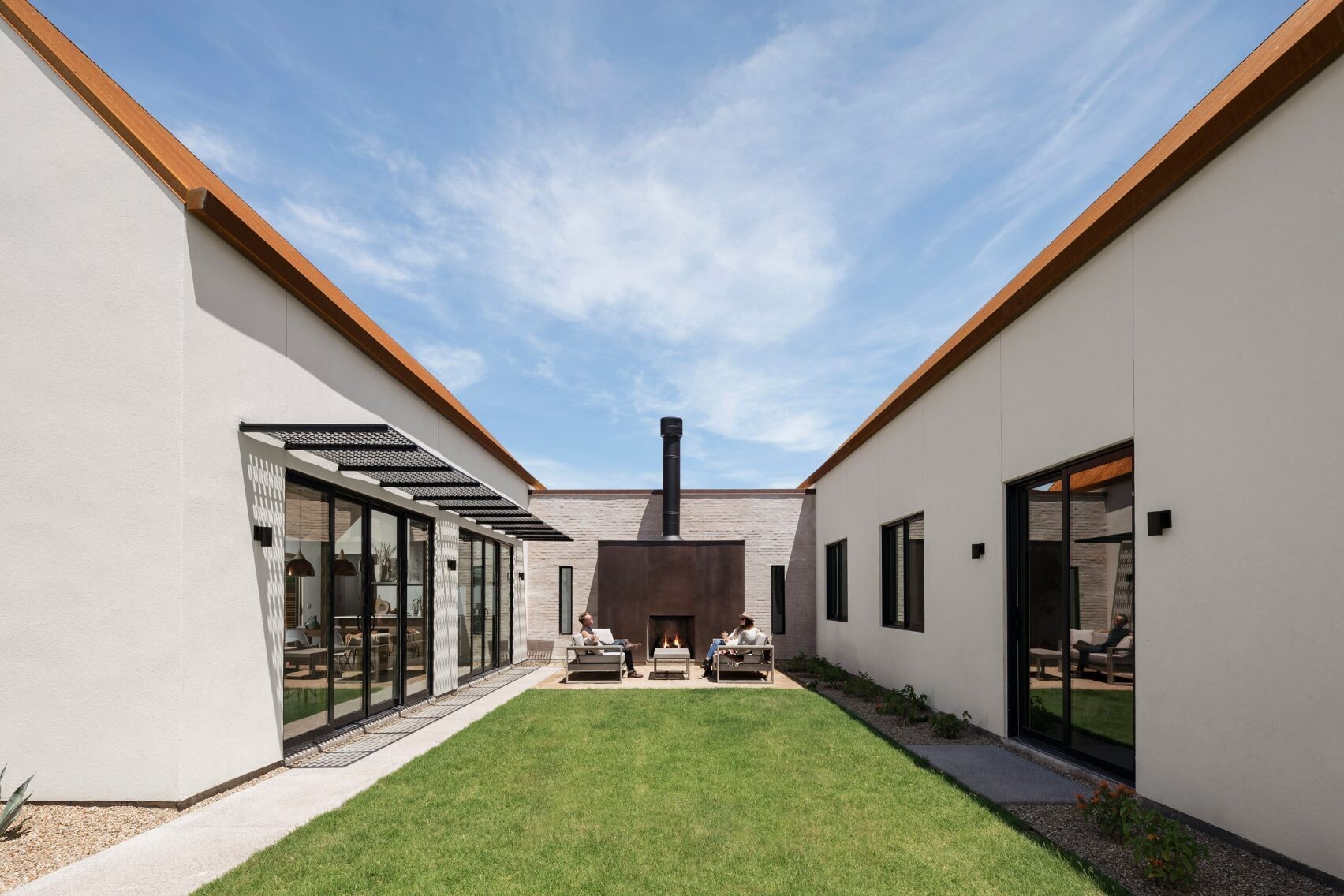
· Pushed to the Edges: By shifting the main structure to the periphery of the lot, the architects liberated the center for a series of versatile outdoor spaces.
· Zoning Around Courtyards: The layout separates public and private wings around courtyards, achieving a masterful balance between seclusion and openness.
· A Visual Connection: Strategic openings frame views of the historic canal, tying the home to its context.
The Passive Ecosystem: Challenging the Desert Heat
The project relies on passive cooling strategies that formed the basis of traditional regional architecture:
· Shaded Courtyards: These act as natural thermal exchangers, releasing heat at night and absorbing coolness during the day.
· Cross-Ventilation: Windows and openings are positioned to create consistent air currents throughout the interior spaces.
· Solar Protection: The architectural massing is designed to shield the large glass openings from direct sun exposure.
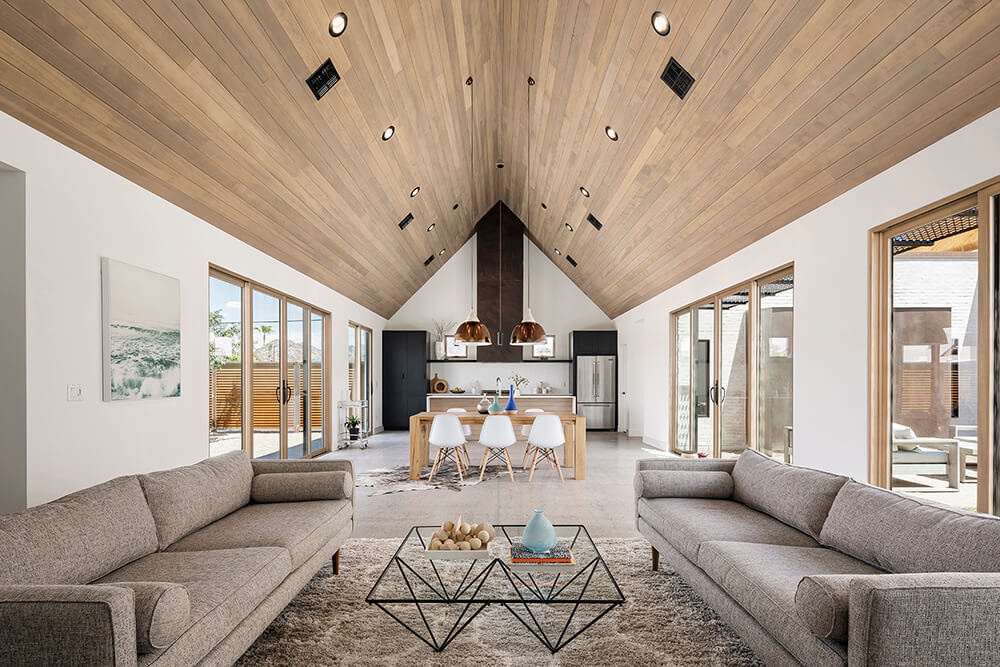
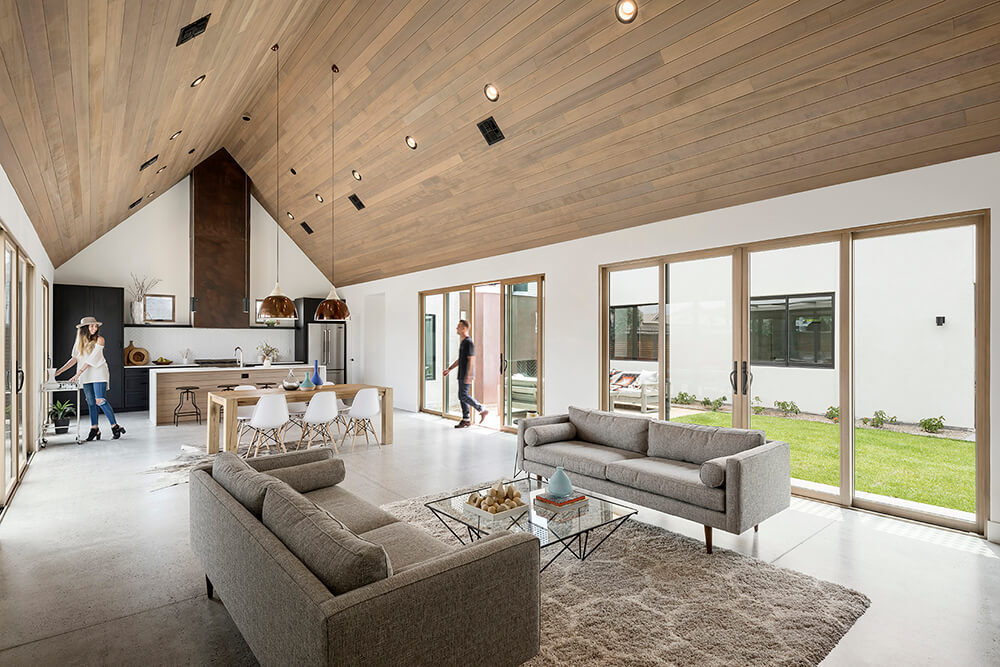
Anatomy of the Interior: From Courtyard to Vaulted Ceiling
The Social Zone: The Beating Heart of the Home
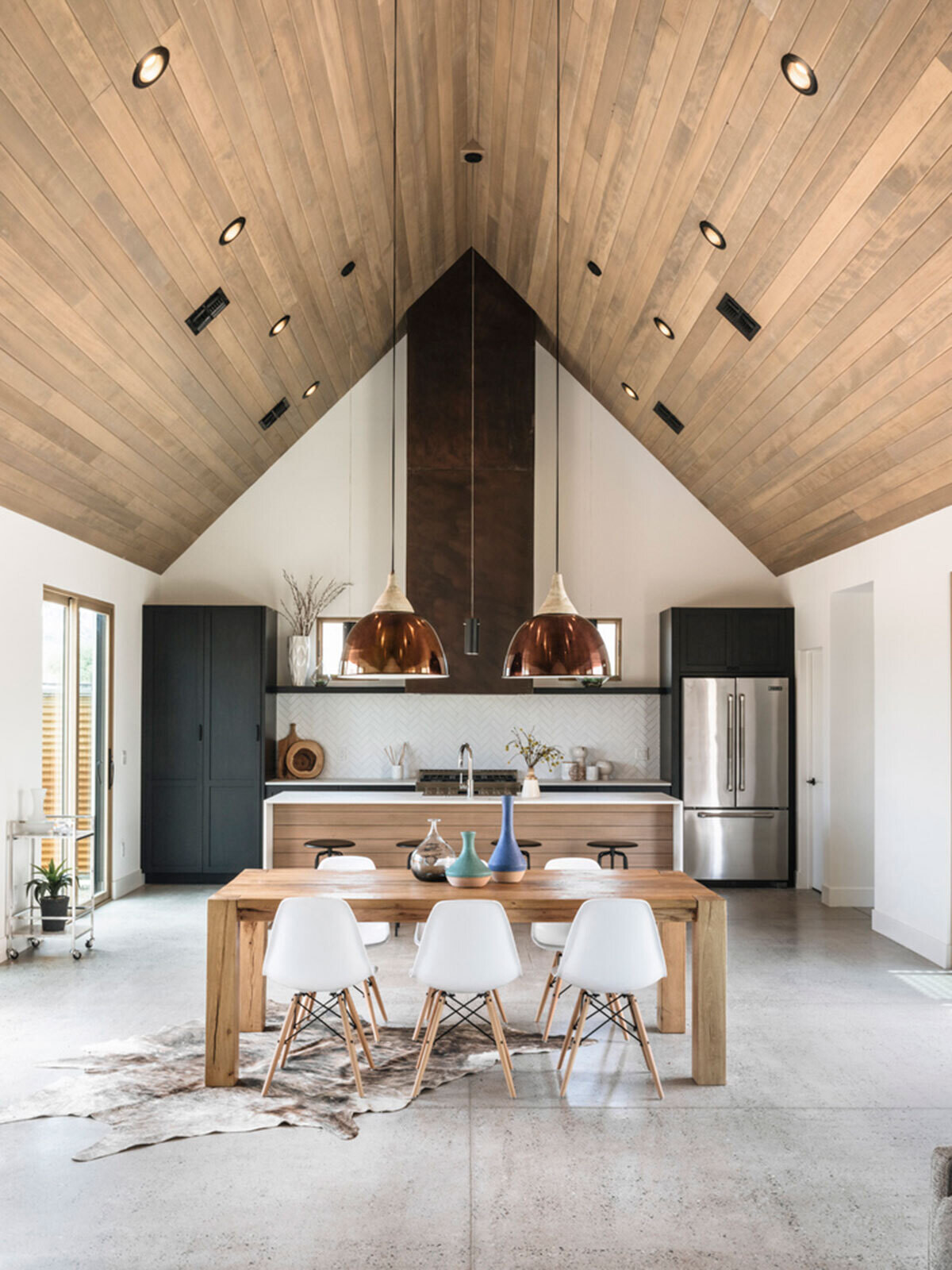
The main living area is a model of spatial fluency, crowned by a vaulted ceiling of Hemlock wood, which adds:
· Visual height that creates a feeling of expansiveness.
· Acoustic properties that improve sound quality in the open volume.
· A natural color gradient that interacts with the changing daylight.
The Kitchen: A Laboratory of Materials and Durability
The kitchen presents a case study in selecting materials resistant to desert conditions:
· Dekton Countertops: Chosen for their resistance to scratches, high heat, and UV radiation.
· Handmade Fireclay Tile: Adds a layer of artisanal craft and uniqueness with a subtle zigzag pattern.
· Copper Farmhouse Sink: A living material that evolves with use, adding distinct character and tying the earthy palette together.
Exterior Architecture: Outdoor Living Rooms
The house challenges the conventional concept of boundaries between inside and outside:
· The Central Courtyard Lounge: With its rusty steel fireplace, this becomes a primary living space during the winter months.
· The Shaded Dining Area: Dedicated to family meals in the open air.
· Transitional Passageways: These serve as buffer zones that regulate movement between different areas.
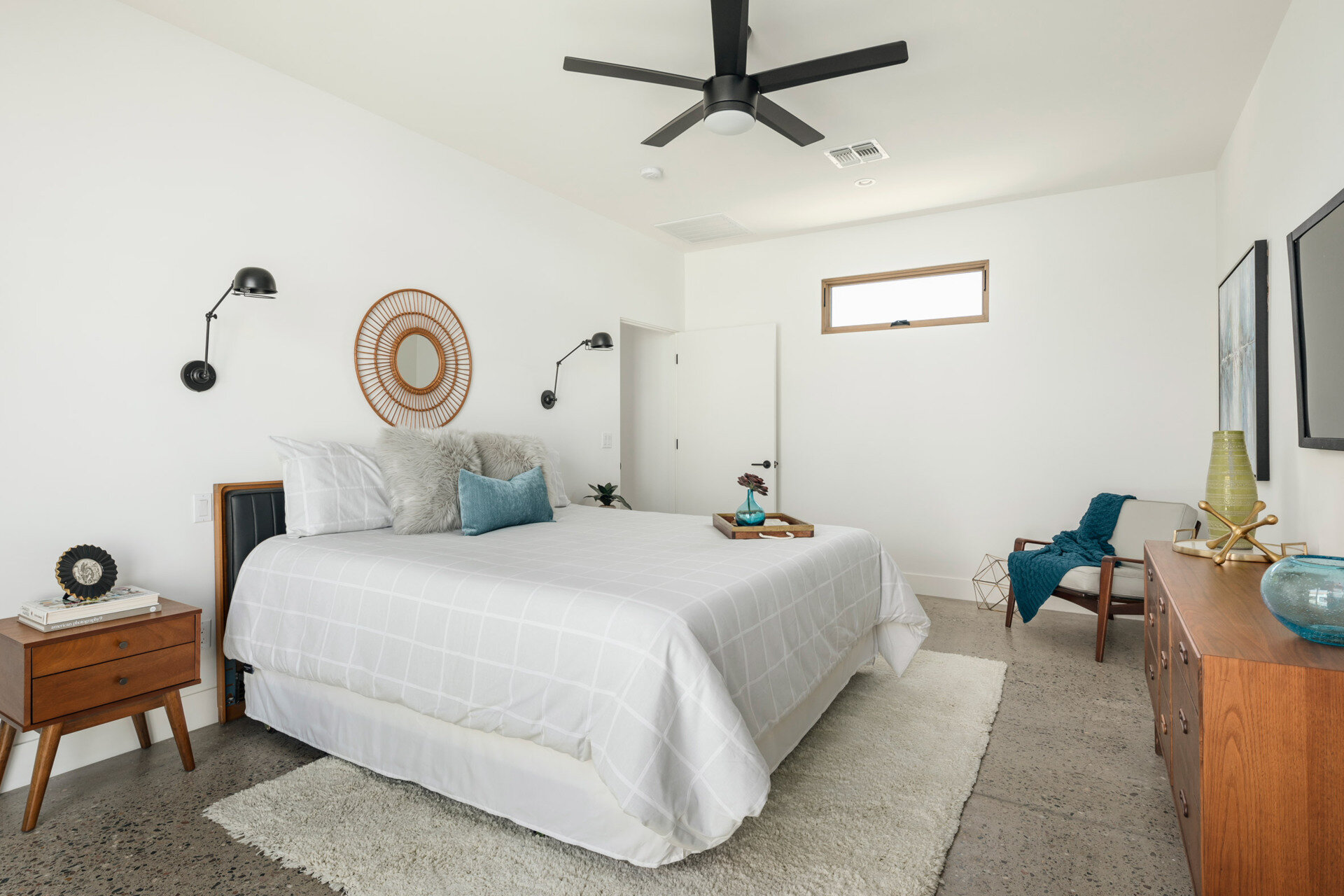
The Bedrooms: Sanctuaries of Privacy and Serenity
The bedroom design applies a “less is more” philosophy:
· Wood-Framed Windows: Provide better thermal insulation than aluminum.
· Exposed Concrete Floors: Offer thermal mass, helping to regulate temperature.
· Built-in Storage: Reduces visual clutter and promotes a sense of calm.
✦ Archup Editorial Insight
This article explores the conception of “Canal House” in Phoenix as a modern desert home inspired by historic Mission forms. The design raises questions regarding long-term thermal performance, as its significant reliance on rusty metal roofing may absorb substantial heat in a harsh desert climate, potentially increasing the cooling load on mechanical systems. Furthermore, the horizontal distribution of spaces across multiple courtyards, while successful in providing privacy, fragments the remaining land area and limits potential for future vertical expansion. However, the building’s orientation and creation of shaded courtyards establishes an effective passive system for air circulation and the natural cooling of outdoor living spaces.
Brought to you by the ArchUp Editorial Team
Inspiration starts here. Dive deeper into Architecture, Interior Design, Research, Cities, Design, and cutting-edge Projectson ArchUp.


