
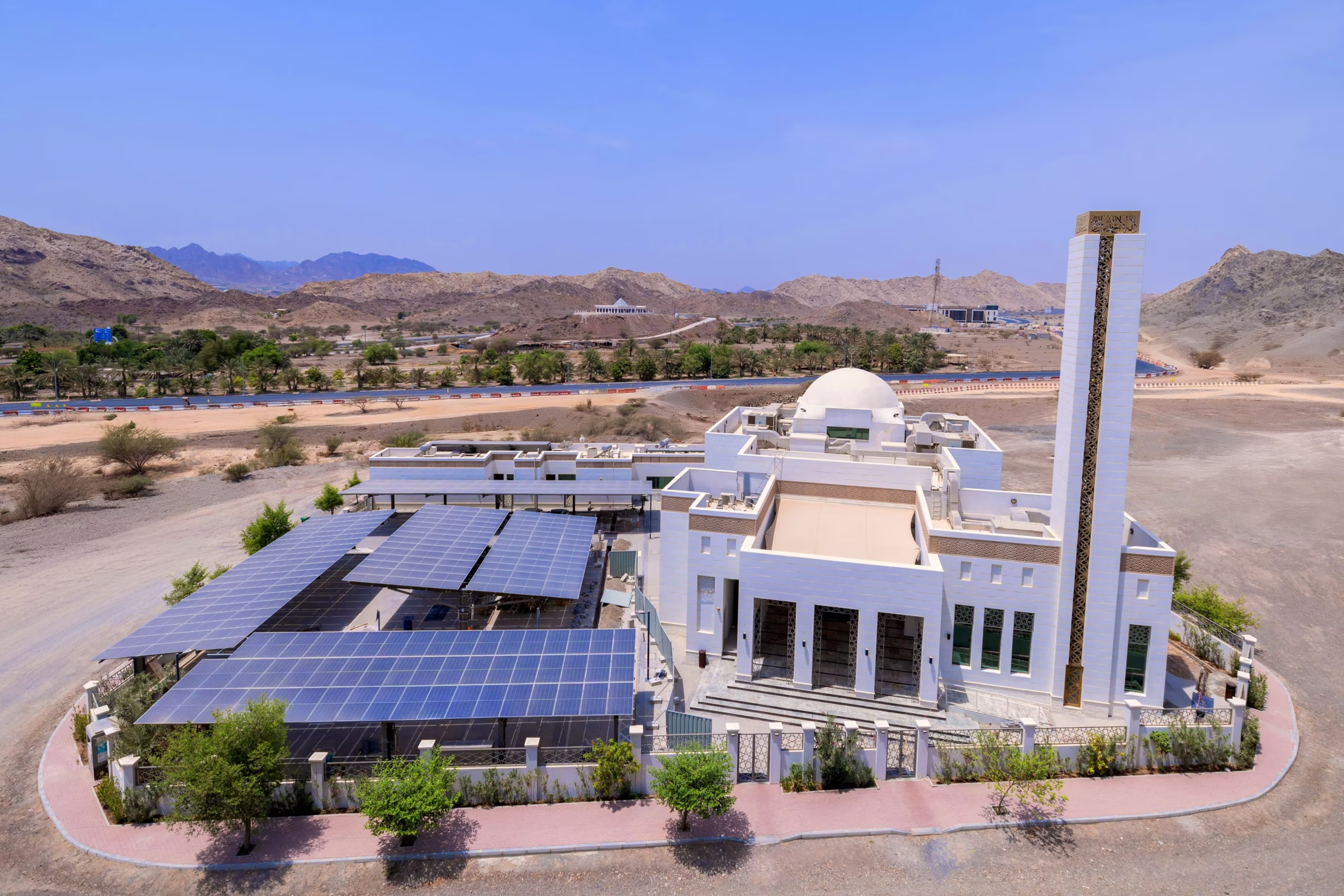
The Carbon Mosque in Dubai, the first mosque in the world, is a new vision uniting architecture, faith, and sustainability.

Deep in the Hatta oasis rises the world’s first carbon-neutral mosque, a building unlike any other. Its uniqueness lies not in ornamentation or scale, but in its concept: this carbon-neutral mosque does not consume from the environment more than it gives back. More than an engineering achievement, it stands as an architectural statement on the relationship between humans, nature, and faith, demonstrating how architecture can evolve from a physical structure into a living entity that breathes light and respects energy.
Architecture That Breathes Light
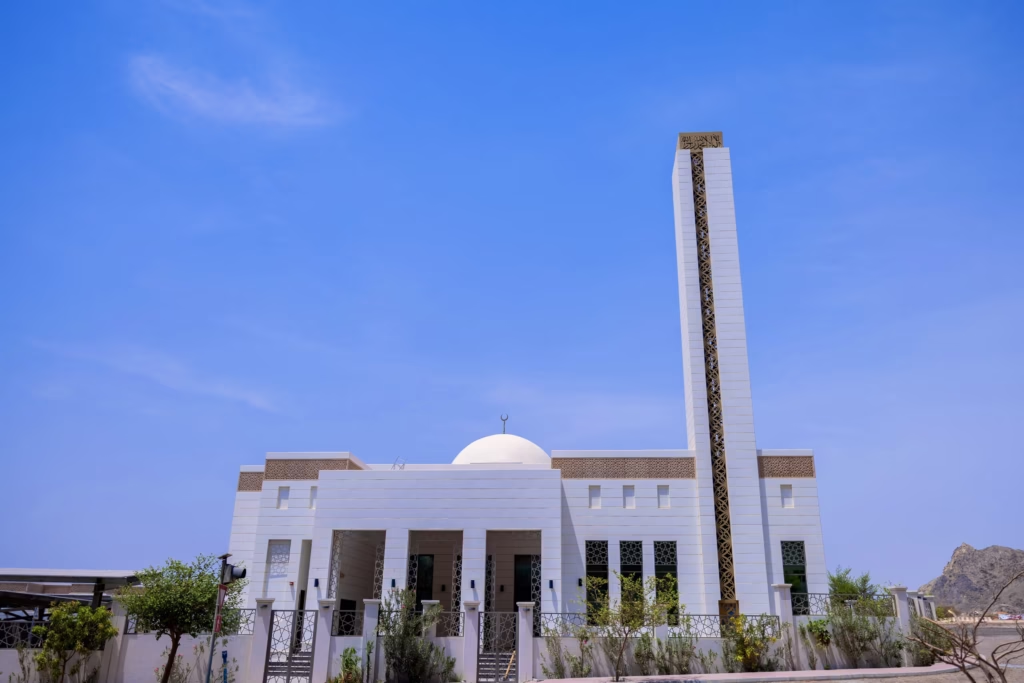
The mosque’s design harnesses natural light as both an energy source and a visual element.
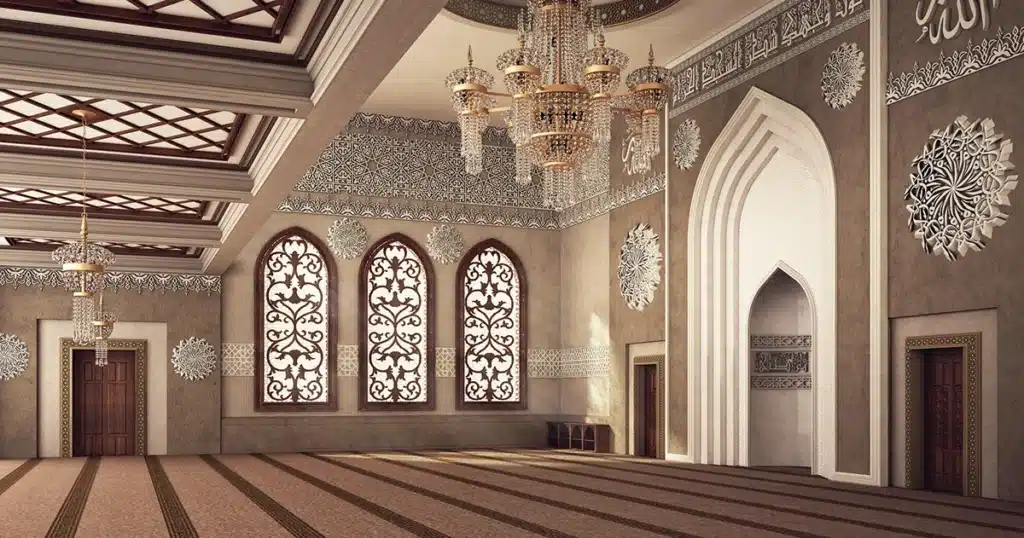
Daylight flows through upper openings to illuminate the prayer hall, reducing the need for artificial lighting and creating a visual calm that enhances spiritual focus.
The glass façade reflects heat without obstructing views, acting as a smart barrier between the interior and exterior, ensuring privacy while conserving energy.
Spirit of Place and Architectural Identity
The building’s form is simple yet embodies a renewed Islamic identity.
The minaret rises lightly, complementing the surrounding mountains rather than dominating them, appearing as a natural extension of the landscape.
The façade communicates through stone, sand, and light, reflecting the local environment, subtly conveying that sacredness can coexist with ecological consciousness.
Here, spiritual values and environmental awareness converge, presenting a model for the modern mosque constructed not only from concrete but also from thoughtfulness and responsibility.

Integrating Humans and Nature
The mosque is not a closed building; it functions as an integrated ecological system.
Its roof is covered with solar panels generating all the energy required for operation, with surplus power fed back into the grid.
Windows are strategically positioned for optimized airflow, and recycled water is used for irrigation and cleaning, making every drop and every ray of sunlight part of the building’s life cycle.
This reflects an Islamic sustainability philosophy, where moderation and balance are moral and environmental imperatives.
Architecture as a Tool for Reflection
The mosque is conceived as an intellectual space as much as a physical one.
Upon entering, visitors are guided toward a renewed connection with the environment.
There is no excessive decoration or waste; function and symbolism exist in harmony.
Light, shadow, and water are not merely decorative they serve as mediums for contemplation and form part of an urban design philosophy that sees beauty as a tool for balance rather than display.
The Meaning of Carbon Neutrality
Carbon neutrality here is more than an environmental achievement it is a spiritual and intellectual message:
Faith is inseparable from human responsibility toward the Earth.
Just as worship emphasizes physical purification, this mosque calls for environmental purification, encouraging humans to live in harmony with resources without excess.
In this sense, it becomes a global model for architecture that worships with humanity rather than for it.
Conceptual Summary
The carbon-neutral mosque in Dubai represents a shift in Islamic architectural thinking, transitioning from a building that honors the past to a space that opens the future.
It condenses a long trajectory of thought on how architecture can serve both faith and environment, achieving balance between beauty and function, sanctity and consciousness.

🧩 Summary Table
| Aspect | Details |
|---|---|
| Architectural Type | Contemporary mosque based on carbon neutrality principles |
| Core Concept | Uniting Islamic spirituality with environmental sustainability |
| Visual Identity | Simple lines, natural light, locally sourced heat-reflective materials |
| Energy | Fully solar-powered with surplus production |
| Water | Recycling systems for irrigation and cleaning |
| Design Philosophy | Balanced relationship between humans, nature, and worship |
| Architectural Value | Global model integrating sacred architecture with environmental principles |
| Intellectual Message | Faith as both an environmental and aesthetic responsibility |
✦ ArchUp Editorial Insight
The carbon neutral mosque in Hatta oasis stands as an architectural masterpiece blending simplicity with natural beauty. The walls, made from locally sourced materials, harmonize with the natural light streaming through upper windows, creating a serene spiritual atmosphere within the prayer hall. The minimalist minaret integrates seamlessly with the landscape, while the heat-reflective glass façade conserves internal energy. Critically, the design demonstrates high technological ambition, which may face challenges in energy management and material costs. Nonetheless, the project serves as an inspiring model that unites sustainability with spirituality, redefining the contemporary mosque as a balanced ecological and intellectual space.
ArchUp continuously documents leading architecture exhibitions and conferences, offering verified coverage of international competitions and official results within an open-access database.


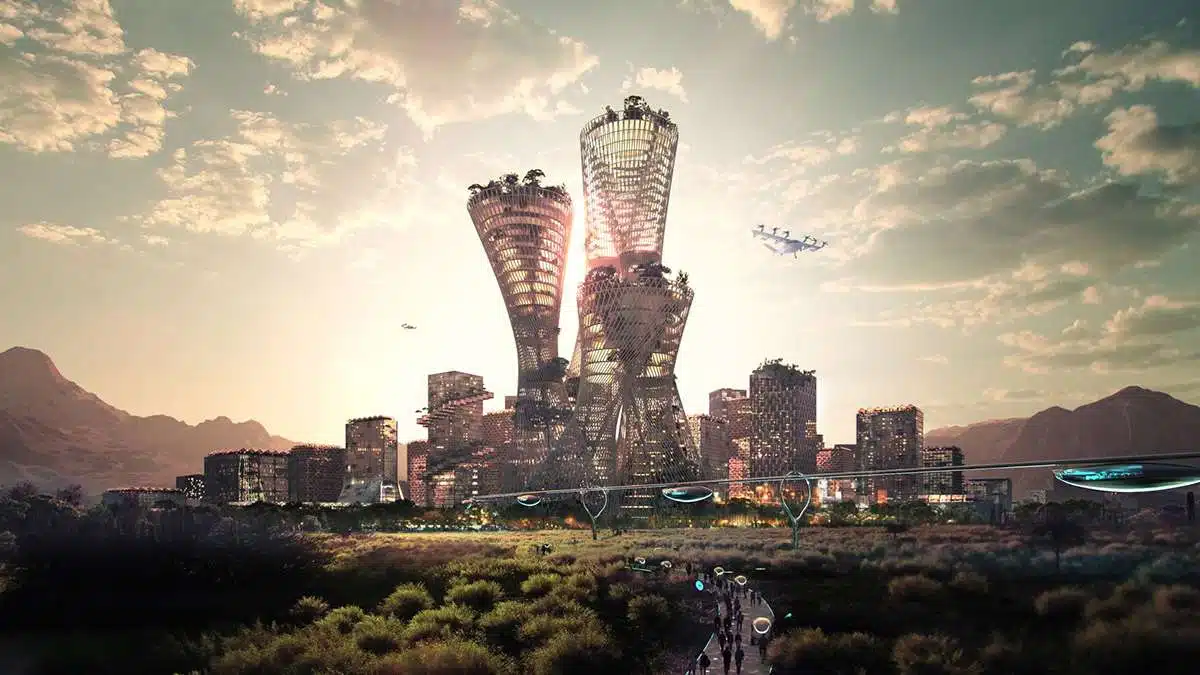
Honestly, The Carbon Mosque in Dubai feels more additive than integrated. The core building remains architecturally conventional, while the carbon-neutral and solar concepts seem applied rather than embedded in the design logic. The absence of real interior photographs and reliance solely on renders further limits our ability to assess the spatial and atmospheric quality of the project.