Casa de Puerto: A Small Architectural Masterpiece Telling a Coastal Story in Progreso

Introduction: Where City Life Meets Coastal Serenity
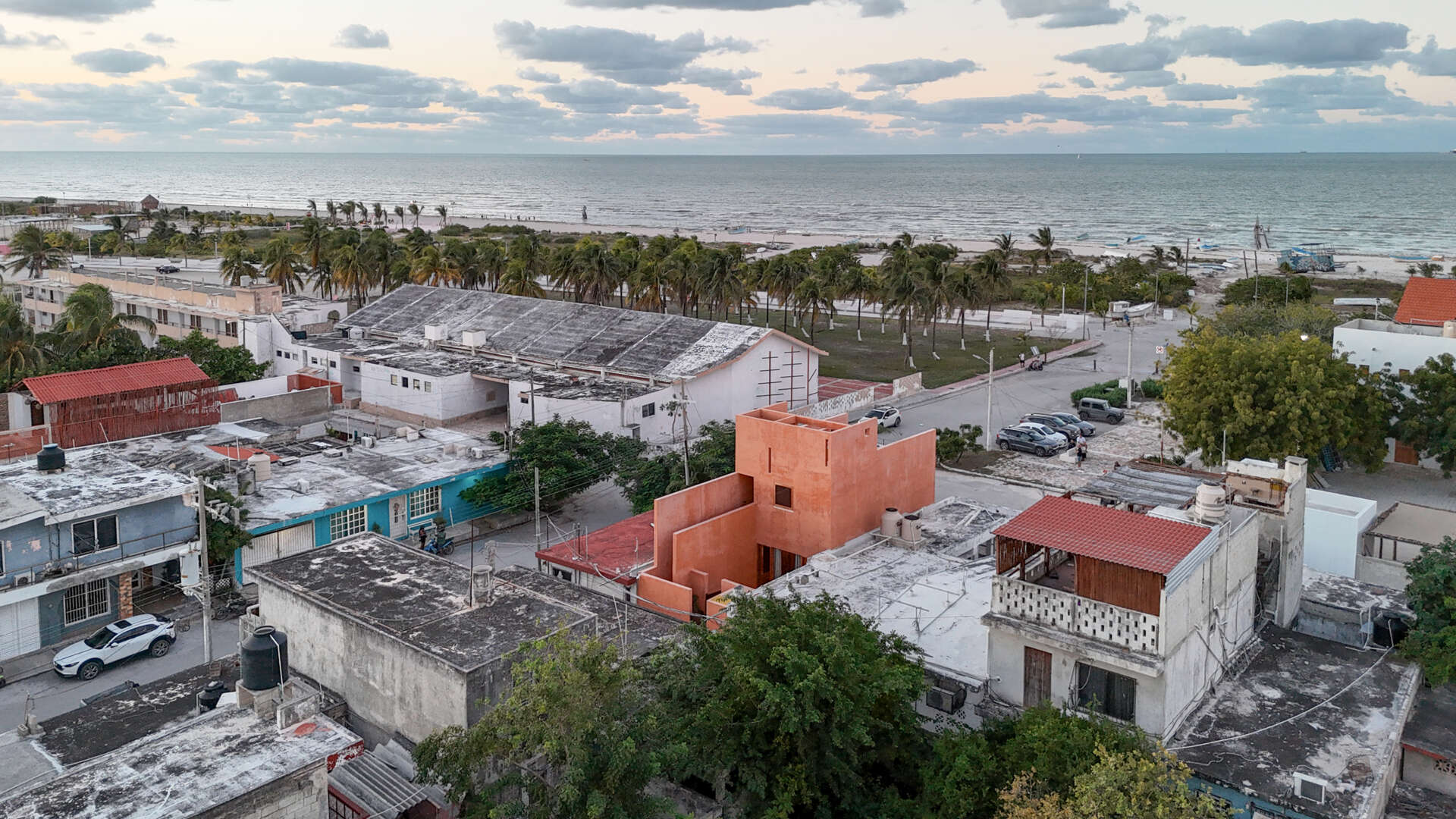
In the heart of the vibrant coastal city of Progreso, in the Mexican state of Yucatán, where the rhythm of urban life blends with the tranquility of the Caribbean Sea, stands Casa de Puerto, a testament to design prowess. This project, designed by TACO Taller de Arquitectura Contextual, presents a dream for coastal city dwellers: how intelligent architecture can create an ideal sanctuary that connects the vibrancy of the city with the calm of the coast, without the need for vast spaces.
The Challenge and Response: Creativity Within an 5×17 Meter Space
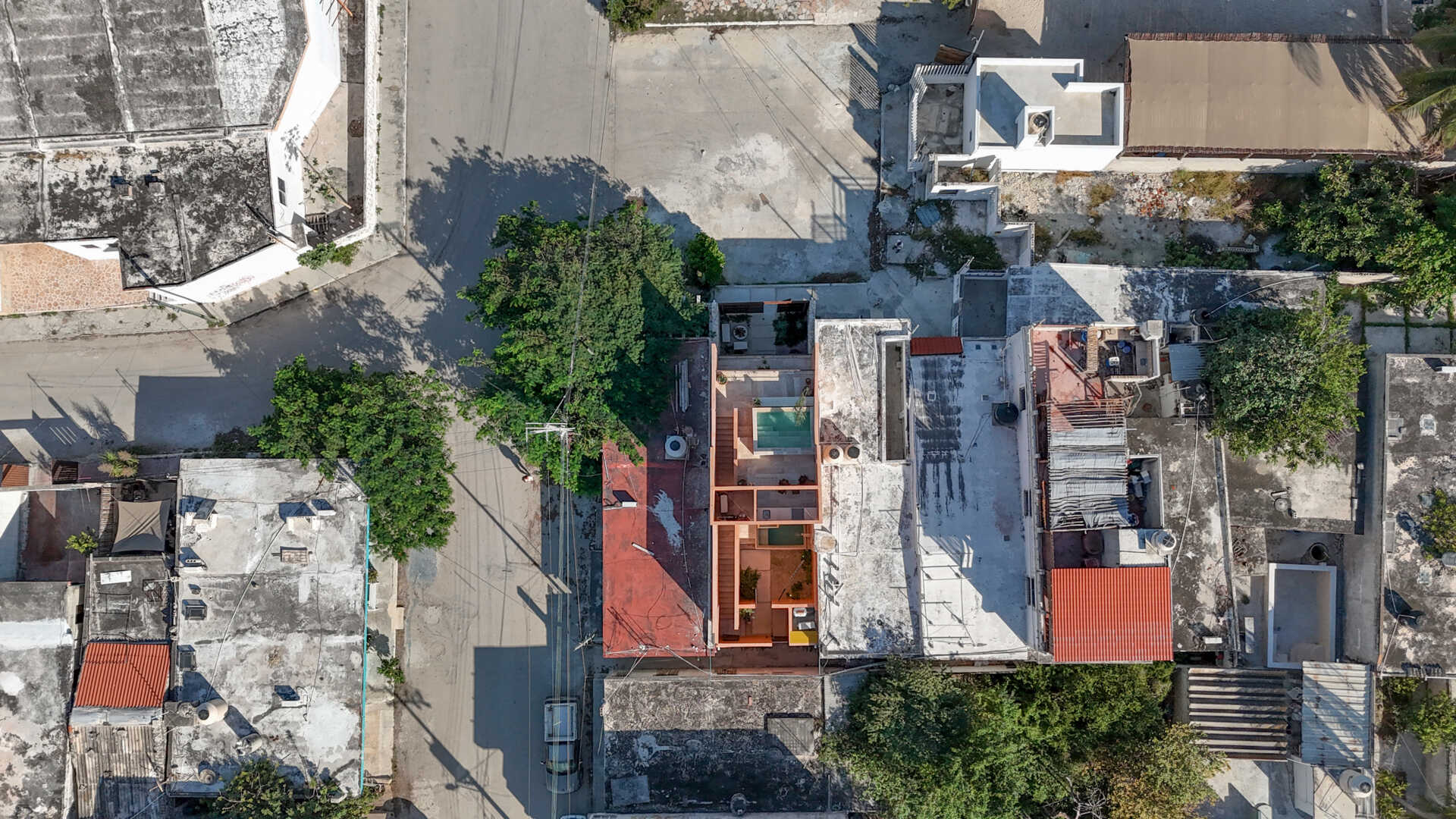
The house was built on a narrow, rectangular plot, measuring just 5 by 17 meters—a constraint that might seem daunting to many. However, TACO studio embraced this challenge as a source of inspiration. Instead of viewing the limited space as an obstacle, it was considered a catalyst for creative thinking, leading to the adoption of a vertical design strategy that maximizes the use of every available centimeter while maintaining a sense of breadth and openness.
Flexibility as a Philosophy: Two Units in One Home
At the core of the design concept lies the idea of functional flexibility. The house contains two integrated residential units that can operate in two ways:
· As independent dwellings: Making it an ideal solution for a main family unit with a complementary unit for guests or for generating additional income through rentals.
· As a unified residence: Where the two units are combined to create a single, interconnected family space, adapting to the changing needs of its inhabitants over time.
This philosophy makes the house a living, adaptable entity, rather than just a static structure.
Dialogue of Materials: A Spatial Fabric Between Tradition and Industry
The connection with the site extends beyond design to the choice of materials that tell the story of the place. The house is a beautiful dialogue between past and present:
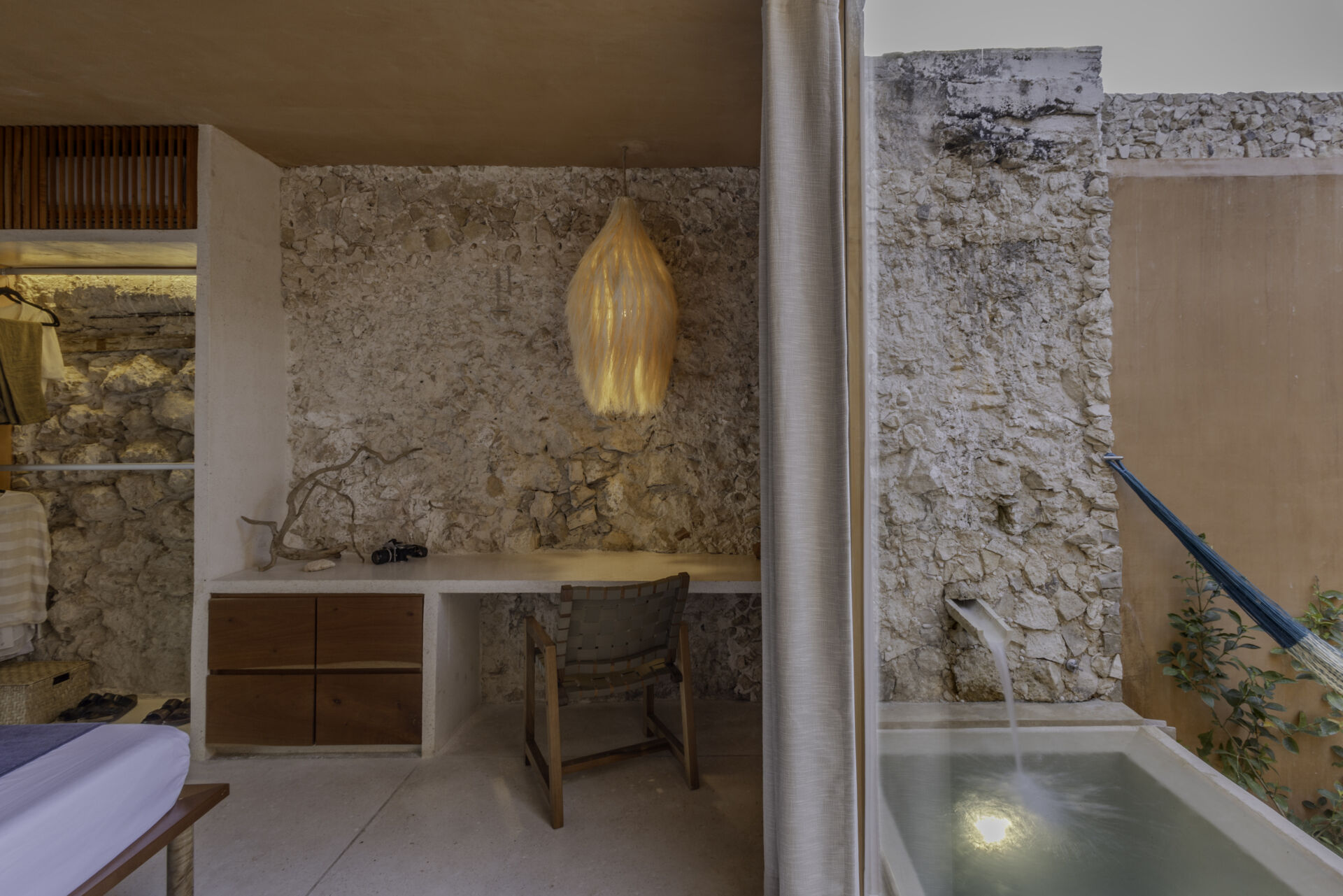
· Ancient Stone Walls: Parts of the existing structure and the original side walls were carefully integrated into the new construction, giving it historical roots and a sense of authenticity.
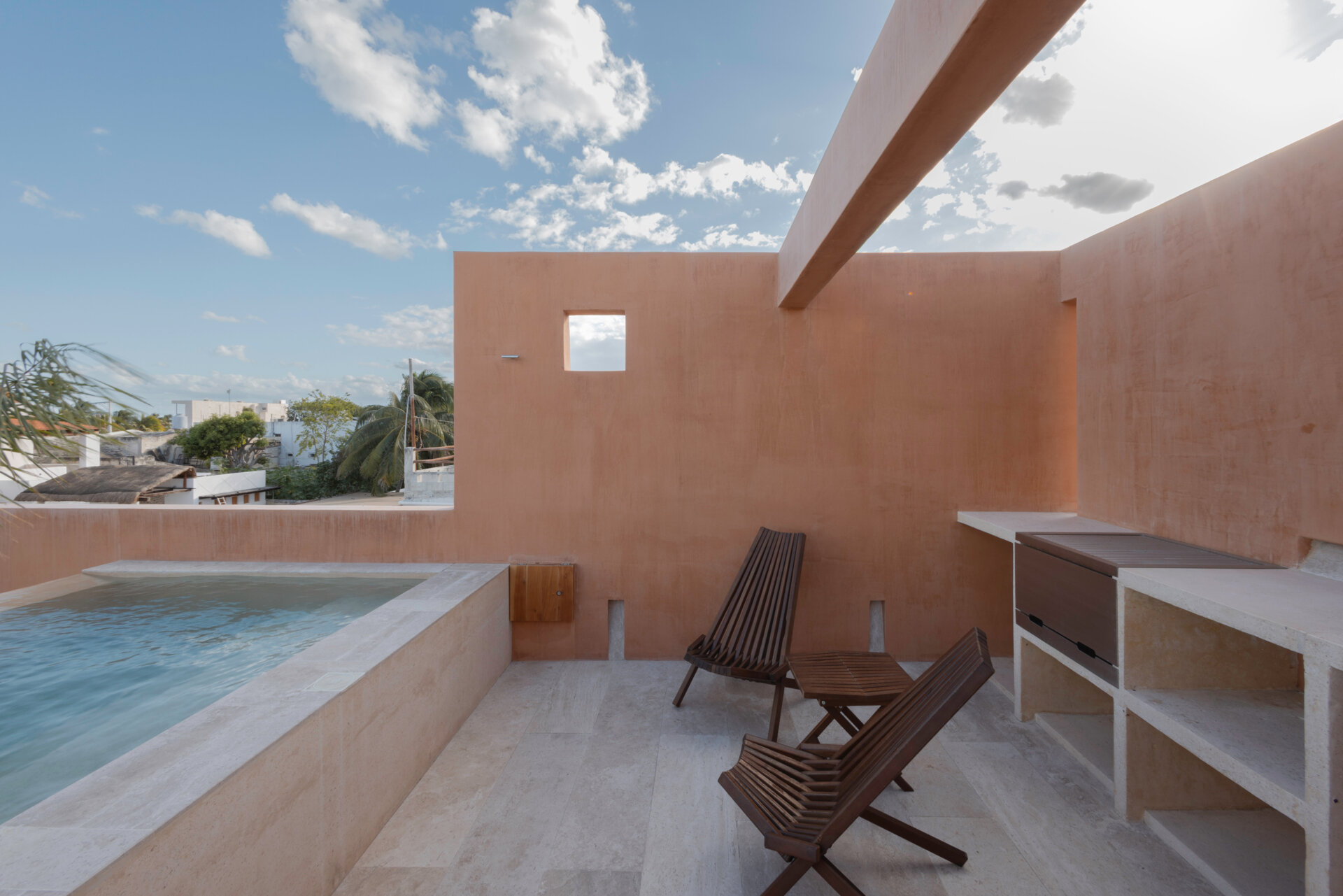
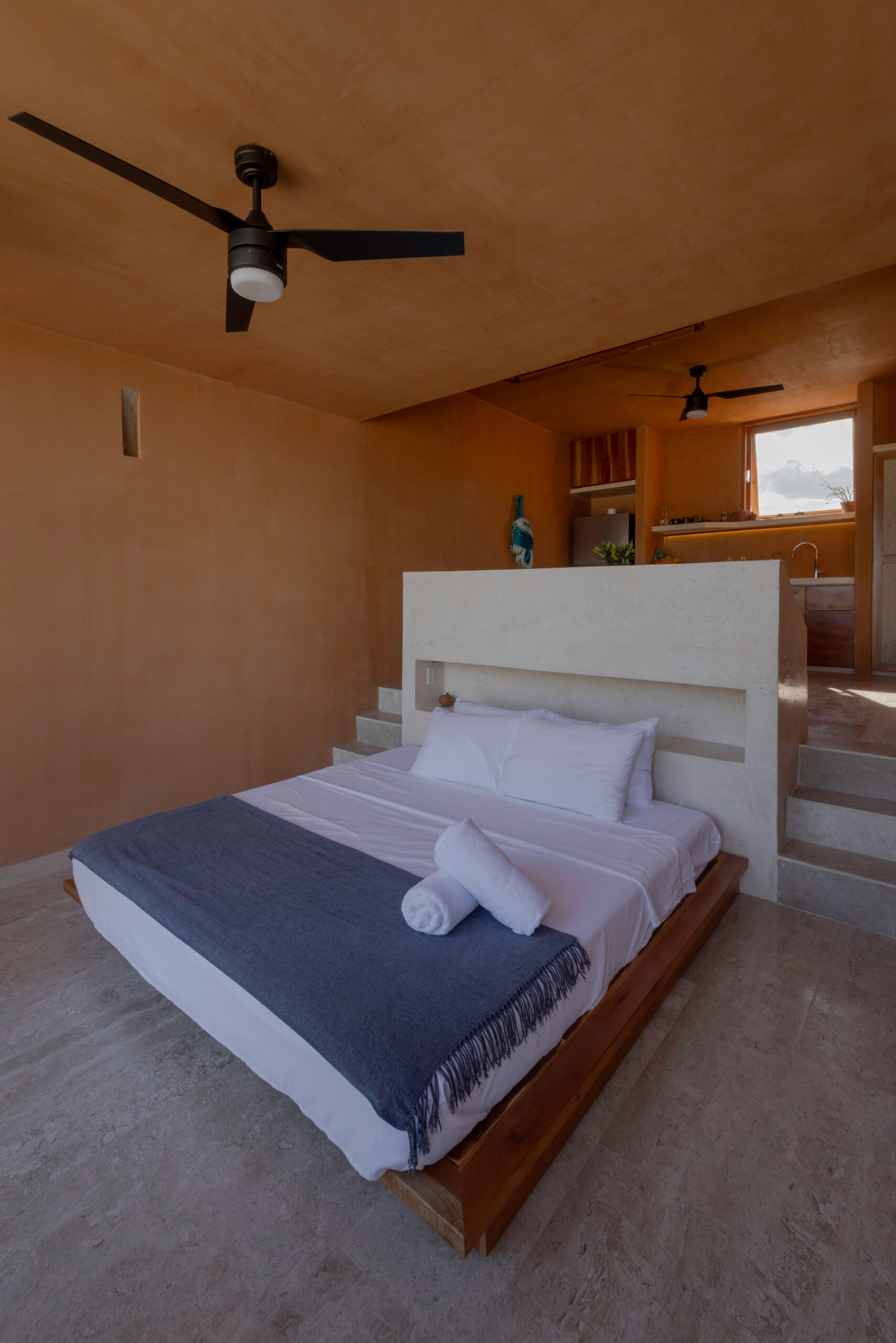
· Shell-Inlaid Concrete: The building’s floors are made of white concrete mixed with seashells, a direct reference to the coastal identity of Progreso.
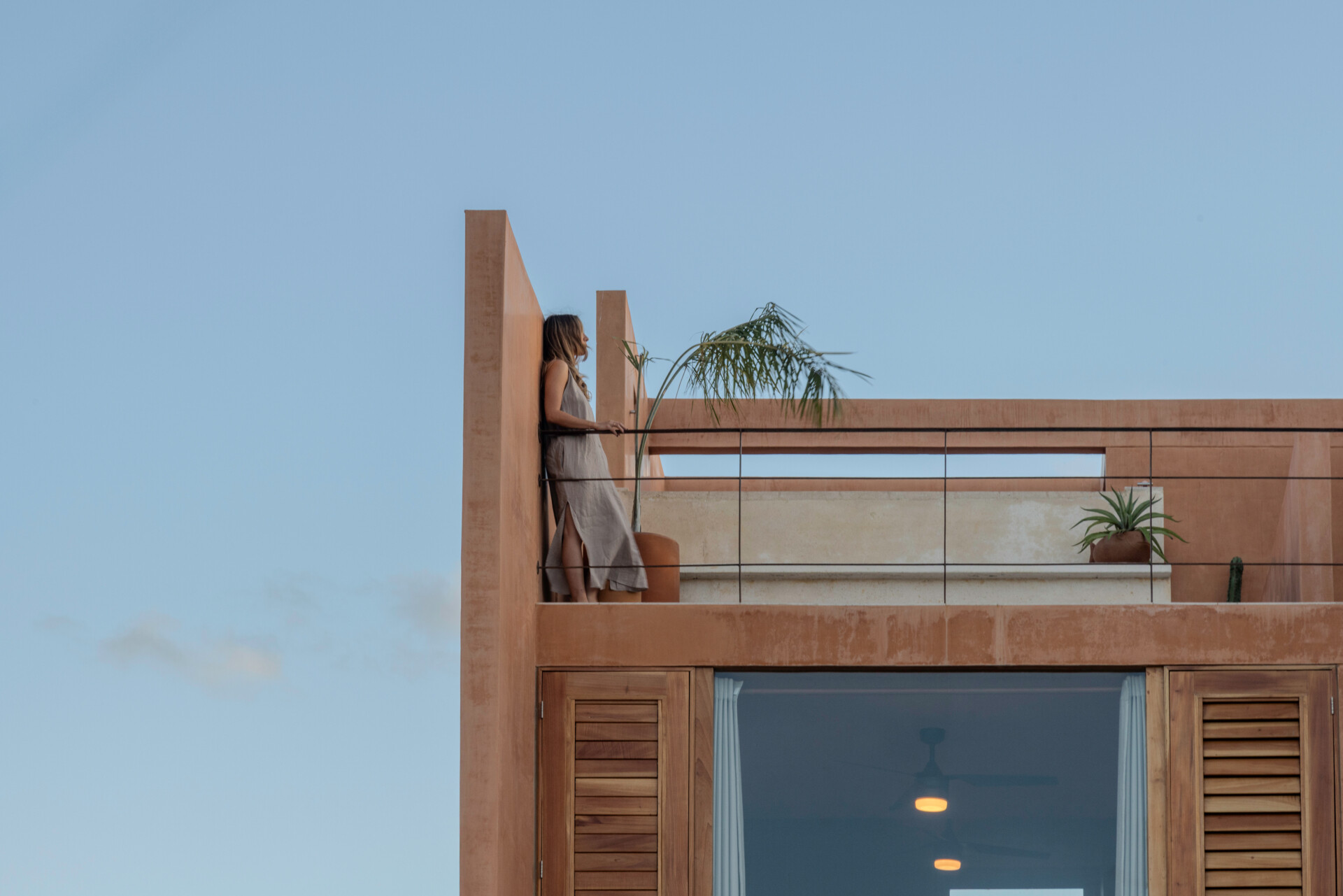
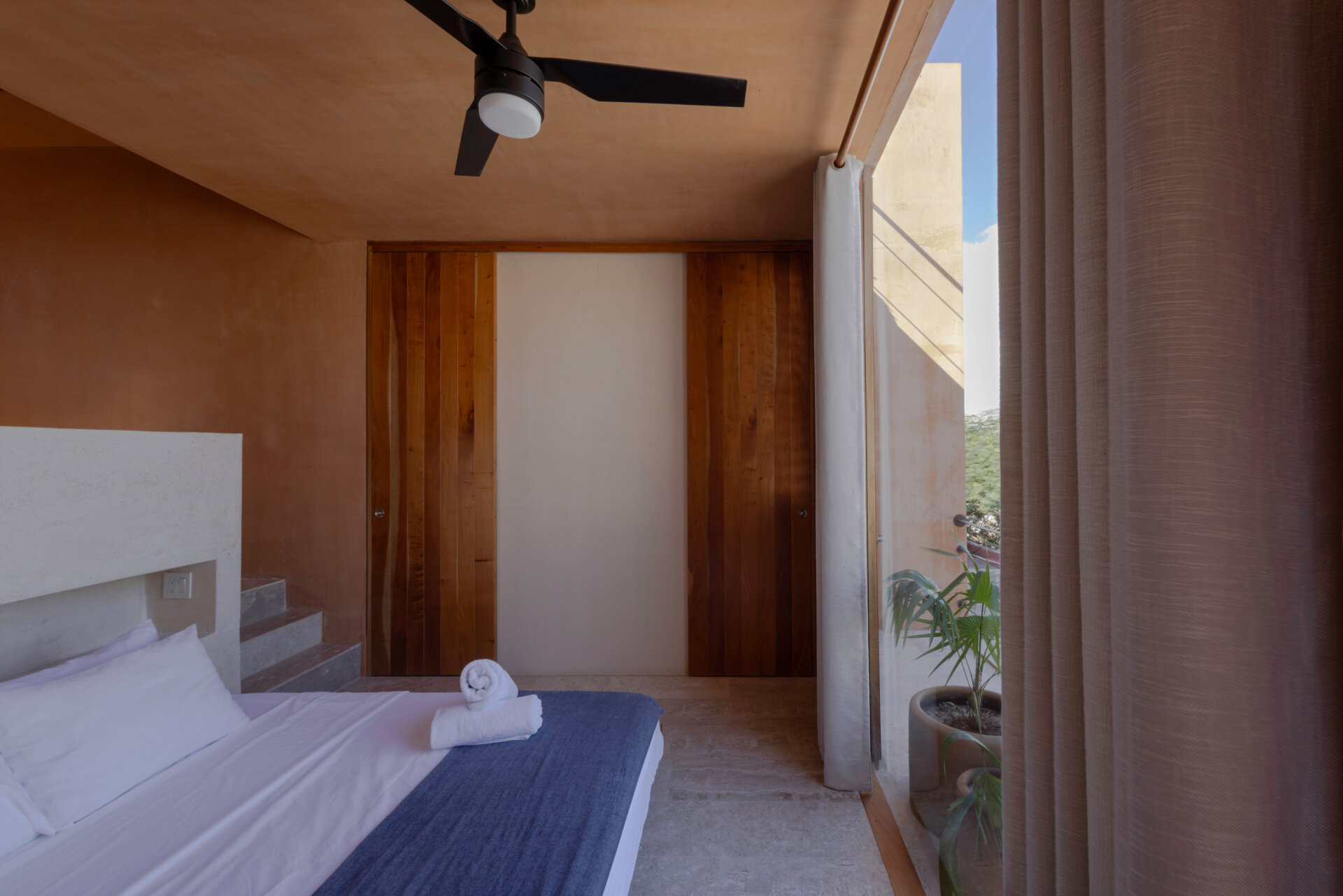
· Warm Cedar Wood and Weathered Steel: The wood adds warmth and organic texture, while the oxidized steel provides a durable industrial touch that harmonizes with the port city’s character.
The Transitional Threshold: From Narrow Alley to Serene Courtyard
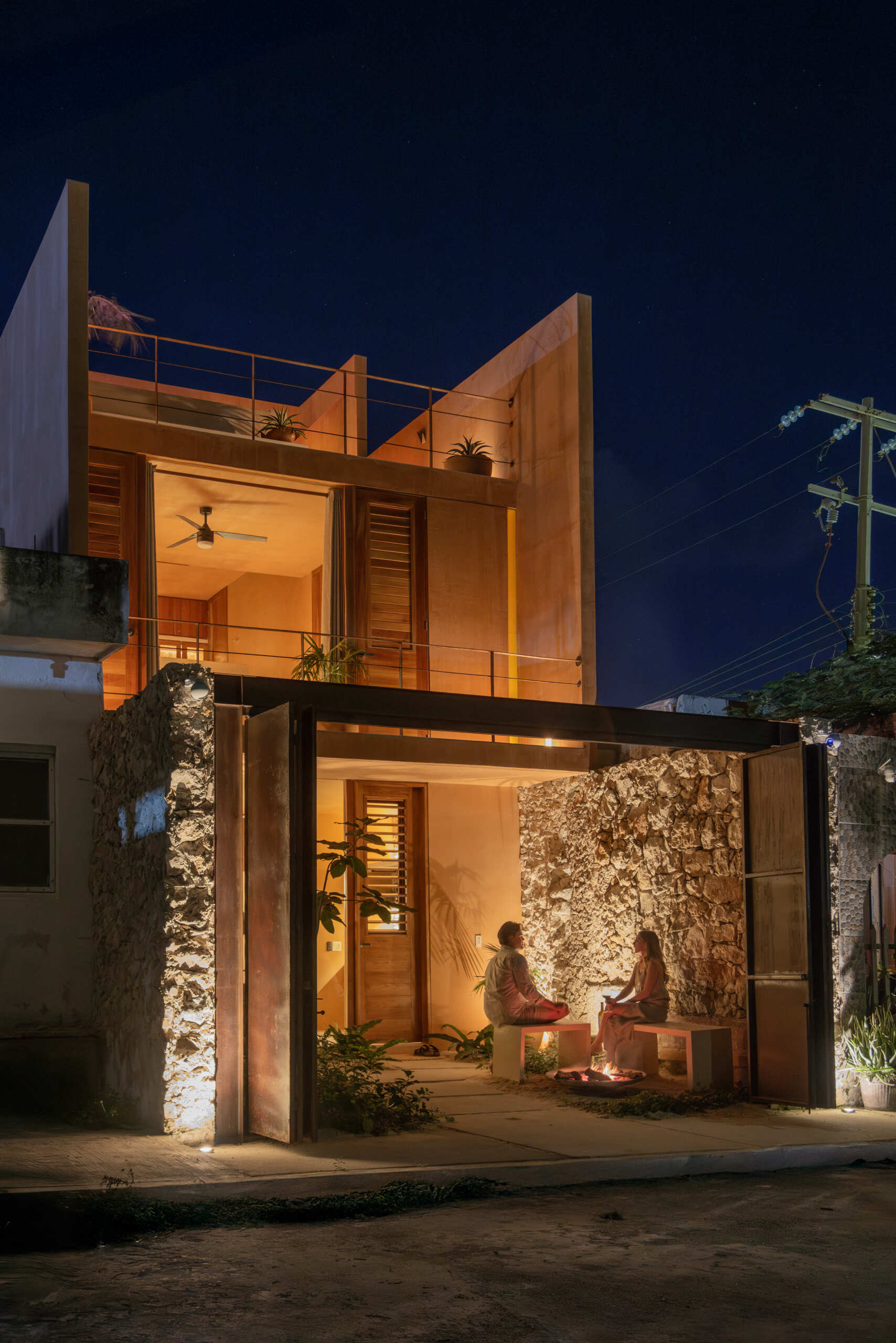
The entry experience is a carefully considered journey. There is no traditional door directly onto the street, but rather a narrow pedestrian alley that leads the visitor to an internal courtyard. This courtyard acts as the “beating heart” of the project, regulating movement between:
· The lower residential unit.
· The staircase leading to the upper floor.
· The service area.
This design creates a transitional moment that calms the visitor, separates them from the street noise, and prepares them to receive the tranquil atmosphere inside the home.
The Lower Unit: Living Embraced by the Courtyard and Plants
The ground floor unit is designed to live both indoors and outdoors simultaneously. It features a private garden with a shallow water pond and a sandy garden planted with native coastal vegetation. The interior design is open and flowing, where spaces (living, dining, sleeping) are defined by subtle changes in floor levels, rather than traditional walls, enhancing a feeling of visual and spatial fluidity. This unit contains an open kitchen, a dining area, a bedroom, and a bathroom.
The Upper Unit: Embracing the Sea Horizon
A continuous staircase leads to the upper unit, which contains a master bedroom entirely oriented towards the sea. A large window with a balcony frames the view, turning the sea vista into a dynamic natural painting that becomes an integral part of daily life inside the room. From an environmental perspective, the mass of the bathroom and staircase was placed on the western side to act as a natural thermal barrier, protecting the interior spaces from the heat of the afternoon sun in Yucatán’s hot climate.
The Rooftop Finale: The Project’s Crown and Panoramic Views
The experience culminates on the rooftop terrace, an open space designed for relaxation and gatherings. It features a small pool and a barbecue area, making it a natural extension of the living spaces. From here, panoramic views offer scenes of the beach, the maritime pier, and the lighthouse, skillfully embodying the moment where Progreso’s urban life meets its charming coast.
Sustainability and Context: Rooted and Intelligent Architecture
The project’s respect for its context is evident in several points:
· Reusing the Existing Structure: Reducing waste and new materials.
· Natural Ventilation and Lighting: Relying on the courtyard and strategic openings to achieve thermal comfort and reduce energy consumption.
· Local Materials: Such as local stone and shells, which reduce the carbon footprint of transportation.
Conclusion: Lessons from Yucatán in Compact Architecture
Casa de Puerto is more than just a small house; it is an architectural statement. On a total area of just 95 square meters, the project offers valuable lessons in achieving a balance between:
· Old and New through materials.
· Private and Shared through functional flexibility.
· Urban and Natural through the relationship with the site.
It proves that quality of life is not measured by vast spaces, but by intelligent design, respect for context, and the ability to create a rich and inspiring living experience.
✦ Archup Editorial Insight
The project addresses the challenge of providing flexible housing on a narrow urban plot in a coastal context. From an architectural perspective, the vertical distribution of the residential units imposes a hierarchical circulation pattern, where access to the upper unit requires mandatory passage through all levels, potentially creating a sense of functional separation between the spaces. The primary reliance on a single central courtyard for ventilation and lighting for the lower unit may limit the effectiveness of cross-ventilation in some areas, particularly those furthest from the openings facing the courtyard. Integrating the solid mass of the staircase and bathroom on the western side creates a thermal barrier but, in return, consumes part of the upper floor area that could have been allocated for additional living spaces oriented towards the horizon. However, the design achieves efficiency in utilizing the vertical section of the land, providing a direct sea view for the upper unit that would be absent in any traditional horizontal layout for the same area.
Brought to you by the ArchUp Editorial Team
Inspiration starts here. Dive deeper into Architecture, Interior Design, Research, Cities, Design, and cutting-edge Projectson ArchUp.