

Cheng Tsung FENG’s ‘Sailing Castle: Roppongi’ Reinterprets the Urban Horizon

Where History Meets Modernity on the Grounds of Tenshu Shrine
In the heart of Tokyo, where ancient spirits meet the vibrant present, Taiwanese artist Cheng Tsung FENG presents his new installation, ‘Sailing Castle: Roppongi,’ for Roppongi Art Night 2025. The work is strategically situated within the historic Tenshu Shrine, a 641-year-old site, establishing a profound dialogue between the location’s sanctity and the work’s contemporary aesthetic from the very beginning.
The Journey of ‘Sailing Castle’: From Taiwan to the Heart of Tokyo
This work represents the sixth iteration in FENG’s pioneering ‘Sailing Castle’ series, which began at the 2019 Taiwan Lantern Festival. The series continues its rich exploration of the relationship between architecture, collective memory, and cultural symbolism, traveling to different cities to capture the spirit of each place and reinterpret it through the artist’s unique vision.
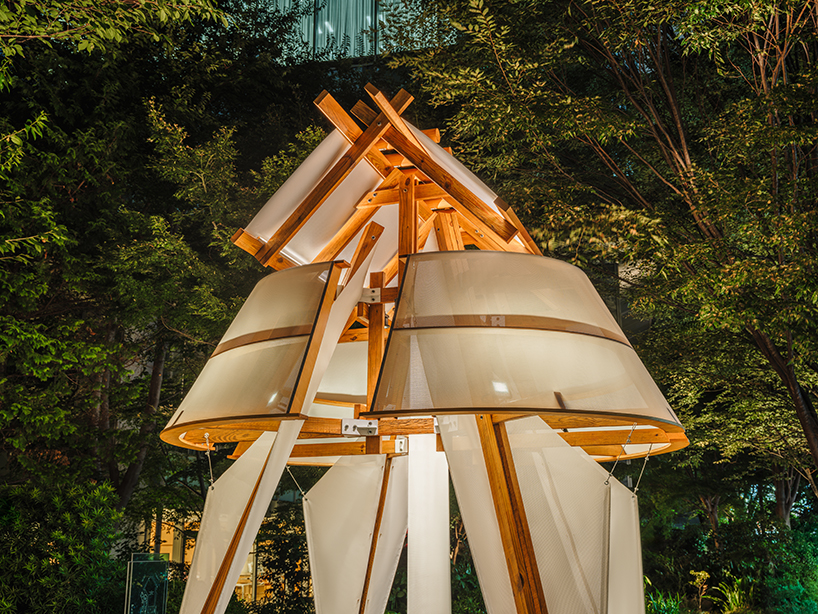
Abstraction of Roppongi’s Skyline: From Skyscrapers to a Unique Wooden Structure
The installation takes shape through a meticulous process of abstraction and fusion of Roppongi’s most famous architectural landmarks. Instead of creating replicas, FENG reshapes their outlines into a single artistic form. These landmarks include:
· Tokyo National Art Center
· Suntory Museum of Art
· The famous Mori Tower
· Sumitomo Roppongi Grand Tower
· The distinctive Roppongi Crossing
· 21_21 Design Sight
These features are reassembled into a unique wooden structure that reflects Tokyo’s contemporary urban identity while paying homage to the traditional craftsmanship used in its creation, forming a bridge between ancient handiwork and modern aesthetic vision.
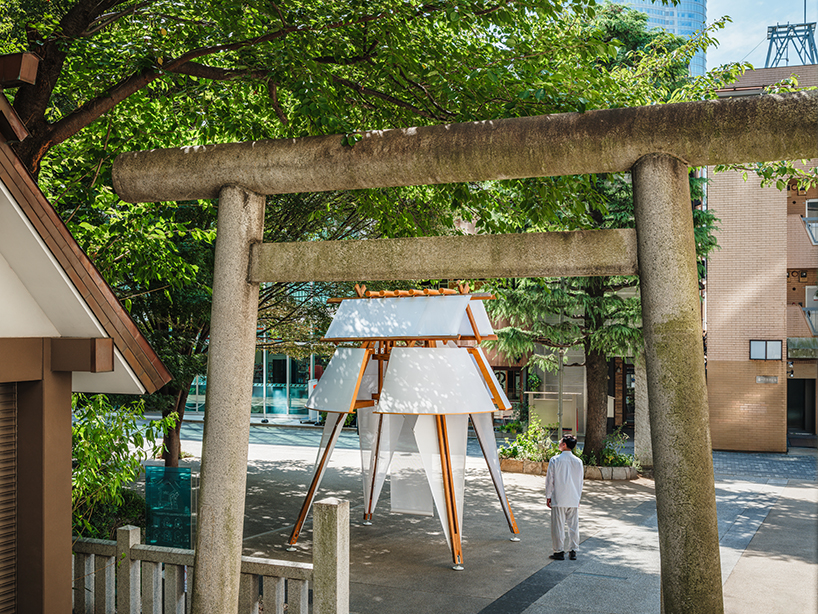
The Philosophy of ‘Urban Sails’: Architecture as Entities Moving Through Time
At the heart of this work lies a deep artistic philosophy. The ‘Sailing Castle’ series explores the dynamism of the urban landscape. FENG portrays the city skyline not as a static entity, but as a fleet of sails gathered in a harbor. These “sails”—representing the buildings—are structures that dock temporarily before continuing their journey through the currents of time. In ‘Sailing Castle: Roppongi,’ this abstract concept materializes through a complex frame of interlocking wooden components, where light and shadow carve out the city’s evolving silhouette, reflecting its constantly changing nature.
Construction Craftsmanship: Where Shrine Joinery Meets Shipbuilding Logic
The structural build of the installation is a aesthetic statement in itself. The work evokes the traditional logic of shipbuilding and the exquisite art of Shrine joinery, serving as a reminder of the place’s artisanal roots. The structure features several technical elements:
· Modular Joints: Allowing for smooth assembly and disassembly, in harmony with the work’s temporary nature.
· Rhythmic Layering: Of wood and fabric, creating a sense of rhythm and visual depth.
· Precise Geometric Interweaving: Demonstrating design and execution prowess.
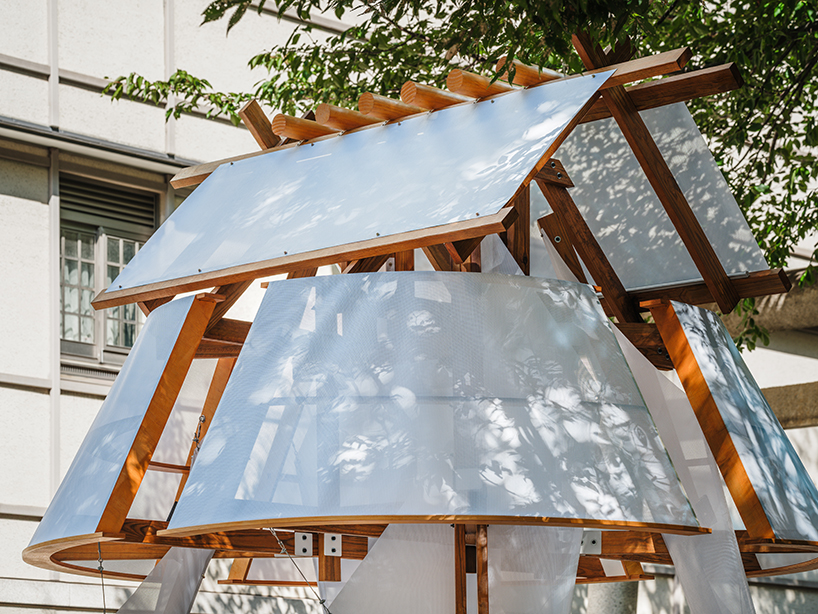
The Magic of Light: Transforming Material and Perceiving Space
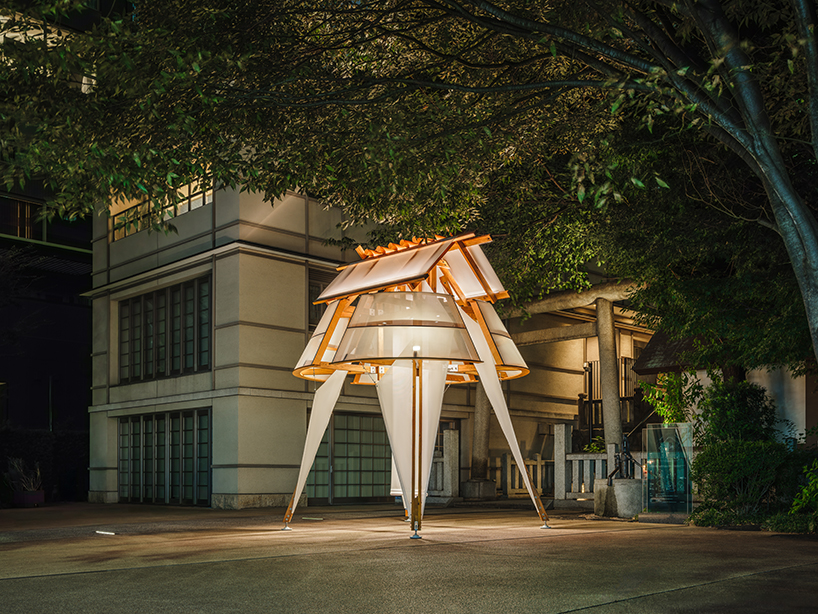
The work is incomplete without the visual transformation brought by its custom-designed lighting system. This system turns the solid wooden frame into a glowing, semi-transparent form that seems to transition between states. This luminous dynamism invites viewers to reconsider the city’s permanence; instead of seeing Roppongi as a collection of solid blocks, the work encourages its perception as a fluid and collective identity, open to interpretation and change.

Creating a Dialogue Between Urban Memory and Ritual Space
Through this installation, Cheng Tsung FENG does not merely present a sculpture for display but initiates a rich dialogue between multiple layers: the urban memory shaped by decades of architectural development and the serene ritual space of the historic shrine. ‘Sailing Castle: Roppongi’ positions itself as a temporary monument, not to the buildings themselves, but to the way architectural forms become vessels carrying shared cultural narratives and a community’s evolving memories.
✦ ArchUp Editorial Insight
The article presents the artwork ‘Sailing Castle: Roppongi’ as a visual medium that translates the architectural memory of an urban area. The installation relies on abstracting the city’s skyline into a unified wooden mass, which may create a disconnection between the abstract symbolism and the audience’s direct sensory perception of the original landmarks. The installation presents a self-contained world where buildings, diverse in their functions and history, dissolve into a single aesthetic mass, risking an oversimplification of Roppongi’s urban complexity. The dialogue between traditional craft techniques and the contemporary structure appears overtly intentional, potentially turning the intended relationship into a direct metaphor rather than an organic fusion. However, the work’s ability to create a transitional space between the shrine’s religious past and the city’s urban present generates a rare moment of contemplation on the layers of time within a single space.
Brought to you by the ArchUp Editorial Team
Inspiration starts here. Dive deeper into Architecture, Interior Design, Research, Cities, Design, and cutting-edge Projectson ArchUp.


