
Christmas Installation at Rockefeller Center Marks 2025/2026 Festivities

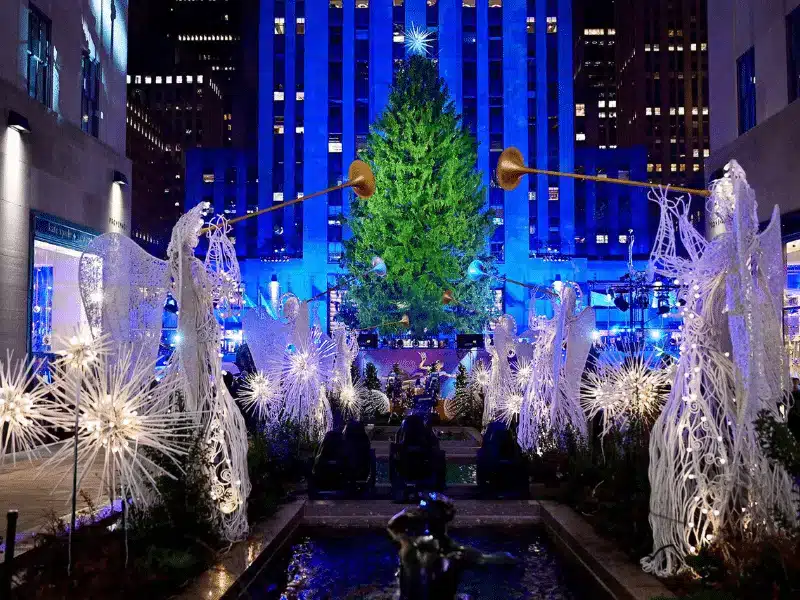
The Christmas installation at Rockefeller Center marks the start of the 2025/2026 holiday season in New York City. It combines urban architecture with seasonal design elements. This holiday installation uses careful architectural design and specialized building materials for structural stability. The Norway Spruce tree measures 22 meters. It shows how temporary projects integrate into prominent cities and can be documented on an architecture platform.

Design Concept
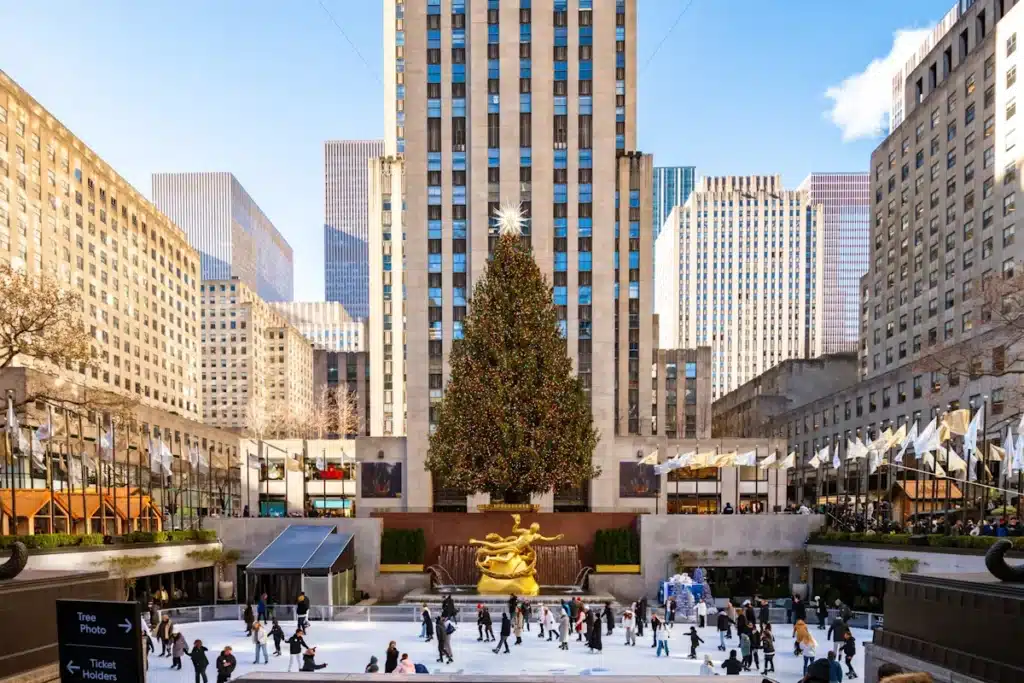
The Christmas installation applies systematic architectural design principles. The tree integrates with surrounding buildings in Rockefeller Plaza. A large crystal star tops the tree. It was designed by Daniel Libeskind. The star interacts visually with the plaza’s internal spaces and façades. This shows how temporary seasonal designs affect urban architecture.
(Courtesy of Rockefeller Center / © David A. M. Wilkins)
Materials & Construction
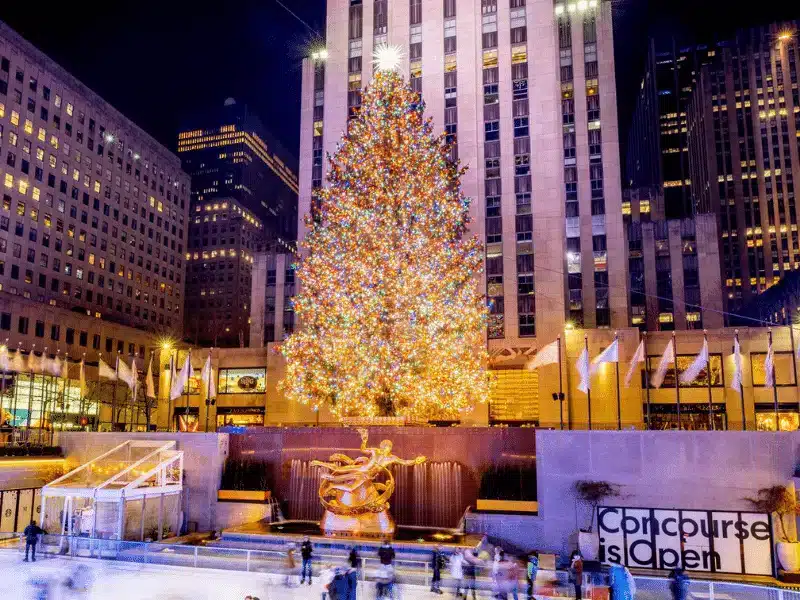
The Norway Spruce came from East Greenbush, New York. It was installed using cranes and precise construction methods. Anchoring systems and engineering ensure stability under wind loads and pedestrian traffic. More than five miles of LED cables illuminate over 50,000 lights. This illustrates the use of building materials in temporary urban structures.

(Image © Robert Caplin / Getty Images)
Sustainability
LED lighting reduces energy consumption. The Christmas installation aligns with green energy standards in cities. After the season, it is dismantled responsibly. Materials are recycled or repurposed according to sustainability guidelines. Temporary Christmas installation projects minimize ecological impact in urban planning.
(Image © Michael Nagle / The New York Times)
Urban and City Impact
The Rockefeller Center Christmas installation transforms the plaza into a pedestrian hub. It shows the role of temporary architecture in shaping urban infrastructure. Documentation in archive provides insights for future design competition or seasonal events. This guidance helps planners integrate similar installations into city centers.
Conclusion
Following the completion of the official lighting ceremony on December 3, 2025, this Christmas installation highlights questions about the role of temporary architectural design in urban planning. How can seasonal installations enhance public spaces while maintaining functionality, and what lessons can guide future projects?
Architectural Snapshot: Temporary Christmas installations combine urban engineering with LED lighting, showing adaptable architecture strategies in high traffic public spaces.
ArchUp Editorial Insight
The Christmas installation at Rockefeller Center opens the 2025/2026 season in the heart of New York, showcasing the fusion of urban architecture with seasonal design elements through a 22 meter Norway Spruce and advanced crane installation, topped by a crystal star designed by Daniel Libeskind. The text emphasizes construction details, building materials, and LED lighting to illustrate structural stability and urban integration, yet it occasionally overlooks social context or practical critique of temporary urban impacts. A subtle nod to energy management and sustainability via LED and recycling is a positive insight, highlighting environmental awareness. In the long term, the article may serve as a reference for seasonal installations, but will these details retain relevance in ten years or fade as city designs and public events evolve?


ArchUp: Technical Analysis of the Rockefeller Center Christmas Tree Installation
This article provides a technical analysis of the Rockefeller Center Christmas Tree installation as a case study in highly organized temporary architecture and its impact on urban space. To enhance archival value, we present the following key technical and design data:
The installation centers on a 22-meter tall Norway Spruce, transported from East Greenbush, New York. It utilizes an advanced mounting system featuring a custom metal base and stabilizing cables designed to withstand winds of up to 100 km/h and visitor foot traffic exceeding 750,000 people during the season. The crystalline star atop the tree, designed by Daniel Libeskind, is crafted from reinforced glass and crystal and incorporates integrated LED lighting circuits.
The visual and structural system involves the use of over 5 miles (8 kilometers) of wiring powering more than 50,000 individual LED lights. This lighting system consumes approximately 75% less energy than traditional bulbs, with total energy usage of about 1,300 kWh throughout the season. Lighting is controlled by programmable software to create synchronized light displays.
In terms of urban and operational performance, the installation transforms Rockefeller Plaza into a pedestrian and celebratory hub, generating an estimated economic impact of millions of dollars from seasonal tourism. After the season ends, the installation is responsibly dismantled: the wood is converted into wood pulp for industrial use, and all metal and electrical components are recycled. The official celebrations commenced with the lighting ceremony on December 3, 2025.
Related Link: Please refer to this article for a broader discussion on the role of temporary art and architecture in shaping urban identity:
Ark Zero Eclipse in Seoul: Public Art Installation by Studio GT
https://archup.net/ar/tammela-hybrid-stadium-العمارة-الرياضية-العمارة-متعددة/