Rotterdam Waterfront Competition Reveals Climate Education Landmark Proposals

Five shortlisted designs for the Shift Landmark emerged this week, proposing new ways to engage the public with climate action through architecture. The competition focuses on Rotterdam’s developing Waterkant district, where organizers envision one of Europe’s most progressive urban planning initiatives. The winning project will combine exhibition space with educational programming.
Coral-Inspired Structure Emphasizes Experience Over Form
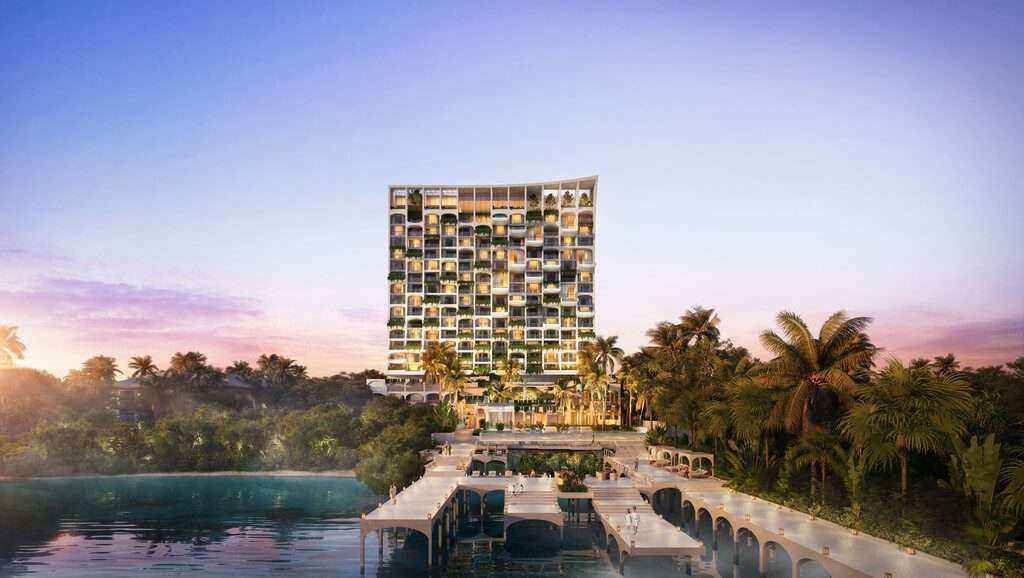
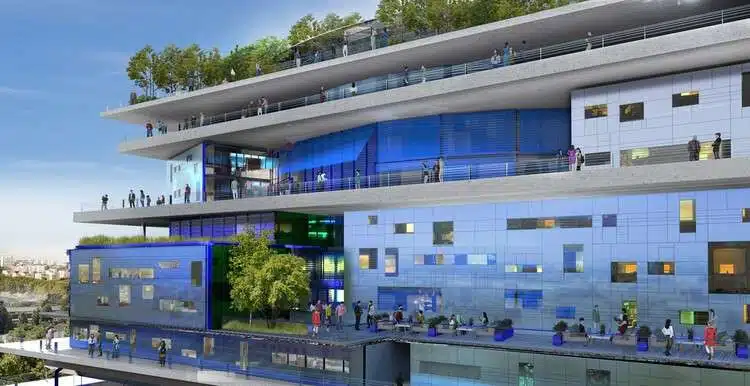
The Urban Reef proposal centers on sequential visitor experiences rather than monumental form. Guests navigate interconnected spaces designed to demonstrate climate solutions without inducing anxiety or assigning blame. Therefore, the design prioritizes multisensory exhibitions that showcase natural ecosystems and their fragility.
The building concept layers climate narratives similarly to coral reef formation. Visitors encounter global examples of successful environmental initiatives in bright, welcoming galleries. Moreover, the exit sequence includes carbon footprint assessment tools that provide personalized impact data. This approach aims to convert awareness into immediate, manageable actions.
Timber Framework and Modular Systems Reduce Environmental Impact
Construction strategies emphasize adaptability and minimal carbon footprint. The structural system relies on timber components paired with reconfigurable modular elements. This allows exhibition content to evolve alongside scientific developments without requiring major renovations.

External cladding and interior design finishes utilize biobased and recyclable building materials. Natural ventilation systems integrate with daylighting strategies to reduce operational energy demands. However, the design maintains visitor comfort through passive environmental controls rather than mechanical systems.
Biodiversity Integration Extends Climate Mission Beyond Building Envelope
The landscape design incorporates planted terraces supporting native species across multiple levels. These outdoor rooms provide contemplative spaces while demonstrating urban biodiversity principles. Meanwhile, integrated water management systems handle stormwater through natural processes.
Dutch social venture Shift initiated the competition to address the gap between climate concern and meaningful action. Competition organizers note that while three-quarters of Europeans express climate anxiety, only ten percent actively modify behaviors. The sustainability landmark intends to bridge this divide through accessible, hopeful messaging.
Rotterdam’s Waterkant waterfront district will host the winning proposal following spring announcement. The selected design team will then engage local communities through participatory planning processes before final development.

A Quick Architectural Snapshot
The Urban Reef proposal reimagines climate education buildings as layered, coral-inspired experiences in Rotterdam’s waterfront district. Timber construction with modular systems and biobased materials supports the brief’s regenerative ambitions. Community participation will shape the winning design following spring selection. Read more news on ArchUp.
✦ ArchUp Editorial Insight
Climate-focused landmarks emerge when public awareness fails to translate into behavioral change. European surveys reveal a significant gap between environmental concern and meaningful action. This creates demand for physical spaces that bridge understanding and participation.
Rotterdam positions itself as a testing ground for circular economy principles. The city actively courts experimental projects that reinforce its progressive urban identity. Meanwhile, competition formats generate media attention while distributing design risk across multiple proposals.
The emphasis on timber construction and modular systems reflects current material supply chains and regulatory shifts. European building codes increasingly penalize high-carbon materials. Developers respond by specifying renewable alternatives that satisfy both compliance requirements and marketing narratives.
Educational programming within architectural spaces serves municipal goals beyond climate messaging. These venues attract tourism, justify waterfront development costs, and signal institutional commitment without requiring systemic policy changes.
This project is the logical outcome of climate anxiety monetization, municipal branding ambitions, and evolving material regulations.