Co-Milieu and Deep Origin Lab Revitalize Tai-Silk Courtyard: A Fusion of Heritage and Modernity

In a masterful blend of preservation and innovation, Co-Milieu and Deep Origin Lab have breathed new life into the historic Jiangnan-style Zhou Mansion in Taizhou, China, transforming it into the Tai-Silk Courtyard a dynamic cultural and commercial hub dedicated to embroidery and craftsmanship. Nestled in the heart of Jiazhi Street, this adaptive reuse project reimagines the vernacular residential design into a flowing public axis, seamlessly connecting the city’s waterfront with a contemporary gallery and cultural pathway.
Honoring the Past, Embracing the Future
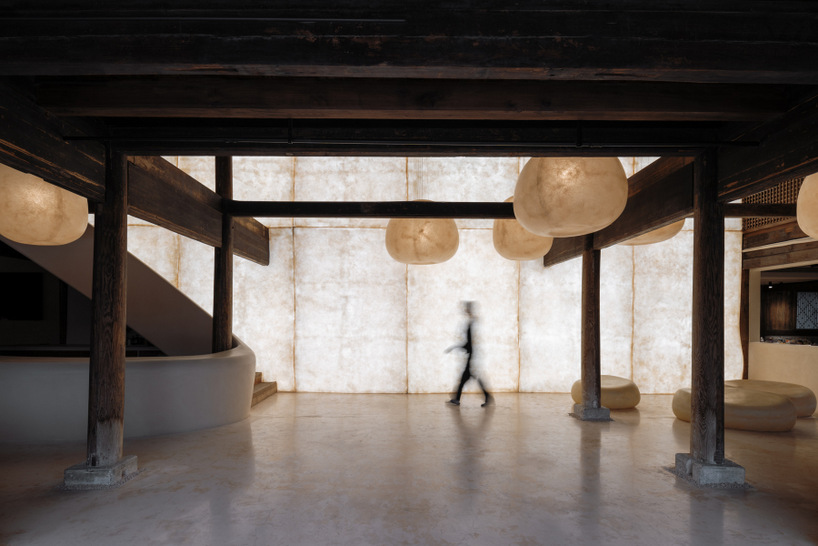
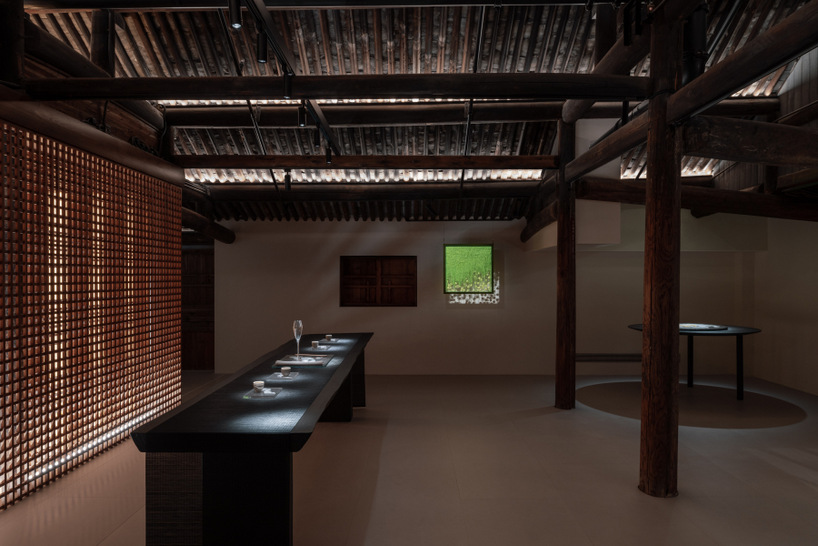
The architects meticulously preserved the original wooden frame structure while reprogramming it as a vibrant anchor for local fashion displays, exhibitions, and events. At its core, a folded, glass-reinforced plastic wall sculptural and translucent stands in the atrium like a bolt of draped silk, symbolizing the interplay of tradition and modernity.
Spatial Poetry: Stitching the Old and New
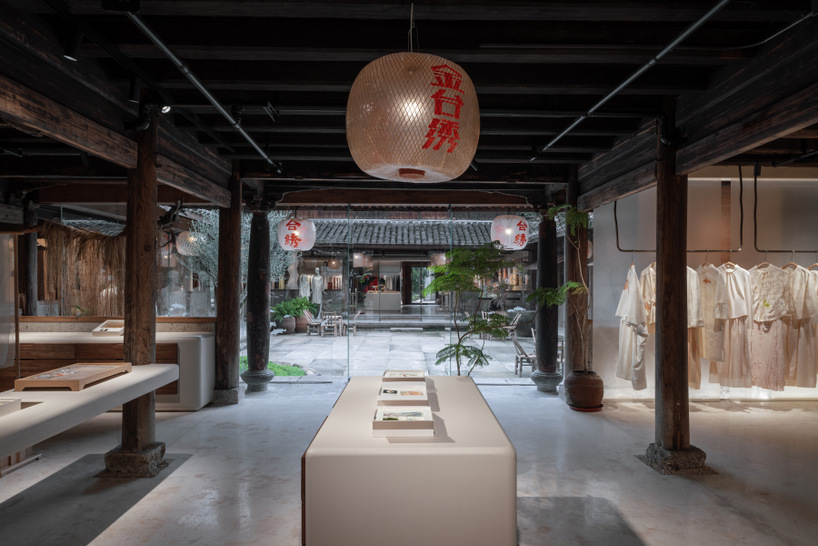
The Zhou Mansion, like many Jiangnan courtyard homes, revolves around a quadrangular central courtyard, flanked by a three-bay main hall, attached wing rooms, and an entrance gate. The design team retained this spatial rhythm but restructured circulation to create a linear sequence: waterfront façade → courtyard → atrium → staircase → gallery—inviting the public inward. This spatial composition mirrors the layered, delicate artistry of the embroidered works on display.
Subtle Design Interventions
- South Façade (Waterfront): Largely untouched, with only the historic wooden gate restored and dual copper signage added. Passersby glimpse the illuminated courtyard through the open gateway.
- East Façade: Glass doors replace wooden ones for accessibility, while new display windows frame embroidered garments from the interior shopfront.
- Courtyard Transformation: Once enclosed by wooden doors and columns, it’s now partially glass-encased, extending the gallery space outward. Original stone paving was replaced with warm beige terrazzo, accented with salvaged stones for continuity.
A Celebration of Craftsmanship
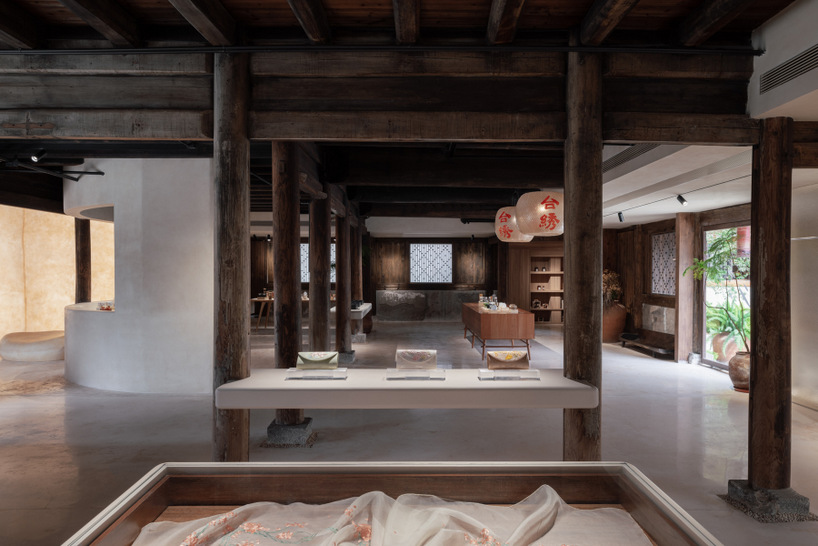
The second-floor gallery, accessed via a slender wooden staircase, immerses visitors in the work of master embroiderer Lin Xia, with lighting that casts shadows as if woven into the embroidery itself. The project’s success lies in its reverence for craft not just in exhibits but in construction. Inspired by techniques like piercing, stitching, and draping, the design process became an act of architectural needlework: custom clothing racks, transparent wall materials, and repurposed demolition debris reflect the team’s philosophy of “craft as construction.”
Gallery as Cultural Beacon
The Tai-Silk Courtyard now stands as a testament to symbiotic design, where heritage and innovation coexist. It’s more than a gallery it’s a living dialogue between Taizhou’s artisanal legacy and its future.
✦ ArchUp Editorial Insight
This project redefines adaptive reuse by weaving Jiangnan heritage into a contemporary cultural tapestry. Co-Milieu and Deep Origin Lab’s approach excels in spatial storytelling, where every design choice from the folded glass wall to the terrazzo courtyard echoes the delicacy of embroidery. However, the intervention could have further explored sustainable materials to align with global ecological priorities, given the project’s civic role. That said, its true brilliance lies in elevating local craft into an architectural language, proving that tradition, when thoughtfully reinterpreted, can become a catalyst for community engagement and artistic revival.
Brought to you by the ArchUp Editorial Team
Inspiration starts here. Dive deeper into Architecture, Interior Design, Research, Cities, Design, and cutting-edge Projectson ArchUp.