Concrete recycling using YKMA design

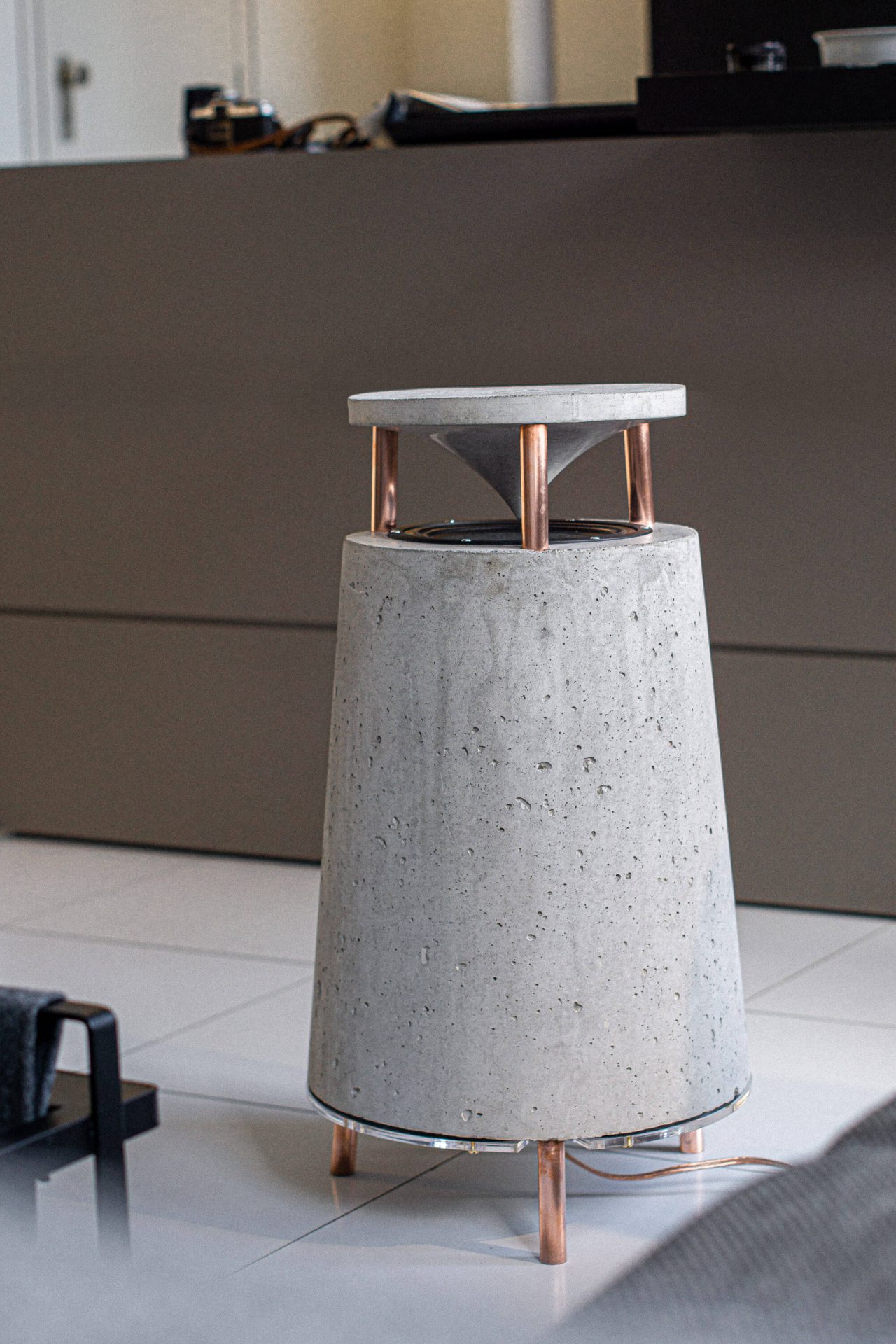
The OC1 loudspeaker, the company’s debut item, is primarily constructed from cast recycled concrete. Concrete has been widely employed for a variety of applications since the classical Roman Empire. Currently, it ranks second to water as the most utilized resource on earth.
An average of one cubic meter of concrete every year for every person on the planet. Demolished structures and roads wind up in landfills or, in a slightly better case scenario, provide the sub-base for brand-new highways. Not only is this a huge waste, but we also lose great properties. YKMA is a firm believer in repurposing this classic material for the OC1 loudspeaker’s highly practical housing.
Contrary to popular belief, concrete makes for the best loudspeaker material because its stiffness and heft (the speakers each weigh 33 kilograms) reduce distortion in the form of resonance and vibration. Due to these properties, only the air can carry the soundwaves’ energy, resulting in incredibly pure and clear acoustics.
By collaborating with regional facilities that process old roads and buildings, YKMA can acquire the raw materials it needs from inside the Netherlands. The result is a new concrete mixture that contains 80 mass percent of these recycled materials.
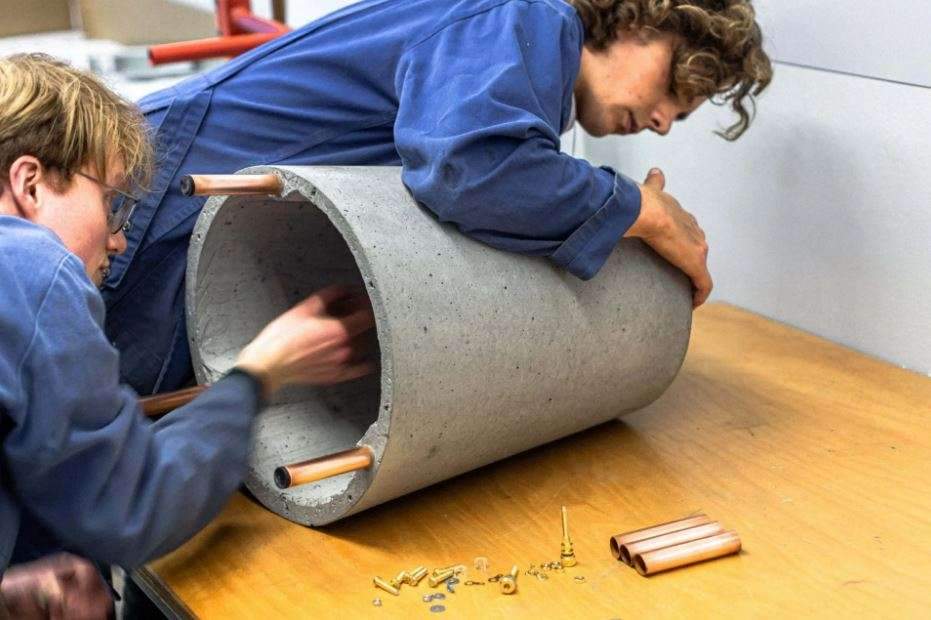
Hand casting pours the concrete mixture into the mold, which was also by YKMA. Concrete that is still in liquid form takes on the texture of the mold’s surface. Accordingly, depending on the material of the mold and the concrete’s composition, the concrete goes into a variety of textures, ranging from a smooth, polished finish to a rough, bubbling surface.
To reflect sound waves as clearly as possible, the bottom of the soundwave diffuser on top of the OC1 goes to a mirror-like finish while the main body of the structure is unfinished to display the material’s character.
We can take out the product of the mold after hardening for at least 48 hours.
Even though the concrete may have formed by that point, curing and hardening still take place. The concrete reaches around 95% of its strength after a month has passed. The hardening process truly never ends; concrete just gets stronger with time, which perfectly encapsulates one of the guiding principles of YKMA design: building durable goods.

Read more on Archup:
https://archup.net/sabine-marcelis-%d9%88%d9%85%d8%ac%d9%85%d9%88%d8%b9%d8%a9-%d8%a7%d9%84%d8%a5%d8%b6%d8%a7%d8%a1%d8%a9-%d8%a7%d9%84%d8%af%d9%82%d9%8a%d9%82%d8%a9-%d9%85%d9%86-%d8%a7%d9%8a%d9%83%d9%8a%d8%a7-%d8%aa/
https://archup.net/21_21-design-sight-brings-christo-and-jeanne-claudes-larc-de-triomphe-wrapped-to-tokyo/
LA+ INTERRUPTION international open design ideas competition