

Concrete, Steel, Wood, and Glass: The Symphony of Materials That Shaped Our Modern World

Our contemporary world is unimaginable without the four fundamental materials: concrete, steel, wood, and glass. These four elements have not merely been construction raw materials; they have been the instruments writing the entire narrative of human evolution, from primitive shelter to sophisticated skyscraper. They are materials that consistently reappear in new forms, each time reaffirming their timeless balance, transforming structural necessity into an expressive aesthetic and intellectual statement.
The First Encounter: The Birth of an Unprecedented Alliance
The union of these materials was not a coincidence or a mere aesthetic whim, but an structural necessity dictated by the demands of the era. While brick and stone faced limitations in bearing weights and spanning distances, concrete and steel together offered a revolutionary solution. Designers demonstrated that when combined, they could achieve unprecedented load-bearing capacity, allowing for spanning greater distances and supporting heavier loads to new levels. It was not just about endurance, but about creating architectural possibilities that did not exist before.
How Did the Quartet Complete Itself?
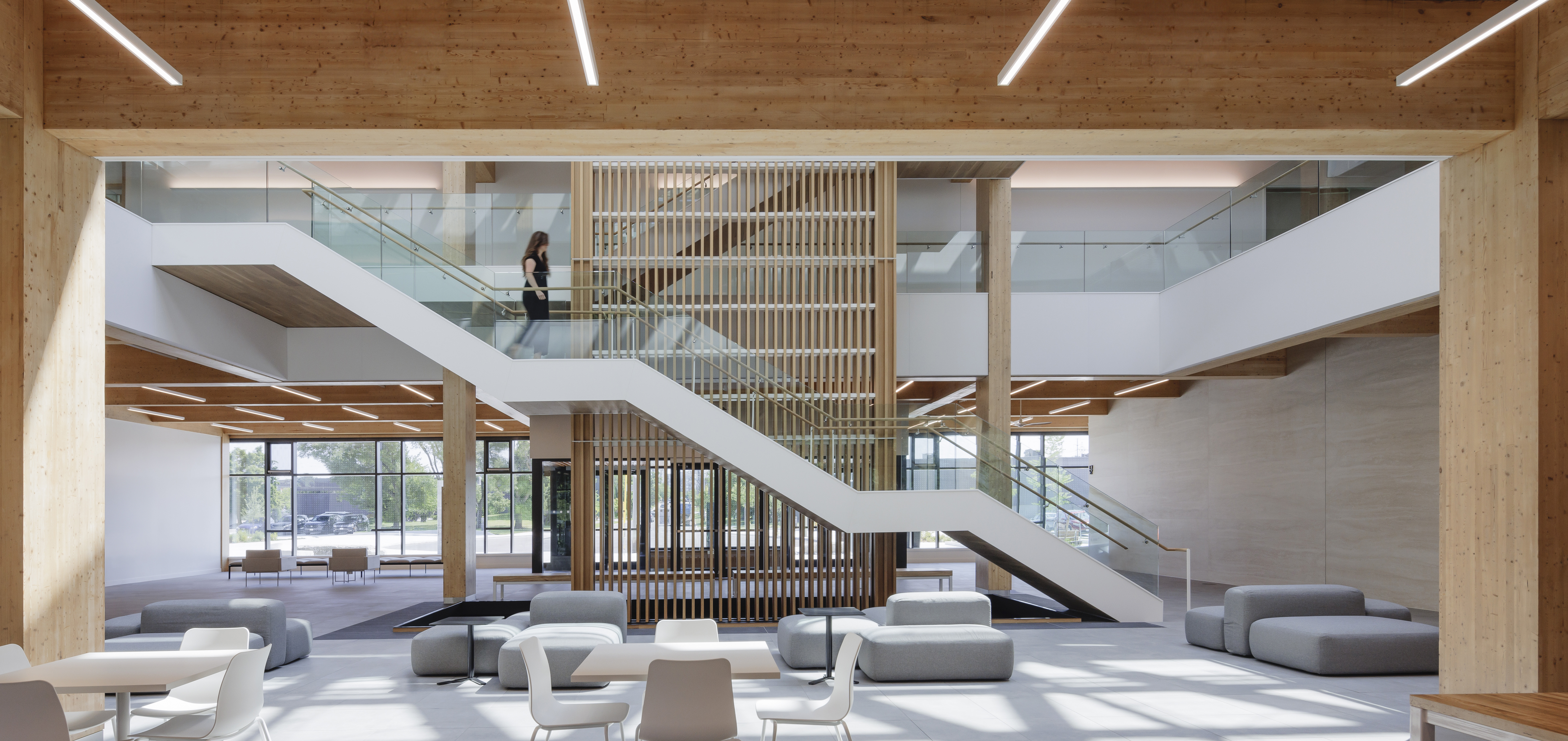
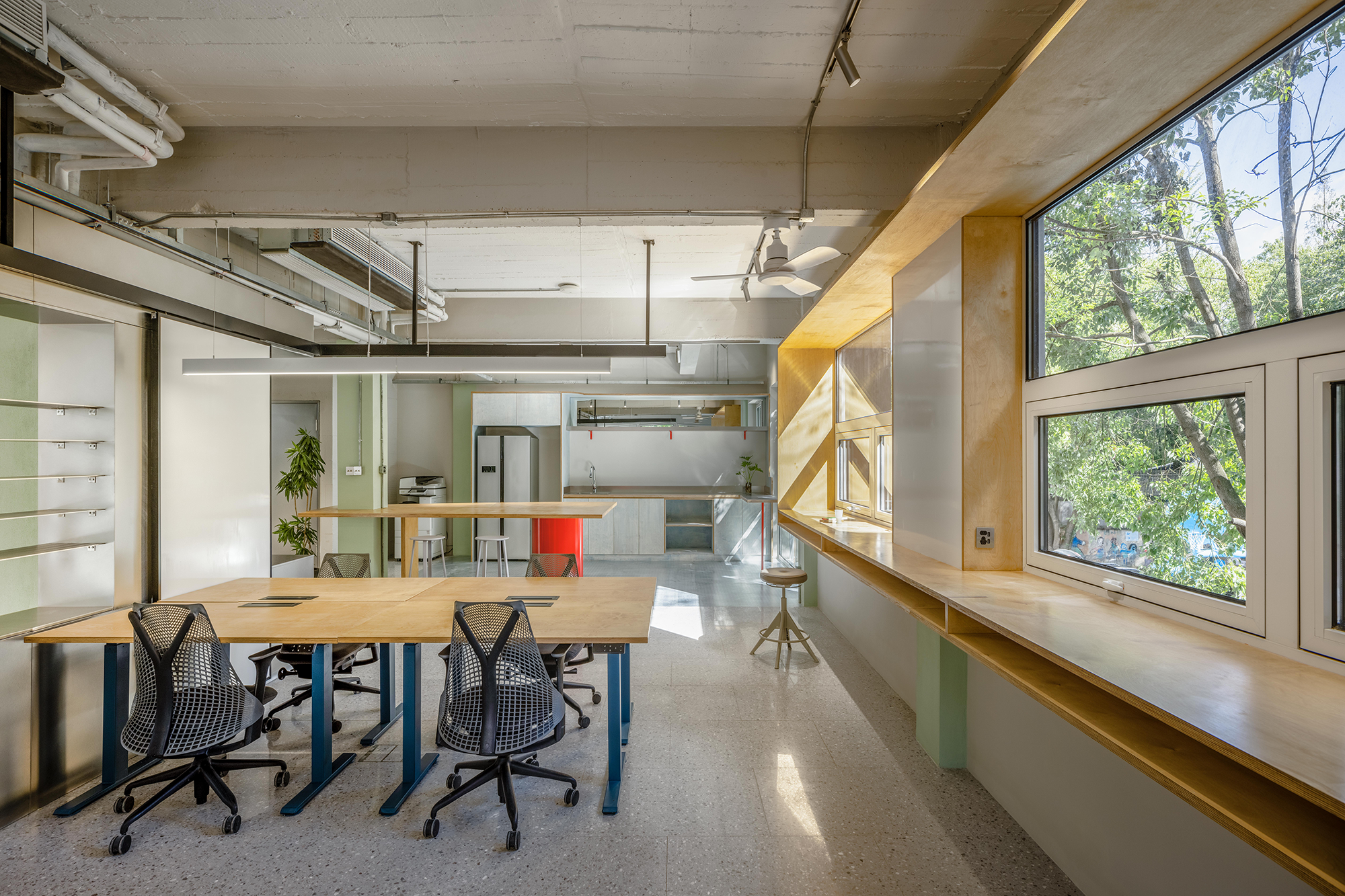
Not long after, glass and wood joined this alliance. Glass came to solve the dilemma of isolation from the surroundings, transforming solid walls into transparent curtains that merge the outside with the inside, making light a construction element no less important. As for wood, with its organic, warm sensibility, it returned to restore human balance to spaces threatened by the industrial harshness of concrete and iron, reminding us of nature and origin.
From Skeleton to Living Skin: The Aesthetic Transformation
This alliance did not remain confined to pure function; it underwent a radical shift into a rich expressive language. Designers began to perceive the hidden aesthetic dialogue between these materials: the metallic coolness of steel softened by the organic warmth of wood, the harshness of the concrete mass broken by the purity of transparent glass. Walls were no longer barriers; they became living membranes breathing light and void.
A New Language is Born: The Rules of Modern Architecture
This dynamic encouraged engineers to move beyond the conventional, giving birth to new architectural vocabulary based on dualities: strength versus lightness, mass versus void, transparency versus opacity. A building was no longer just a shelter; it became an expression of thought, the spirit of the age embodied in this harmonious quartet.
Global Conquest: Becoming the Language of Progress
With the end of wars and the commencement of massive reconstruction efforts, coupled with accelerating industrialization, the world needed a fast, effective architectural language that expressed optimism for the future. Here, the material quartet spread like wildfire.
· Concrete and Steel: Provided the confidence to build vertical cities—skyscrapers that forever changed urban skylines.
· Glass: As its production cost decreased and its purity increased, it became a symbol of openness and transparency, not only in buildings but in the institutions themselves.
· Wood: Played the role of a wise mediator, quietly returning to interior decor and furniture, softening the edges of the industrial world and imparting a sense of care and reassurance.
At the Heart of Daily Life: The Invisible Influence
While ostentatious buildings may be the most eye-catching, the true impact of these materials is evident in the fabric of our daily lives that we often overlook.
· Concrete: Forms the structure of most modern residential blocks, offering affordability and high durability.
· Steel: Is the backbone of infrastructure, from bridges connecting shores to the structures that support our lives.
· Glass: Transformed shop fronts into display windows, merging commercial spaces with street life.
· Wood: Maintained its role as an element of warmth and intimacy in our homes, from flooring to furniture pieces.
A Renaissance: Material Evolution in the 21st Century
Today, we are witnessing a new era of craftsmanship, where these materials are evolving to meet the demands of sustainability and intelligence. Each material has spawned evolved “offspring” that reflect a spirit of innovation and responsibility.
· Concrete: It is no longer just a heavy, grey mix. Here is Ultra-High Performance Concrete (UHPC) offering lightweight strength, while concrete manufactured from recycled aggregate appears to reduce the carbon footprint.
· Wood: Underwent its greatest transformation with the emergence of Cross-Laminated Timber (CLT), enabling engineers to construct multi-story buildings that are safe and sustainable, reconnecting the city with nature.
· Glass: It has transformed from a passive to an active material. There is smart glass capable of changing its transparency, and photovoltaic glass that turns facades into small power plants.
· Steel: Evolved to become smarter, with alloys like weathering steel that forms a natural protective layer as it ages, and blends that are almost entirely recycled.

Conclusion: Towards a Balanced Future
The ongoing lesson from the journey of this quartet is that true progress lies not in replacement, but in reunderstanding and innovation. The family of architectural materials has learned to age gracefully, combining the resilience of the past with the responsibility of the future. It reminds us that the best architecture is built with integrity, allows light to enter, finds harmony in contrast, and leaves a positive legacy for future generations.

✦ Archup Editorial Insight
The article examines the historical and aesthetic evolution of the four fundamental materials in architecture—concrete, steel, wood, and glass—analyzing their transformation from structural tools into symbols expressing the spirit of their age. It is important to address how the dominance of these materials has normalized a certain typology in the urban landscape, where the aesthetic and functional values associated with them are often imposed on diverse cultural and climatic contexts, potentially eroding local specificity. The intensive reliance on concrete and steel creates a significant carbon footprint, while the extensive use of glass presents major challenges for building energy efficiency. Nevertheless, the core value of these materials lies in their ongoing flexibility and adaptation. Sustainable innovations such as low-carbon concrete and smart glass offer the potential to correct the course of this architectural legacy toward a more balanced future.
Brought to you by the ArchUp Editorial Team
Inspiration starts here. Dive deeper into Architecture, Interior Design, Research, Cities, Design, and cutting-edge Projectson ArchUp.


🛠️ Important structural note: To increase the efficiency of the article, it is recommended to use the subheading format (H3) to divide the text into sections.