Container City – Designing a modular lifestyle

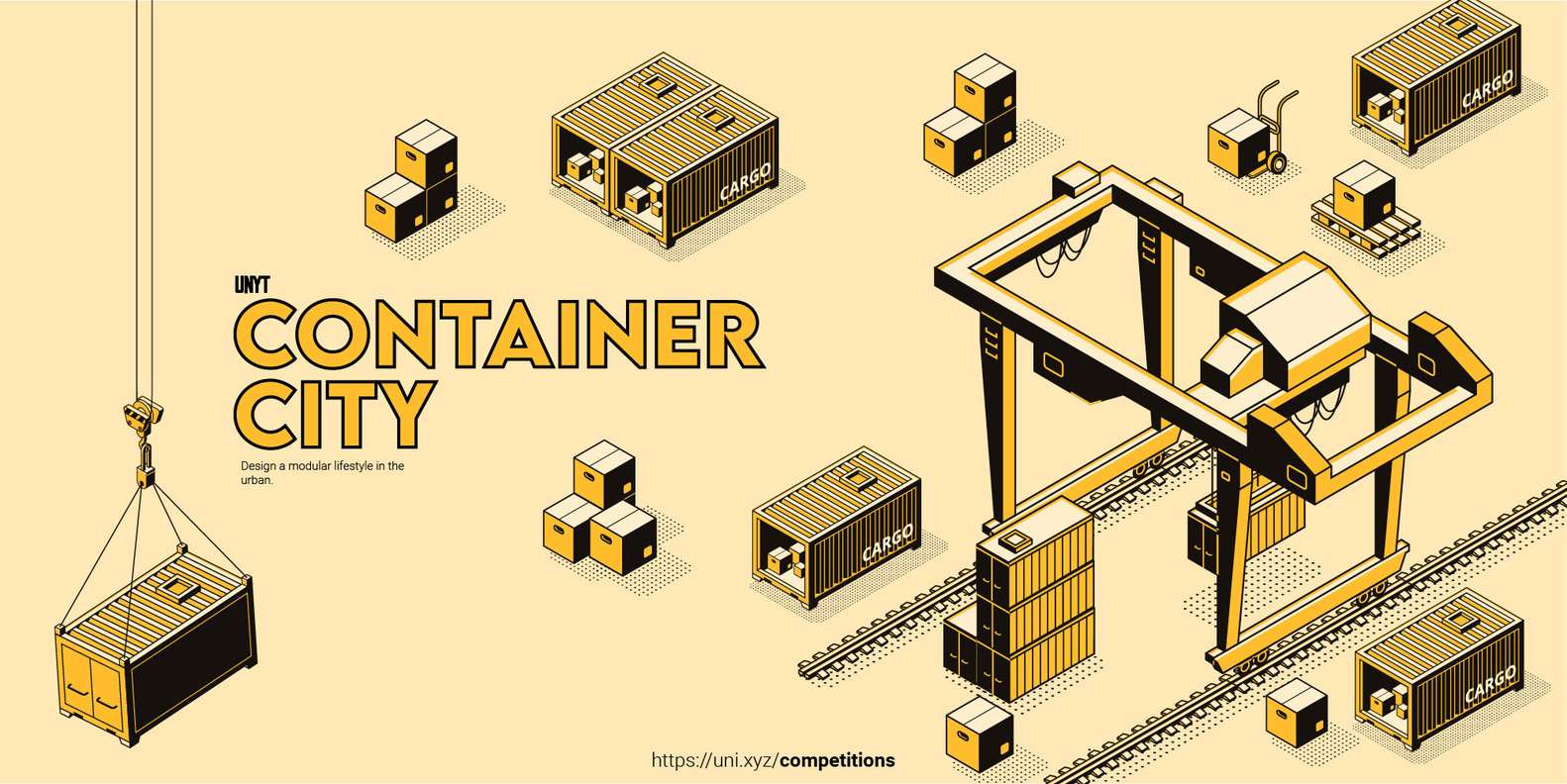
There are some great things especially when we see in the context of this breakthrough in freight delivery. But at the same time, it brings a lot of this waste because of the decaying of these containers due to loss in serviceability and use. There are especially two key takeaways in this story, emphasizing two sides of the shipping container story. Let’s look at them objectively.
QUALITIES
Starting with the good side, shipping containers bring modularity that is unparalleled which has boosted trade largely. A quality that the construction industry has severely ignored in the past. No matter how much we demand customization, urban living pushes for modular construction in a lot of ways at least in spatial planning (eg. Apartments, Condos). The quality of modularity is unavoidable when the rise in housing demand is so high and time is crucial.
At the same time, shipping containers bring a downside of generating waste by frequent decommissioning. They are costly to dismantle hence finding alternative uses is a great way to address the excess waste generation. At the same time bringing down construction costs for design projects. How can we use these qualities to our advantage to deliver better habitats to our people as architects?
ISSUE
Rising rents in urban areas and shrinking the quality of living is a huge problem urban areas face. The biggest components of this cost are – 1. Land Prices (Which are impossible to change) or 2. Construction cost (Which can be brought down through various strategies) And modular construction may be the only known way that can do it.
The prices can not only be offset by faster construction but quicker making times as well. This is the biggest reason, despite the availability of containers in a port city, it can be a point to explore manufactured housing as a concept especially for dense urban areas.
BRIEF
The design brief is to design a student housing concept made of 15 shipping containers. Devise the spaces and the requirements based on how many people ideally can this shipping container setup can fit. Please note the housing concept has to be made out of shipping containers primarily. If you wish to create extensions, canopies, bridges, made of other materials (Like timber, steel, concrete) you may do that, but only limited to 15% of the surface area of these 15 containers only. The size of the container can be any of the two 40′ x 8′ x 8’6″ and 20′ x 8′ x 8’6″. You can include plinths, columns, or frameworks made of other materials.
The container setup will be placed on vacant land leased for a certain duration or deck on the water like the Urban Rigger – by BIG or on a structural grid to keep land below accessible for other use – to mitigate the rising land cost. Space efficiency matters the most, hence effective utilization of inside and outside spaces is a must. Please note no more than 4 containers can be stacked on top of each other. They are designed only for laying horizontally.
Download the information related to this competition here.
Title
Container City – Designing a modular lifestyleType
Competition Announcement (Ideas)Website
https://uni.xyz/competitions/container-city/info/aboutOrganizers
UNYTRegistration Deadline
March 29, 2021 03:00 PMSubmission Deadline
March 30, 2021 03:00 PMPrice
29 USD