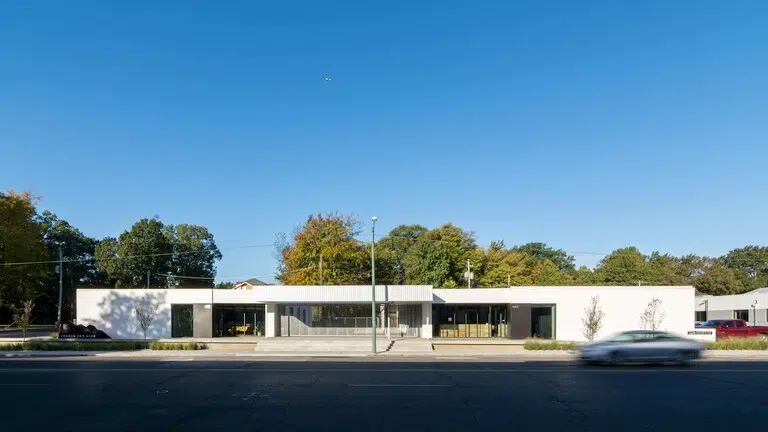
Ebraz: A Cultural Institution Redefining Hospitality and Creativity in the Heart of London

Ebraz: A Cultural Experience Beyond the Traditional Gallery
In a city that leaves little room for pause, a new institution quietly seeks to offer a radical experience. Ebraz, spanning a six-story building with 10,000 square feet and listed as a Grade II historic structure, is more than just an art gallery or exhibition space. It positions itself as a platform where imagination meets intellect, where complex questions are posed, new possibilities explored, and hospitality becomes part of the daily practice.
Roots and Foundation
Ebraz was founded by Lina Lazaar in 2011 as part of the Kamel Lazaar Foundation and began as an online platform aimed at sharing visual culture across the Middle East and North Africa. With its move into a physical space, this new chapter represents a step toward strengthening its presence in a city that Lazaar sees as central to the project’s ambitions. As Lazaar states, “No city has a more widespread diaspora around the world than London.”
Vision of the Space and Its Function
Ebraz is not designed merely to present artworks but to redefine the relationship between audiences and cultural content. It strives to be a space for interaction and experience, where visitors can engage in intellectual dialogues and explore new ideas, away from the traditional gallery arrangement.
Nourishing Mind and Soul: The Vision of the “Ebraz” Project
“Please, come in, feed your bodies, feed your minds. And as you ascend through the building, feed your souls.”
– Hammad Nasar
With this symbolic statement, Hammad Nasar, Director of Programs and Content, conveys the essence of the project that unites body, mind, and soul. Ebraz does not aim to be merely a cultural institution but a holistic experience that invites visitors on an ascending journey, from the tangible to the spiritual.
The Concept of a Global Majority
Nasar describes the project as both ambitious and necessary, explaining that the idea of the “global majority” is not tied to a specific geography or fixed identity but represents an open vision connecting cultures. This openness forms the beating heart of Ebraz, where no rigid boundaries exist between art forms or communities.
An Institution Evolving with Its Audience
Rather than relying on fixed exhibitions or rigid programs, Ebraz develops gradually and flexibly, with ideas, spaces, and audiences emerging over time. The institution describes this approach as a “universe of interests and audiences”, a space shaped by the diversity of those who participate in the experience.
Architecture as a Translation of Thought
The building itself embodies this philosophy. Architect Somaya Wally of Counterspace, supported by James Bell from MSMR Architects, redesigned it to serve as a tangible expression of cultural hospitality. Spanning six floors, each space bears a name inspired by African and Arab societal patterns, reflecting the project’s connection to both heritages.
Spaces That Foster Interaction
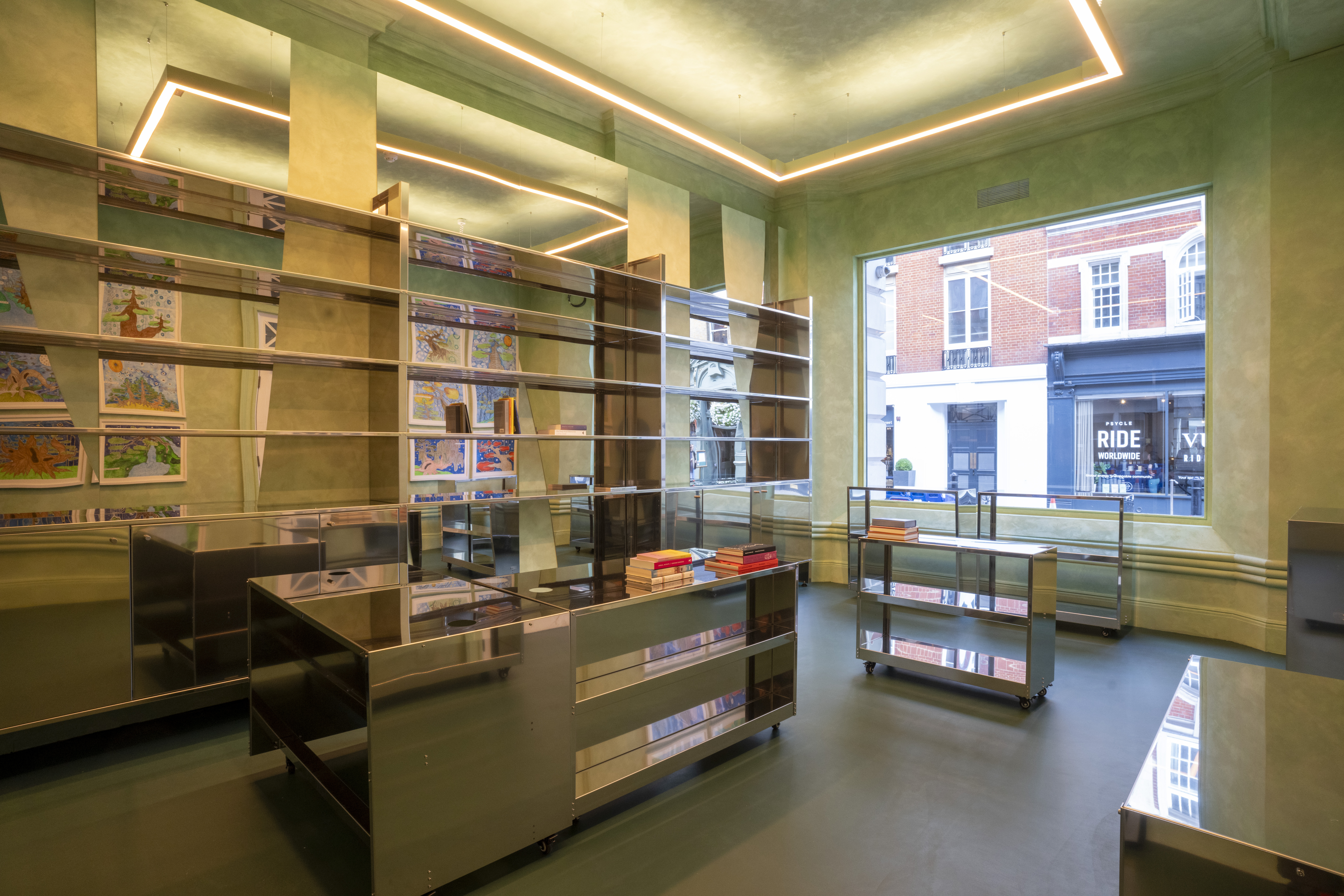
At street level, visitors are welcomed by the “Library” and a café open to the city, inviting dialogue and encounters. Inside, the Council Hall hosts exhibitions and discussions, while the basement Manasa space offers film screenings and live performances. The “Read” Library provides a quiet corner for contemplation and reading, embodying the idea of “feeding the soul” that Nasar emphasizes.
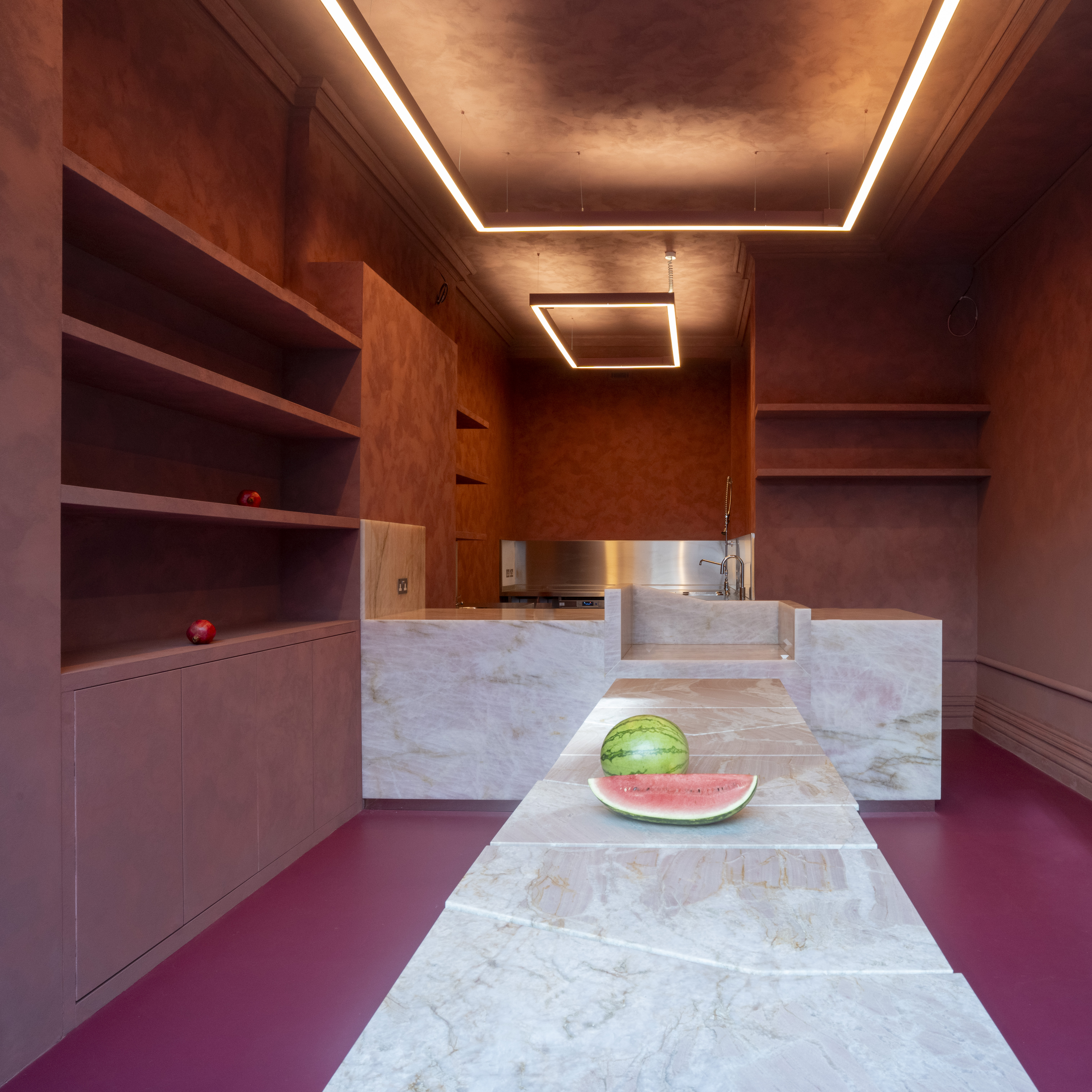
The Residency Model: The Core of the Intellectual Vision
The residency model forms the central axis of the vision guiding Ebraz. According to the founder, Lina Lazaar:
“The concept of residency is something we truly care about. The idea here is that magic can happen when you relinquish authority to the people you trust, whose expertise and vision you want alongside you.”
Lazaar here expresses a philosophy based on participation and trust, viewing the institution not as a center of authoritative knowledge but as an open field for collaboration among creators and thinkers from diverse backgrounds.
Art as a Means to Revive History
As part of the opening program, Ghanaian artist Ibrahim Mahama presents his installation “Parliament of Ghosts”, transforming the Council Hall into a space that rethinks the material memory of history.
The work consists of furniture from the colonial era and jute bags collected during the COVID pandemic, creating a visual and intellectual interaction that questions the idea of restoration and reviving forgotten objects.
Mahama explains:
“What fascinates me most is the question of repair: how do we bring things back to life, and how do we extract history through material forms?”
Through this approach, art becomes a tool to evoke collective memory and reshape the relationship between past and present.
Knowledge as a Living Archive
On another floor, the spirit of research and experimentation is embodied in the Residency Library of the Autolith Group, which transforms decades of exploration in art, politics, and history into a living archive that interacts with visitors. This archive includes books, films, and maps presented in a way that generates new dialogues about shared cognitive memory.
Literature and Society in Constant Interaction
The Residency’s Book Library, organized by the Palestine Literature Festival in collaboration with Burley Fisher Books, focuses on global critical literature, positioning writing as a tool for understanding the self and the world. This initiative turns reading into a collective experience that transcends linguistic and cultural boundaries.
The Café as a Living Cultural Space
On a more sensory level, the Olé Café, led by Chef Bouthaina Ben Salem, celebrates Tunisian culinary traditions, transforming food into a narrative language that tells stories of memory and belonging. Here, taste is not merely a gustatory experience but a means of cultural communication among visitors.
Dialogue and Music as an Extension of the Experience
Cultural writer and critic Shumon Basar adds an intellectual dimension through a series of lectures and public discussions, weaving a thread that connects the project’s diverse components. Meanwhile, curator Ibid Buglab leads an advanced program of music and sound, offering an auditory experience that reflects the spirit of experimentation and openness at the heart of Ebraz.
Toward a Journey That Connects Geography and Thought
For Lina Lazaar, Ebraz is not about presenting isolated content or fleeting events but about weaving an integrated journey that links geographies, cultures, and multiple media. She explains:
“You’re not coming here for one piece of content. You’re trying to thread a journey that connects different geographies, across content and mediums. We really want this to be an open institution, collaborating with like-minded organizations and creating enough porosities for others to join us.”
Hammad Nasar adds that the residency model at Ebraz allows interactions to develop cumulatively, fostering a continuous dialogue between visitors and participants and deepening engagement over time.
Going Where Others Don’t Go
In a city brimming with cultural institutions, Ebraz does not seek repetition or competition but aims to venture where others cannot, or will not, go.
It opens a space for difficult conversations and provides a platform for questions that are often neglected, while holding generosity and hospitality as core values.
Lazaar emphasizes:
“We care that this place is a gathering of gatherings. We don’t say this lightly, this hospitality is a fundamental value we want to embody.”
A Promise of a New Cultural Future
Since its opening in October, the project has been presented as a bold experiment in gathering, connecting, and collaborating, while simultaneously hinting at possibilities beyond its walls.
Reflecting on this stage, Lazaar says:
“I’m excited for the moment when it is no longer ours alone, but belongs to everyone.”
Within this vision lies the true spirit of Ebraz: the belief that coming together, posing questions, and imagining collectively can generate new cultural forms and lead to a more open and humane future.
✦ ArchUp Editorial Insight
While Ebraz demonstrates a clear ambition to redefine the cultural experience and create spaces for interaction between thought, art, and hospitality, certain challenges remain. Its strengths lie in its ability to offer a multi-layered experience, thought-provoking spaces, and the promotion of dialogue between cultures, giving visitors a sense of engagement and curiosity.
On the other hand, some visitors may feel that the vast scope of concepts and simultaneous projects makes it difficult to fully follow all aspects of the experience. The unconventional nature of the space may not be comfortable for all audiences, particularly those accustomed to traditionally organized exhibitions or events.
Moreover, the ongoing success of the project requires a high level of coordination among various programs and contributors, which poses a challenge in a dynamic environment that relies on gradual development.
Overall, Ebraz offers an exciting cultural promise, yet it remains an experience that requires more time to consolidate its identity and demonstrate its effectiveness to all potential audiences.
Prepared by the ArchUp Editorial Team
Don’t miss the chance to explore more from Architecture in fields like Design and Cities on the ArchUp website.