ecoLogicStudio Unveils FundamentAI: A Revolutionary AI System for Environmentally Responsive Urbanism at Venice Biennale 2025

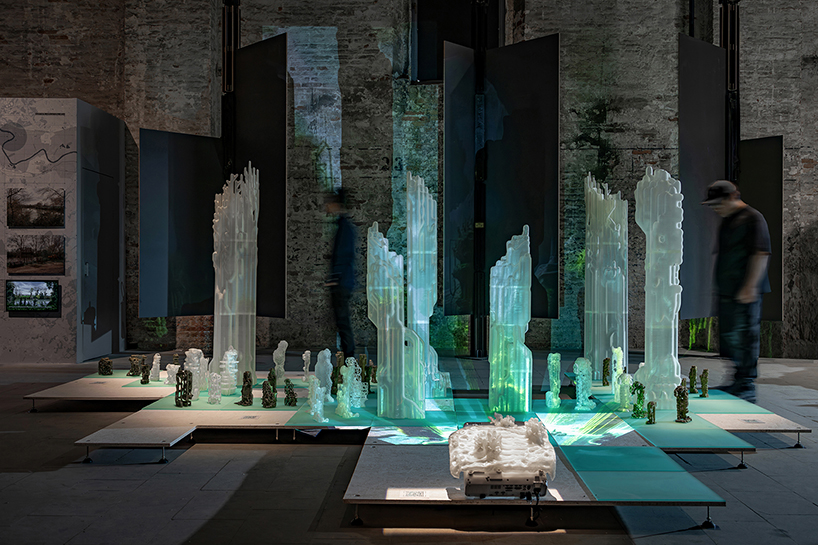
At the 2025 Venice Architecture Biennale, ecoLogicStudio—in collaboration with the Synthetic Landscape Lab at Innsbruck University and the Urban Morphogenesis Lab at the Bartlett, UCL—has unveiled FundamentAI, a groundbreaking installation that merges artificial intelligence, biotechnology, and urban design.
This project reimagines how cities can adapt to ecological changes by integrating real-time environmental data into architectural processes. Located in the Arsenale, FundamentAI presents a vision where Venice’s lagoon ecosystem actively shapes urban form, offering a blueprint for climate-resilient, participatory, and adaptive architecture.
Key Innovations: How FundamentAI Works:-
1. AI and Ecological Data as Drivers of Architectural Form
FundamentAI introduces a dynamic model of urbanism, where real-time ecological signals—such as water acidity, microbial activity, and light conditions—are processed by multimodal AI systems to generate adaptive structures.
Key AI technologies powering the project include:
- DeepSeek-R1 & GPT-4o – For analyzing user-submitted images and texts
- FLUX.1-dev (on ComfyUI) – Generating AI-driven architectural visuals
- TRELLIS – Producing 3D models from environmental data
- Kling AI – Creating responsive animations
By blending human input with environmental feedback, FundamentAI produces living architectural responses that evolve alongside ecological conditions.
2. Bio-Fabricated, Biodegradable 3D-Printed Structures
The installation features full-scale 3D-printed columns made from biodegradable materials, inspired by Venice’s traditional ‘bricole’ foundation poles. These structures are not static—they react to lagoon conditions, with embedded sensors triggering subtle lighting shifts that visualize real-time ecological changes.
This approach redefines urban foundations as symbiotic, living systems rather than inert infrastructure.
Why FundamentAI Matters: Global Implications for Sustainable Cities:-
1. A Blueprint for Climate-Resilient Architecture
As cities grapple with extreme weather, flooding, and biodiversity loss, FundamentAI offers a model for adaptive urban planning. By treating waterways, microbes, and climate data as active design agents, it shifts architecture from static to responsive.
2. AI as a Tool for Ecological and Social Equity
- Empowers communities to co-design their environments
- Integrates non-human actors (like microbial ecosystems) into urban planning
- Scales beyond Venice, offering solutions for flood-prone and rapidly urbanizing areas
3. Beyond Venice: Upcoming ecoLogicStudio Projects
FundamentAI is part of a larger research initiative, with future projects including:
- DeepForestCube – Premiering at the 2025 Triennale International Exhibition
- Tree.One – Launching at Bundeskunsthalle Bonn (June 2025)
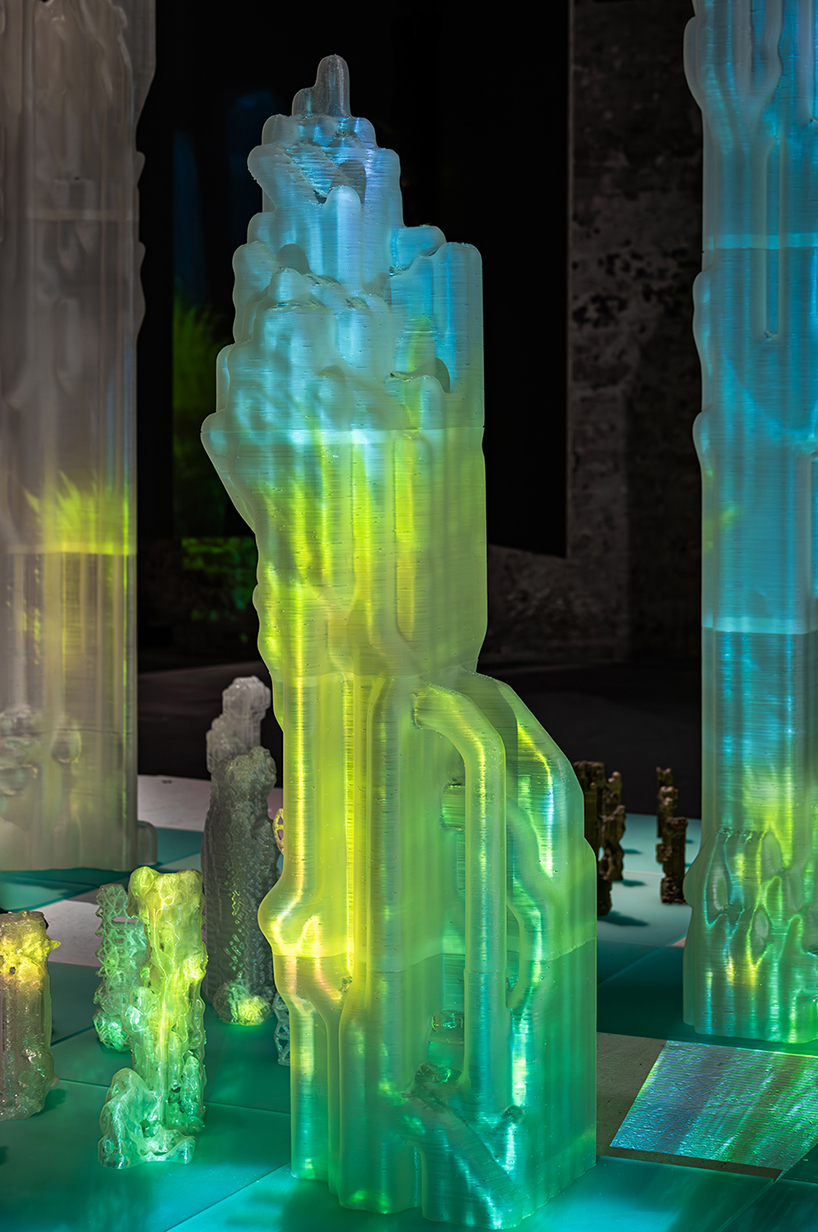
generative AI processes respond to real-time environmental data like acidity and light
The Future of Cities is Alive, Adaptive, and AI-Enhanced:-
FundamentAI represents a radical shift in urban design, where AI, biology, and human creativity converge to create living architecture. By embedding real-time ecological intelligence into the built environment, ecoLogicStudio and its partners are paving the way for smarter, more sustainable cities.
As climate challenges intensify, projects like FundamentAI prove that the cities of tomorrow must not just resist nature—they must collaborate with it.