Eight interiors that strike a balance between rustic and contemporary

Eight interiors that strike a balance between rustic and contemporary
These material choices are often used to create a homely and welcoming atmosphere that is somewhat reminiscent of a farmhouse style.
From an inn with nautical-leaning decor to a mid-century home in Joshua Tree, here are eight examples of how interior designers are bringing rustic design tropes into the 21st century.
Furthermore, This is the latest in our lookbook series, which provides visual inspiration from Dezeen’s archive. For more inspiration see previous lookbooks featuring wood-paneled dining rooms, statement headboards, and homes with pergolas.
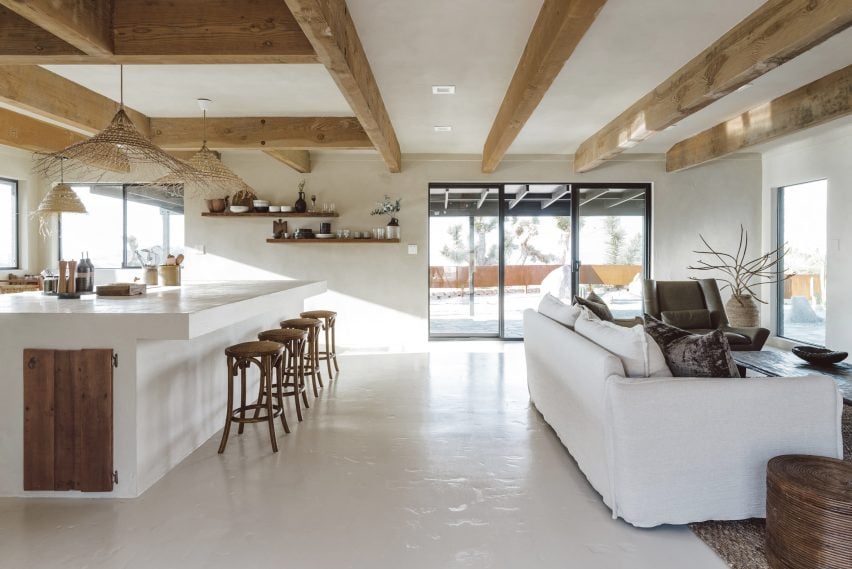
Villa Kurno, US, by Mini Inno
Los Angeles interior design studio Mini Inno renovated this mid-century ranch-style home in Joshua Tree National Park and converted it into a holiday home.
Moreover, The studio opted for a neutral interior scheme that serves as the background for various wooden furnishings and fixtures.
Wood beams were left exposed across the ceiling of the living area while wooden barstools, shelving, and cupboard doors are contrasted against the white-painted walls and floors.
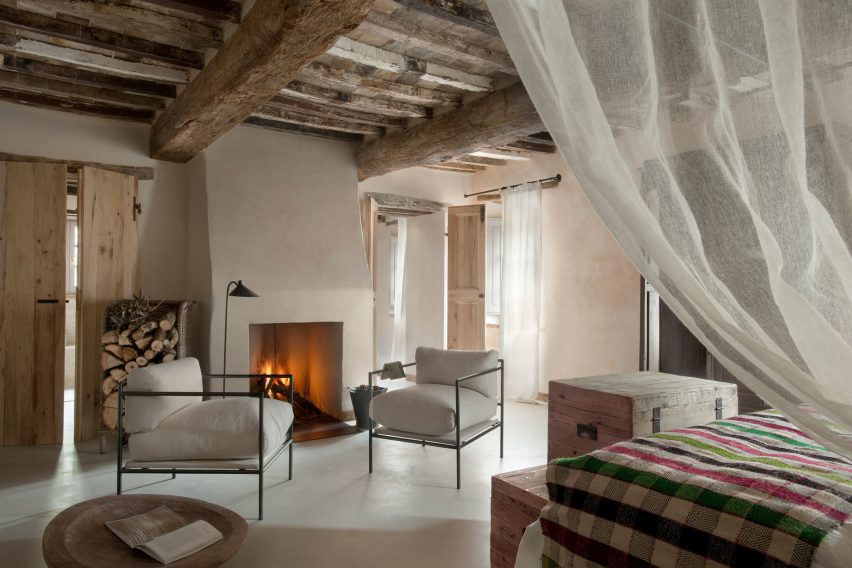
Monteverdi Hotel, Italy, by Michael Cioffi
Located in a hamlet in Val d’Orcia, a UNESCO World Heritage Site in Tuscany, Monteverdi Hotel was transformed from a crumbling building to a 29-room hotel over a 14-year renovation.
Materials and finishes throughout the interior were for their textural quality and walls feature uneven surfaces with indents and niches. Salvaged wood was used for ceiling beams, timber archways, and closet doors, which were constructed from old farm doors.
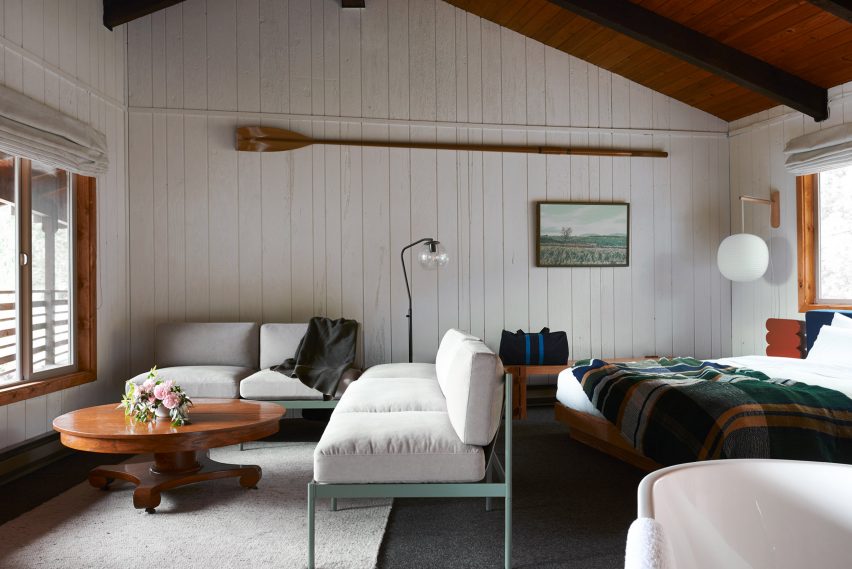
Whidbey Inn, US, by Mike and Matt French
Mike and Matt French collaborated with friends and local designers to update this historic inn on Whidbey Island near Seattle.
The team renovated the property and decorated the interior with a contemporary yet rustic approach with subtle nautical influences. Wood paneling in various shades was used across the interior and paired with timber furnishings.
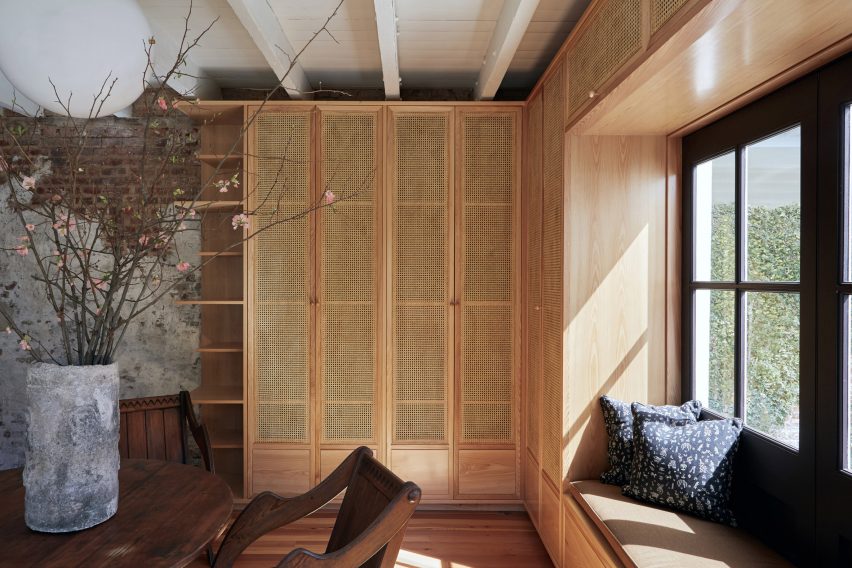
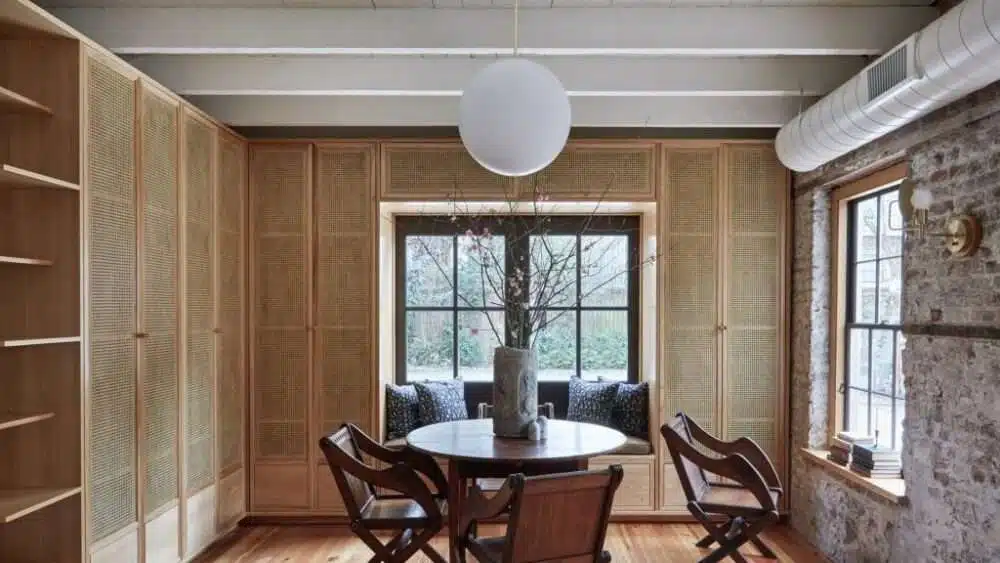
Carriage House, US, by Workstead
This home is set inside a converted kitchen house in South Carolina. A small outbuilding that was originally used to prepare food for the main residence.
Workstead decorated its interior using an imperfect approach that saw the US studio make a feature of exposed, paint-splattered brickwork and crumbling plaster walls.
In one of the home’s living areas, cypress, and woven cane cabinets with an integrated window seat were built around a window. Extending from the wooden floors up to the white-washed ceilings.
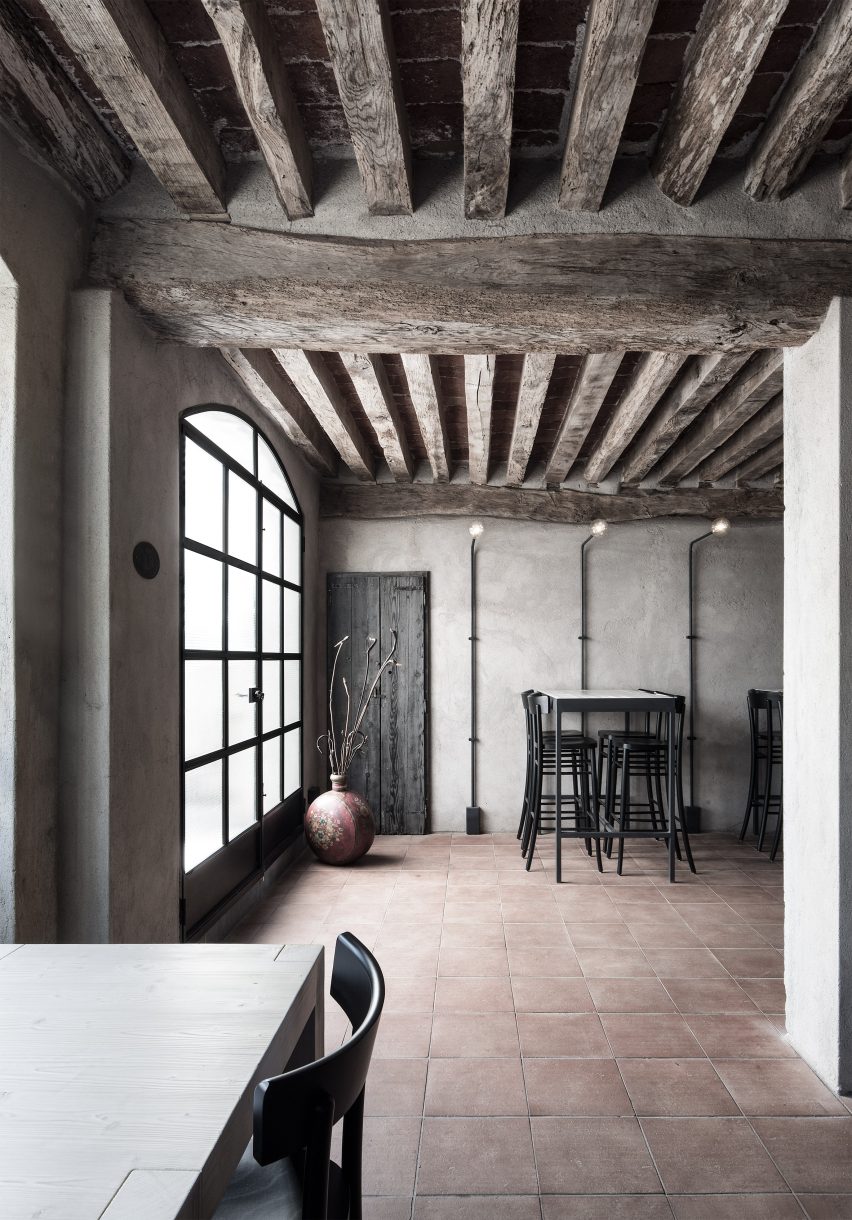
La Ganea, Italy, by Studio Mabb
A material palette of plaster, timber, and iron defines the rustic interiors of this restaurant in Brescia, Italy. It was by interiors practice Studio Mabb.
The former farmhouse dates back to the 16th century and was renovated to have a simple aesthetic with earthy components. Large wooden beams stretch across the ceiling above a tiled floor and grey-washed walls while dark wood and iron furnishings complete the moody atmosphere.
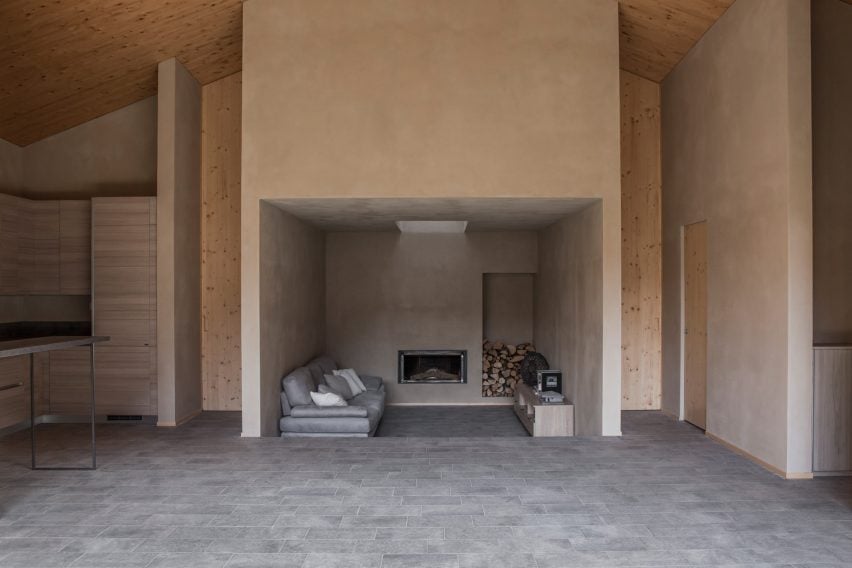
Japanese tea house, Italy, by Lorenzo Guzzini
At this home on Lake Como materials were for their likeness to the surrounding nature and the vernacular architecture of the historic village of Dizzasco.
Also, Textural wall finishes in earthy tones and stone-lined floors were with exposed wooden ceilings, pine skirting boards, and doors to reference the rustic look of traditional tea houses.
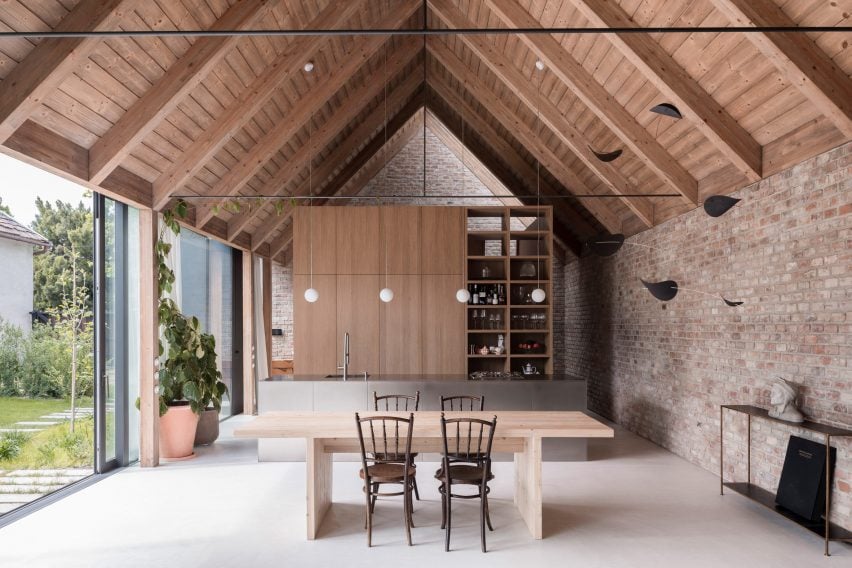
House V, Slovakia, by Martin Skoček
Slovakia-based architect Martin Skoček used salvaged and time-worn materials in the interior of this gabled home near Bratislava.
Additionally, Bricks walls are in the open-plan living area at the center of the home beneath a wood-gabled ceiling that spans the entire length of the space.
Contemporary additions such as a steel breakfast island and oak storage wall anchor the kitchen area. Therefore providing a contrast with the raw brick walls and wooden ceiling.
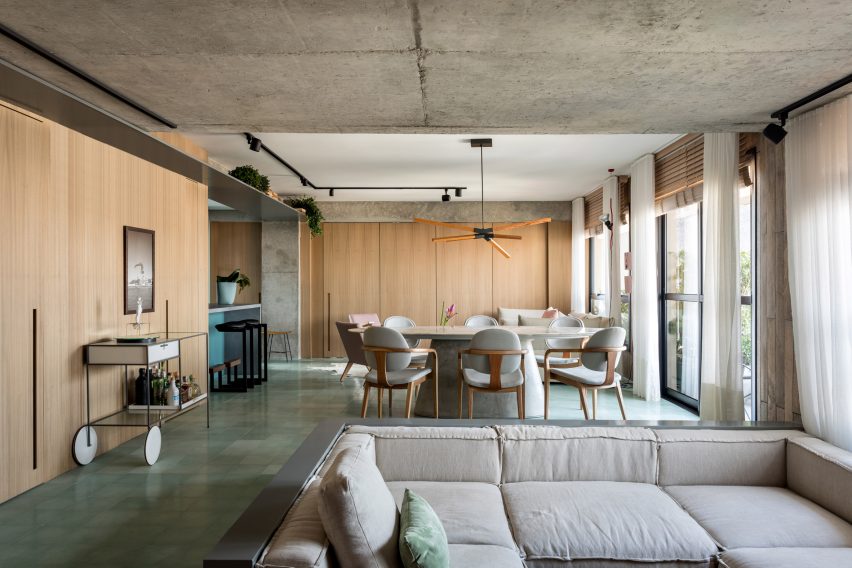
GM Apartment, Brazil, by Nildo José Architects
Brazillian studio Nildo José Architects highlighted many of the existing architectural features when renovating this two-bedroom apartment in a condominium tower in Sao Paulo.
Moreover, The interior scheme draws on a more contemporary idea of rustic. Therefore using exposed concrete elements combined with bleached wood and glazed tiles.
“The kitchen is open and funky, blending rustic and modern with colors, design, and materials,” the studio said.
Finally, Read more on Archup: