Escenario Hanabusayama: New Residential Project in Tokyo’s Hills

Escenario Hanabusayama responds to its hillside site in Tokyo’s Meguro ward with quiet precision, integrating borrowed scenery, exposed concrete, and passive ventilation. It explores how housing can emerge from terrain rather than override it. This approach reflects ongoing questions in urban architecture, avoiding grand gestures in favor of geological mimicry.
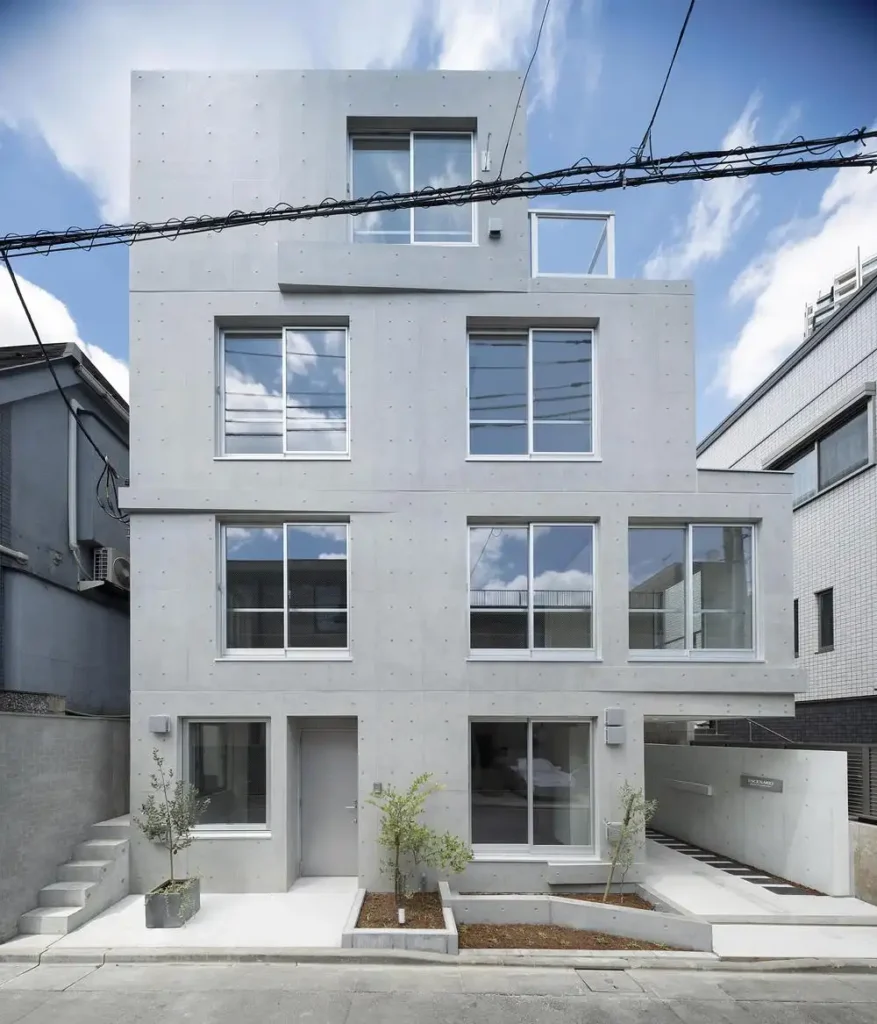
Design Concept: Architecture Carved from Slope
The site lies near historic Edo era neighborhoods. Its contours inspired a form that echoes natural strata. Escenario Hanabusayama features slanted ridges and staggered volumes, resembling rock layers more than typical buildings. Instead of flattening the slope, the design uses it to shape both exterior and interior rhythm. A rhythmic grid of square apertures opens to the street. The rear abuts a ten meter cliff, closed for stability. Framed views of hilltop greenery reinterpret shakkei, or borrowed landscape a principle documented in Japanese architectural design.

Materials & Construction: Concrete as Terrain
Exposed concrete serves as structure and finish. It acts as an extension of the cliff face, not a stylistic statement. This aligns with regional practices in building materials. Boundary walls use slender stone patterns that mirror natural bedding. Inside, greige-toned concrete surfaces remain raw. Daylight modulates their texture throughout the day. No cladding or secondary layers obscure the material’s honesty. Past precedents like this appear in ArchUp’s archive.
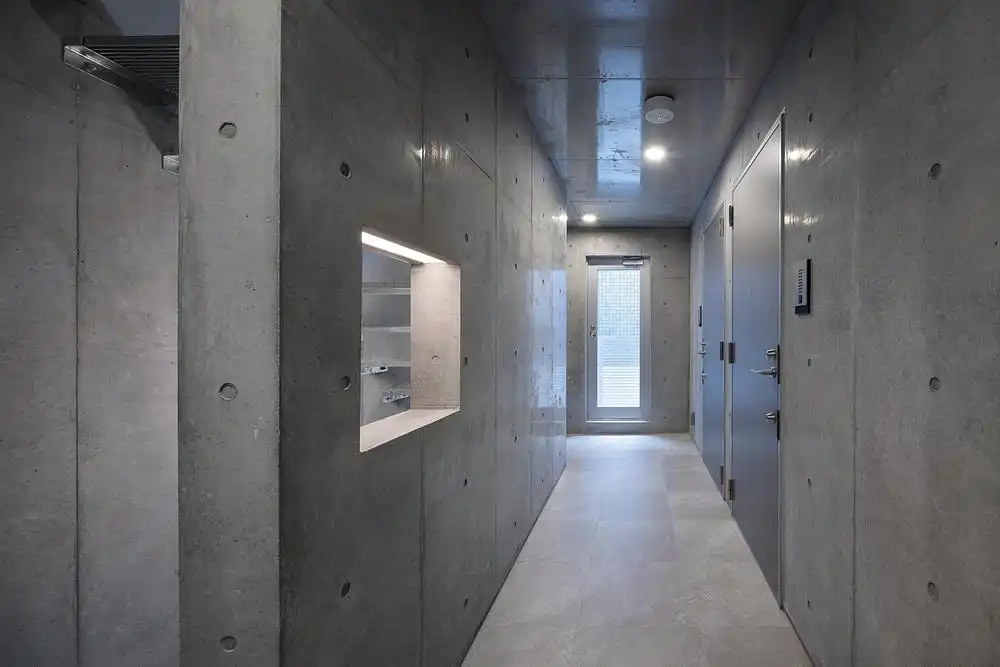
Sustainability: Passive Strategies Over Systems
Each unit opens on two sides. This ensures cross ventilation and daylight without mechanical systems. The strategy responds pragmatically to Tokyo’s humid summers. Energy demand drops while livability rises. These choices fit regional models tracked by sustainability research. Efficiency is embedded in section and orientation. No certifications are claimed, only quiet functionality.
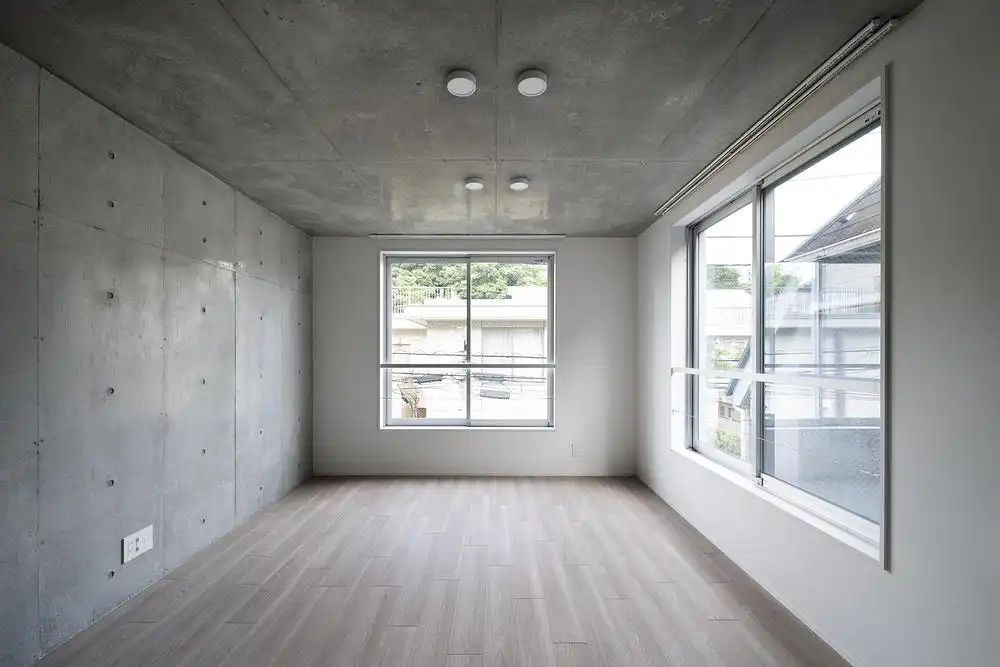
Urban Impact: Density with Restraint
Land scarcity in Tokyo often forces vertical stacking. Escenario Hanabusayama chooses contextual quiet instead. Its muted palette and modest scale let it recede into the hill. It avoids visual competition with older neighbors. This raises a question: can such restraint be replicated in other sensitive urban zones? Especially as global cities grapple with density and heritage.
Architectural Snapshot: Escenario Hanabusayama uses exposed concrete and borrowed landscape to embed twelve units into Tokyo’s hillside without disrupting its geological rhythm.
ArchUp Editorial Insight
Escenario Hanabusayama positions itself as terrain-responsive housing in Tokyo’s Meguro ward, presenting twelve units through layered concrete and borrowed landscape. Its narrative leans on geological metaphor and passive design, consistent with Ryuichi Sasaki Architecture’s formal language. Yet, the project risks aestheticizing topography without confronting Tokyo’s acute housing inequities or regulatory constraints. The use of exposed concrete feels more stylistic than structural, and the quietude borders on escapism in a city demanding density with social accountability. Still, its restraint in scale and palette avoids visual aggression a rare discipline. Whether such an approach remains relevant depends on whether architecture chooses to embed itself in land or merely pose upon it.