

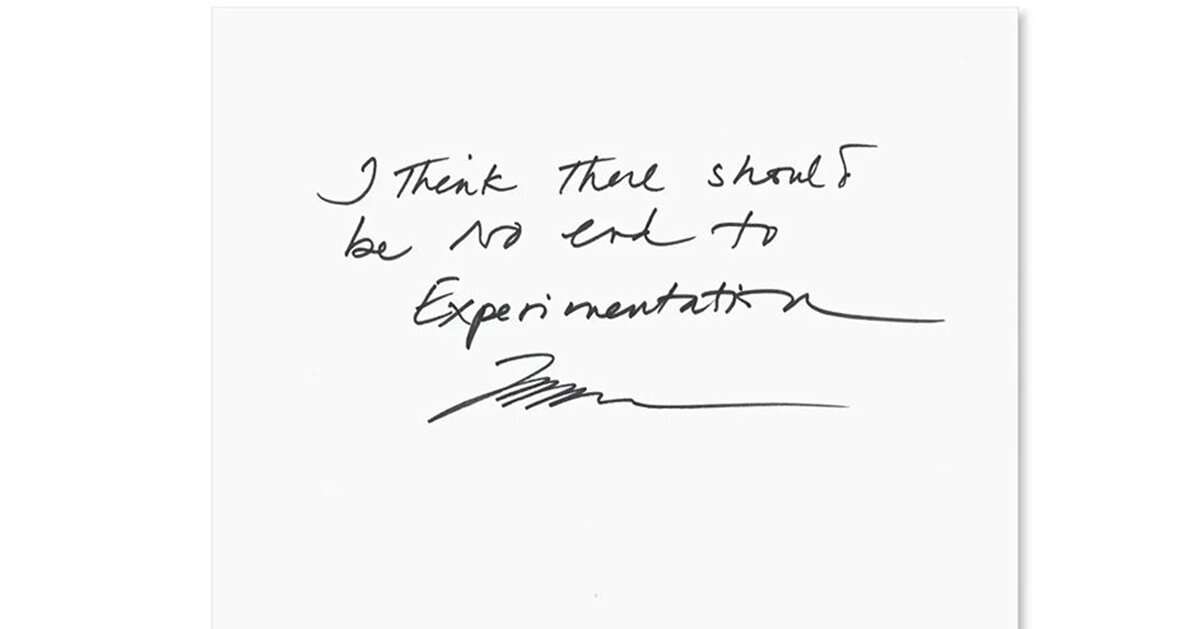
Hans Ulrich Obrist Archives Chapter 6: Zaha Hadid — “I Think There Should Be No End to Experimentation”
1 May، 2026 @ 8:00 am - 31 March، 2027 @ 5:00 pm
Overview
LUMA Arles presents the sixth chapter of Hans Ulrich Obrist’s Archives series, dedicated to Zaha Hadid, at The Tower in the Parc des Ateliers in Arles, France. The exhibition opens May 1, 2026 and runs through March 31, 2027, marking the tenth anniversary of Dame Zaha Hadid’s passing on March 31, 2016. It is organized by LUMA Arles Artistic Director Vassilis Oikonomopoulos and curated by Hans Ulrich Obrist (Senior Advisor) and Arthur Fouray (Curator and Archivist), in close collaboration with the Zaha Hadid Foundation.
Presented in The Tower designed by the late Frank Gehry, a close friend of Hadid’s, the exhibition brings together early calligraphic architectural paintings, notebooks, archival materials, and hours of previously unseen video interviews recorded between 2001 and 2013. It is the first major institutional presentation of this material since the Serpentine’s posthumous exhibition “Zaha Hadid: Early Paintings and Drawings” in 2016.
Focus
The exhibition’s central argument is that Hadid’s early painting practice was not supplementary to her architecture but structurally generative of it. Working through axonometric projection, multi-perspectival viewpoints, calligraphic line, and acrylic layering, she developed a spatial vocabulary through the canvas long before advanced software could coordinate the geometric complexity she was inventing. The title, drawn from Hadid’s own words, names her methodological position precisely: experimentation not as phase but as permanent condition.
The show traces three interconnected chapters of Hadid’s career: from her engagement with Constructivism and the Russian avant-garde at the Architectural Association under Rem Koolhaas and Elia Zenghelis; to her early projects and their reception in the French context, including the CMA CGM Tower in Marseille (2004–2011) and Pierresvives in Montpellier (2002–2012); to her longstanding intellectual relationship with Hans Ulrich Obrist, which began in the late 1990s with the *Meshworks* commission at the Villa Medici in Rome.
Through axonometric projection, multi-perspectival viewpoints, calligraphic line, and acrylic layering, she pushes architecture beyond the inertia of Euclidean geometry long before advanced software can help coordinate such complexity.
LUMA Arles, Exhibition Description, 2026
Exhibition Structure
Chapter 1: Constructivism and the AA Years
The exhibition opens with Hadid’s formation at the Architectural Association in London from 1972, where she worked in the orbit of Rem Koolhaas and Elia Zenghelis exploring the aborted experiments of Modernism and the Russian avant-garde. This section presents the Suprematist geometric exercises and calligraphic paintings that formed her early research practice, tracing how abstract painting functioned as a laboratory for spatial invention at a moment when her architectural ideas had no buildable form yet.
Chapter 2: Early Projects and the French Context
The second chapter connects Hadid’s painterly research to her early built work and unbuilt proposals, with particular attention to the French context: the CMA CGM Tower in Marseille and Pierresvives in Montpellier, two projects that situate her practice within French institutional and urban history. The selection traces the path from her first completed building, the Vitra Fire Station in Weil am Rhein (1988–1993), through the development of her built architectural language.
Chapter 3: The Obrist Relationship
The third chapter documents Hadid’s sustained intellectual exchange with Hans Ulrich Obrist across encounters in London, Basel, Munich, and Paris through the early 2000s. It includes her participation in several Serpentine Marathons, her *Lilas* installation inaugurated at the Serpentine’s 2007 Summer Party, and the completion of the Serpentine North Gallery and The Magazine restaurant (2009–2013) by Zaha Hadid Architects. Hours of previously unseen video interviews from 2001 to 2013 are presented here, alongside posters realized by her peers and admirers.
Works and Materials
The exhibition combines early calligraphic paintings and notebooks as Suprematist geometric exercises; architectural drawings and project documentation; archival materials from the Zaha Hadid Foundation; posters by peers and admirers; and hours of previously unseen video interviews recorded between 2001 and 2013. The material spans painting, architectural research, publication, and discourse, presenting Hadid as a philosopher of space rather than solely as a builder of monuments.
About the Archives Series
The Hans Ulrich Obrist Archives is a long-term project at LUMA Arles dedicated to bringing together, safeguarding, and sharing the archives of key figures in art, architecture, design, and critical thought. Each chapter focuses on a single figure whose archive is in dialogue with Obrist’s own collection of conversations, collaborations, and institutional relationships accumulated over four decades of curatorial practice.
Audience
The exhibition is open to the general public at LUMA Arles. Its nearly eleven-month run places it within several major cultural seasons in Arles, including the Rencontres de la Photographie (July) and the Arles Christmas market (December). Its primary audience is practitioners and historians of architecture, contemporary art, and design research, alongside general visitors to LUMA Arles and those drawn to the retrospective scope of Hadid’s practice. The Tower in Gehry’s building provides a resonant architectural venue for an exhibition about architectural imagination.
Event Details
| Exhibition Dates | May 1, 2026 – March 31, 2027 |
| Venue | The Tower (Living Archives, Level –2; Cherry Tree Gallery, Level –2), Parc des Ateliers, 35 avenue Victor Hugo, 13200 Arles, France |
| Hours | 10:00am – 6:00pm / Closed Tuesdays |
| Admission / Fees | Ticketed — purchase via tickets.luma.org |
| Subject | Zaha Hadid (b. October 31, 1950, Baghdad / d. March 31, 2016, Miami) |
| Anniversary | 10th anniversary of Hadid’s passing (March 31, 2026) |
| Artistic Director | Vassilis Oikonomopoulos, LUMA Arles |
| Curators | Hans Ulrich Obrist (Senior Advisor); Arthur Fouray (Curator and Archivist) |
| Curatorial Assistant | Lucas Jacques-Witz |
| In collaboration with | Zaha Hadid Foundation |
| Venue architect | Frank Gehry (The Tower, Parc des Ateliers) |
| Contact | luma.org/en/arles / +33 4 65 88 10 00 |
✦ ArchUp Editorial Insight
The most important claim this exhibition makes is not about Hadid’s built work but about her painterly practice: that the canvases were a genuine research instrument, not an illustration of ideas already formed elsewhere. If the early calligraphic paintings and notebooks are shown with sufficient analytical context, they reveal something that retrospectives organized around built projects routinely obscure — that Hadid’s formal language was developed through drawing and painting before it was ever constructable, and that the period often dismissed as “paper architecture” was where the most consequential spatial thinking occurred. Presenting this at The Tower in Gehry’s building adds a layer of architectural self-referentiality that is either resonant or distracting depending on how explicitly the installation addresses it. The ten-year anniversary frame is occasion rather than argument; what will define the exhibition’s contribution to understanding Hadid’s practice is the density and honesty of the archival material it brings to light, particularly the previously unseen video interviews, which have the potential to complicate the institutional hagiography that has surrounded her legacy since 2016.
Closing Note
Nearly eleven months in The Tower at LUMA Arles, opening on the tenth anniversary of Hadid’s passing and closing on its exact date a year later, gives this exhibition an unusual temporal frame. The material it promises — early paintings, notebooks, unseen video interviews across twelve years of conversation — is among the most substantive archive-based engagement with Hadid’s practice to have been mounted since her death. For those engaged with the history of architectural drawing, the relationship between painting and spatial invention, and the theoretical and critical culture of late twentieth-century architecture, the Arles presentation is worth the journey.
Related Events

Event Data Review Notice: Event information is collected and edited by ArchUp’s human Events Desk. Since 10 September 2026, Archive Data Agent, an AI-assisted verification account operating under the ArchUp Events Desk, has provided a secondary review layer to identify and correct routine human data-entry inconsistencies, including dates, schedules, locations, and currency conversions. Final editorial responsibility remains with ArchUp.