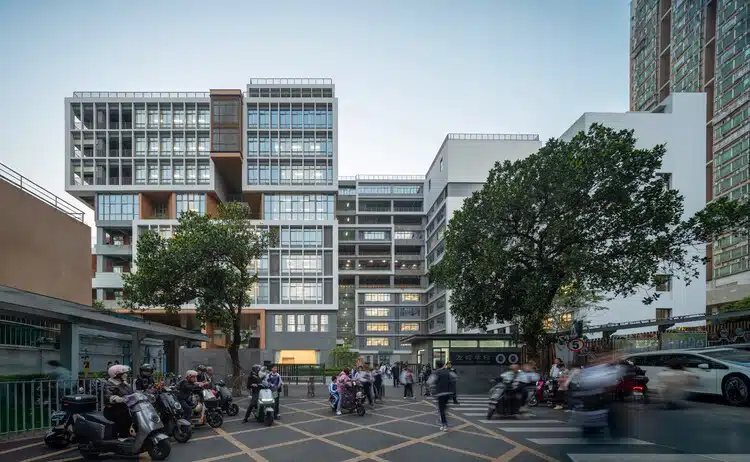
From Industry to Dwelling: Transforming a 1930s Shoe Factory into a Contemporary Masterpiece

In the heart of the urban fabric, where old walls tell tales of a bygone industrial era, the British firm APA undertook an exceptional renovation mission: transforming a 1930s shoe factory into a contemporary apartment pulsating with life. The goal was not merely to provide housing but to revive the original spirit of the place while infusing it with a modern and bold character. Through this meticulous process, the designers managed to merge the building’s historical narrative with the needs of modern living, resulting in a unique residential space that attracts design enthusiasts from everywhere.
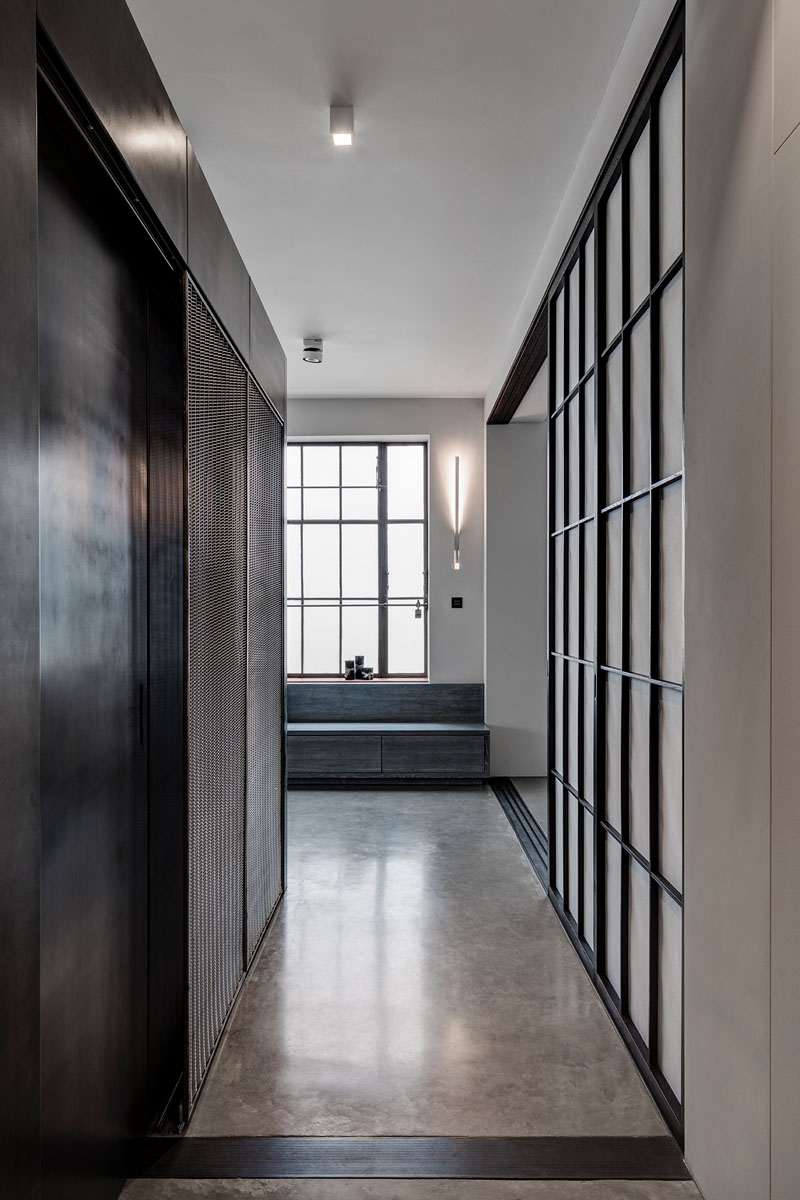
Light and Structure: The Foundation of the Design
The vast windows with their original mechanical frames were the first element to catch the attention of both the designers and the client. These windows were not just a source of natural light but a framework connecting the interior space to the outside world, celebrating urban movement and rhythm. These elements formed the main attraction of the project, as the client sought a home that did not isolate itself from its surroundings but celebrated and integrated with it, all while preserving the structural authenticity that distinguishes the historic building.
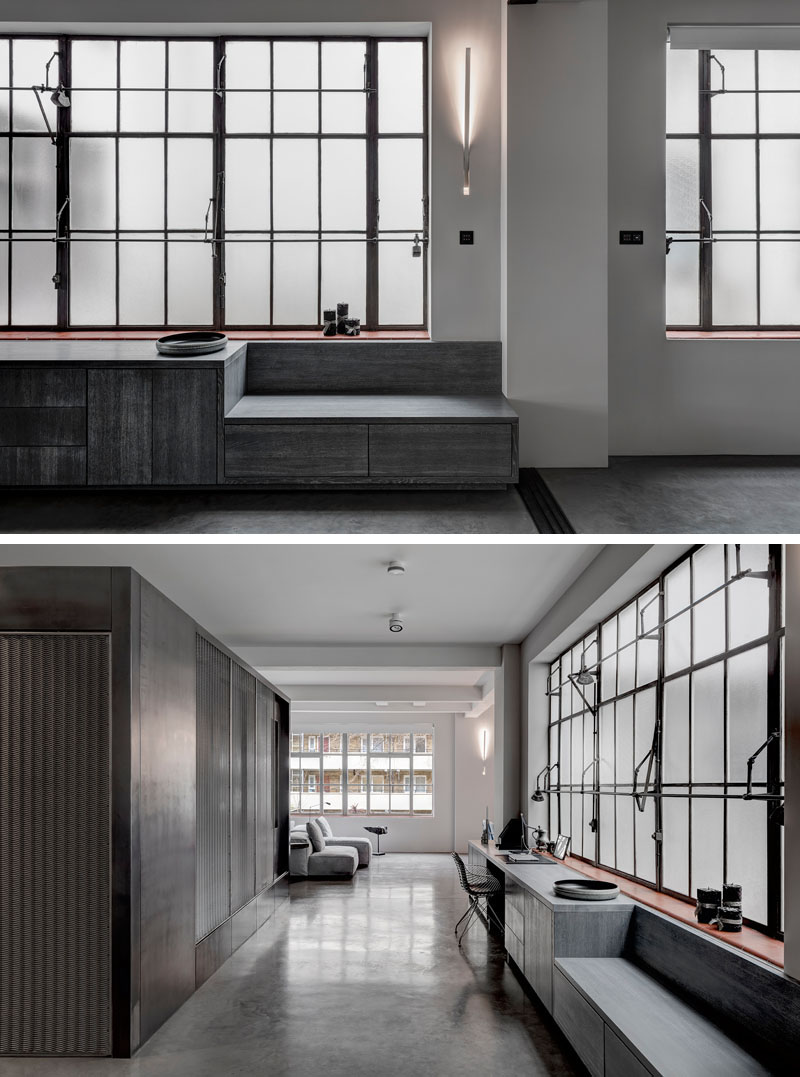
Smart Flow and Multifunctionality: A Multi-Use Bench
To enhance the feeling of spaciousness and continuity, a smart built-in bench extends along one side of the apartment. This bench not only provides comfortable seating but also seamlessly transitions into a dedicated work desk, creating a designated home office area without the need for walls or partitions that disrupt the flow of space. This design feature not only directs movement towards the living room and kitchen but also sets the overall tone for the home: where furniture elements blend perfectly with architecture, creating a cohesive and practical environment.
The Black Box: The Beating Heart and Functional Sculpture
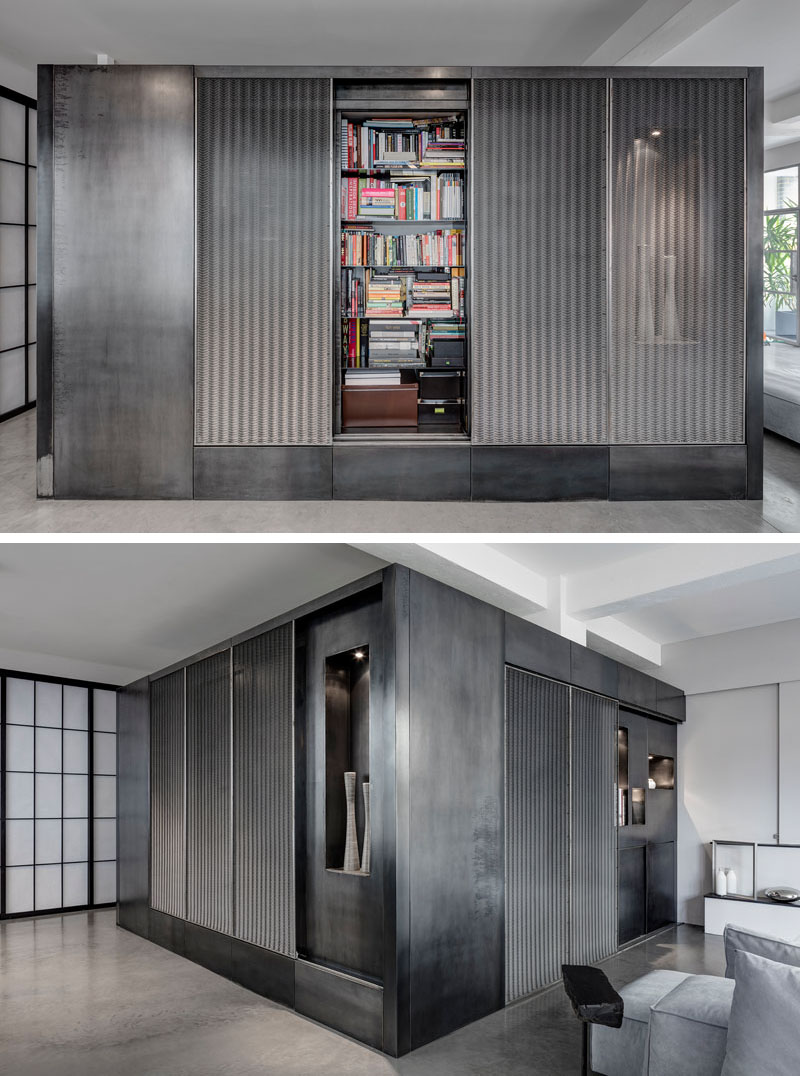
At the center of the design sits a dramatic element that draws all eyes: a black box resembling a mysterious cube. This element is not just a simple partition or wall but a functional sculpture serving multiple roles. Constructed from raw steel walls, black mesh screens, metal shelves, and smart sliding doors and niches, this box becomes the focal point around which the apartment’s life revolves. It reflects the client’s passion for theater, cinema, and precise design, creating moments reminiscent of changing scenes on a stage.
Internal Division Without Walls: The Philosophy of Open Space
The black box reveals its brilliance in organizing space without the need for traditional walls. It houses a private bathroom, a personal archive for films and books, and discreetly integrated laundry facilities. Each face of this cube serves a different purpose: one for reading, another for sleeping, a third for work, and a fourth for cooking, dining, or socializing and relaxing. This ingenious arrangement creates a seamless and fluid experience, where room functions shift according to the residents’ needs, while all spaces remain visually connected, enhancing the feeling of breadth and freedom.
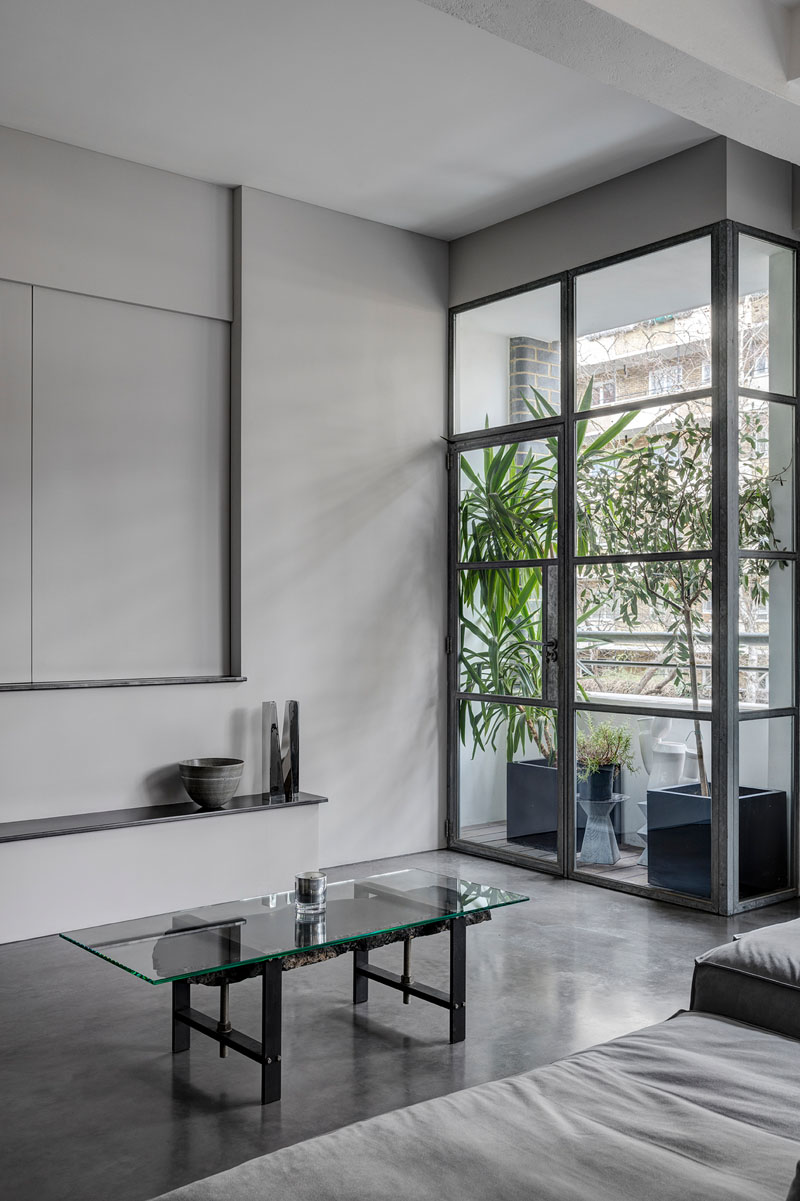
The Living Room: A Bi-Directional Sofa and Integrating Nature
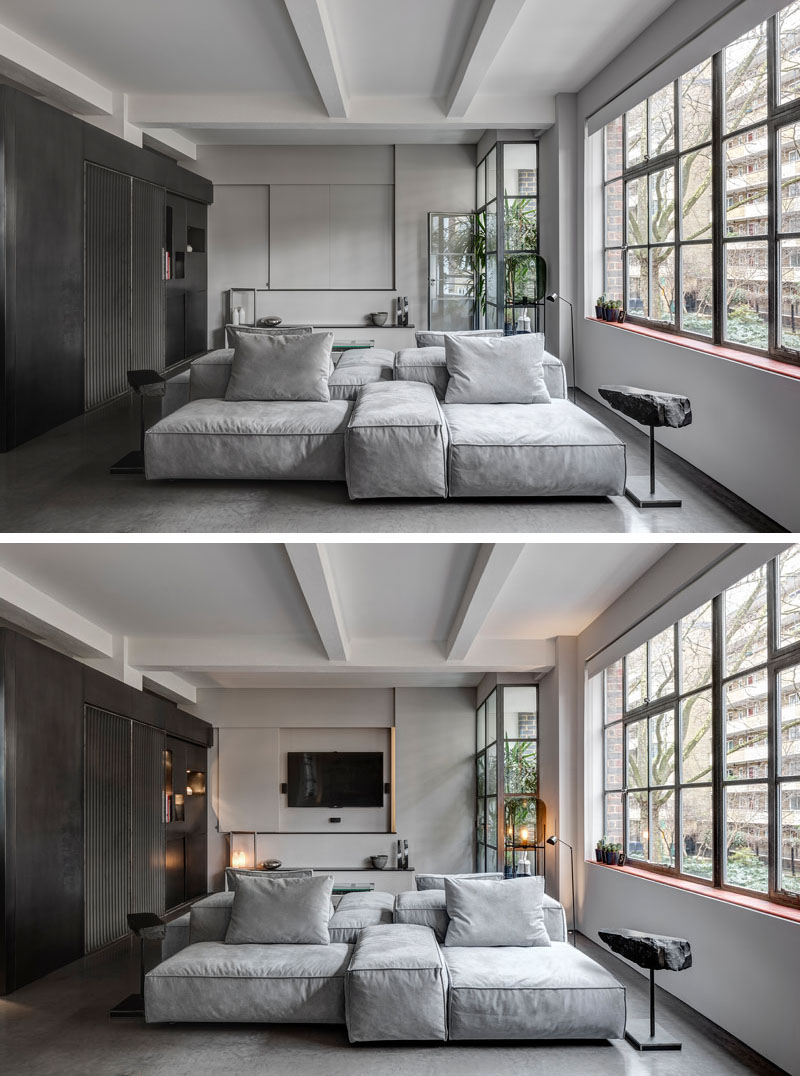
In the living room, the main design element is a double-sided sofa. One side faces a hidden television integrated into the wall decor, while the other faces the kitchen and dining table. This design not only encourages social interaction but also fosters a dynamic feeling of movement within the open space. Opposite this area, a small balcony introduces a hint of nature into the interior through a curated selection of plants, softening the stark industrial palette and adding a touch of life and color.
The Kitchen: Where Authenticity Meets Contemporary
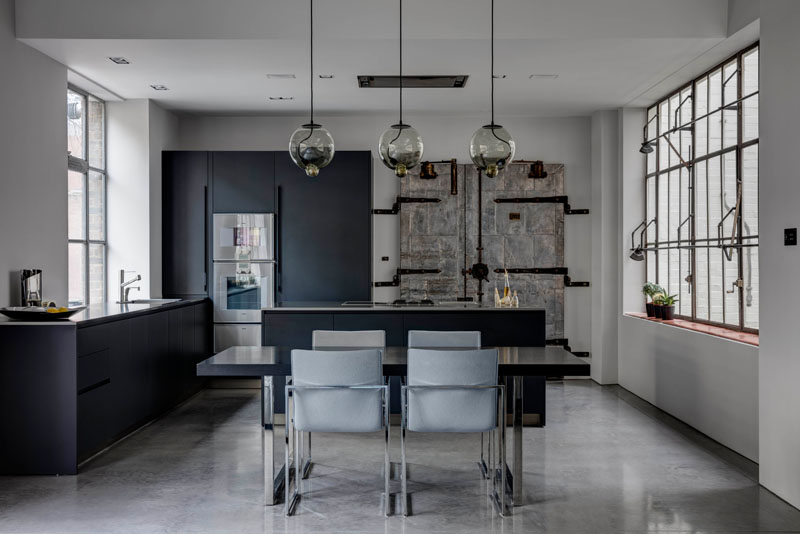
In the kitchen, a historical element stands out as a bridge connecting the past to the present: a stunning, massive original industrial door that was preserved and cleverly integrated into the new design. This door stands as a testament to the building’s industrial roots. Surrounding it, modern black cabinets contrast with pure white walls and polished concrete floors, while touches of warm wood and metallic tones add depth and warmth to the atmosphere. The kitchen represents the point where the raw meets the refined, and the antique meets the contemporary.
Conclusion: More Than Just a Home
APA‘s transformation of this shoe factory is more than just a renovation project; it is a complete reinvention of space. Where industrial roughness meets theatrical precision, and highly personal details meet structural durability. The result is a home that reflects not only the residents’ passion for cinema, design, and travel but also creates a new story for the building. It is a moody and elegant apartment, constantly transitioning between softness and strength, privacy and openness, light and shadow, becoming an inspiring model for architectural heritage revival.
✦ ArchUp Editorial Insight
This project presents a compelling vision for reviving industrial heritage by converting a former factory into a contemporary home that celebrates authenticity and identity. The design shows great appreciation for original elements like the mechanical windows and industrial door, transforming them into aesthetic and functional strengths. However, the raw steel walls and stark industrial aesthetic could pose a challenge in terms of sensory comfort and warmth in the long term, warranting a deeper study to achieve the optimal balance between bold aesthetics and daily residential comfort. The paramount achievement remains the project’s success in creating a rich visual narrative, where every element, especially the central black box, tells a story that forges a deep emotional connection between the place and its inhabitants.
Brought to you by the ArchUp Editorial Team
Inspiration starts here. Dive deeper into Architecture, Interior Design, Research, Cities, Design, and cutting-edge Projectson ArchUp.