From Shore to Storefront: Shawads Studio Weaves Quanzhou’s Nautical Heritage into Local Fish Coffee’s Interior Design

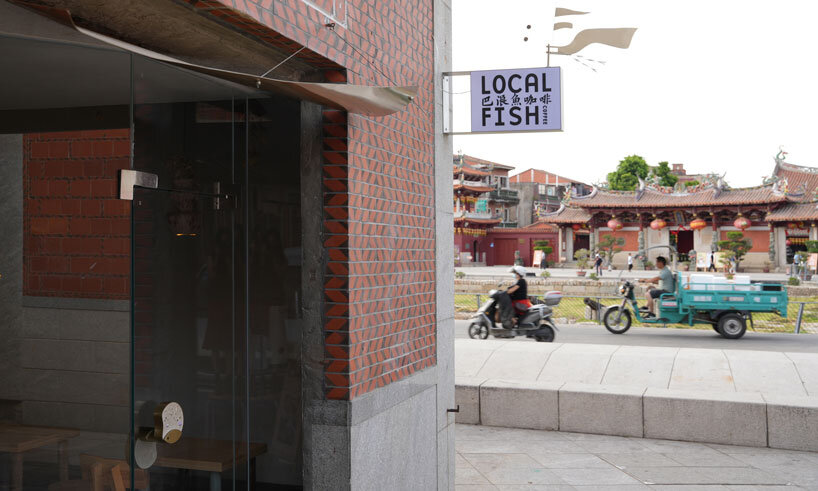
In the historic port city of Quanzhou, near the venerable Tian Hou Temple, a unique narrative of sea, faith, and community is being told not through words, but through space and material. Shanghai-based Shawads Studio (Shu Yin Design and Architecture Studio) has completed the interior design for Local Fish Coffee, a 75-square-meter café that serves as a profound architectural homage to the city’s rich maritime legacy. Historically known as ‘Zayton’ to Arab traders, Quanzhou was a pivotal terminus on the ancient maritime Silk Road. This project moves beyond mere aesthetics, translating the region’s oceanic culture and collective memory into a tangible, immersive spatial experience that resonates with both locals and visitors.
An Architectural Response to History and Site
The design’s genius begins with its response to an irregular plot. Shawads Studio conceived a building footprint defined by soft, responsive curves that elegantly navigate the site’s constraints. This curvilinear language continues inside, where a welcoming entrance and flowing curtain walls deliberately blur the boundary between the interior of the café and the vibrant life of the street outside. This approach not only maximizes the compact space but also creates a dynamic, inviting facade that beckons patrons inward.
The Heart of the Space: Light, Air, and Connection
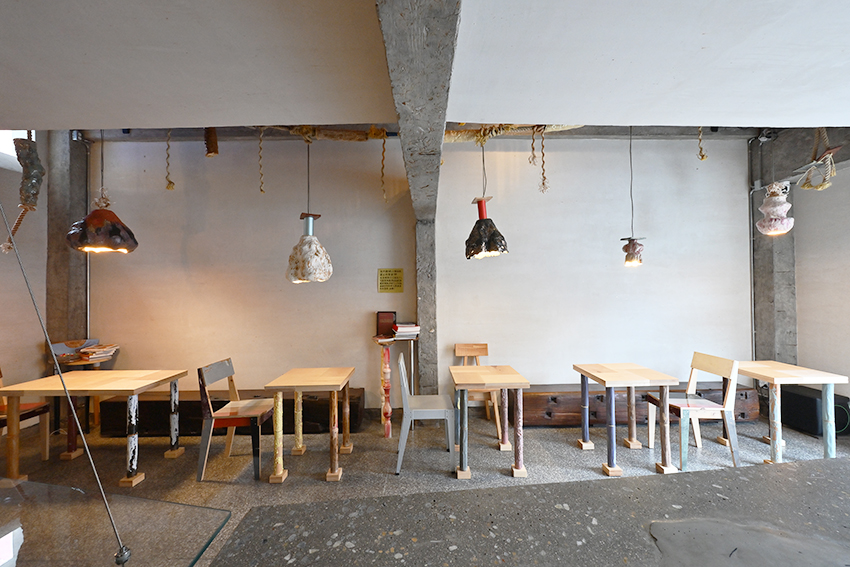
Central to the spatial strategy is a breathtaking light well that punctures the ceiling. This feature is far more than a design element; it is the functional and spiritual core of the café. It floods the interior with abundant, soft natural daylight, promotes passive ventilation, and establishes a visual connection to a loft area above. This vertical connection fosters an atmosphere of openness and airiness, preventing the compact footprint from ever feeling confined. It evokes the feeling of an open courtyard, a communal gathering point under the vast sky a theme deeply connected to coastal living.
Materiality and Craft: Weaving the Story of the Sea
The true soul of the Local Fish Coffee interior lies in its meticulous material selection and artisan techniques, which directly narrate the story of the ocean.
- Reclaimed Deck Wood: Organically arranged flooring made from reclaimed ship deck wood is a masterstroke. Its weathered texture and organic placement mimic softwood naturally deposited along a coastline, inviting patrons to literally walk on a piece of maritime history.
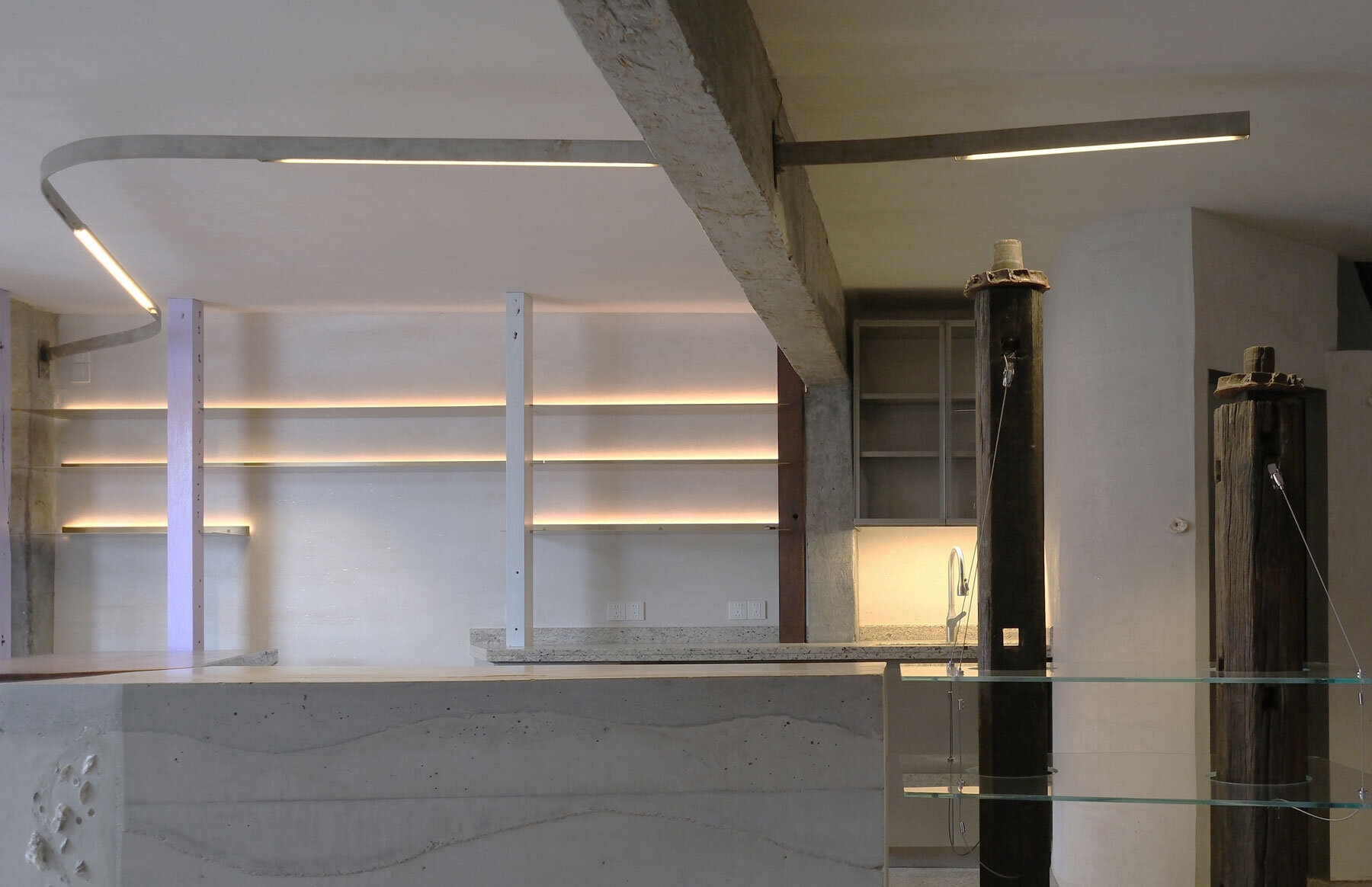
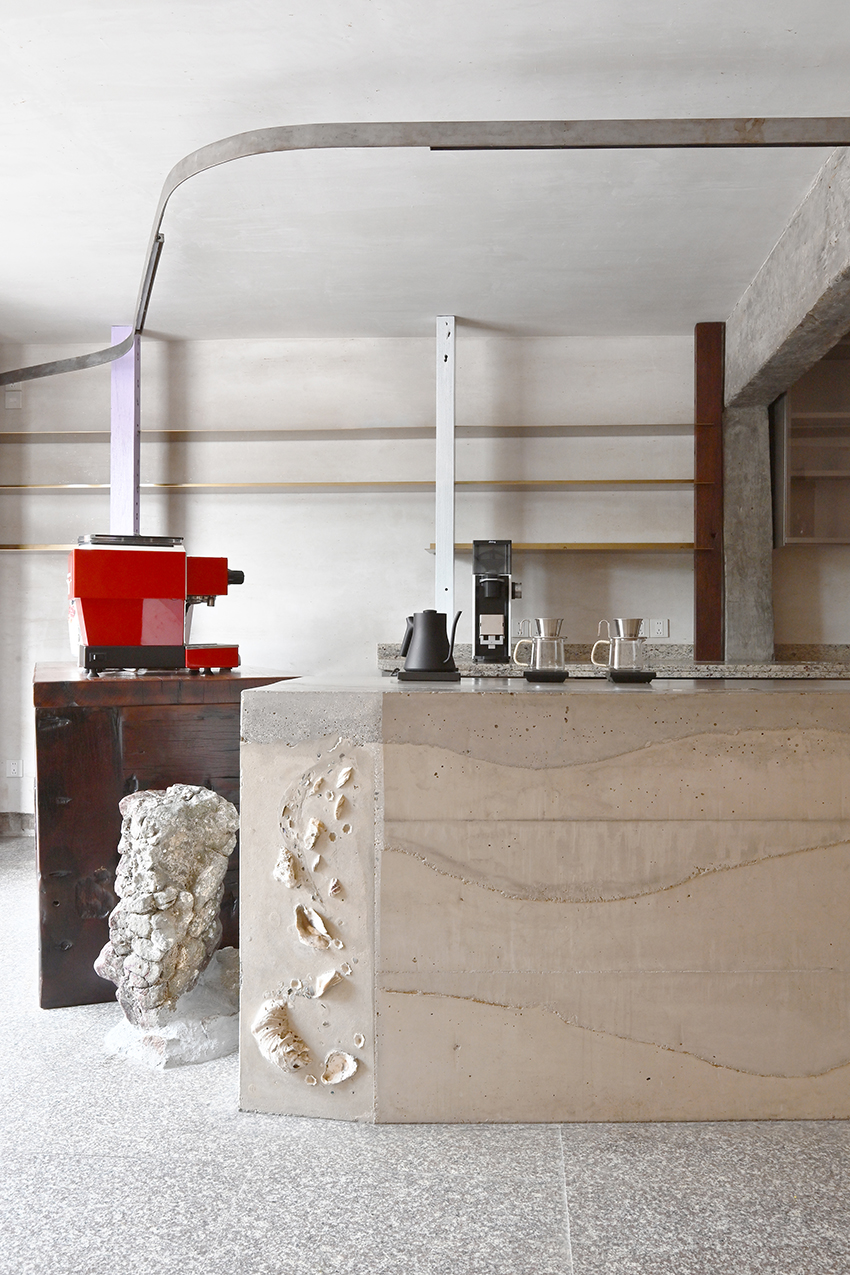
- Artisan Concrete: The concrete surfaces are exceptionally crafted. Embedded with seashell fragments and terrazo, they evoke the layered, wave-worn patterns of the seabed and geological strata. The precise casting and subsequent hand-polishing highlight a commitment to craftsmanship that mirrors the care of shipbuilding.
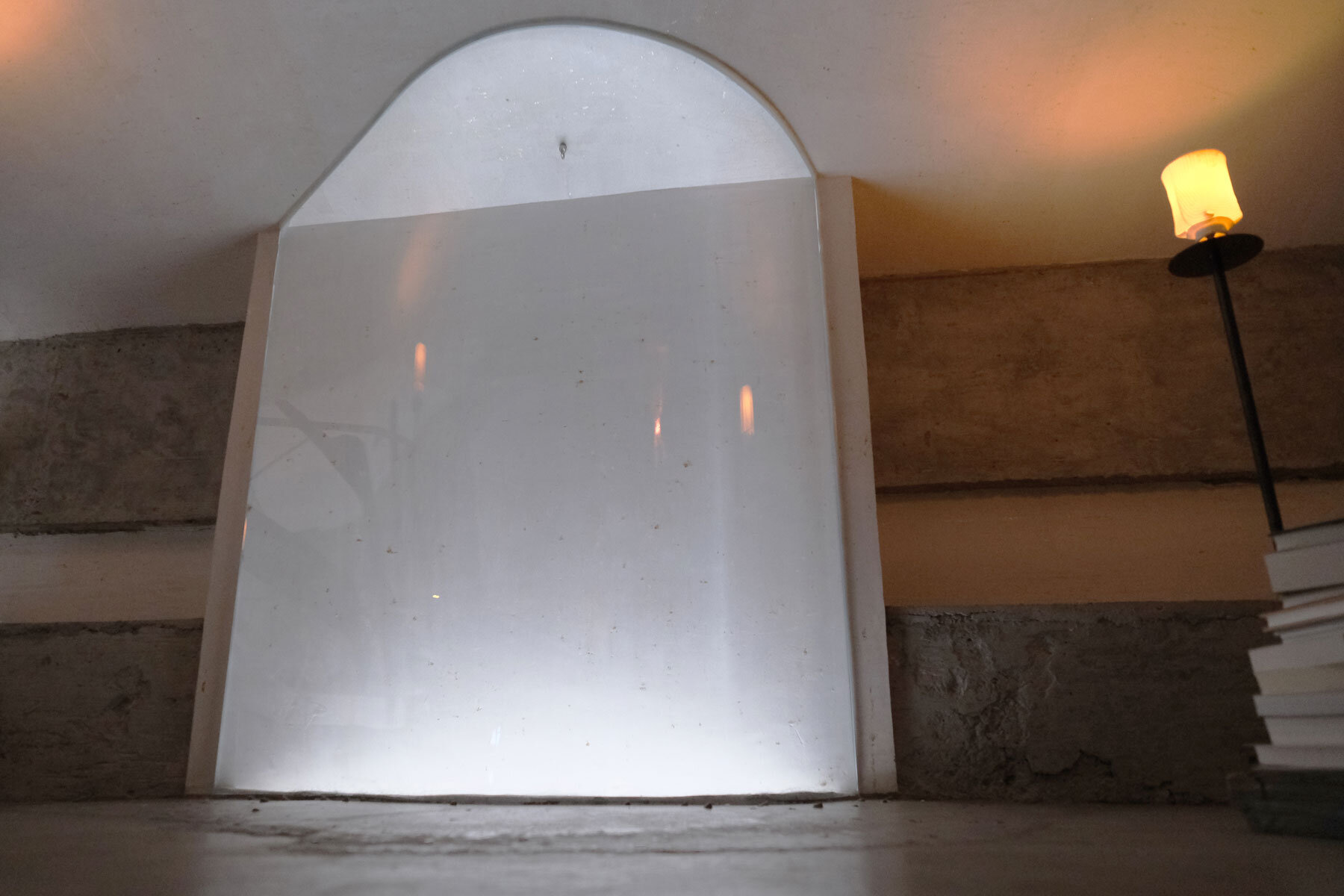
- Custom Mica Wall: A standout feature is a custom wall treated with mica powder and polished using methods inspired by Moroccan Tadelakt. This process produces a subtly reflective, shimmering surface that captures and plays with light, simultaneously recalling the surface of water and the texture of natural stone.
Spatial Narrative and Poetic Interventions
The design journey through the café is marked by thoughtful interventions that deepen the nautical narrative. A small, sunken seating area, reminiscent of a tidal pool or a tiny beach, features embedded shells and intricately carved details, directly referencing the local coastline. This creates an intimate nook for patrons to relax.
Above, the lighting scheme continues the story. Suspended, lightweight iron bars and custom-made “ceramic wave lamps” introduce elements of movement and delicate light into the space. These fixtures, alongside curved glass panels and the exposed concrete, create a sophisticated balance between raw natural effects, industrial elements, and traditional artistry.
Conclusion: A Functional Sanctuary of Community and Heritage
Ultimately, Shawads Studio has achieved more than just a beautiful coffee shop. They have crafted a functional sanctuary that honors Quanzhou’s identity as a historic port city and its reverence for the sea goddess Tian Hou. The interior design of Local Fish Coffee successfully integrates material experimentation, spatial layering, and profound cultural storytelling. It stands as a testament to how contemporary design can respectfully draw from the past to create spaces that are not only visually compelling but also serve as vibrant hubs for community gathering and caffeination. It is a place where every surface has a story, and every visit feels like a brief voyage.
(✦ ArchUp Editorial Insight)
Shawads Studio’s design for Local Fish Coffee masterfully transcends typical hospitality interiors by embedding Quanzhou’s maritime Silk Road heritage directly into its materiality and spatial flow. The critique, however, lies in the potential tension between the deeply conceptual, almost museum-like narrative and the practical, high-traffic demands of a commercial café; one wonders how the artisan surfaces and sunken seating will endure the wear of daily operation. Despite this, the project is ultimately a profound success, achieving a rare poetic synthesis of cultural memory and contemporary design that actively strengthens the community’s connection to its unique history.
Brought to you by the ArchUp Editorial Team
Inspiration starts here. Dive deeper into Architecture, Interior Design, Research, Cities, Design, and cutting-edge Projectson ArchUp.