A Green Island Rises in Taichung: A New Residential Tower Bringing Nature Back to the City

A Green Oasis Growing Within the City
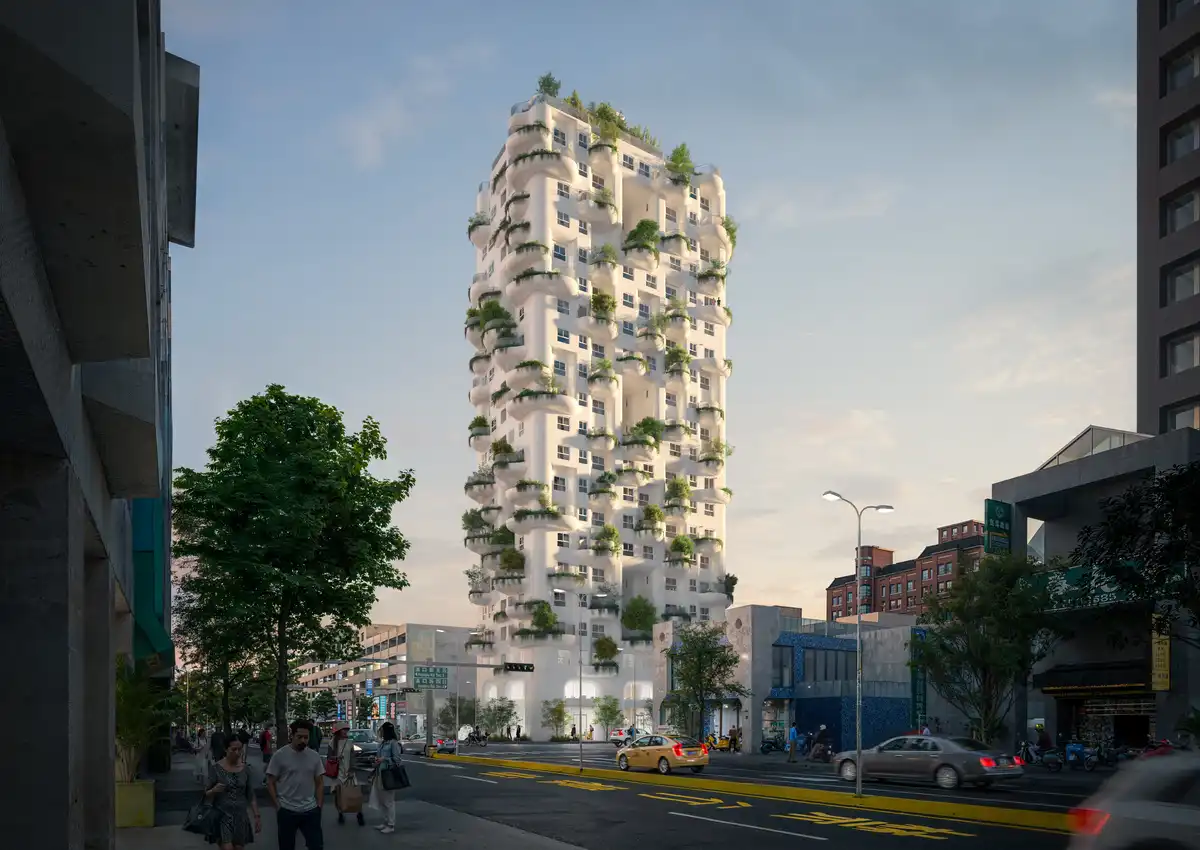
The green residential tower rises within Taichung’s urban fabric like a living mass among the surrounding box-shaped buildings. Visitors immediately notice the soft, organic façade, where curved lines merge with layers of planted terraces. The project redefines urban living, offering generous balconies, vertical gardens, and shared outdoor spaces. These spaces blend air, light, and movement, allowing residents to interact with nature. The building forms an architectural scene that harmonizes with the environment. Its unique presence stands out among the concrete blocks around it.

The Site as a Design Narrative
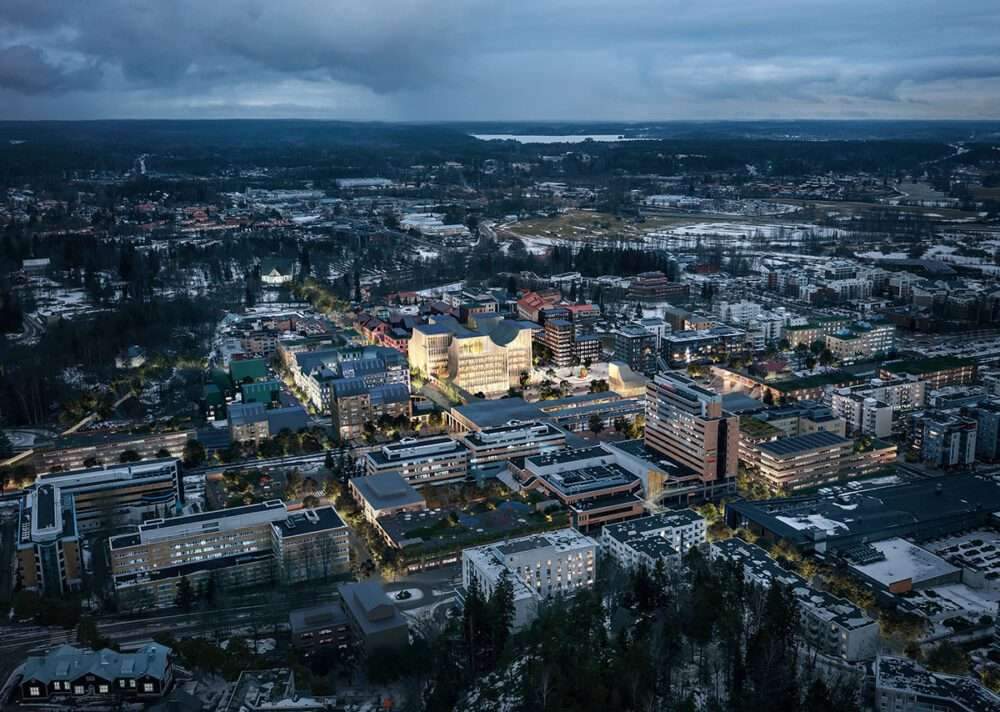
The green residential tower occupies a key junction between the North and Beitun Districts, which have grown rapidly in recent years. The design bridges the busy commercial zone and the quieter residential areas. It embraces the urban island concept, planting greenery along façades and balconies. The plants form natural layers that rise from the ground upward. Residents enjoy a direct connection with nature, as greenery integrates into every level, making the environment part of daily life.
Visitor Journey and Circulation
The journey begins through an open passage that blends seamlessly with the street, reinforcing continuity between public and private space. Visitors move vertically through the tower toward five shared terraces, each carved into a three storey void that opens generously to the outside.
These communal spaces create natural meeting points and offer changing perspectives of the city. At the rooftop, residents reach an elevated garden and a multi use space that serves as the main gathering point, offering panoramic views over Taichung.

Architectural Details Shaped by Light
The project uses a façade clad in irregular ceramic mosaic tiles designed to adapt to the building’s delicate curves. Larger tiles are placed on flat areas, while smaller ones shape the tighter curves to achieve a smooth, continuous surface.
This material interacts with sunlight throughout the day, creating subtle color shifts and emphasizing the organic character of the design.
The façade incorporates 104 planted private balconies and 38 standalone planting units, giving the building depth and transforming its envelope into layered greenery that appears to grow with the tower.
Materials and Construction Techniques
The green residential tower relies on carefully selected materials to strengthen sustainability and performance. The project integrates recycled components and systems that support vegetation without compromising structural integrity.

Materials and Techniques
- 30% reused stone from the previous building to form interior floor finishes.
- 100% ceramic mosaic cladding across the façade for visual fluidity.
- 104 planted private balconies enabling direct interaction with greenery.
- 38 independent planting units distributed across multiple floors.
- Natural ventilation efficiency exceeding 60% thanks to curved façades.
- Structural reinforcement with 15% additional load capacity to support soil, irrigation, and planted elements.
Full Environmental Integration
The green residential tower develops a new relationship between the building and its surroundings. The design reduces environmental impact through the reuse of demolition materials and minimizes construction waste.
The planting palette includes species native to Taichung’s ecosystems, ensuring that environmental principles are applied within the building itself.
Balconies and planted façades reduce heat gain and provide natural shading, lowering energy consumption. Meanwhile, shared outdoor spaces remain usable throughout the year thanks to the micro climate generated by the building’s organic curves and vegetation.

A Final Vision of a Living Architectural Scene
The green residential tower presents a contemporary model for urban living, where the façade becomes a natural landscape rising floor by floor. The design connects public and private areas through an architectural language grounded in fluidity, material warmth, and living greenery creating a small ecosystem embedded within the urban context.
The project does more than add a new residential structure; it creates an interactive experience that allows residents to reconnect with nature without leaving the city. Terraces, gardens, and organic materials work together to form a clear architectural identity, giving the tower a presence that stands apart from conventional urban typologies.
Architecture professionals can follow ArchUp’s events section for verified updates on exhibitions, conferences, competitions, and results.
✦ ArchUp Editorial Insight
The project delivers a strong visual presence shaped by soft curves and planted balconies that form a façade shifting with light and movement, giving the mass the appearance of a green island rising within the city. The design approach aims to break away from surrounding box like structures, yet its extensive use of vertical planting raises questions about long-term maintenance and irrigation efficiency in a dense urban context. Despite these concerns, the project successfully strengthens the residents’ connection to nature and offers notable architectural value by integrating shared spaces with greenery to create a more balanced living experience.