Milan Ice Arena Not Ready for 2026 Olympics

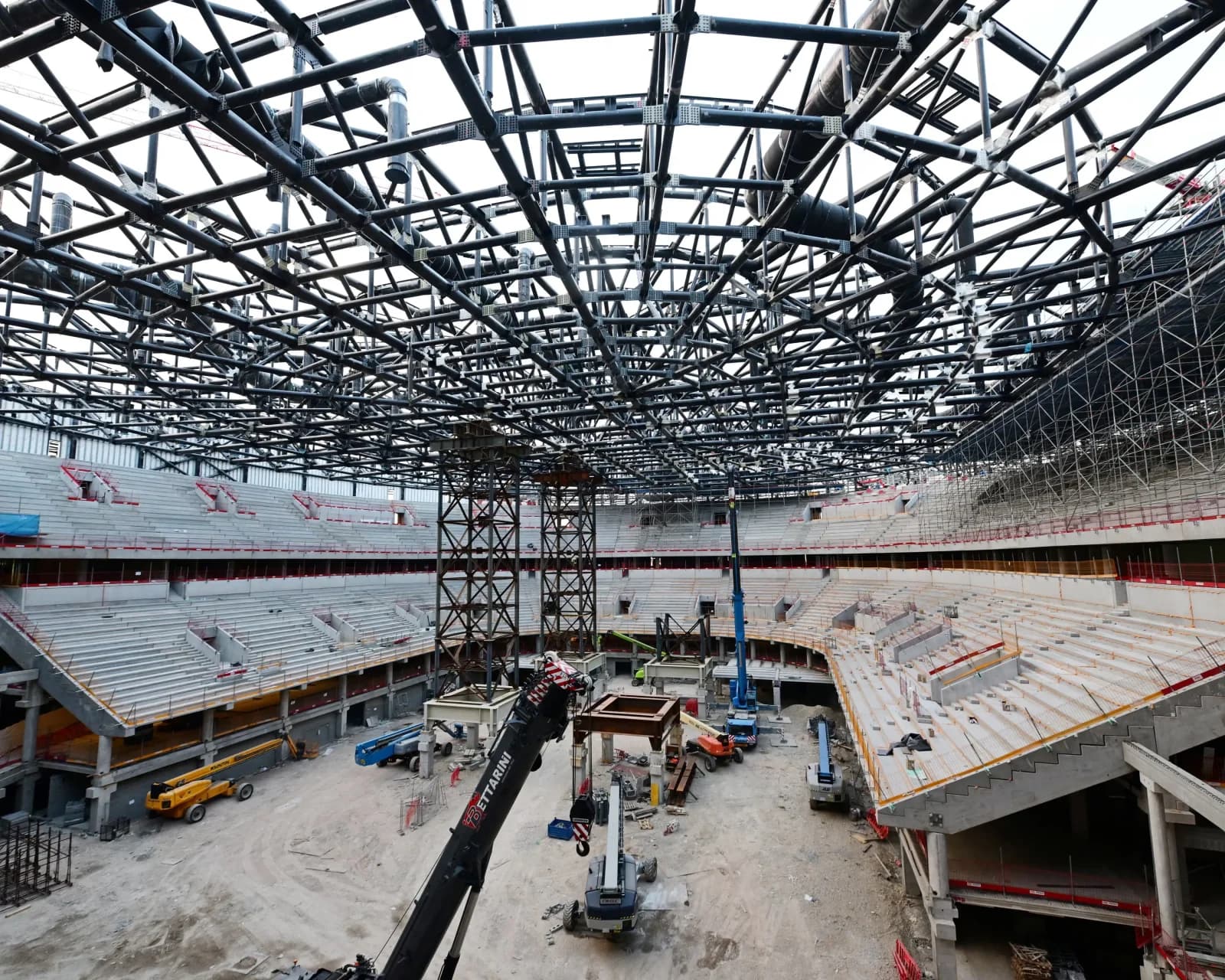
Milan ice arena remains incomplete as of January 2026.
This jeopardizes its use in the Milan Cortina Winter Olympics.
Women’s ice hockey starts February 5. Men’s begins February 11.
Officials now monitor the project closely in news about Olympic events.

Site and Urban Context
The arena sits in Santa Giulia, east of central Milan.
It anchors a large urban renewal zone tied to the Games.
Designers classified it as essential sports buildings.
It will seat 16,000 and host nearly all Olympic ice hockey matches.
Past Olympic sites show similar patterns in the archive.
Planners also expect it to serve cities long after the event.
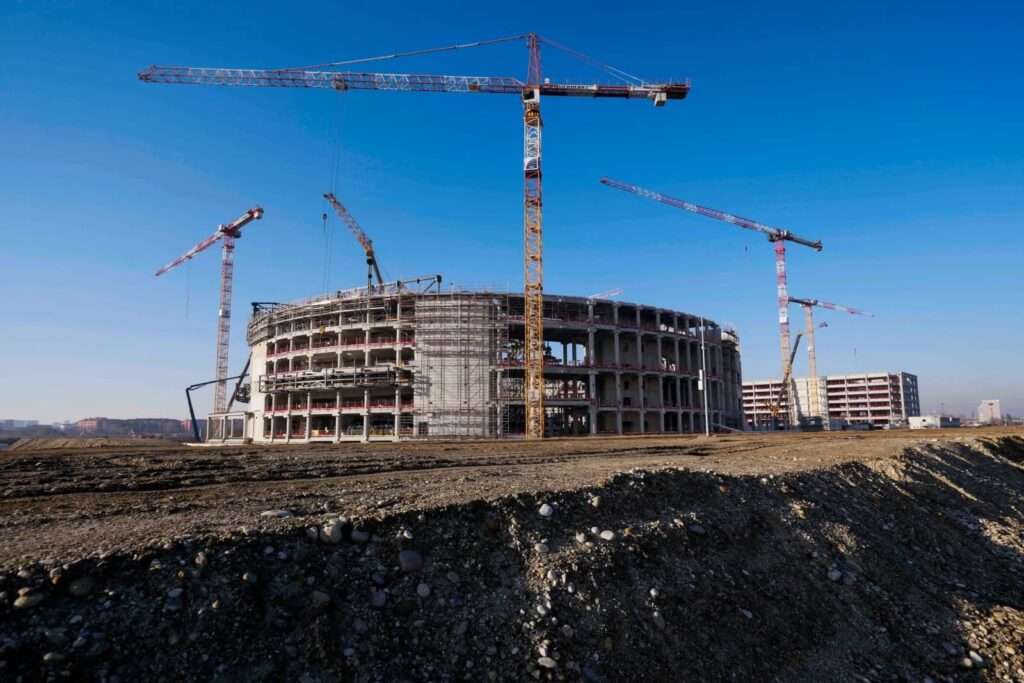
Construction Timeline and Partial Opening
Officials confirm full completion will miss the February deadline.
Core functions ice surface, locker rooms, training areas will likely work.
But seating opens at 11,800 instead of 16,000.
Delays hit upper tier finishes.
This reflects common stress in Olympic architectural design.
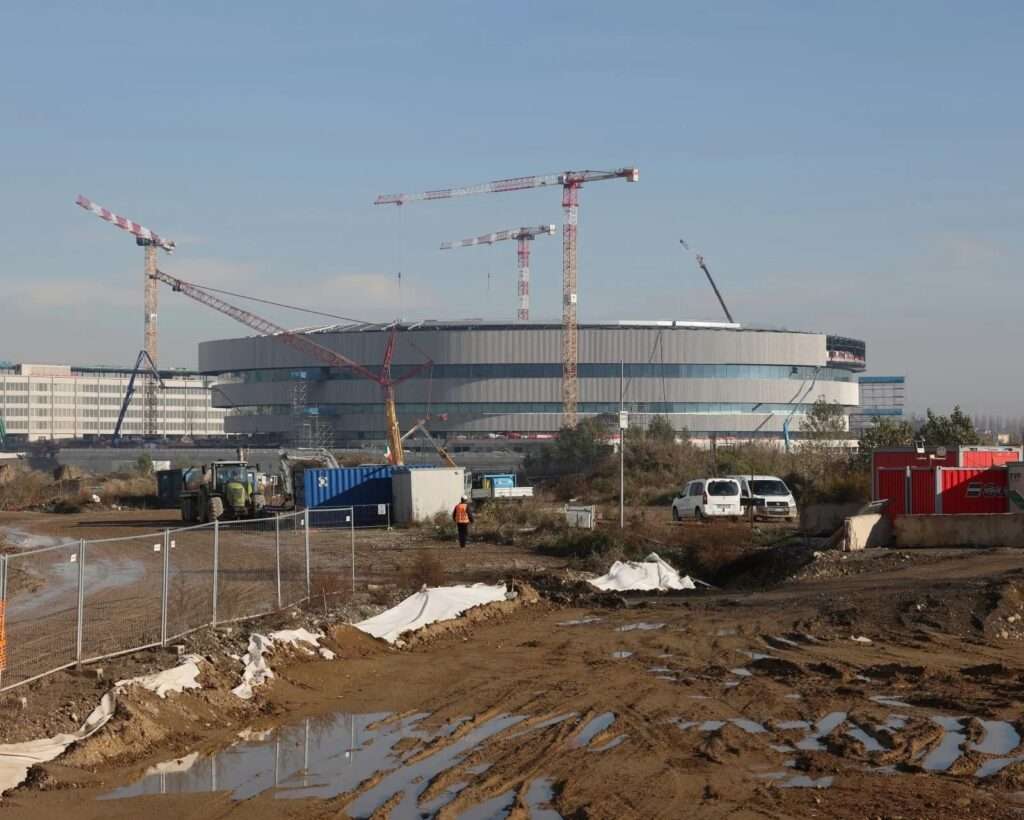
Technical Compliance and Rink Specifications
The Milan ice arena follows International Ice Hockey Federation rules.
Its rinks are shorter and wider than NHL standards.
NHL players return for the first time since 2014.
This raised scrutiny on ice quality and safety.
The venue now ranks among highly technical buildings.
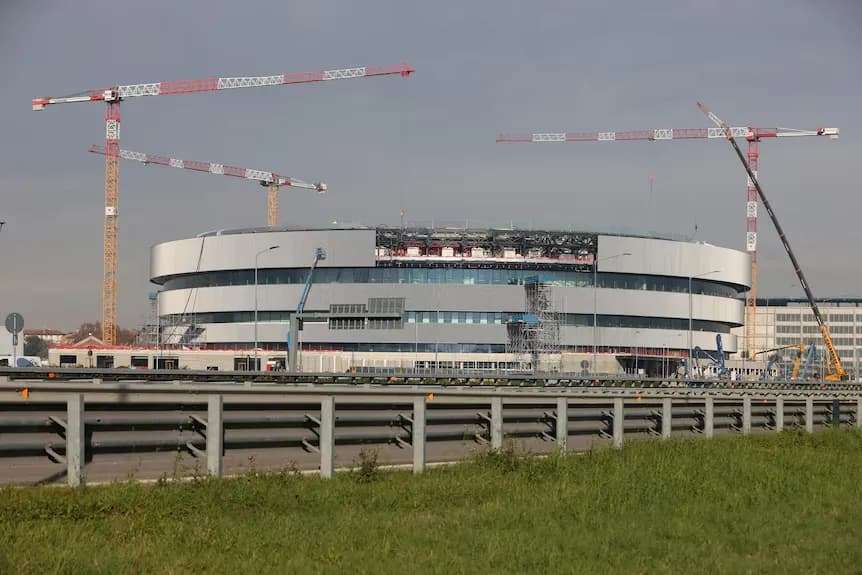
Material Logistics and Schedule Compression
Labor shortages and supply issues disrupted construction.
Teams struggled to install building materials like insulated panels and refrigeration systems on time.
Post-Games Legacy at Risk
Planners designed the arena for long term public use.
But a rushed debut may hurt maintenance and integration.
These trade offs often appear in architectural research.
Time pressure now overrides formal completion.
The Milan ice arena will operate before it is fully built.
This is the fourth and final mention .
Architectural Snapshot
The Olympic arena tests architecture’s capacity to perform under time pressure without formal completion
✦ ArchUp Editorial Insight
The article situates the Milan ice arena’s delay within the tight frame of the 2026 Olympics.
It highlights a growing chasm between operational readiness and full architectural completion.
Facts are presented with neutrality no embellishment, no softening of setbacks.
It subtly notes scheduling pressures but avoids questioning the Olympic model itself.
Credit goes to its precise details: reduced seating, rink dimensions, safety protocols.
What remains unresolved: will this endure as architectural analysis?
Or fade into bureaucratic ephemera after the Games?