
Hadaway House: Contemporary Mountain Architecture


Site and Mountain Context
The house is located on a northwest-facing slope in the Sunridge neighborhood of Whistler, within a mountainous environment characterized by sharp terrain and clearly defined topography. In this context, the building appears as an architectural mass that directly engages with the slope and the view, with a strong reliance on glazed openings that allow the natural landscape to extend into the interior.
Form Composition and Engineering Treatment
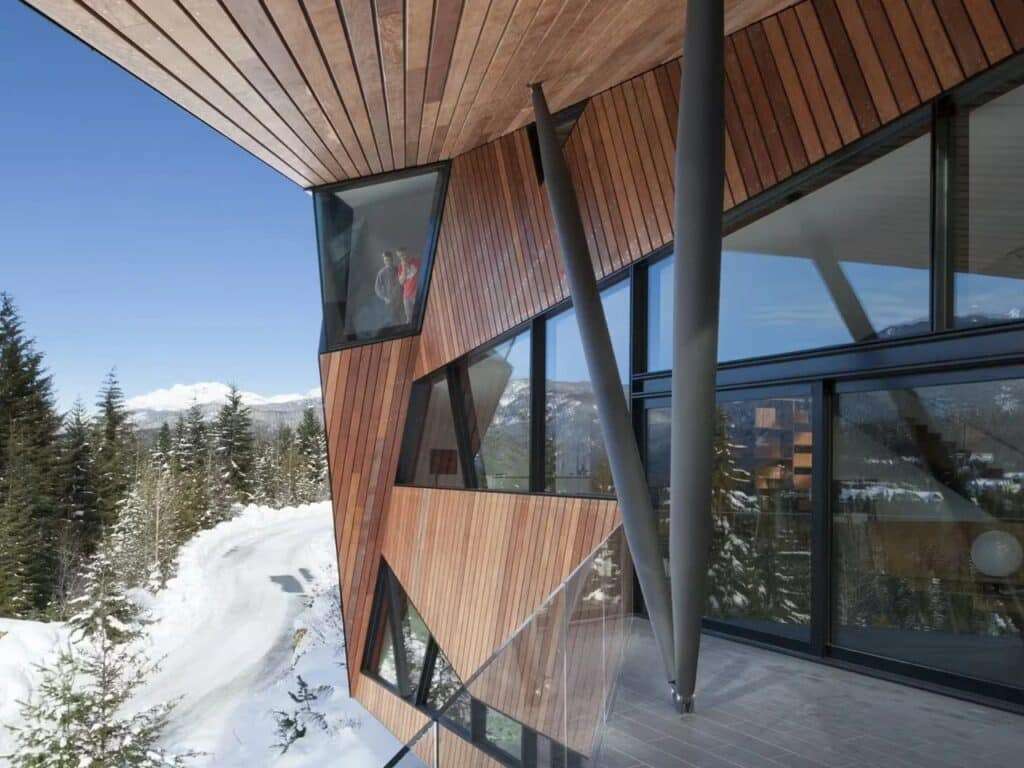
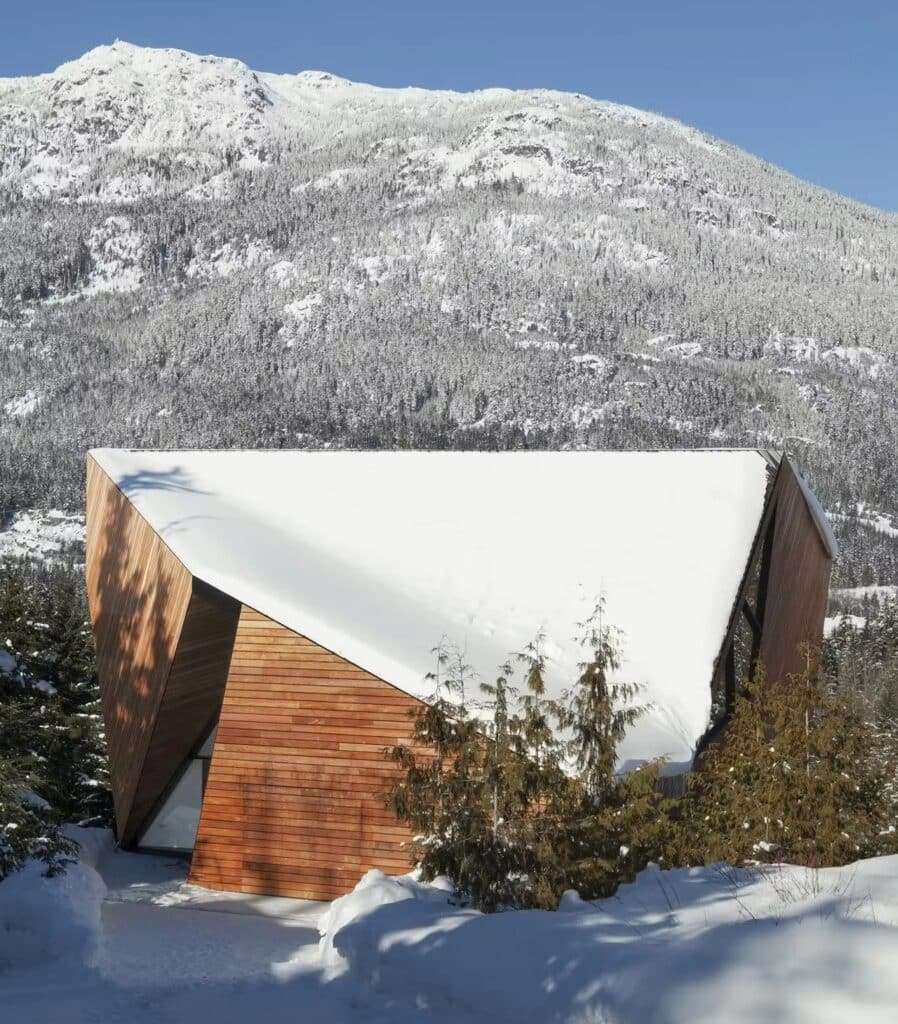
The project demonstrates an unconventional formal treatment compared to typical mountain homes, consisting of sharp planes and clearly defined angles that reflect a complex three-dimensional character. The wood-clad façade also emerges distinctly from the hillside mass, reinforcing the building’s relationship with the surrounding terrain rather than isolating it from it.
Relationship Between Form and Function
Here, architectural form is directly tied to a climatic function. The steeply pitched roof is designed to manage snowfall and facilitate its shedding. As a result, functional considerations merge with formal composition, making the boundary between architecture and nature indistinct. The building appears as an extension of the mountainous context rather than a separate object within it.
Interior and Spatial Composition
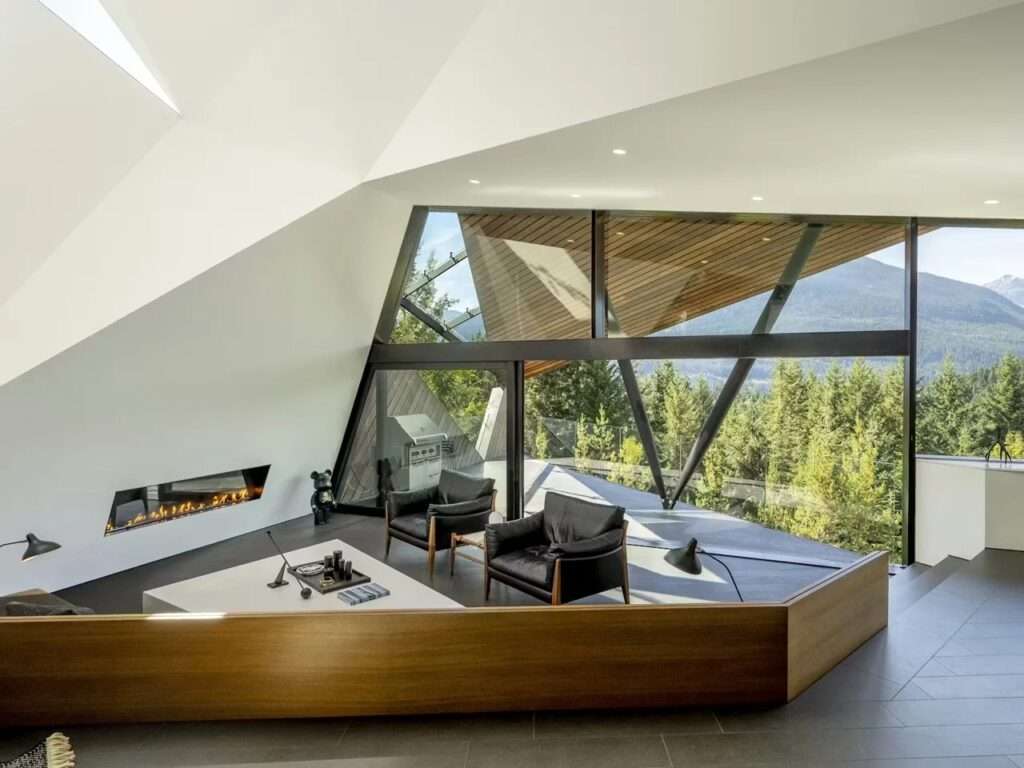
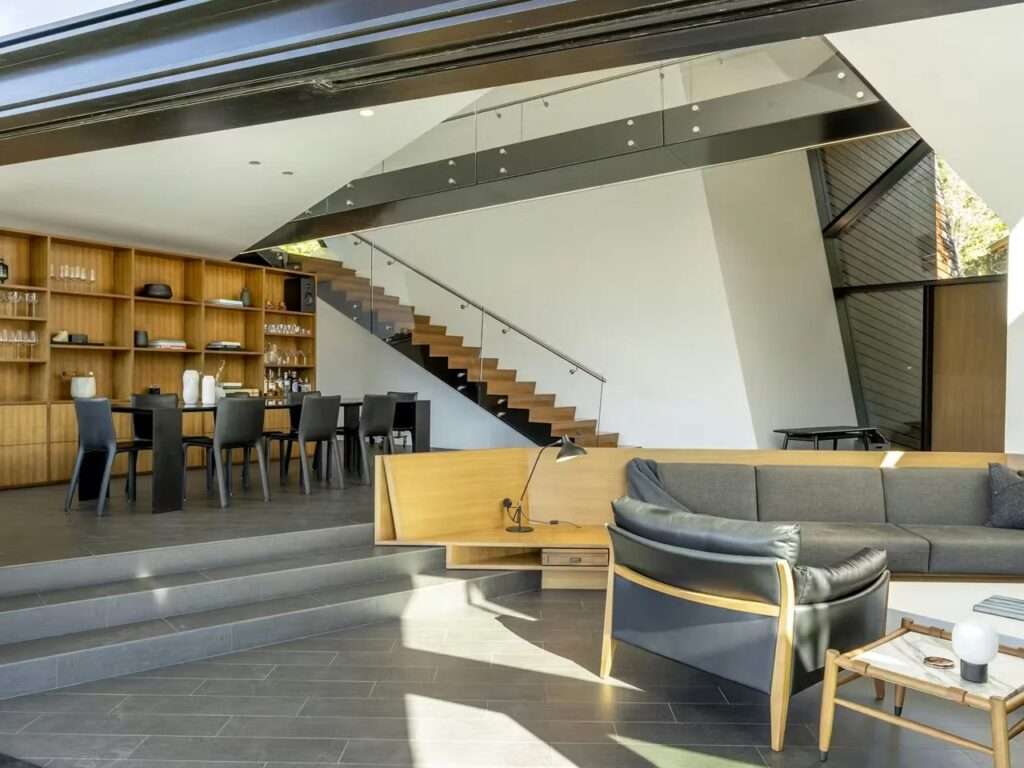
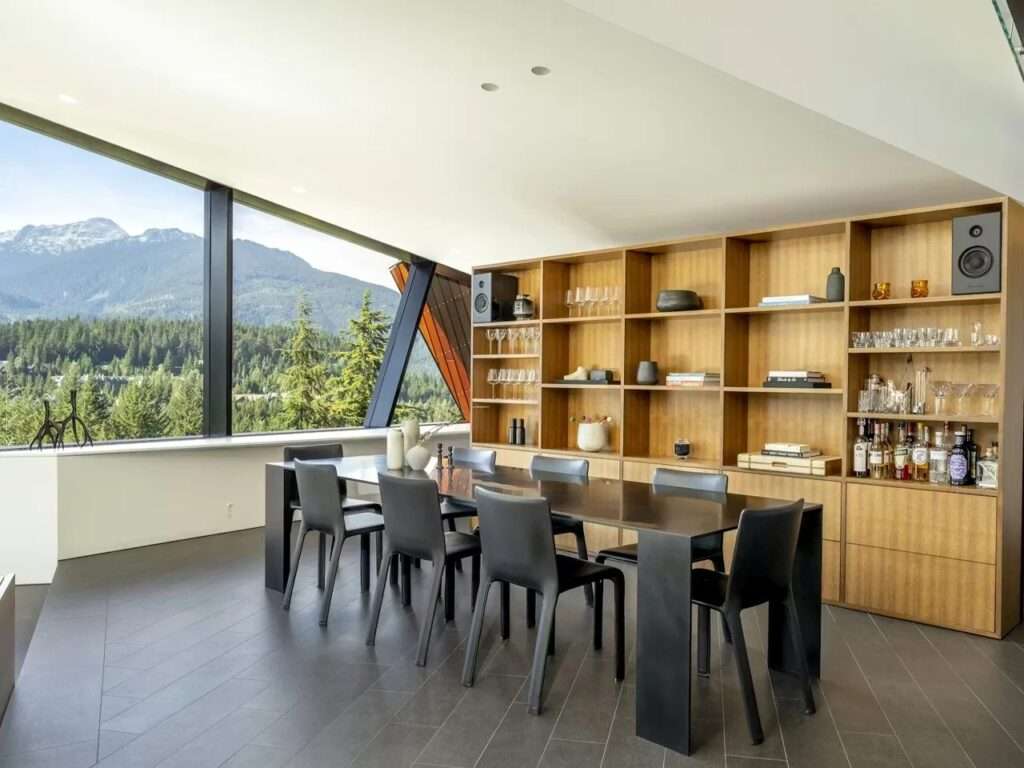
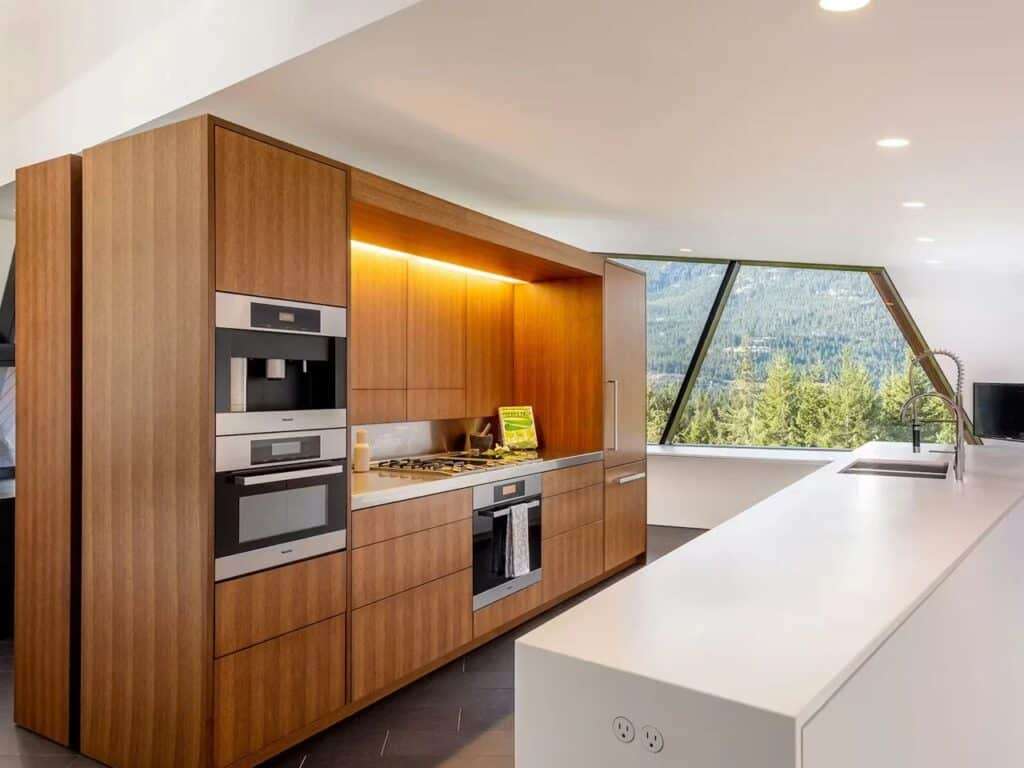
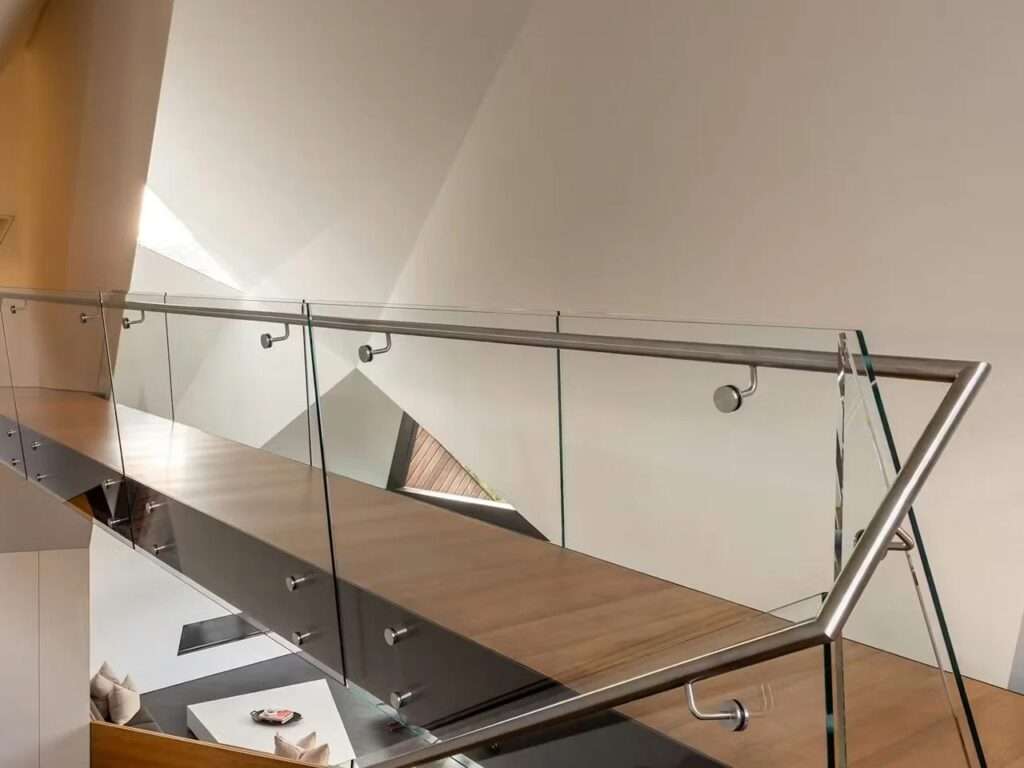
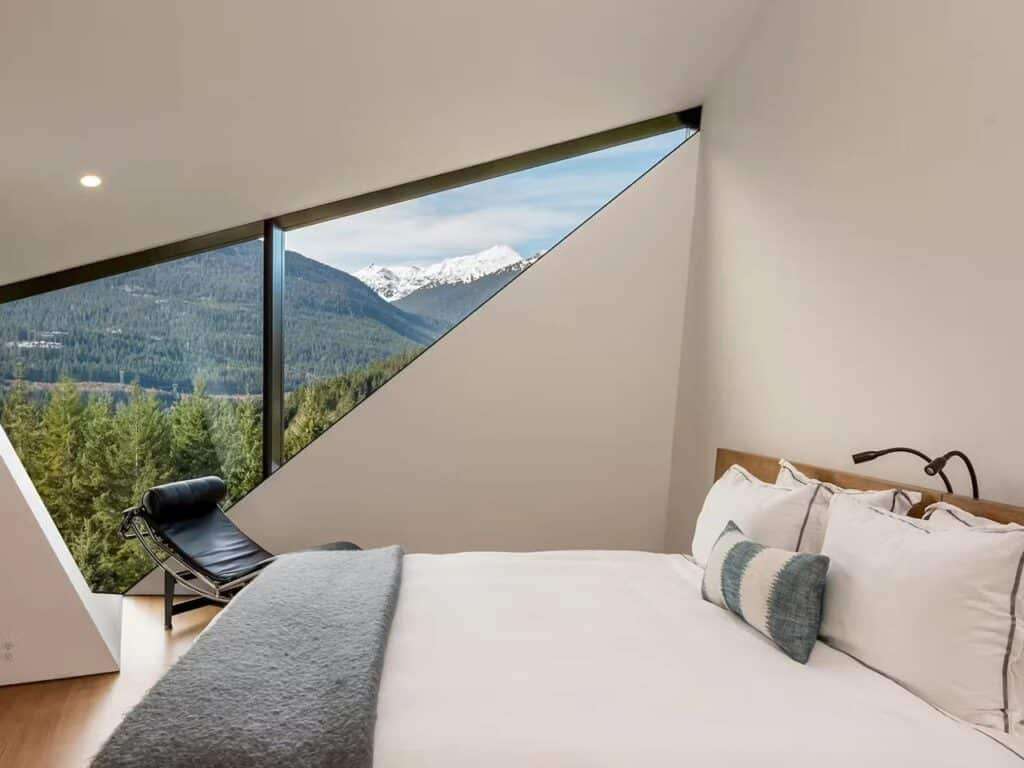
Inside, the house adopts an expansive character that is not immediately reflected by the exterior façade. The high ceilings give the living spaces a sense of scale closer to public volumes, while continuous glass walls open up the view toward Whistler Valley, with natural light shifting throughout the day. A glass staircase also introduces a clear vertical element, connecting different levels and enhancing the perception of movement within the space.
Relationship Between Interior, Exterior, and Context
Sliding glass doors connect the living room to a covered outdoor deck, reducing the strict separation between inside and outside. In terms of site conditions, the house sits on a relatively small plot within a highly private neighborhood, close to the mountain and the Whistler area, achieving a balance between proximity to activities and visual detachment from the immediate surroundings.
Architectural Timeframe and Project Evaluation
The house was completed in 2013 and received recognition from the Canadian architectural institute. Over time, it has come to be understood within a broader context of rethinking mountain architecture, moving away from conventional rustic typologies. The project reflects a transitional moment in understanding the relationship between architectural form and the contemporary mountainous environment.
✦ ArchUp Editorial Insight
Hadaway House in Whistler operates as a material outcome of the intersection between real estate capital in mountain regions, land-use zoning constraints, and snow-load requirements within a high-value regulatory context. The construction is not primarily driven by an architectural intention, but rather emerges from the pressure to maximize land value under strict building conditions on sloped terrain, where steep roof pitches and reduced building footprints are imposed as standardized solutions.
Insurance considerations, energy efficiency requirements, and the logistical difficulty of construction on steep topography further narrow design options in favor of a tightly controlled structural envelope and extensive glazing systems. These glazed surfaces function as a market differentiator within a real estate economy oriented toward high purchasing-power demographics.
The result is a negotiated condition between return on investment and environmental risk management, where design becomes a regulatory response more than an autonomous act of composition.

★ ArchUp Technical Analysis
Technical and Documentary Analysis of the Hadaway House Project – Whistler, Canada:
This article presents an architectural analysis of the Hadaway House project as a case study in reinterpreting contemporary mountain architecture. To enhance its archival value, we would like to present the following key technical and design data.
The house was completed in 2013 and received recognition from the Royal Architectural Institute of Canada. It is located on a northwest-facing slope in the Sunridge neighborhood of Whistler, within a mountainous environment with distinct topography. The project employs an unconventional formal treatment consisting of sharp surfaces and pronounced angles reflecting a complex three-dimensional character, with a wood-clad facade emerging from the hillside mass.
The steeply pitched roof is designed to manage snow shedding, with large V-shaped steel columns supporting the architectural overhangs to withstand heavy snow loads. The house features an expansive interior character with high ceilings and extensive glazed walls (including triangular windows) that open the view toward the Whistler Valley, with sliding glass doors connecting the living room to a covered outdoor deck, and a central wooden staircase with a glass railing connecting the different levels.
The house is situated on a relatively small lot within a private neighborhood near the mountain and Whistler area.
Related Insight: Please refer to this article to understand the context of modern architectural preservation:
Contemporary Mountain Architecture: Strategies for Dealing with Terrain and Snow Loads.





✅ Official ArchUp Technical Review completed for this article.