
Epiq Vehicle: Reinterpreting the Car as Spatial Composition

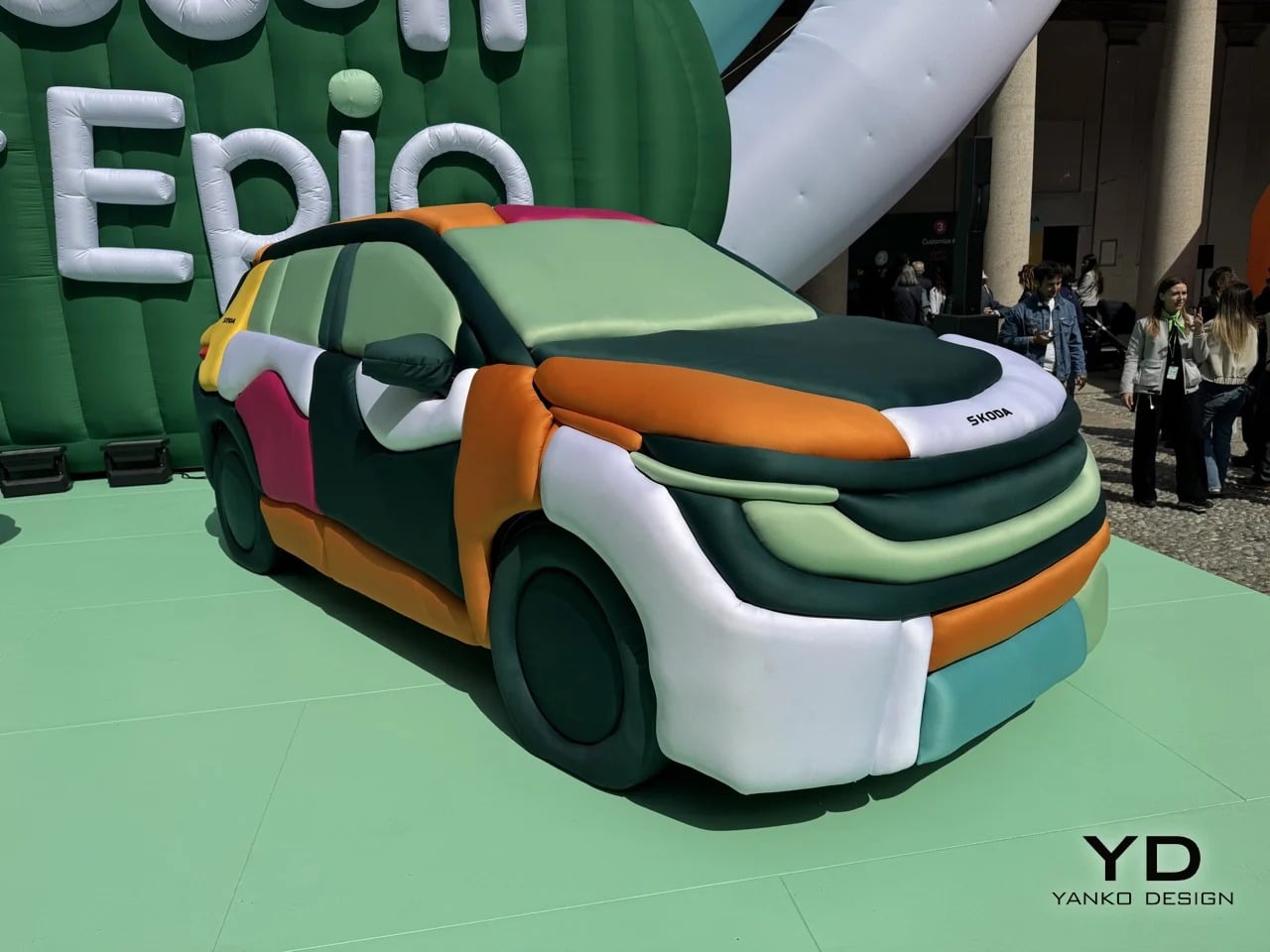
Reinterpreting the vehicle as a compositional space
The vision stems from the contrast between rigid industrial design methodologies and the experimental approach in spatial design. While vehicles are typically engineered according to precise technical and geometric constraints, Ulises Studio treats space as a flexible medium that is reshaped through sensory experience. This contrast establishes the overall framework of the project, where the concept of the vehicle shifts from being a purely functional product to an element within a visual composition open to reinterpretation.
Transforming the vehicle into a malleable visual surface
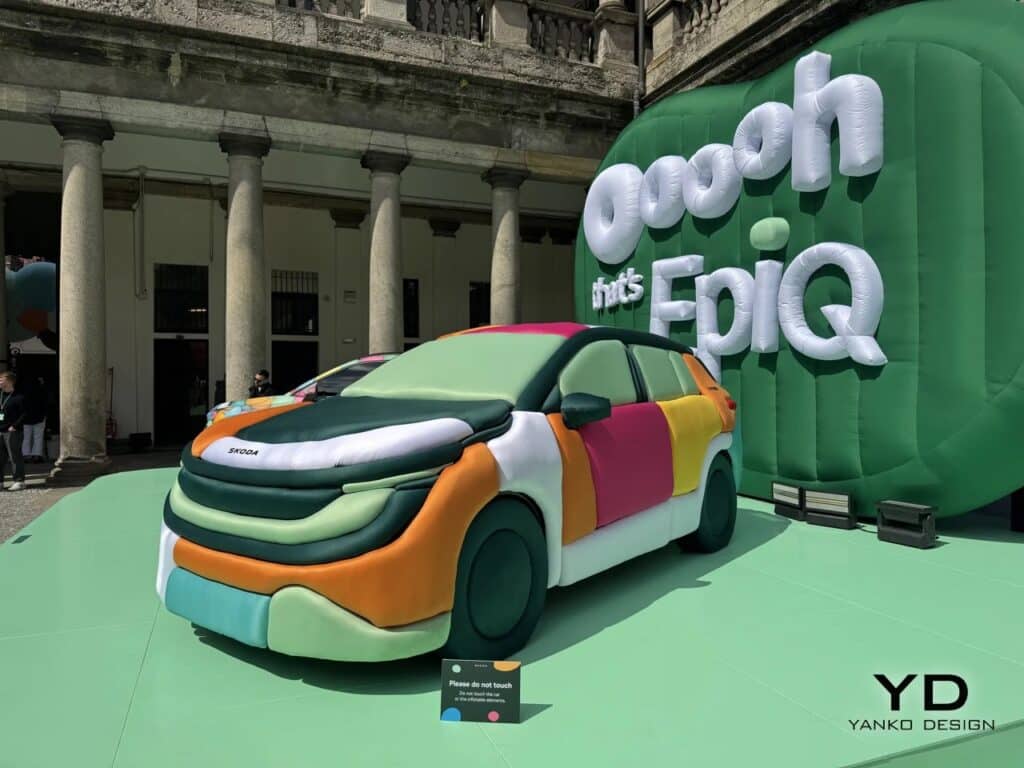
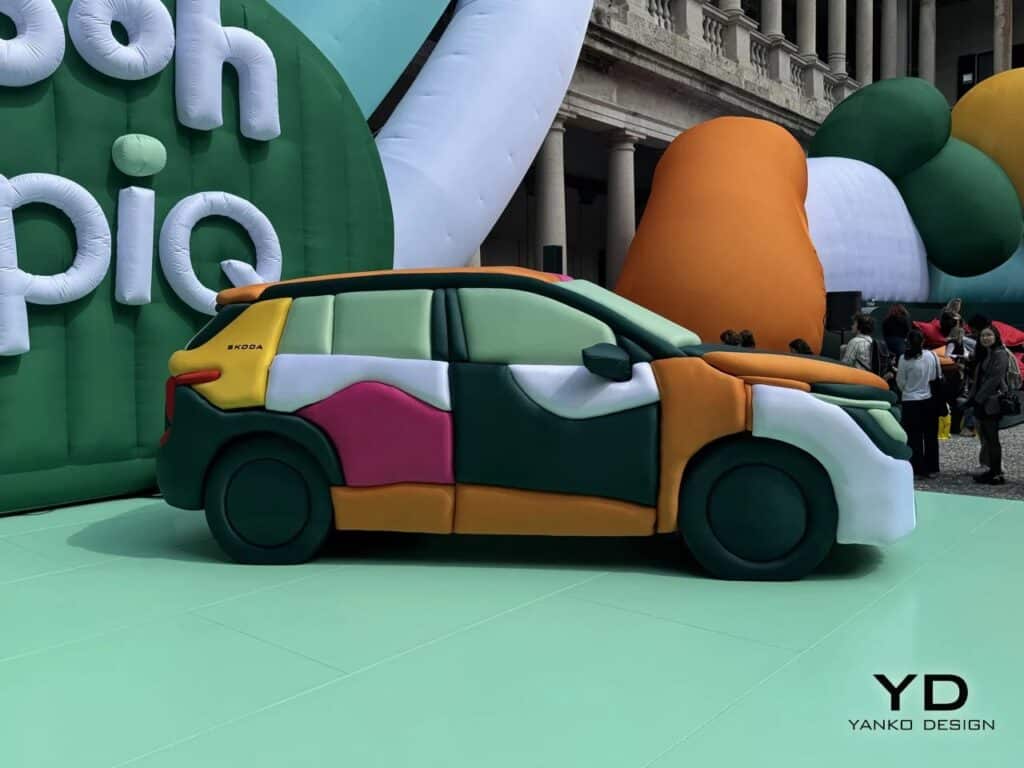
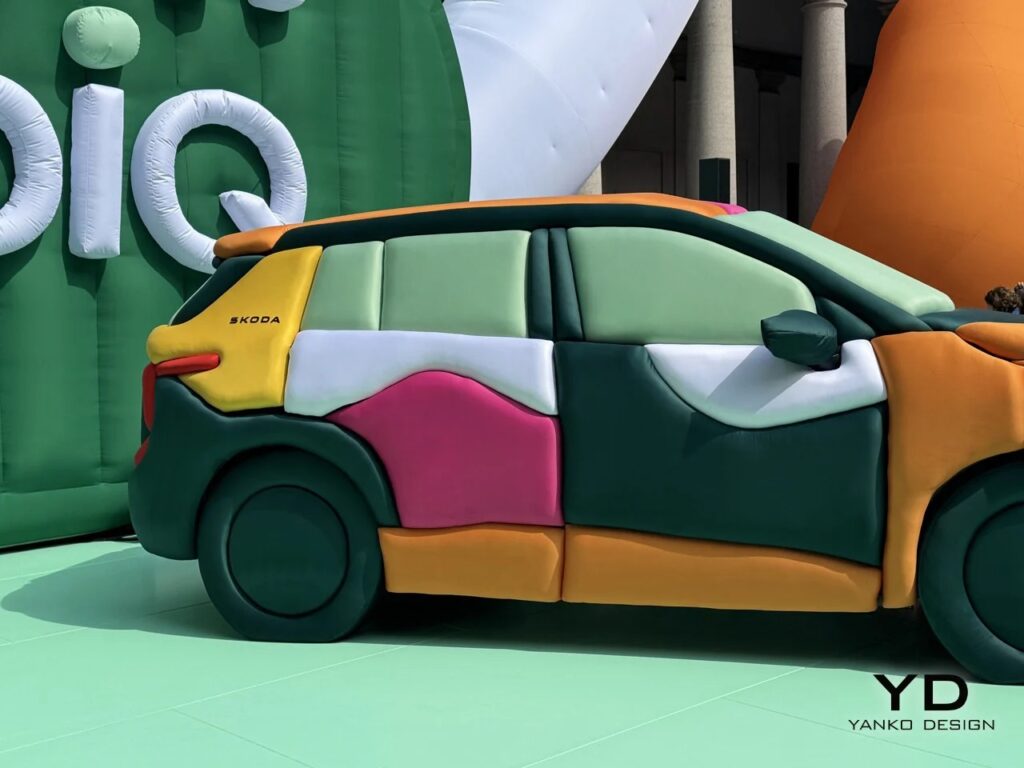
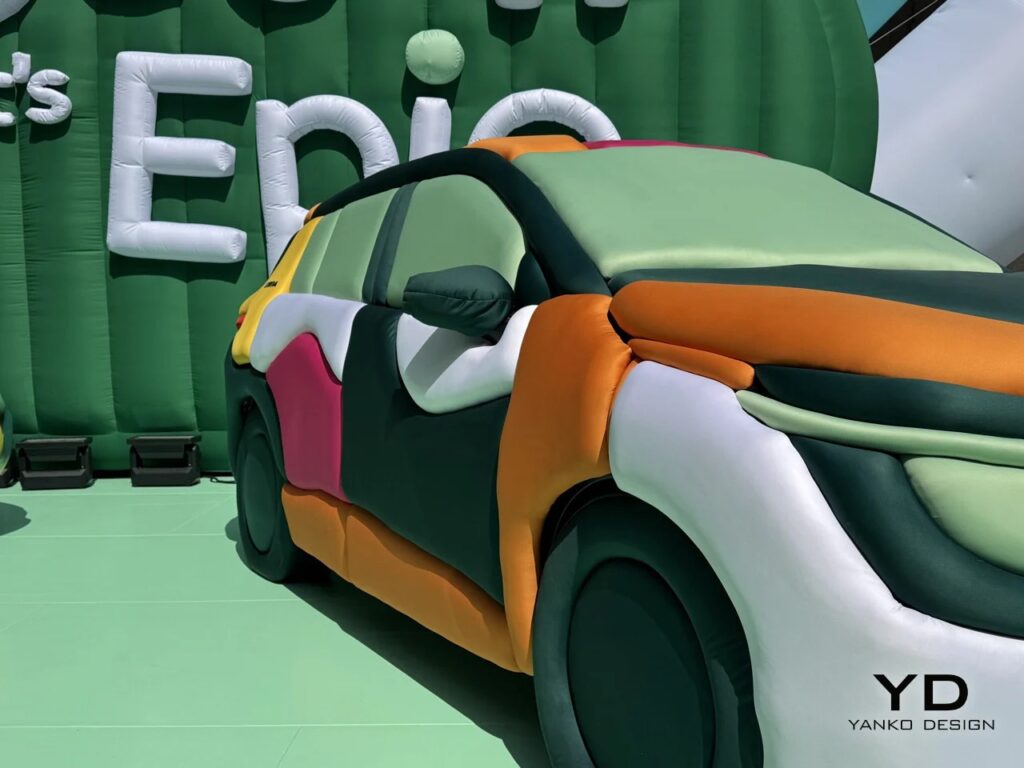
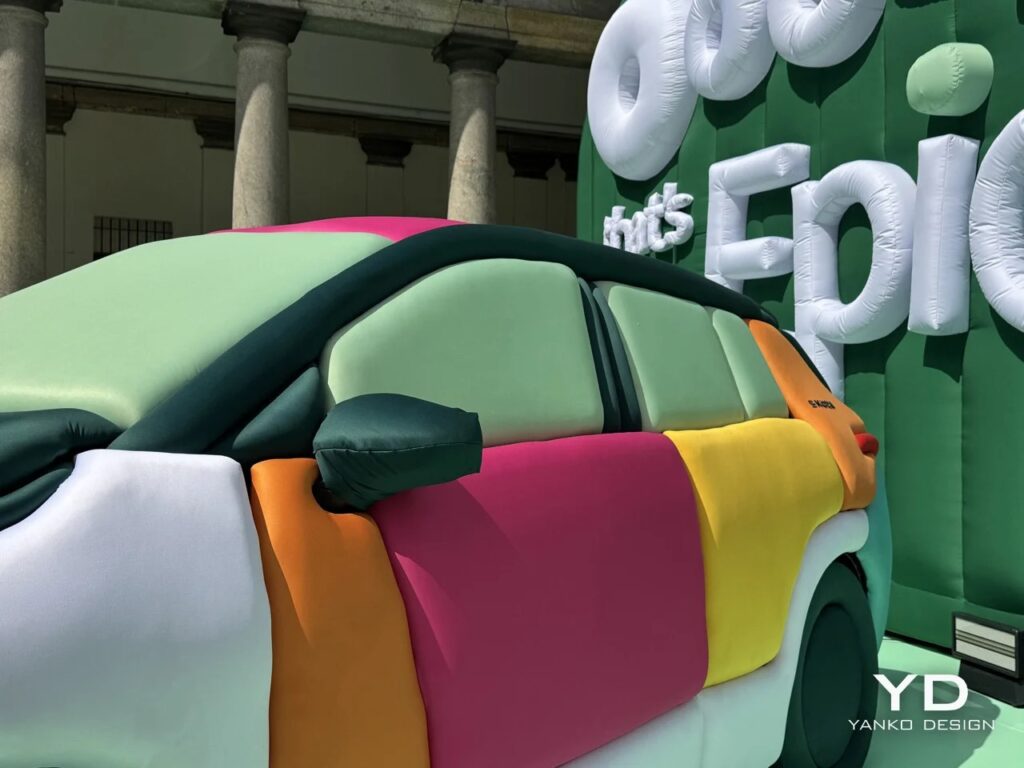
Within the context of a collaboration held during Milan Design Week 2025, the Epiq electric car was used as a case study to explore this intersection between industrial design and spatial design. The vehicle’s body was wrapped with evenly distributed inflatable textile elements arranged in a horizontal rhythm, redefining its external contours. The use of multiple color gradients, including green, orange, pink, yellow, and blue, contributed to transforming the solid mass into a dynamic visual composition, driven more by chromatic rhythm than by its traditional functional appearance.
A comparison between engineering reality and interpretive experience
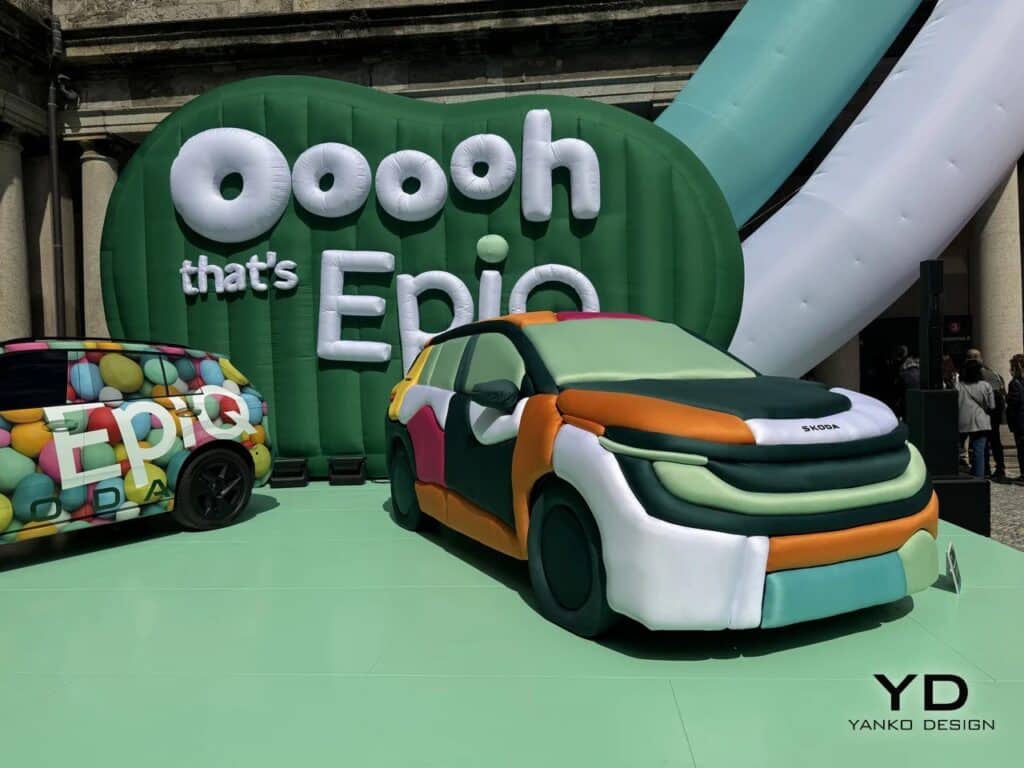
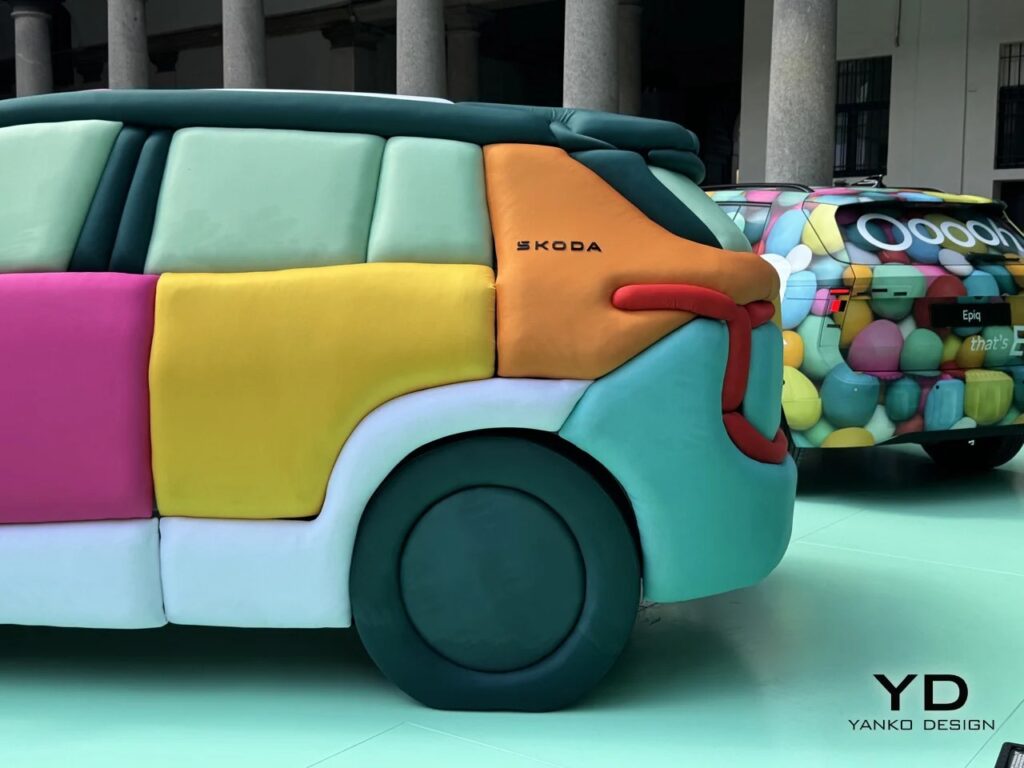
During the exhibition hosted at the Senate Palace, multiple versions of the same model were presented, each undergoing a different treatment with inflatable elements. This repetition enabled a direct comparison between the original engineering structure and the added spatial intervention. As a result, the project became a model for how industrial design can be re-read from a compositional perspective, where material reality merges with visual interpretation without compromising the core function of the displayed object.
Reconfiguring Visual Identity Without Altering the Structure
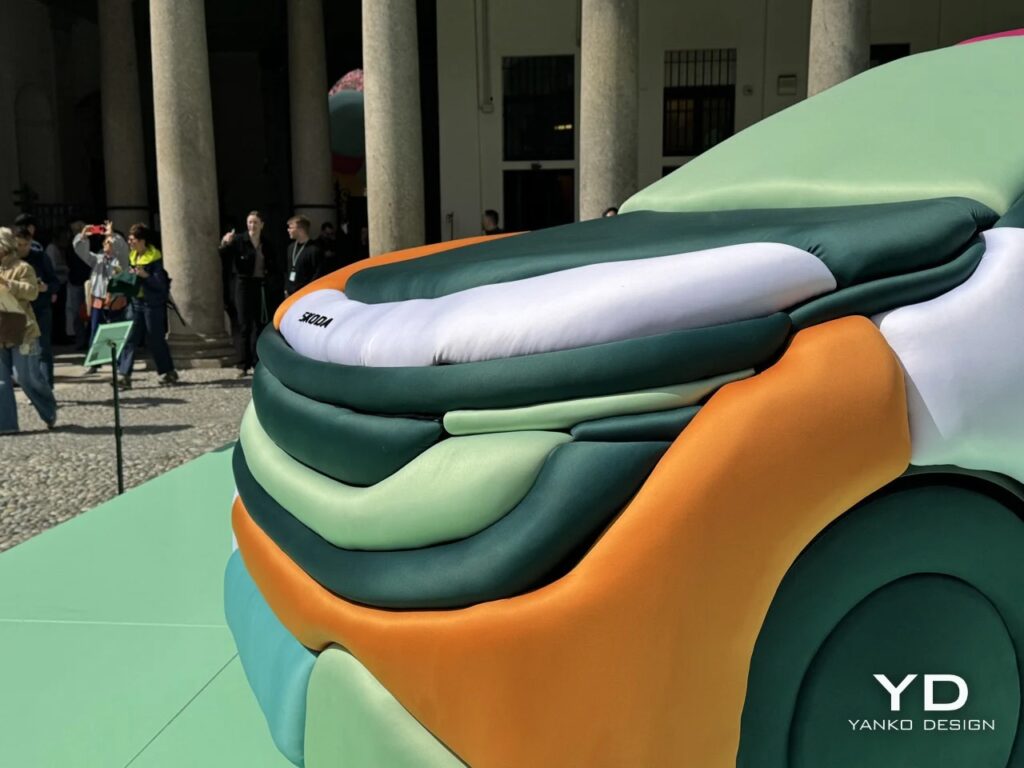
This compositional work relies on reinterpreting the vehicle’s identity by adjusting its visual perception without affecting its core structure. Design details such as curves, lines, and voids are transformed into soft elements that resemble cushion-like volumes in form. The inflatable tubing follows the original structural pathways of the Epiq vehicle, preserving its overall proportions and keeping it recognizable despite the evident material transformation. As a result, the vehicle remains categorized as a compact SUV in terms of formal reading, yet it is visually perceived as a softer mass, more closely associated with human qualities than rigid metals.
Sensory Interaction Between Material and Perception
The use of air-filled fabric in this context generates a perceptual tension between what the viewer sees and what they expect from the material’s properties. While the form visually suggests a real vehicle, the nature of the surface reveals a different material presence that stimulates direct sensory engagement. This contradiction enhances the sense of tactility, where visual perception becomes linked to a bodily impulse to touch and press, despite the full awareness that the structure is, in essence, a temporary inflatable composition.
Expanding Space into an Integrated Compositional Environment
In addition to the treatment of the vehicles, the courtyard of the Senate Palace was reinterpreted as a spatial design extension of the same concept; it was transformed into an inflatable environment in which visual and material elements are distributed in a unified system. This environment included a large-scale wall composed of inflatable tubes, as well as smaller elements functioning as sculptural furniture that allows visitors to pause and observe from multiple viewpoints. The floor surface was also covered in a uniform color that visually connected the components of the space, creating a cohesive visual system that reinforces the idea of an integrated spatial design without separating object from context.
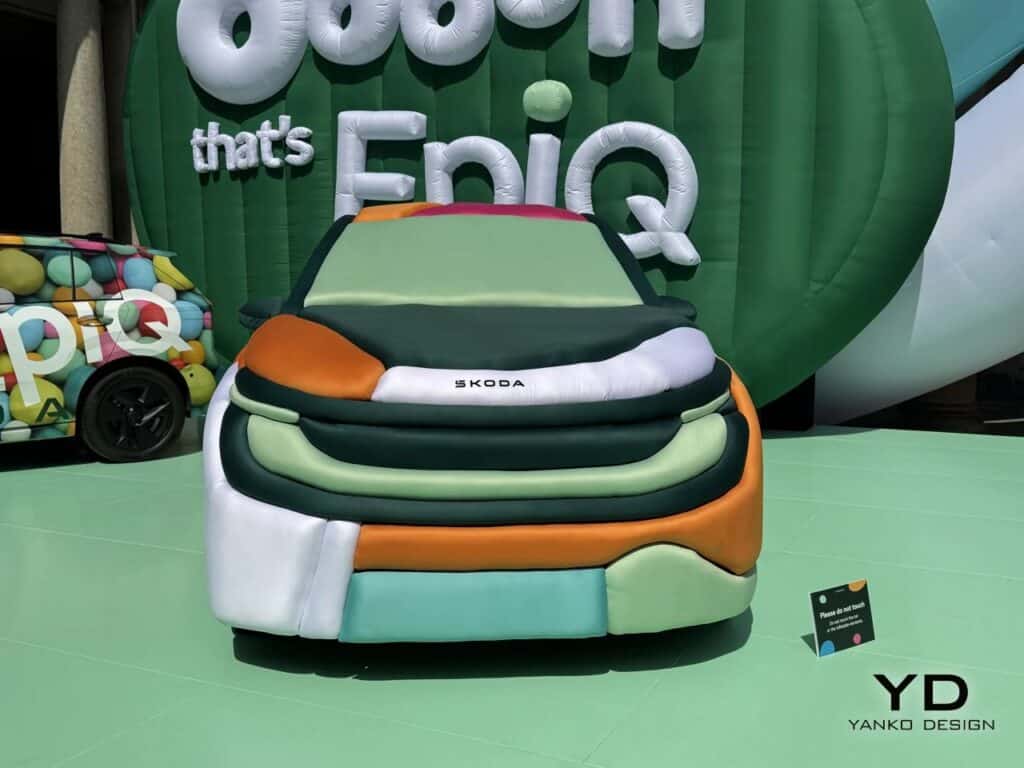
Integrating the vehicle within a cohesive environmental narrative
This collaboration is built on treating the Epiq car as an element within a comprehensive spatial system rather than an isolated central object. The vehicle is embedded within the overall scene, surrounded by inflatable forms that intersect with it in material language and color gradients. This approach creates a level of visual cohesion rarely seen in traditional automotive exhibitions, where the vehicle does not appear as an independently displayed object, but rather as an integral part of a continuous environment. The arrangement of elements within the space also guides visitor movement in a deliberate manner, making the experience based on navigating between shifting visual relationships rather than focusing on a single fixed point.
Spatial design as a narrative structure
Ulises Studio approaches spatial design in this work as a narrative tool, where material elements are used to construct a sequential perceptual experience. This is evident in the way vehicles and sculptural components are arranged within the courtyard to generate multiple movement pathways. As a result, the visitor’s role extends beyond observation to active interaction with the space while moving between different angles and perspectives. This approach reflects an advanced understanding of architectural experience as a series of evolving relationships within space.
Redefining the vehicle’s image through material language
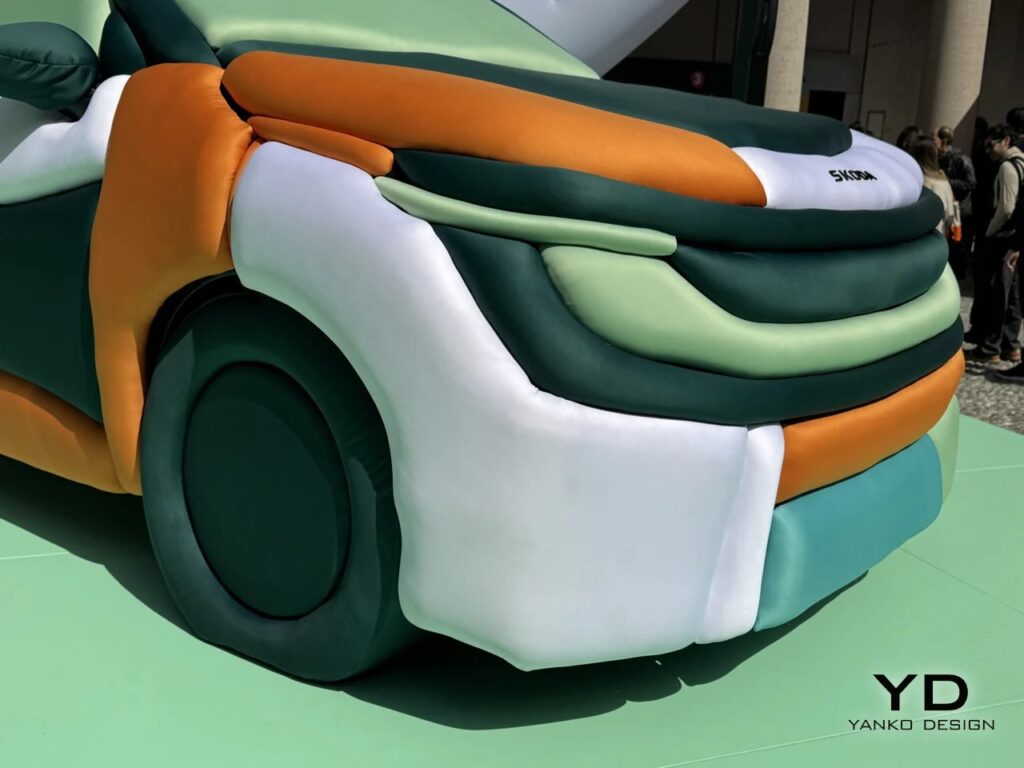
In this context, traditional materials such as metal and glass are replaced with inflatable textile structures, resulting in a radical shift in both the visual and functional perception of the vehicle. This transformation softens the rigidity typically associated with new model launches and replaces it with a lighter, more fluid reading. The introduction of large-scale textual elements within the space further reinforces this direction, adding a direct communicative layer based on a simple visual language closely aligned with contemporary culture. In this way, design becomes a means of redefining the relationship between function and sensory perception within the architectural environment.
✦ ArchUp Editorial Insight
The Epiq car installation during Milan Design Week 2025 functions more as an organizational outcome than a deliberate design intervention. It emerges at the intersection of brand sponsorship structures, exhibition programming requirements, and the logic of the experience economy. The industrial mass of the vehicle is reclassified within a framework that prioritizes attention-driven metrics over functionality, while inflatable construction systems respond to constraints of rapid assembly, reduced execution cost, and the temporary disassembly requirements of institutional events. What appears as a formal distortion is, in reality, a negotiated compromise between the standardization of automotive manufacturing on one side, and the logistical pressures of spatial exhibition production on the other.
The courtyard of the Senate Palace is transformed into an organizational structure for visitor circulation and the distribution of visual density, where the car is managed as a secondary element within a field governed by human flow dynamics and collective perception management rather than as an independent design object.

★ ArchUp Technical Analysis
Technical and Documentary Analysis of the Epic Vehicle – Milan, Italy:
This article presents a design analysis of the Epic vehicle as a case study in reinterpreting the automobile as a compositional space within an exhibition context. To enhance its archival value, we would like to present the following key technical and design data.
The work was presented during Milan Design Week 2025 at Palazzo del Senato, through a collaboration between Studio Ulisse and the Škoda brand, using the Epic electric vehicle (a compact sports utility vehicle) as the study model. The vehicle’s body was clad with horizontally distributed inflatable textile elements, employing multiple color gradients (green, orange, pink, yellow, blue) to redefine its external features.
The front grille and headlights were replaced with soft colored bands, with the inflatable tubes following the original contours of the car’s body to maintain its overall proportions. Multiple versions of the same model were displayed, each subjected to a different treatment with the inflatable elements.
The courtyard of Palazzo del Senato was transformed into an inflatable environment where visual and material elements were integrally distributed, including a large-scale mural made of air tubes and sculptural furniture pieces, with the floor surface covered in a uniform color. The inflatable techniques relied on considerations of installation speed, reduced execution costs, and temporary dismantlability.
Related Insight: Please refer to this article to understand the context of modern architectural preservation:
Temporary Architecture and Inflatable Installations: Between Sensory Experience and Execution Efficiency.


✅ Official ArchUp Technical Review completed for this article.