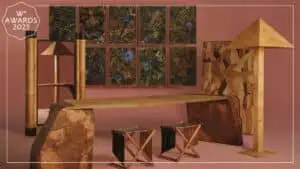
Heirloom House: Longevity and Adaptability

Design for Longevity vs. Short-Term Design
In today’s world, many products and buildings are consciously designed to be short-lived. For example, electronic devices are expected to slow down after a few years, and some ready-made furniture pieces lose stability after a short period of use. Traditional residential buildings, meanwhile, are often designed to last for limited decades, typically between 50 and 100 years, before requiring major maintenance or structural intervention. This normalization of limited lifespan has made the idea of designing something that could endure for a thousand years seem radical and unfamiliar.
The Heirloom House Project: Rethinking Construction
In this context, the MIT project presents an innovative model for long-term design. The project is based on nine engineered construction components designed to last up to a thousand years. The concept goes beyond conventional notions of “sustainability,” aiming not merely for a building to survive decades or even centuries, but to create a structure capable of resisting time in a tangible and deliberate way.
This approach prompts reflection on how we currently construct buildings and products, posing both a technical and philosophical challenge regarding the feasibility of integrating extreme longevity into contemporary architecture without compromising functionality or aesthetics.

Modular Components as the Foundation for Long-Term Design
The MIT concept relies on nine core components that work together as an advanced building kit. These components include columns, beams, floor slabs, wall panels, and connection elements, all designed to be assembled, disassembled, and reassembled without the need for permanent fasteners.
Balancing Engineering and Physics
Each piece is precisely designed to integrate with the other elements through careful engineering and calculated weight distribution. In this context, the research team applied principles of motion and physics to ensure the cohesion of the entire system, not through screws or adhesives, but through gravity, balance, and friction.
Redefining the Traditional Concept of Structure
This approach represents a radical shift in thinking about structural systems. It does not rely on externally imposed force to hold elements in place, but on engineering intelligence embedded in the shape and mass of the materials themselves. In this way, construction transforms from a simple assembly of parts into a dynamic, sustainable system capable of enduring over the long term.

Flexibility as a Core Element in Design
What distinguishes MIT in particular is that its components are neither fixed nor rigid. These pieces are designed to be manually reconfigurable, allowing spaces to be reshaped and used in different ways over time, without the need to add new elements.
Adapting to Future Needs
Thanks to this flexibility, the dwelling can evolve according to the changing needs of future generations. For example, a double bedroom today could transform into a studio or workspace in the future, or into an open suite after several decades, while retaining the same nine core components.
Sustaining Function Alongside Structure
The goal here is not only to ensure the building remains standing, but also to maintain its practical utility over time. Designing the components in this way allows spaces to adapt to new needs without becoming obsolete or useless, expanding the definition of sustainability to include functional lifespan alongside structural longevity.

The Significance of the Name and the Dimensions of Continuity
The name Heirloom carries important symbolic meaning in the context of the project. This term is typically used to describe items passed down through generations, such as jewelry, long-lasting cast-iron kitchenware, or pieces of furniture that endure despite frequent moves.
Construction as Cultural Heritage
Through this name, the researchers ask whether the house itself can bear the same symbolic and cultural weight. In other words, could a building become something passed down from one generation to the next, rather than merely a structure that is rebuilt or demolished over time?
Redefining the Concept of Sustainability
The idea goes beyond structural durability to encompass a deeper dimension that includes heritage and cultural function. Here, the building becomes not just a place to live, but a continuous element linking generations, reshaping the relationship between humans and the spaces they inhabit over centuries.

Confronting the Culture of Fast Consumption
The significance of MIT’s concept extends beyond design, serving also as a cultural counterbalance to contemporary trends in architecture. In recent years, the focus has been on temporary buildings and rapidly produced products, where speed and cost reduction take precedence over longevity. This approach is not inherently wrong, but it often results in a built environment designed to meet only present needs, with little consideration for future generations.
Longevity as a Foundational Principle
The Heirloom House project responds to this reality in a calm and analytical manner. It does not deliver lectures on sustainability, yet its implications are clear: anything designed to last a thousand years will not end up in a landfill anytime soon.
Redefining the Purpose of Construction
The fundamental question the project raises is simple yet profound: what does it mean to build with longevity in mind, rather than treating longevity as an afterthought? This shift in thinking encourages a reconsideration of how buildings and products are designed, emphasizing continuity and long-term functionality over immediate gratification of present needs.

Concrete as a Strategic Choice
The selection of concrete as a core material in MIT carries a clear significance. Concrete is one of the most widely used materials worldwide, yet it is also subject to considerable criticism due to its environmental impact.
Rethinking Environmental Impact
However, when concrete is used thoughtfully and built to last, the need for replacement diminishes. This significantly alters the environmental equation, as the carbon footprint of a building designed to endure a thousand years is entirely different from that of a structure demolished after just sixty years.
Material as a Long-Term Investment
In this way, concrete transforms from a mere building material into a long-term investment. Its longevity over centuries provides tangible environmental benefits, as each additional year of durability reduces the need for new resource consumption and construction waste, redefining the relationship between materials and a building’s lifespan.


Design Across Generations
What distinguishes the MIT project is the philosophical shift it represents. In most contemporary designs, the focus is on meeting the current user’s needs and lifestyle, as well as immediate requirements. In contrast, this project envisions future inhabitants, people not yet born, reconfiguring the very components that were designed centuries earlier. In this sense, design becomes a form of legacy, a gift extending through time.
The Philosophical Value of the Concept
Whether the project becomes a tangible reality or not, its value lies in being both conceptual and provocative. It reminds us that longevity is not merely an environmental or technical choice, but a design choice we can embrace if we wish to think in the long term.


✦ ArchUp Editorial Insight
The Heirloom House project raises a fundamental question: can we create today something that will endure for generations? Perhaps this reminder offers an opportunity to start anew, reevaluate the way we build, and embed the idea of longevity at the heart of every design decision we make.
The Heirloom House project can be seen as an inspiring model for rethinking long-term building design, clearly highlighting the value of integrating structural flexibility with durability. Its core idea, creating components that can be reconfigured and endure across centuries, offers a source of new solutions in urban planning and sustainable design.
However, several questions remain regarding the feasibility of applying this approach on a larger scale. Initial costs, engineering complexity during implementation, and the system’s reliance on precise principles of gravity and friction may limit its applicability in traditional residential projects or in contexts where resources and infrastructure differ. Additionally, focusing on fixed modular components could constrain architectural diversity and aesthetic expression in some cases.
Therefore, the project may be considered more of a conceptual inspiration than a ready-to-deploy model. It can be leveraged to test strategies for flexible design and long-term durability, or to develop educational initiatives and architectural research, while balancing ambitious ideas with the practical realities of conventional construction, costs, and environmental constraints.