

Himi Shin-machi Daycare Center: A Wooden Architectural Vision Redefining Early Learning Environments

Introduction: A Learning Environment Embodying Local Identity
In the heart of Himi City, Toyama Prefecture, Japan, the Himi Shin-machi Daycare Center stands as a testament to how educational infrastructure can be transformed into a distinguished community facility. This architectural project, realized by Shio Architect Design under the leadership of Architect Ataru Shio, is not merely a replacement for a 50-year-old kindergarten. It is a holistic environment designed to nurture early childhood, authentically expressing its local identity through the use of materials and design solutions derived from its context.
The Design Challenge: Transforming Site Constraints into Creative Potential
The project faced a fundamental challenge from its inception: the nature of the site—a long, narrow plot stretching north to south, bisected by a major underground sewage line. This structural constraint necessitated a non-traditional layout. The building’s mass was positioned parallel to the pipeline, avoiding the prohibited construction zone. This design equation significantly improved the usable floor area and allowed for the maximization of fenestration exposed to natural light, directly contributing to the primary goal of creating a bright interior environment.
The Structural System: Reviving Wooden Traditions with Local, Sustainable Support
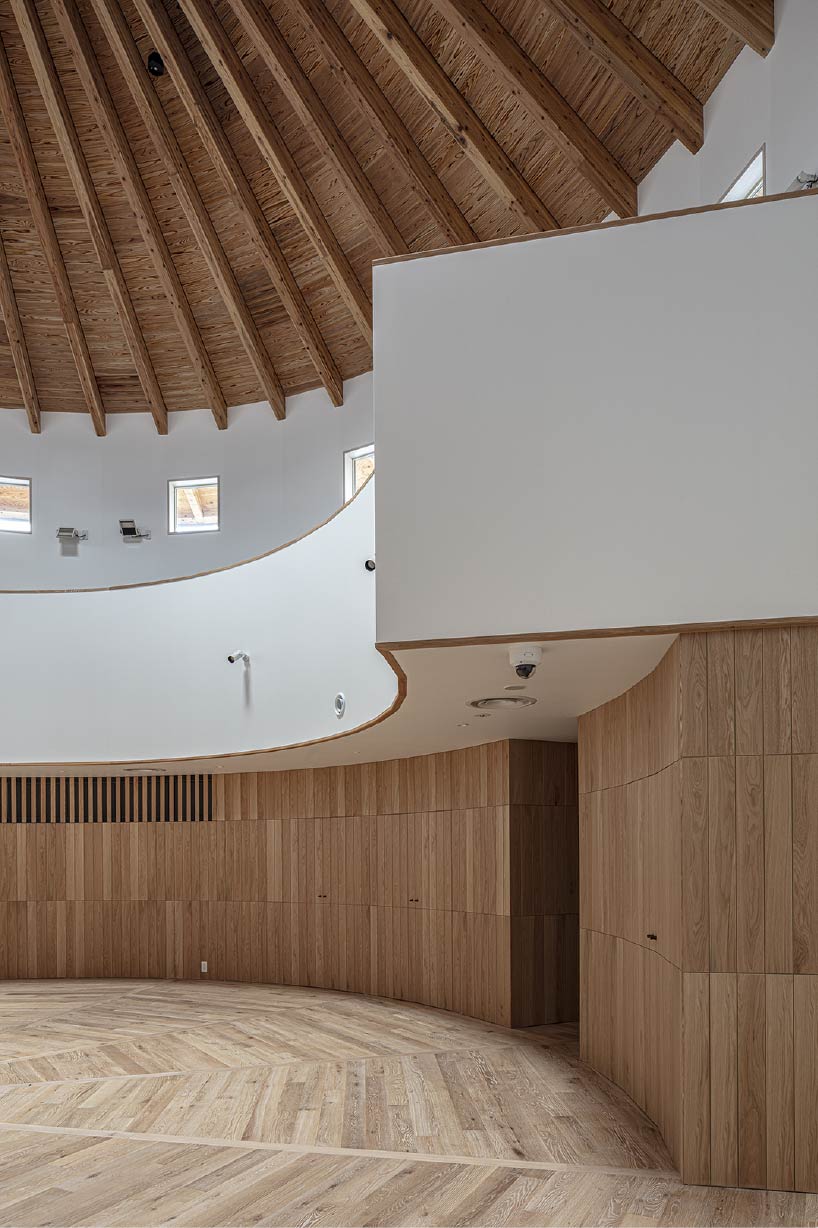
The building’s load-bearing structure is a clear statement of sustainability and local belonging. The designers employed a traditional wooden frame system, backed by financial and institutional support from the Forestry Agency’s Regional Material Support Program. This integration of traditional construction methods and institutional support enabled the use of timber sourced directly from the forests of Toyama Prefecture. This decision not only enhances the environmental aspect by reducing the carbon footprint of transportation but also nourishes the local economy and embodies social sustainability, reconnecting the building with regional craftsmanship and resources.
Climatic Response: A Design in Harmony with the Hokuriku Climate
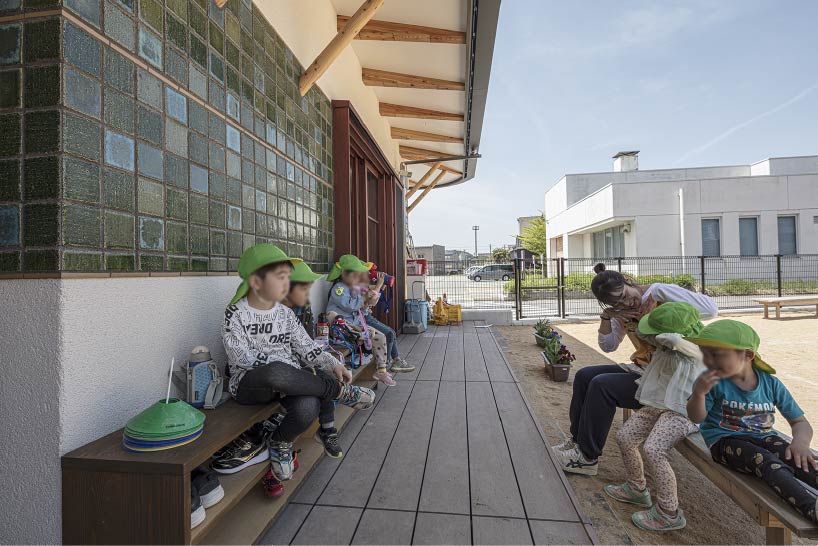
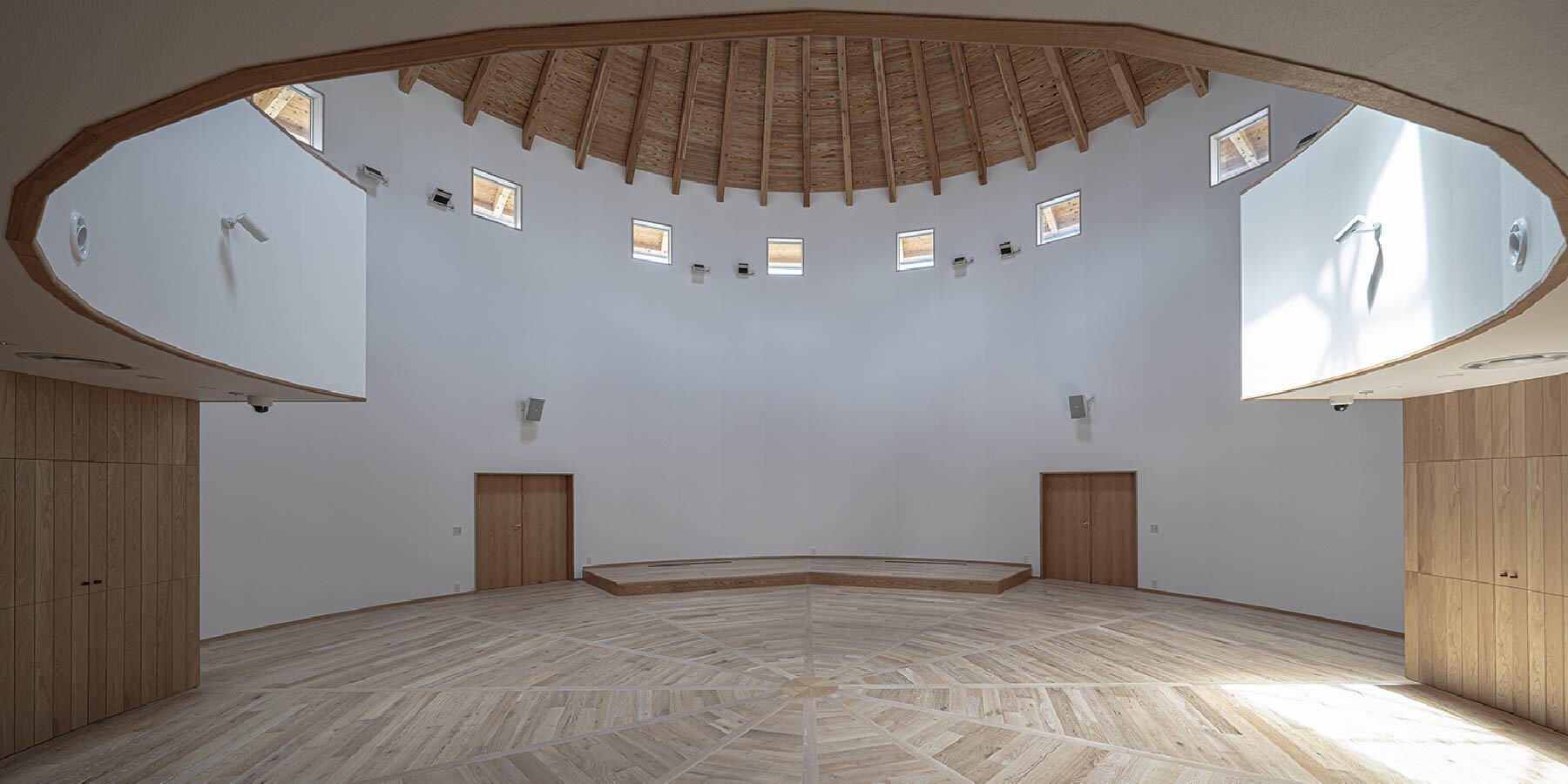
The Hokuriku region is characterized by unstable weather and a limited number of sunny days throughout the year. Consequently, a fundamental design pillar was harnessing and controlling natural light, transforming it into a key element of the spatial experience. This was achieved through a multi-level strategy: large apertures allowing deep light penetration, an open spatial layout minimizing dark areas, and the use of light-colored, high-reflectance surfaces and finishes to distribute light more effectively. The result is an interior environment that remains bright and vibrant, providing children with a daily dose of activity and psychological comfort.

Child Safety and Sensory Experience: An Environment that Stimulates Growth Through Touch
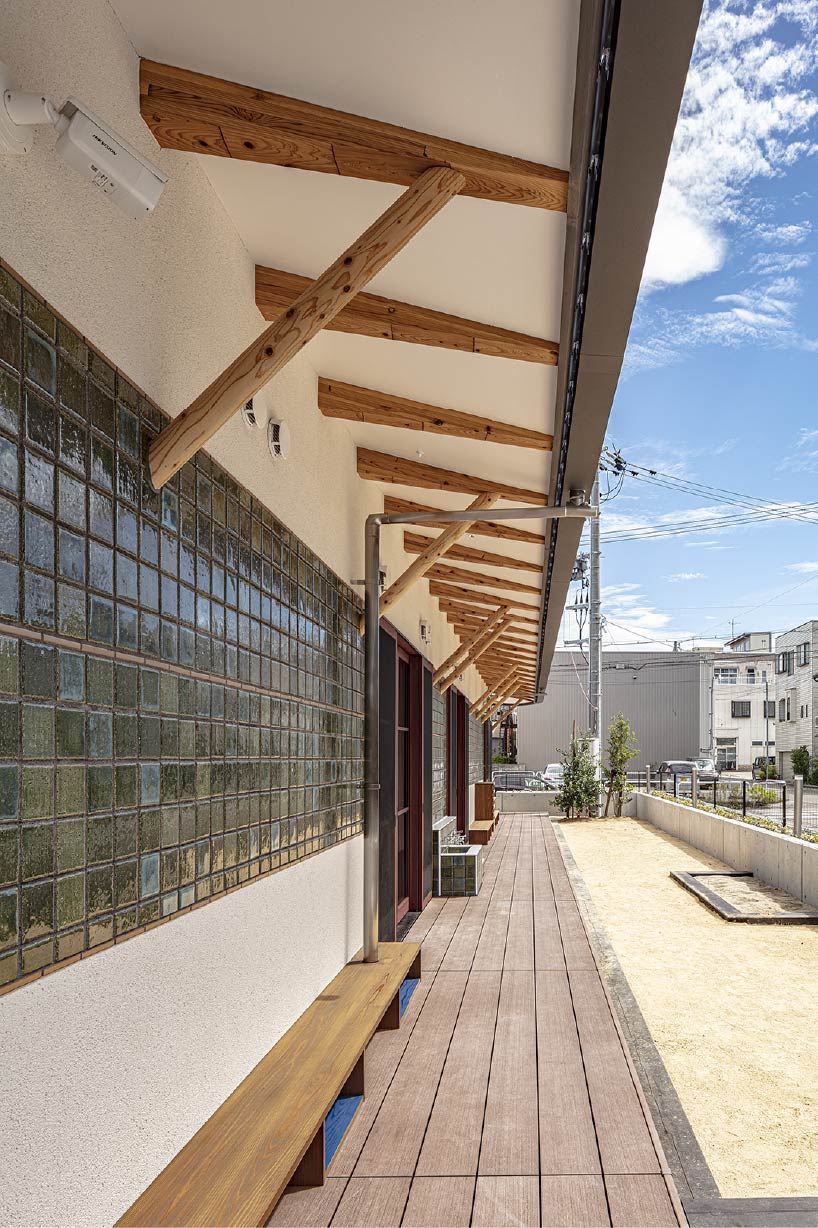
The design transcends the basic functional concept of childcare to enhance children’s sensory and cognitive development. From a physical safety perspective, sharp corners were minimized in the interior design and detailed furniture treatments, reducing the risk of injury during play and movement. On a sensory level, materials were chosen with utmost care, with natural wood surfaces and tile left exposed, presenting children with natural textures to explore through touch. This direct connection with raw materials from an early age nurtures sensory perception and builds an organic relationship between the child and the built environment.
Community Role: From Educational Facility to Civic Landmark
The role of the Himi Shin-machi Daycare Center extends beyond housing children during the day; it stands as a distinguished architectural presence in the city center. Through the selective tender process initiated by the client, the goal was clear: to develop a high-quality public facility. With its warm wooden structure and softly curved form, the building becomes a community landmark, fostering local pride and presenting a contemporary image of how architecture can align with community needs while expressing the spirit of its time and place.
Conclusion: An Integrated Model for Sustainable Educational Architecture
The Himi Shin-machi Daycare Center presents itself as a model worthy of study, combining an intelligent response to site constraints, a steadfast commitment to environmental and social sustainability, and a deep understanding of its young users’ needs. It is more than just a building; it is an integrated ecosystem where architecture interacts with education, and the environment with the community, to create a space that not only teaches children but also inspires, protects, and develops their senses, setting a new standard for future early childhood facilities.
✦ Archup Editorial Insight
The project addresses the use of a traditional wooden structural system to create a daycare center that responds to a complex site’s constraints, focusing on natural light and local materials. The curved form raises questions about its functional efficiency in distributing interior spaces within the narrow plot, potentially creating dead corners or areas difficult to adapt to various educational activities. Relying on large apertures to compensate for the region’s limited sunny days may present challenges in environmental control, such as achieving optimal thermal comfort levels while reducing heating energy consumption in winter. However, the design succeeds in creating a clear sensory connection between the users and the raw material by exposing wooden and tiled surfaces in their original state, providing a rich field for direct sensory exploration within the space.
Brought to you by the ArchUp Editorial Team
Inspiration starts here. Dive deeper into Architecture, Interior Design, Research, Cities, Design, and cutting-edge Projectson ArchUp.


