How Desai Chia Architecture Builds a Global Legacy with a Small-Studio Mindset


In an architectural sector that often measures success by the number of employees and the scale of projects, Desai Chia Architecture stands out as an exceptional model that challenges these standards. Over three decades, founders Katherine Desai and Arjun Chia have not sought horizontal expansion but rather a design depth that makes each project a unique human and architectural dialogue. This article chronicles the studio’s journey from side projects in a small Manhattan apartment to winning the Best Small Firm globally at the 13th Annual A+Awards, and how “staying small” became their most powerful design choice.
The Foundation.. A Journey That Began with an Apartment and a Different Mindset
The studio’s birth was not a premeditated event with expansionist steps, but an organic embodiment of a steadfast mindset. After graduating from MIT, Katherine and Arjun moved to New York to gain experience in major firms. However, their passion began to show in side projects, starting with a Manhattan apartment renovation. Ironically, the next project was a children’s recreational center in California—a project that grew too large to be managed only in spare time, forcing them to establish their first office from Katherine’s apartment. From the beginning, the choice wasn’t about “size” but about “mindset,” as Katherine explains: “We decided early on not to remain static. Every project is a new opportunity to explore new ways of bringing people together.”
The “Small Studio” Philosophy.. Constraint or Creative Engine?
The decision to remain a 6-person studio was not accidental nor due to market conditions, but a conscious design strategy. This philosophy allows for what larger firms often cannot provide: the direct and unrestricted involvement of the founders in every stage of each project. This intimacy with the client creates mutual trust that evolves into long-term partnerships. For example, a family that commissioned the studio to design a private house later returned to commission their offices in Hudson Yards. This “typological fluidity”—where clients return with new and different commissions—is proof of trust in the collaborative design process the studio offers, where a ready-made solution is not imposed upfront.
Design Principles.. From “Closet Anthropology” to Physical Architecture
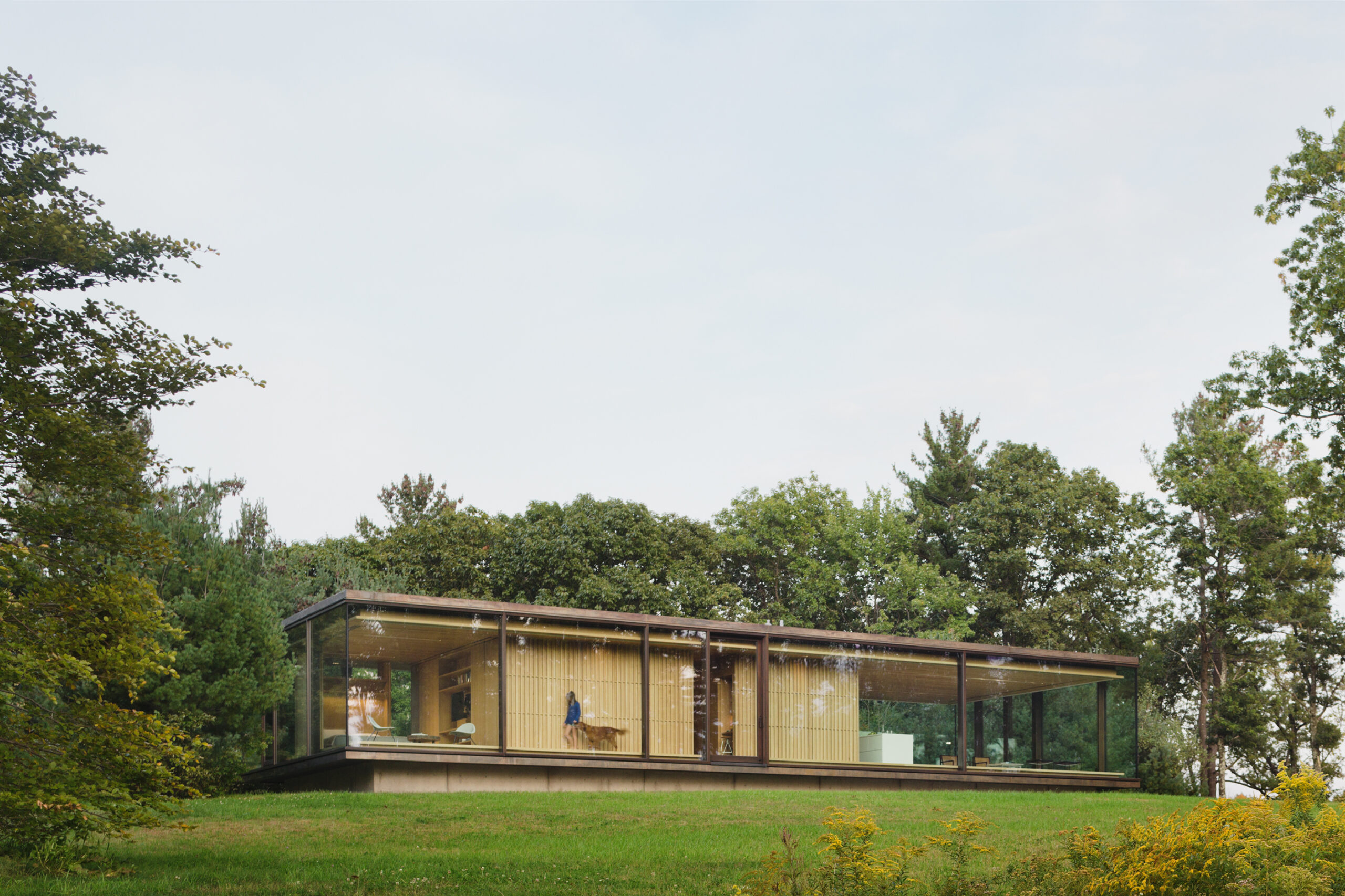
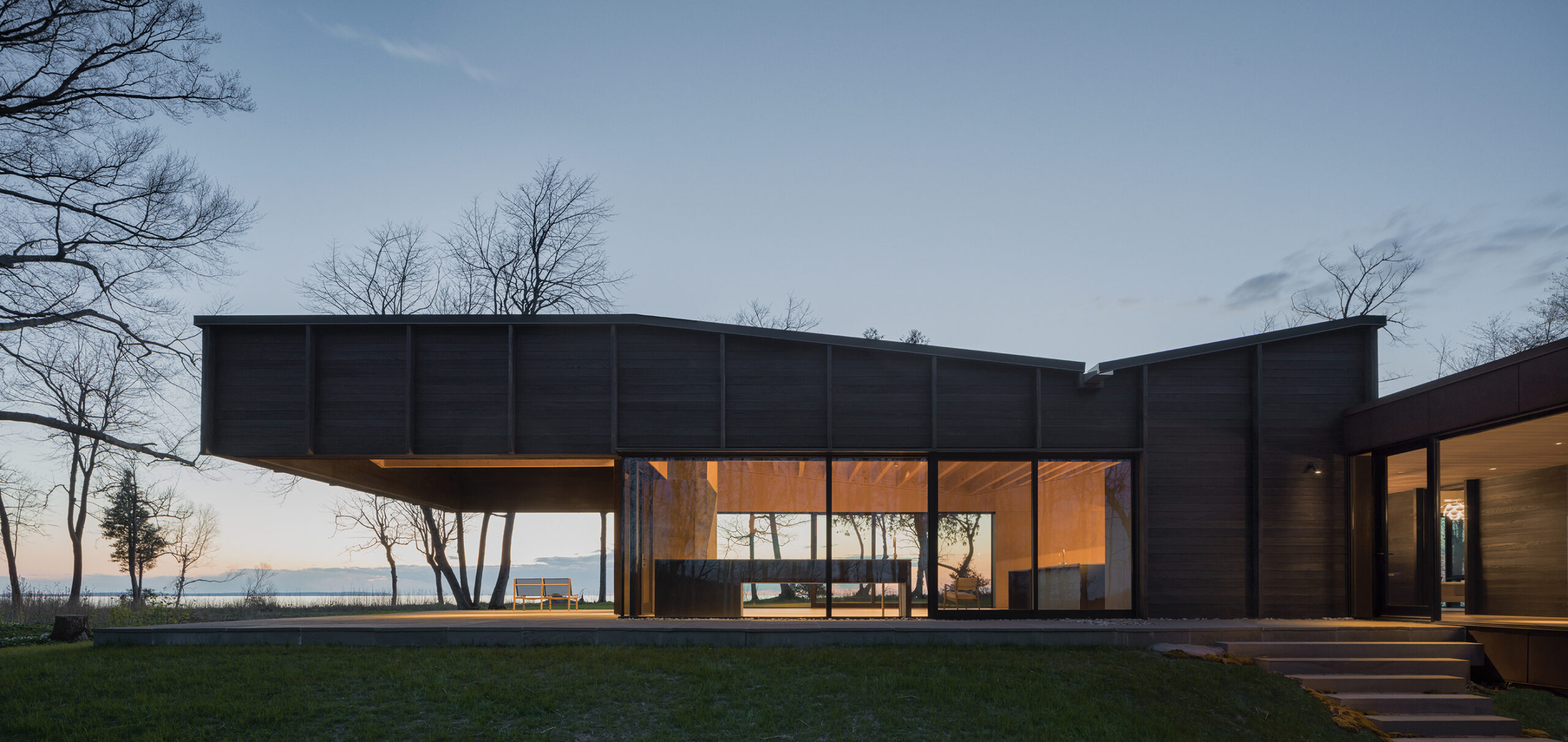
The architects describe themselves as “closet anthropologists,” a unique methodology that begins with discovering the unique cultural and social artifacts in each client’s life and translating them into tangible built form. This curiosity is the creative fuel that has lasted over 30 years. In the LM Guest House project, this philosophy translates into a building that wraps a warm wooden core within a transparent glass frame, creating a minimal pavilion that embodies structural precision and fluidity between inside and outside. Meanwhile, the Michigan Lake House project pushes sustainability even further, where the design was not just a response to the landscape but an effective environmental intervention, using the roof form to collect rainwater and repurposing wood from diseased trees on-site for interior finishes.
Craftsmanship and Detail.. A Legacy That Defies Time
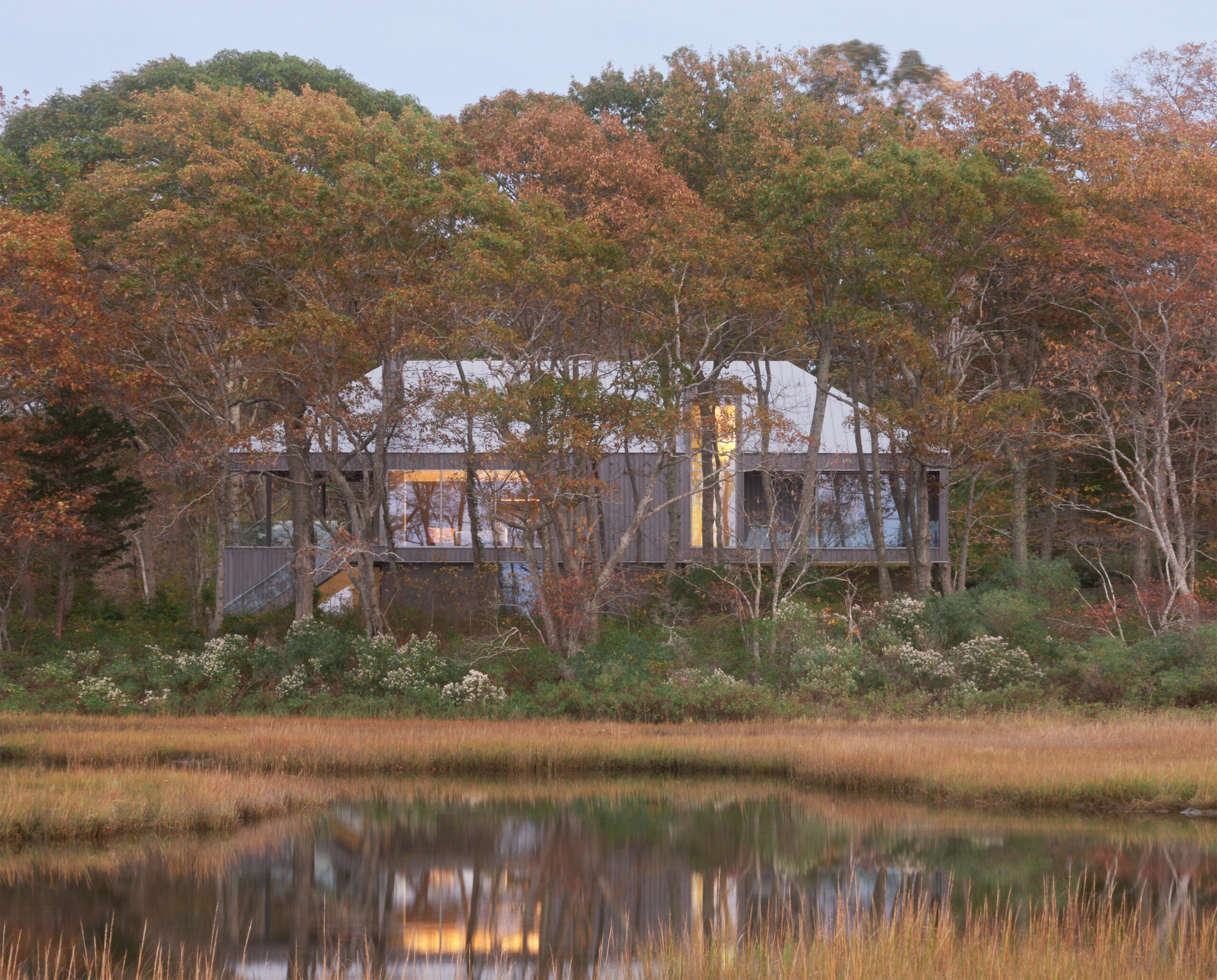
Desai Chia’s philosophy extends beyond functional design to thinking about a building’s legacy across generations. For houses, the designers ask, “Will future grandchildren want to live here?” and for institutions, “How will the next generation of students interact with this space?” This long-term thinking positions the studio as a contributor to shaping material culture over time. The Osprey House on Shelter Island is an example of this quiet refinement; where simple forms create immersive atmospheres responsive to the local wetland ecosystem, revealing harmony between building and nature without one overpowering the other.
Global Horizons.. From New York to Singapore and Costa Rica
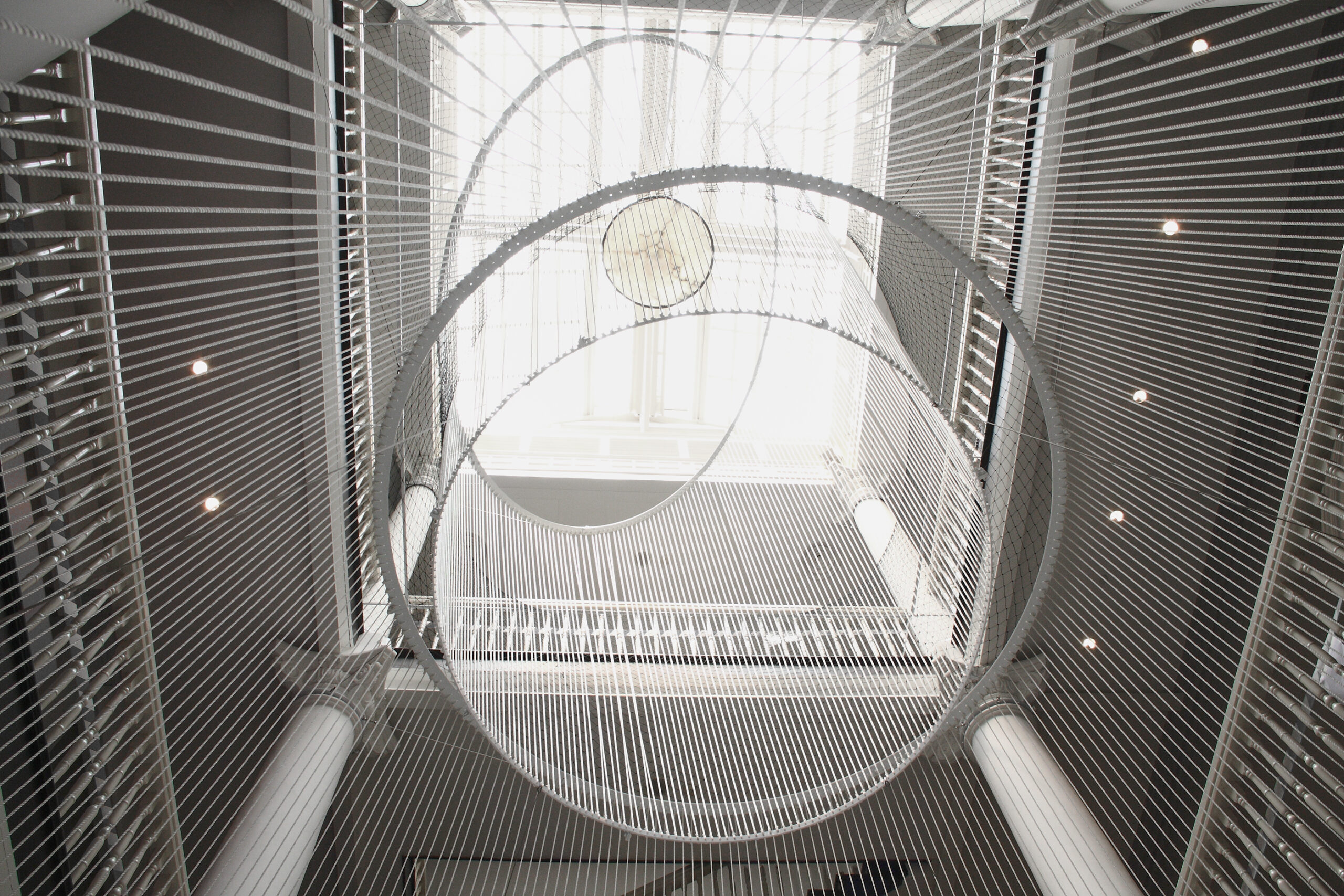
Although most of the studio’s work is rooted in the American context, its dialogue-based methodology has enabled it to execute distinguished international projects. Repeated collaboration with Taiwanese artist Lee Mingwei has produced massive architectural art installations, such as the 3-story installation in the atrium of the Peranakan Museum in Singapore. Recently, the studio received commissions in Costa Rica and a remote Caribbean island, demonstrating that a digital reputation for quality and uniqueness can transcend geographical boundaries. For them, each new site is an invitation to learn and respond, conducting intensive research on local climate and seasonal rhythms to ensure the building interacts intelligently with its environment.
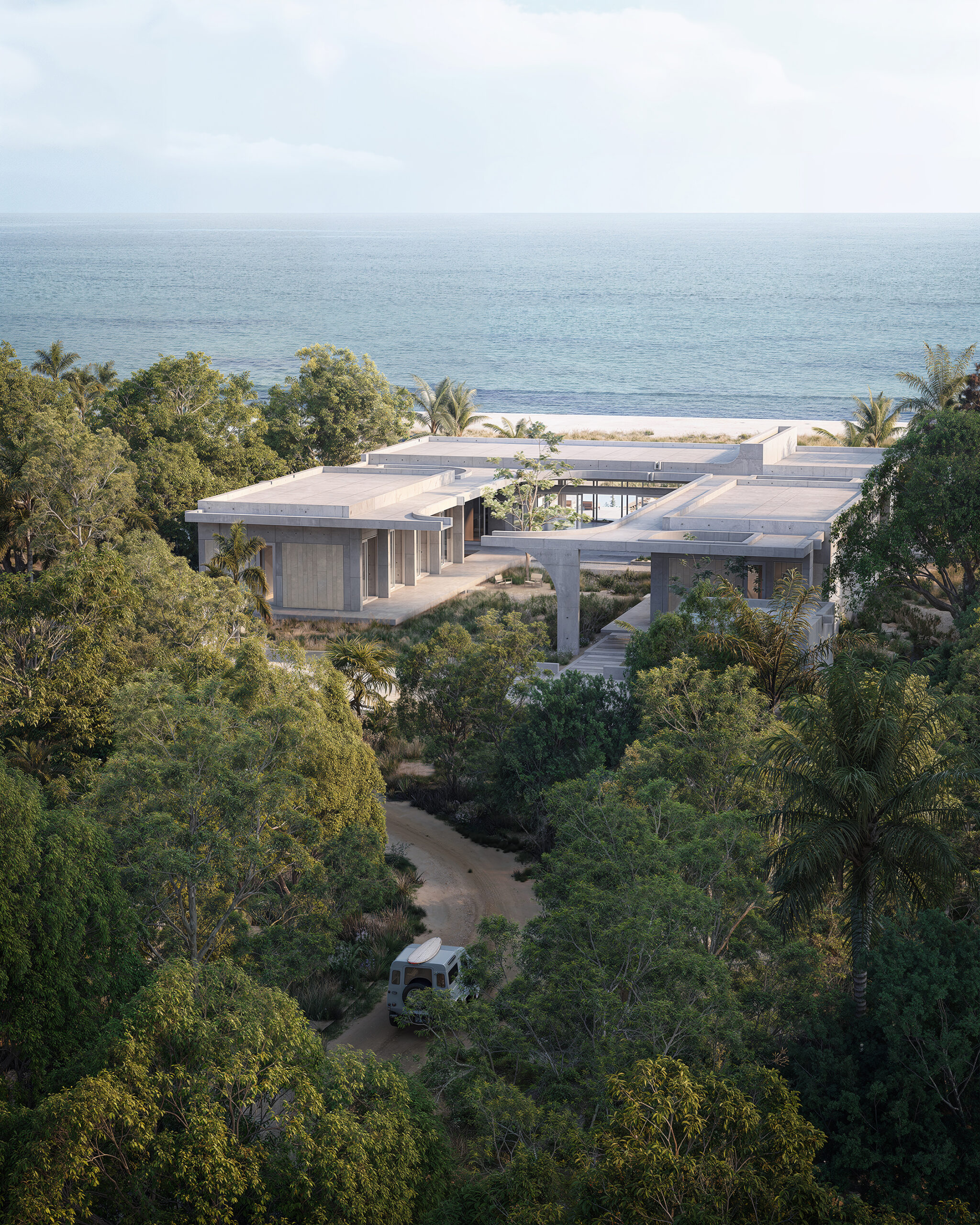
Desai Chia Architecture is not just an architectural firm; it is a practical statement proving that true influence on the architectural scene is measured not by size, but by depth. Depth of relationships with clients, depth of response to context, and depth of thought about a building’s legacy. In an era of rapid expansion, this firm reminds us that real value lies in craftsmanship, curiosity, and the insistence that architecture remains, first and foremost, a human conversation.
✦ ArchUp Editorial Insight
The article outlines the operational model of Desai Chia Architecture, which is based on maintaining a very small team size (6 individuals) as a strategic design choice to ensure the direct involvement of the founders in every project. From an analytical perspective, this model raises questions about its scalability on a broader scale, as reliance on a limited number of minds may restrict the ability to handle multiple, very large-scale projects or projects with overlapping timelines simultaneously and effectively. Furthermore, the intensely personal nature of the design process can lead to architectural solutions that are highly customized to the current client, potentially undermining their flexibility and adaptability to the needs of future users or changing functions. On the positive side, this approach allows for a high level of coherence and unity in the design vision and control over the precision of structural and craft details across various project phases, which is reflected in the quality of the final execution.
Brought to you by the ArchUp Editorial Team
Inspiration starts here. Dive deeper into Architecture, Interior Design, Research, Cities, Design, and cutting-edge Projectson ArchUp.