How to use quantum computing in the construction industry

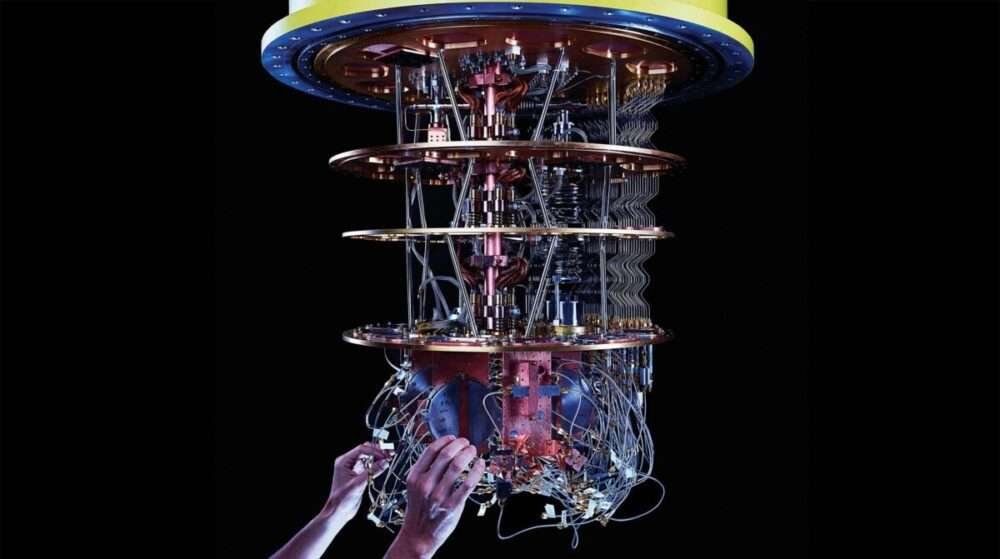
Quantum computing is a field of computing that selects relevant solutions from a large number of options.
It uses quantum computers, ultra-fast machines that solve problems beyond industries’ capabilities
by facilitating fast work, improving processes, and improving quality.
Artificial intelligence, combined with quantum computing,
can bring extraordinary benefits to the construction industry.

Quantum computing for corrosion detection in structures
Quantitative sensors are used to effectively detect corrosion in structures.
These ultra-sensitive sensors are more sensitive and efficient than current technologies.
The sensors are also used to examine small changes in the quality of the metals used in construction by studying the variation in magnetism.

Quantitative Computing for Surveying
Soil surveys in the initial phase of construction projects provide the information needed for land use management
and land use planning, and the process assesses the structural integrity of the floor.
Quantum sensors are used to study the subsurface layers of the soil.
These sensors detect underground distortions, turbulence, sewage, etc., before construction begins.
Thus, unexpected hitches are avoided, which helps save time and money due to delays.

Quantum computing for better planning
Construction companies rely on the 3D modeling process to enable effective construction project planning.
Here, all architectural, engineering, mechanical, electrical,
and plumbing (EMEP) work constitutes a set of activities that are handled using conventional computers.
The problem arises when it is required to develop an operational plan that all teams agree to.

To avoid clashes between different teams, the industry aims to create a system
that uses machine learning to identify faults and deal with them by processing complex algorithms.
Where quantum computing can quickly process this complex information to create a plan that works for everyone.

Quantum computing for faster project completion
Complex problems can be solved, and solutions can be quickly improved using quantum computers.
The industry relies on quantitative computing for planning, surveying, designing, pre-bidding,
budgeting, scheduling, quality and cost control, and cost management.
All of these activities are performed quickly using quantum computing, thus reducing project completion time.
For more architectural news