Humanoid Kriket 3000: Reviving the Aesthetics of Classic Sci-Fi Robots in the Modern Era

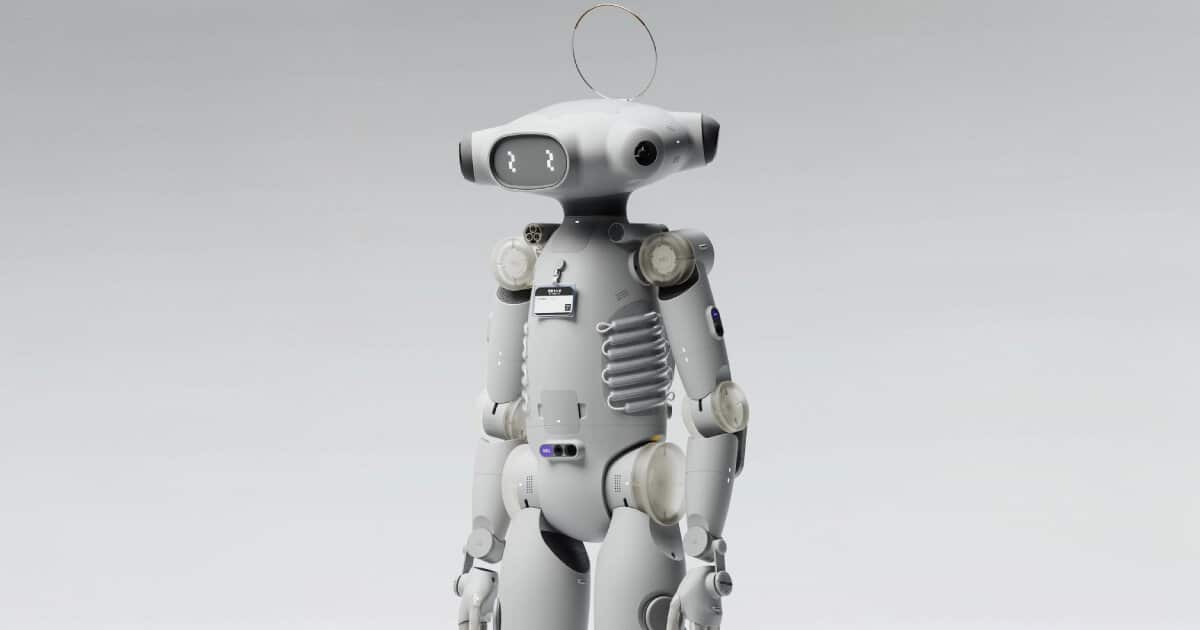
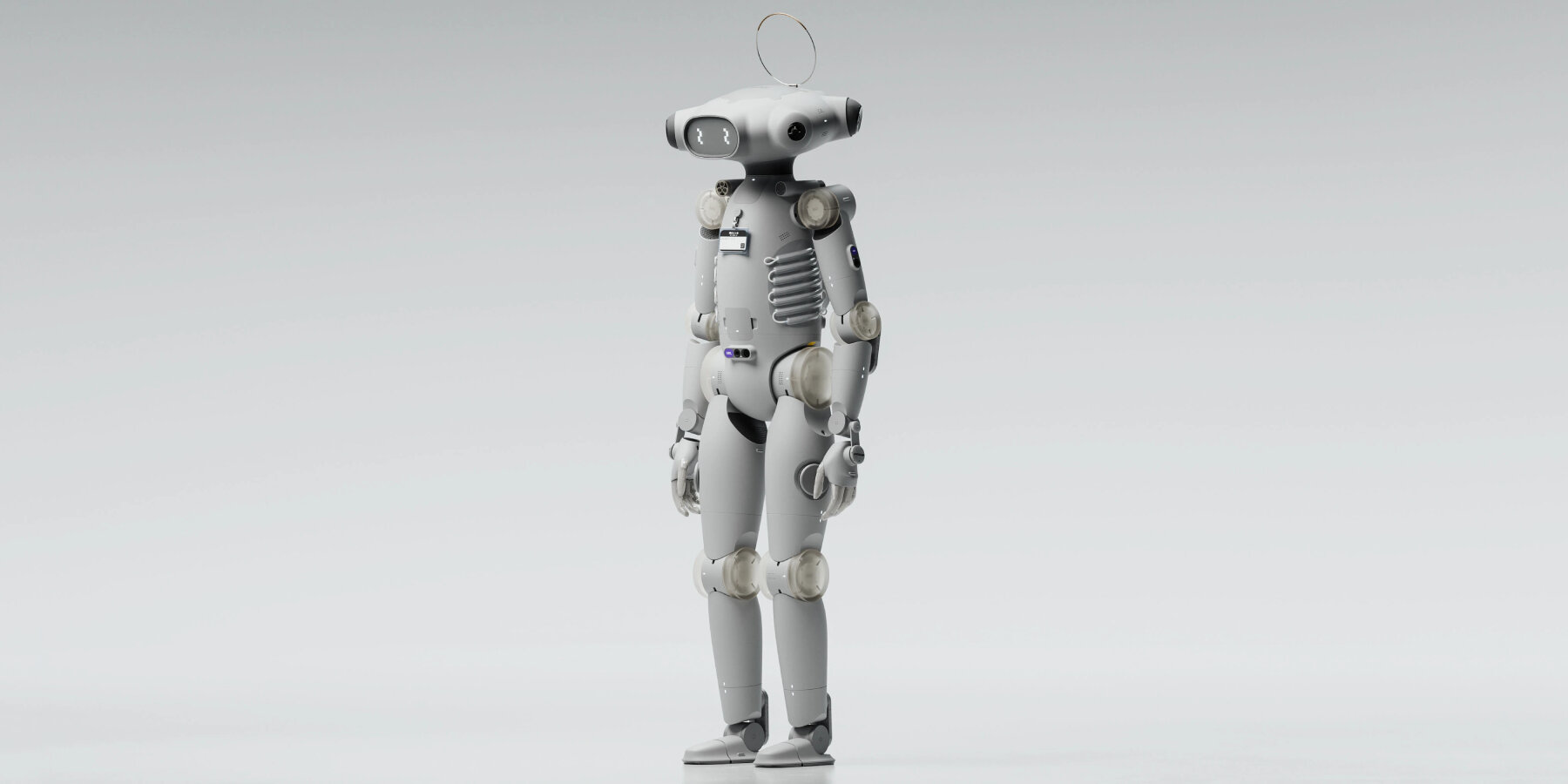
In a world dominated by minimalist design and functional, industrial-looking robots, the Humanoid Kriket 3000 concept takes us back to a golden era of imagination and creativity. This design, from the mind of artist and designer Sean Wells, is not just a robot; it is a bridge between nostalgia and a more human-centric future vision.
Evoking the Spirit of the Sixties: Aesthetic and Color Design
The Kriket 3000 redefines the humanoid form through the lens of mid-century product design. This is evident in:
- Fluidity and Soft Curves: The design abandons the sharp edges and harsh angles of contemporary robots, opting for organic lines inspired by classic car and appliance design from the 1950s and 60s.
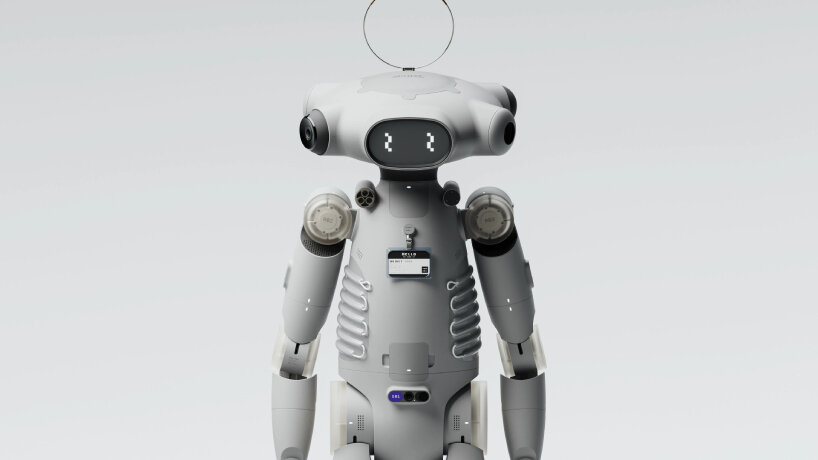
- Soft Color Palette: White plastic dominates, accented with touches of pastel and shiny chrome, giving the robot a friendly and familiar appearance, reminiscent of toys or advanced appliances of that era, rather than a cold industrial machine.
- An Expressive Face: The face features multiple screens resembling large eyes, a staple in the portrayal of robotic characters in old sci-fi films, granting the robot the ability to express a “personality” and impart a warmer character.
Modern Technology in a Classic Shell: Smart Specifications
Beneath the nostalgic appearance, the Kriket 3000 hides advanced modern capabilities, raising the question of how to integrate contemporary technologies into familiar forms:
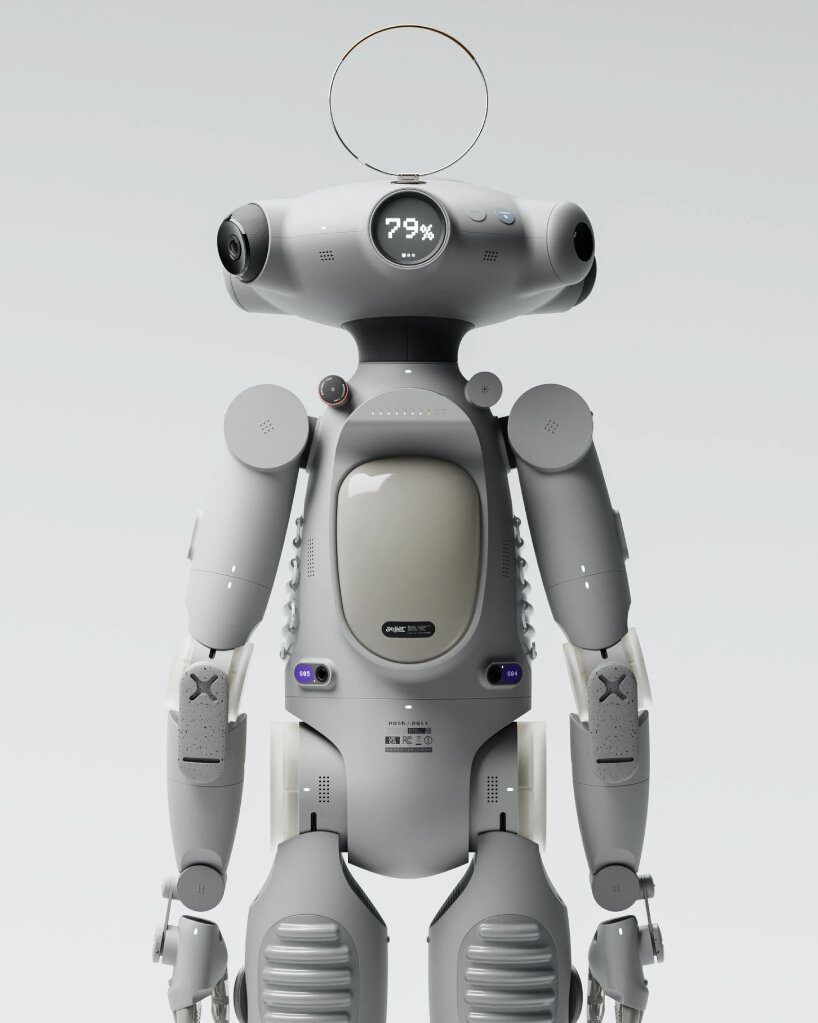
- Interactive Displays: Small digital screens on the robot’s head display battery charge percentage and animations that enhance the feeling of vitality and interaction.
- Advanced Sensors: The robot’s body and head are equipped with an array of cameras and sensors that enable it to perceive its surroundings, detect motion, and even respond to touch.
- Artificial Intelligence and Learning: The Kriket 3000 is likely equipped with an AI platform that allows it to learn its users’ habits, adapt them to perform specific tasks, and communicate more naturally, making it a smart home companion rather than just a machine.
Kriket 3000 vs. Historical Reality: A Quantum Leap in Conception
To understand the innovation of this concept, one must look at the reality of robots in the 1960s and 70s. Those machines were not humanoid at all; they were massive mechanical arms, like Unimate—the first industrial robot in 1961—whose primary task was moving hot metal parts in General Motors factories, a job too dangerous for humans. These robots were made of raw metal, without any facial features, and operated on simple programmed commands. The Kriket 3000 embodies the shift from these purely functional machines to autonomous, social robots capable of coexisting with humans in their daily environment.
Conclusion: Why This Design Matters Today
The Humanoid Kriket 3000 concept represents more than just an art project; it is a cultural statement. In an era where we urgently debate the limits of machine ethics and the nature of human-machine interaction, this design reminds us that the future does not have to be harsh or visually complex. By borrowing elements from a past filled with optimism and imagination, the Kriket 3000 offers an alternative vision for the future of robotics: a future where advanced technology is elegant, familiar, and human at its core.
(✦ ArchUp Editorial Insight)
The Kriket 3000 project presents a captivating vision that embodies the classic mid-20th century sci-fi dream, merging retro-friendly, curvaceous aesthetics with modern AI capabilities to create a familiar humanoid robot. However, the design may raise questions about its feasibility beyond the conceptual frame, as the curved structure and light colors might not be practical for meeting mechanical rigidity and scuff-resistance demands in a real-world environment. Nonetheless, the project’s core strength remains its power to stimulate a rich dialogue on the importance of emotional and aesthetic form in technology design, reminding us that the future can be both advanced and warm.
Brought to you by the ArchUp Editorial Team
Inspiration starts here. Dive deeper into Architecture, Interior Design, Research, Cities, Design, and cutting-edge Projectson ArchUp.