

Interactive Architecture Between Form and Function: A Reading of Michael Jantzen’s Project

An Introduction to Interactive Architecture: When Buildings Transcend Their Traditional Role
In recent decades, there has been a radical shift in how architecture is perceived. This is particularly evident with the emergence of thinkers and designers who treat buildings as living, adaptable entities. Among these pioneers stands Michael Jantzen, who has dedicated his career to developing architectural concepts that fuse art, technology, and function. He breaks traditional boundaries between static form and dynamic life.
“The Autonomous Interactive House”: A Transformative Architectural Experience
In this context, his project titled The Autonomous Interactive House emerges as the pinnacle of his intellectual and experimental evolution. This project doesn’t merely provide a place to live; it introduces a new vision of the relationship between humans and shelter. The house—pre-fabricated from wood—does not maintain a single fixed form. Instead, it shifts and transforms according to the needs and desires of its inhabitants.
Breaking the Fixity of Form: From Rigidity to Adaptability
This design veers away from the conventional notion of a static building that imposes its shape and functions on its residents. Instead, it relies on a flexible and modifiable structure. This structure responds to multiple variables, such as:
- Climatic conditions (sunlight, wind, temperature)
- Personal preferences of the user
- Psychological or emotional states of the occupants
In doing so, the building transforms from a mere container for living into a dynamic entity that shares daily life with the individual. It continuously interacts with them.
The Transformative Roof Mechanism: The Canopy as a Living Element
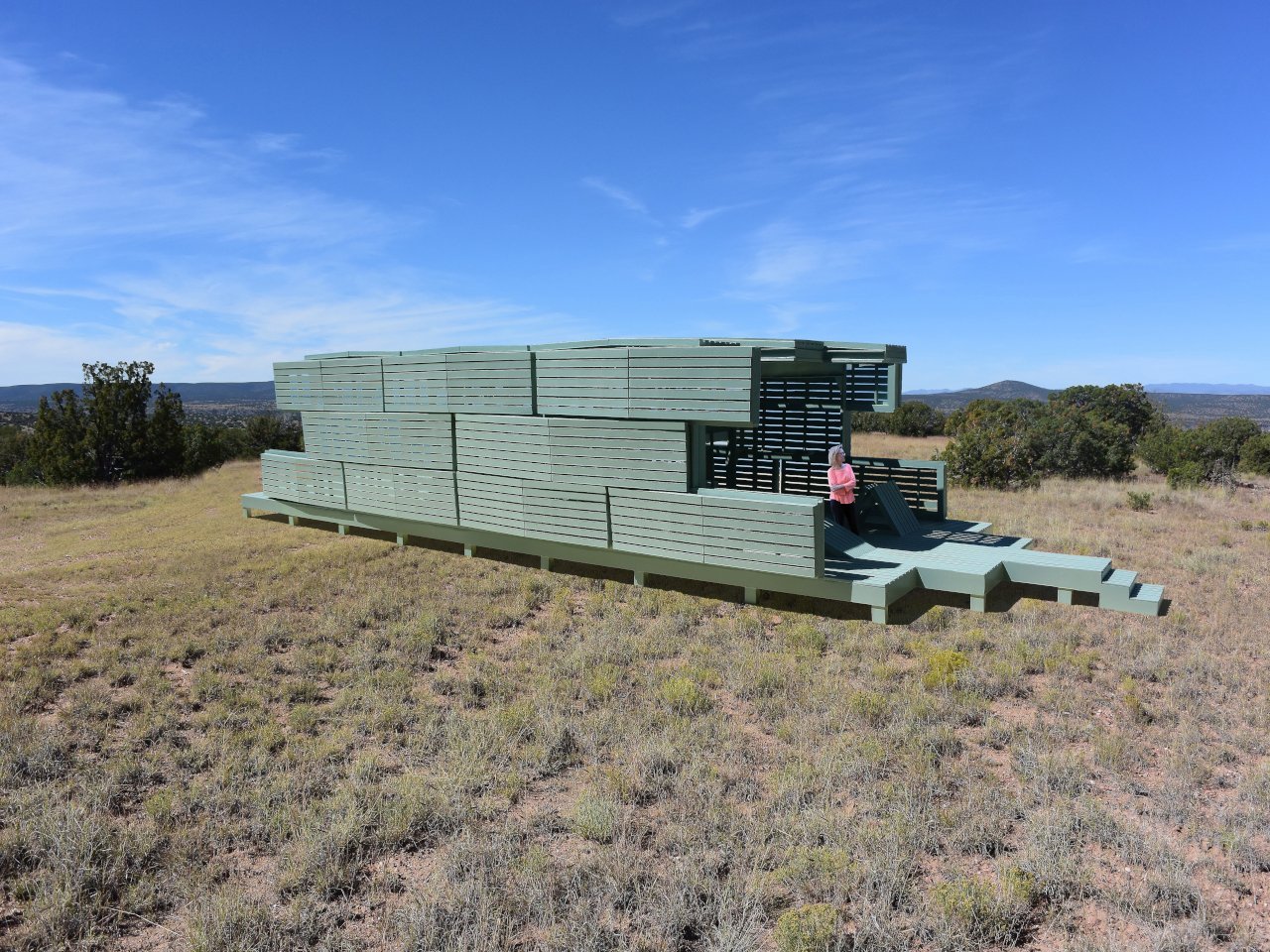
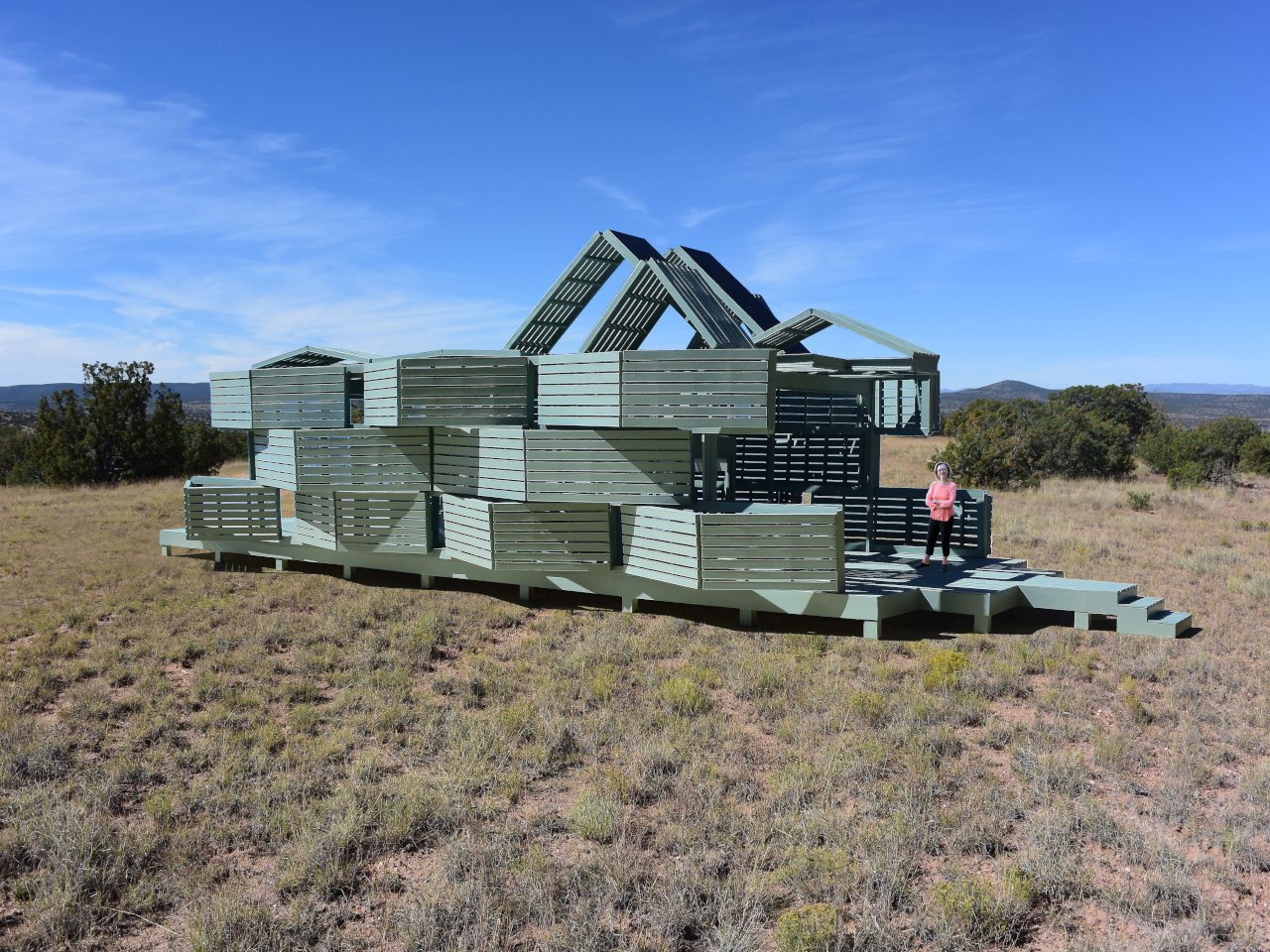
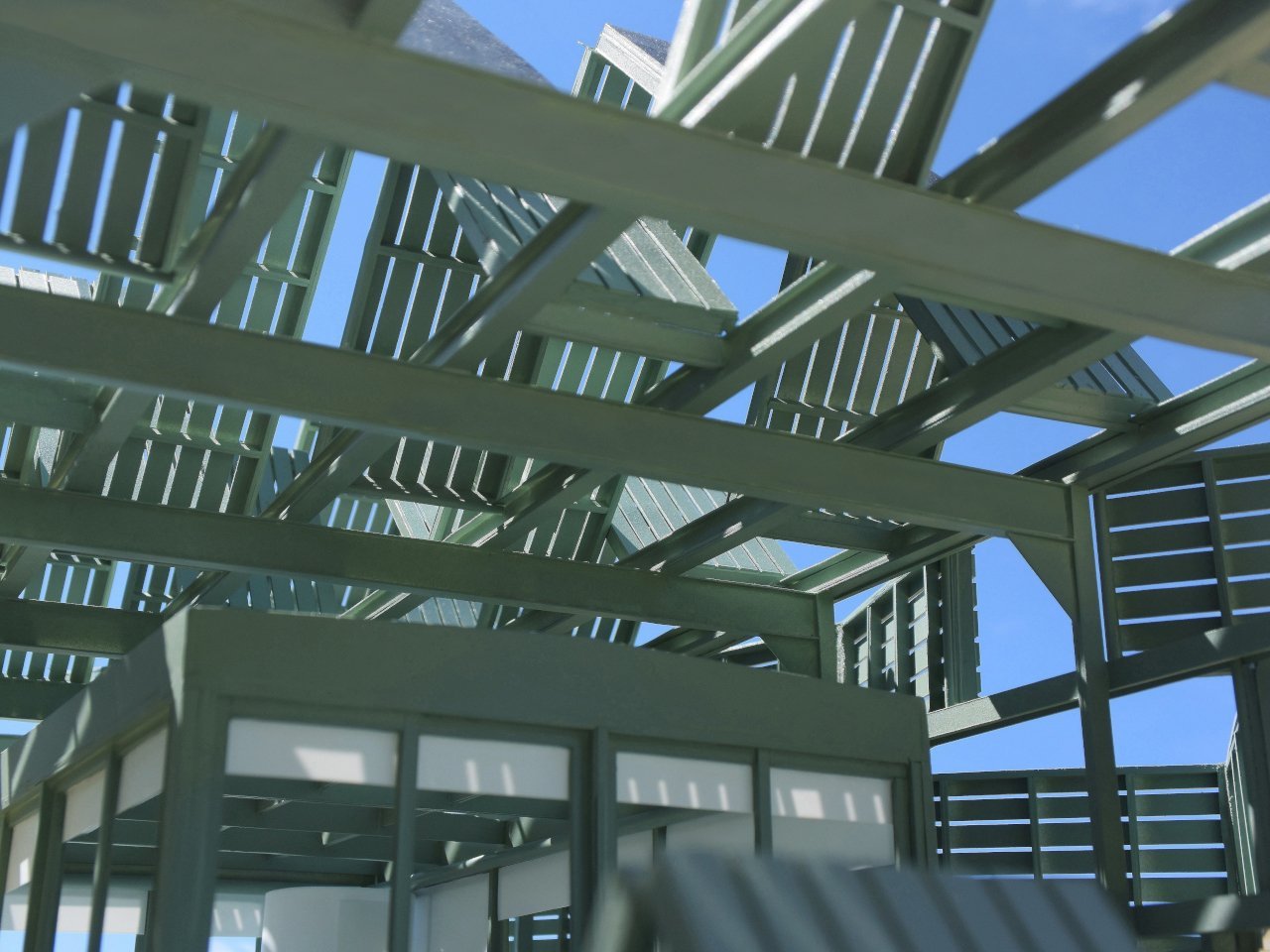
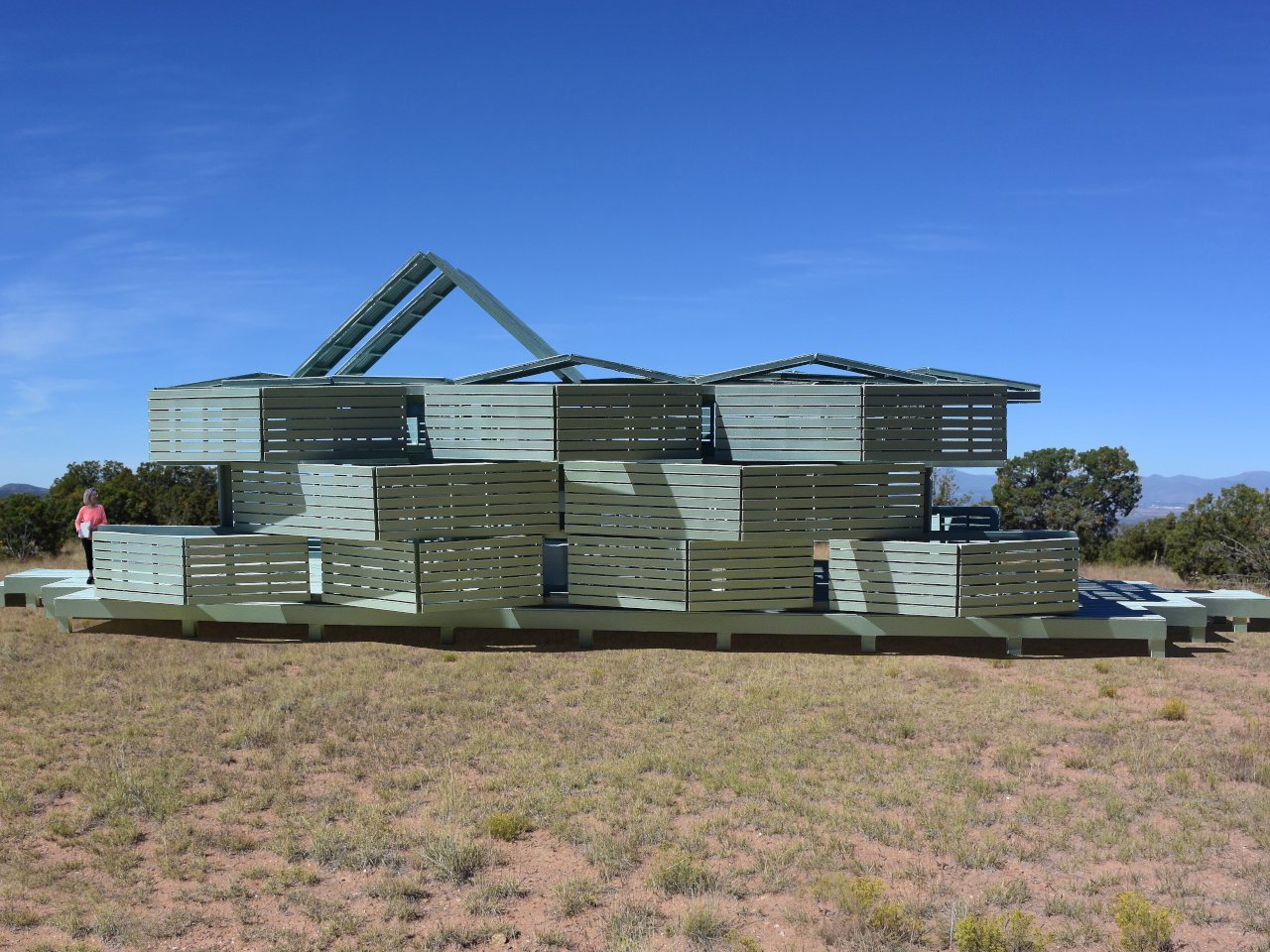
At the heart of this architectural retreat lies a large external canopy—the most prominent and interactive component of the design. This canopy is composed of 32 slotted panels, each connected by two joints. There is one at the center and another at one end, granting them a high degree of mobility.
Control and Adaptation: Between the Mechanical and the Manual
The movement of these panels is engineered to be flexible and operable in multiple ways:
- Through small electric motors equipped with gears to adjust their position automatically.
- Or via manual gear-driven handles that allow for manual angle adjustment.
When the panels are aligned horizontally, the building retains a simple rectangular appearance, offering full shade and effective wind protection.
A Shifting Visual Form: Beyond Static Design
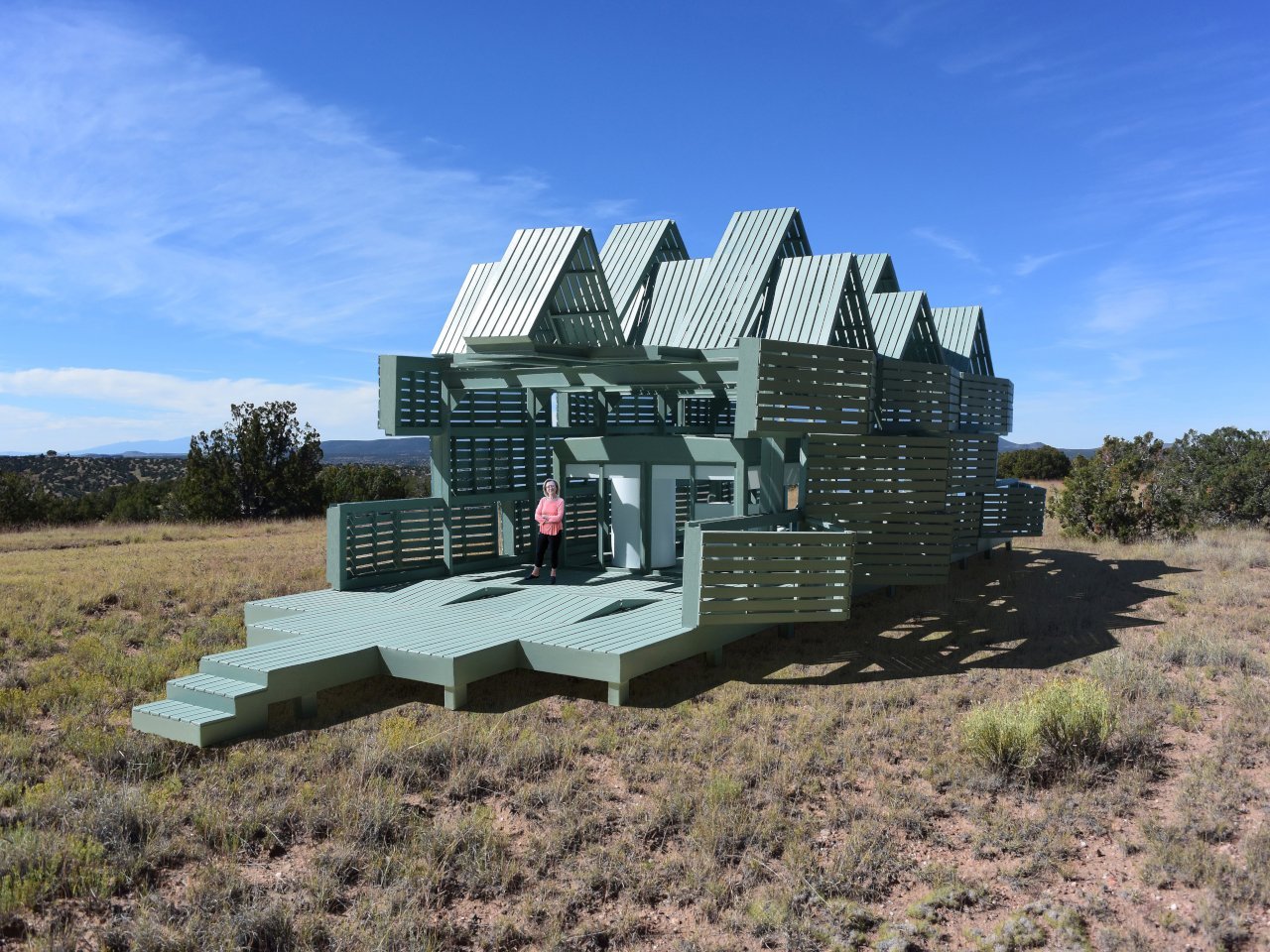
What’s truly striking, however, is what happens when the angles of these panels are adjusted at varying degrees. The overall shape of the building begins to transform gradually, revealing visual and spatial patterns that are entirely unpredictable.
The structure’s configuration changes in response to:
- Current weather conditions
- The user’s personal aesthetic preferences
- Temporary functional needs (e.g., letting in light or blocking wind)
A Moment-Based Experience Beyond Repetition
Notably, these capabilities ensure that every visual configuration is unique. The building never needs to appear the same way twice. Thus, the user becomes an active participant in reshaping the space. They do so according to their own will and in the exact moment they choose.
Solar Energy as Part of the Transformative Design
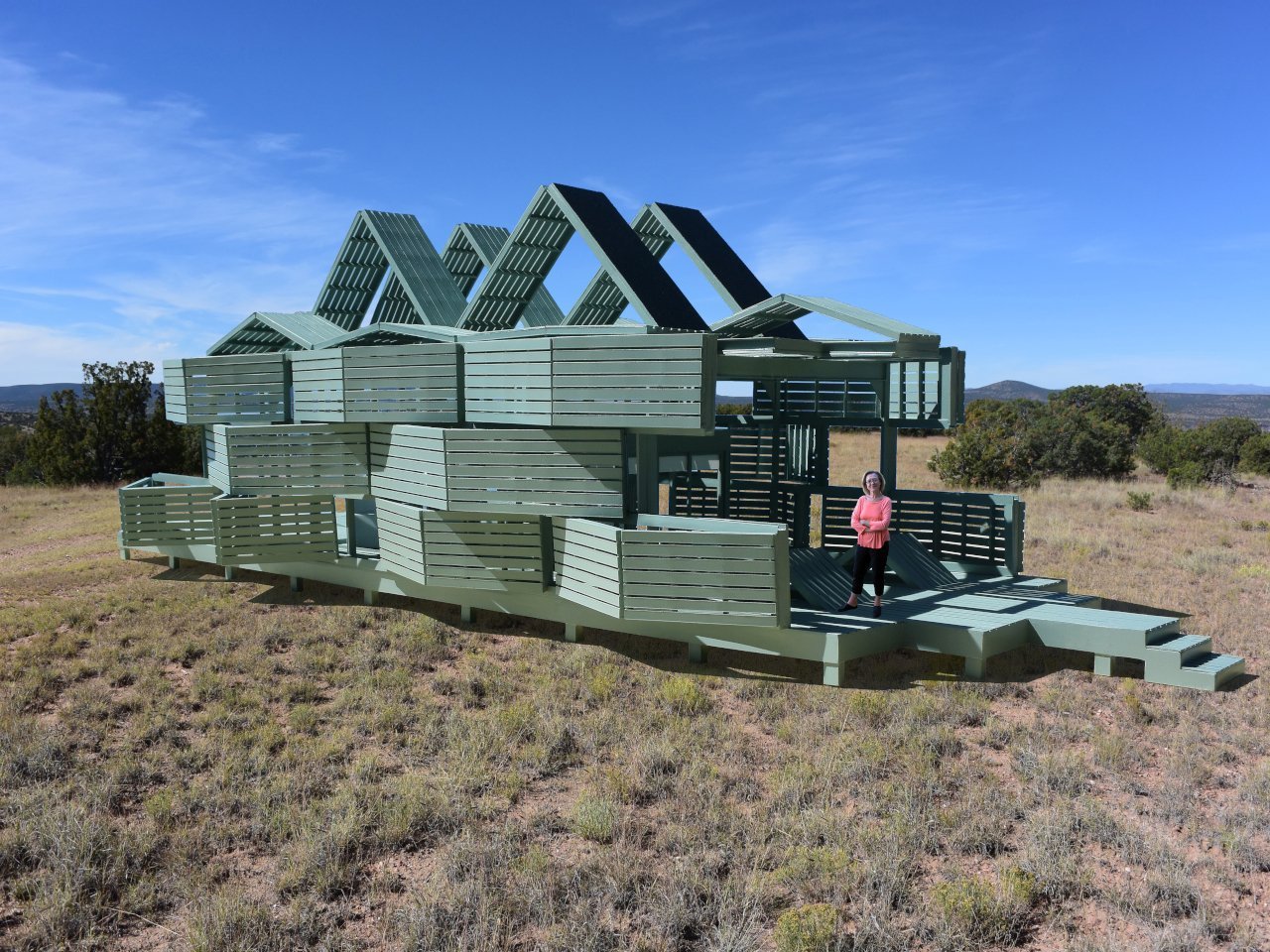
Among the movable panels that make up the external canopy, two primary panels are equipped with integrated solar collectors. These collectors are not merely technological add-ons for energy generation—they are integral components of the overall interactive system embodied in the home’s design.
Smart Orientation to Harness Sunlight
These solar panels can tilt upward or downward, allowing them to adapt to the sun’s path throughout the day. This intelligent orientation enables maximum sunlight capture, thereby ensuring high efficiency in energy production.
Complete Autonomy Without Compromising Aesthetics
Through this system, the house is capable of generating all of its own electricity, eliminating the need for a traditional power grid connection. This reinforces the idea of off-grid, self-sufficient living. At the same time, this functional element does not compromise the aesthetic dimension. Instead, it seamlessly integrates technology into the transformative structure itself, keeping the form ever-evolving and responsive.
The Interior Space: A Glass Capsule Immersed in Light
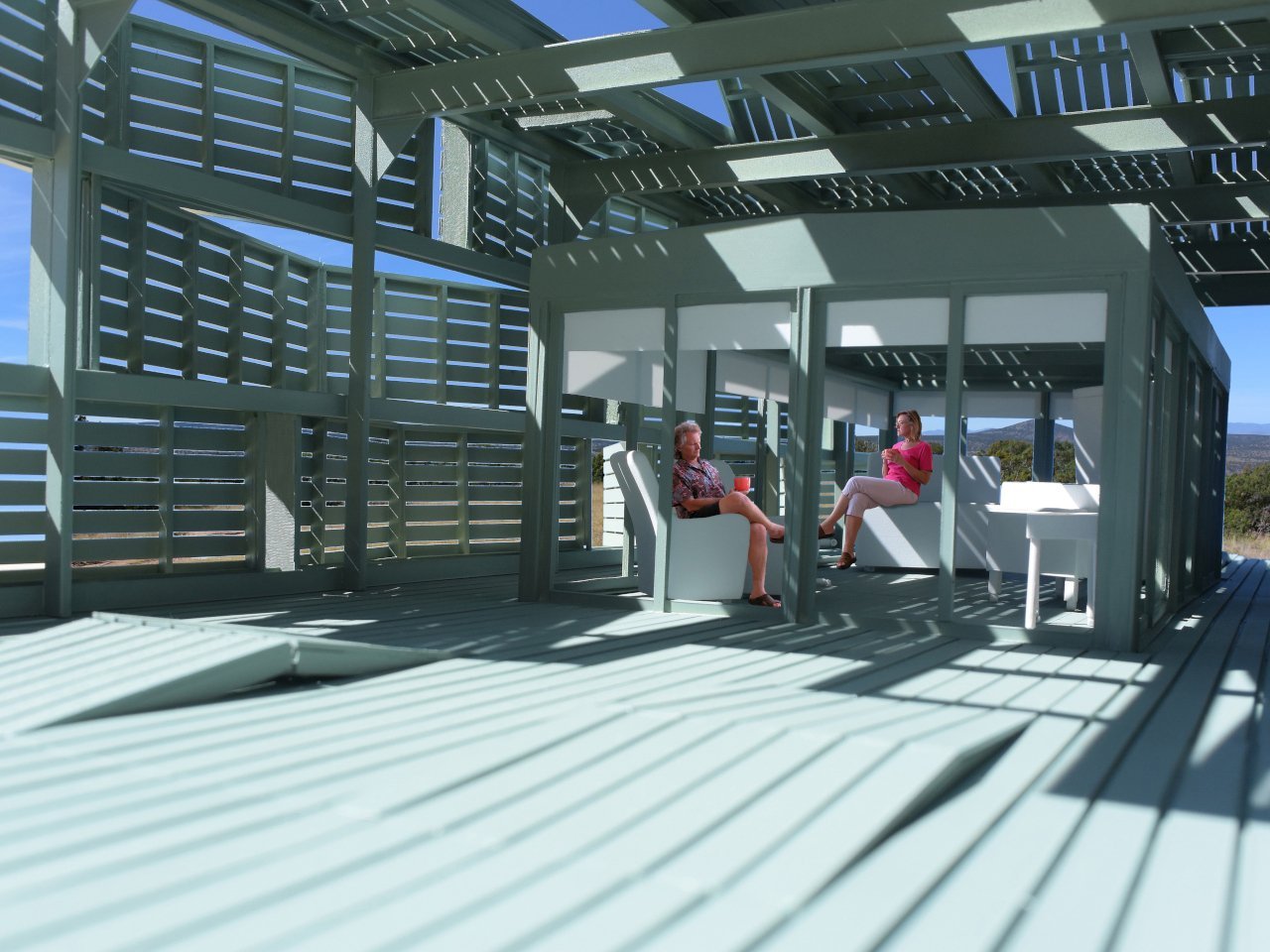
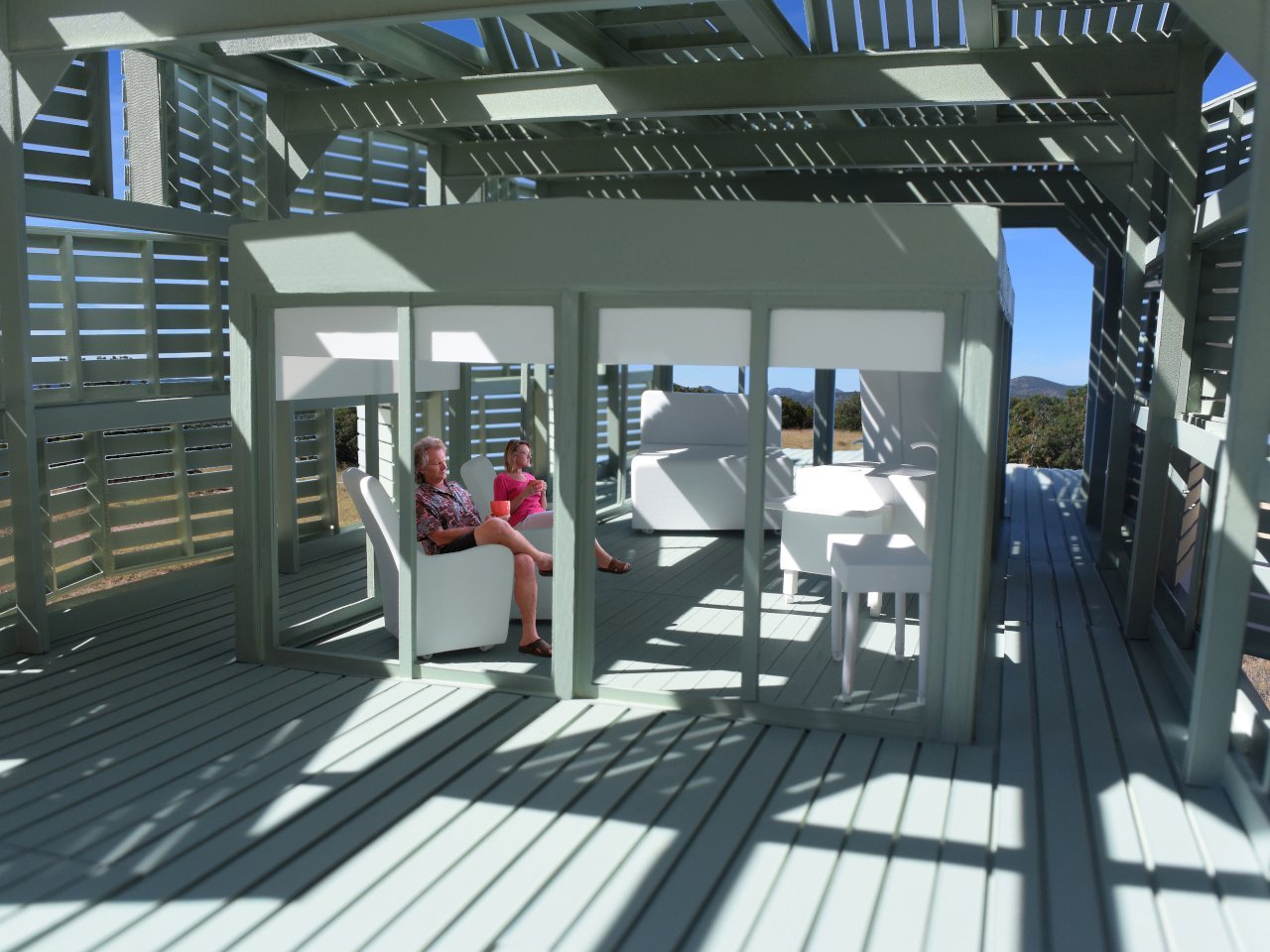
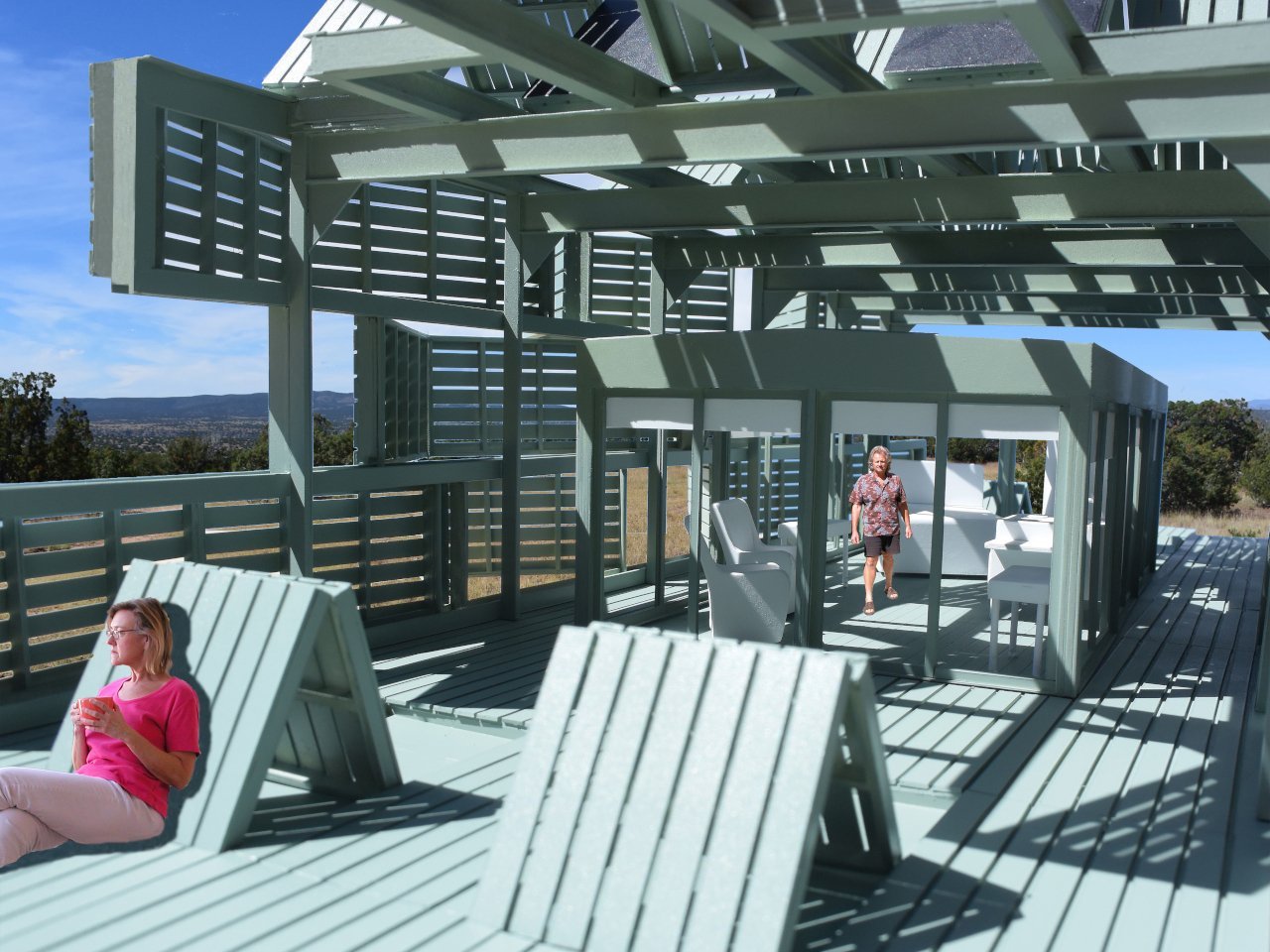
Beneath the transformative canopy rests a rectangular glass structure that serves as the actual living space. This structure resembles what could be called a “transparent capsule,” surrounded by ten sliding glass doors. They provide flexible natural ventilation and allow users to control the degree of openness to the external environment.
A glass roof spans the entire space, offering open panoramic views of the sky, the shifting canopy above, and the surrounding natural landscape. This openness creates a profound sense of integration with nature, all without stepping beyond the shelter’s limits.
A Fully Integrated Design for Independent Living
Despite its apparent simplicity, the interior space contains all essential amenities for two people living off the grid, including:
- A comfortably sized bed
- Flexible seating areas
- Multi-purpose tables
- A compact food preparation unit
- A composting toilet with shower facilities
Energy and Heat Distribution: A Blend of Simplicity and Efficiency
The thermal system inside the shelter relies on propane gas, used for both cooking and heating when necessary. However, when sunlight is available, select panels of the canopy can be opened to let in direct sunlight. This provides sustainable natural warmth without additional energy consumption.
A Transformative and Visual Living Experience
The architectural role of this dwelling extends far beyond mere functionality. It offers a renewable sensory and visual experience, as the glass walls and ceiling continuously frame the dynamic movements of the canopy. The surrounding environment turns into a living artwork that evolves throughout the day.
The spatial experience shifts according to:
- Changes in natural lighting
- The movement of panels in new patterns
- The interplay of shadows and reflections within the interior
An Elevated Base: A Platform Connecting Inside and Out
Both the glass structure and the movable canopy rest on a raised wooden platform, supported by ground-anchored legs. This slight elevation adds a visual lightness. Additionally, it enhances protection from ground moisture and offers a broader view of the surroundings.
Adjustable Expansion: Flexible Use of the Deck
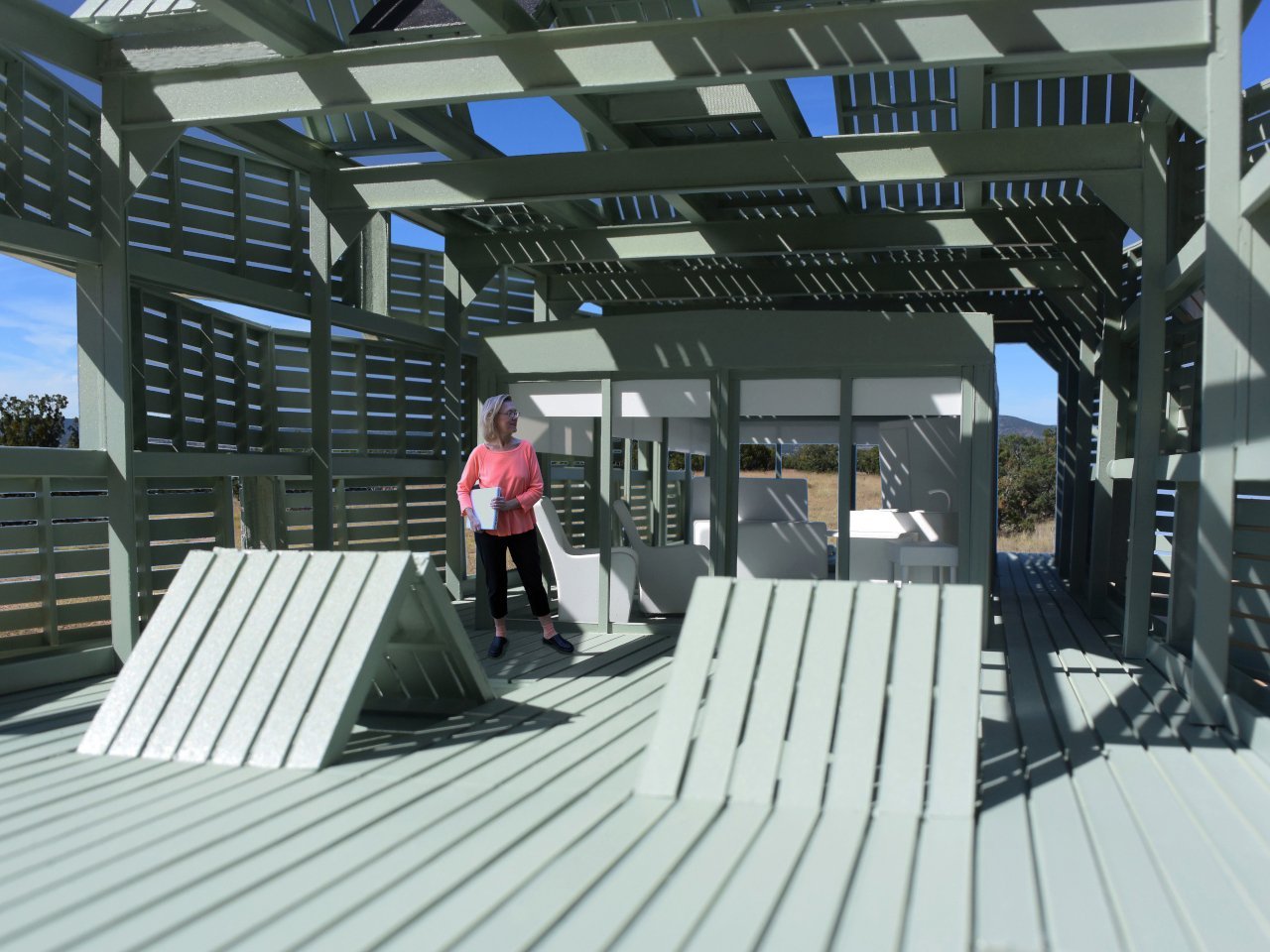
At each end of the platform, there are additional slotted panels that can either lie flat or be tilted at various angles. These panels serve as:
- Extensions for sitting or reclining
- Temporary outdoor spaces for relaxation or contemplation
- Flexible elements that help define the evolving relationship between the interior and the exterior
Toward Interactive Architecture: Redefining the Relationship Between Human and Shelter
This housing model represents a paradigm shift in the concept of traditional architecture. Rather than creating buildings that impose a fixed form and function on the user, the project proposes a participatory model, where the architectural structure interacts with the evolving needs of its inhabitants.
Designer Michael Jantzen believes that architecture should collaborate with its occupants, rather than dominate them. In this way, the home becomes a flexible tool for reshaping the relationship between the individual, the space, and the surrounding environment.
A Balance Between Sustainability and Flexibility
The design clearly reflects a commitment to smart sustainability, without sacrificing comfort or aesthetics. Every component in this house serves more than a single function, intersecting with other elements to create a multi-functional solution:
- Solar panels supply the home with power
- The adjustable canopy regulates both light and heat
- Sliding glass doors provide flexible ventilation and open up to nature
✦ ArchUp Editorial Insight
This architectural concept represents a bold step toward redefining the relationship between human and shelter—a notion that is intellectually compelling. The integration of interactivity and adaptability with elements of nature reflects a forward-thinking vision for more conscious, fluid living environments.
However, this approach also raises several practical questions. While the project clearly aspires to balance sustainability with comfort, the mechanisms of architectural transformation and personalization may be better suited to specific contexts or particular user groups. This is especially true for those who possess the awareness and willingness to engage with their living space on a daily basis.
In other words, while the design’s flexibility and openness are worthy of celebration, some may argue that such adaptability demands ongoing effort. It may not necessarily align with every lifestyle or traditional housing culture.
Explore the Latest Architecture Exhibitions & Conferences
ArchUp offers daily updates on top global exhibitions, conferences, and professional art and design forums.
Follow key competitions, check results, and stay informed through the latest news worldwide.
ArchUp is your encyclopedic hub for discovering events and design-driven opportunities across the globe.


