Jangam Fire Residential Project Seoul 2026

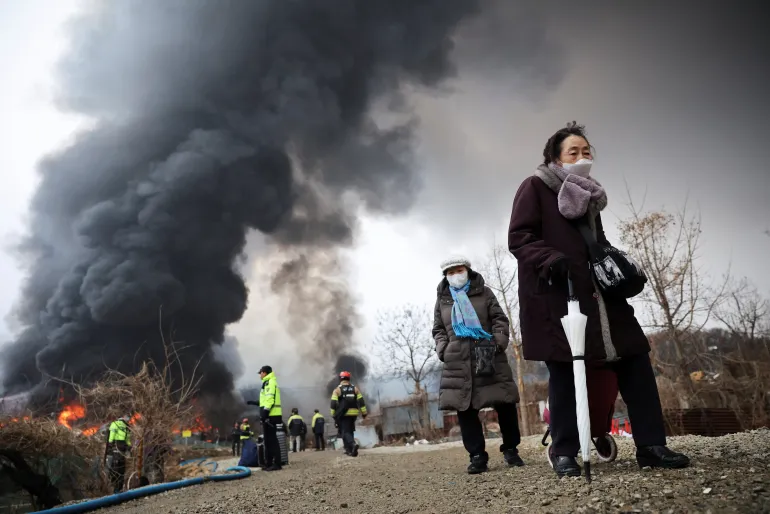
The Jangam fire erupted in January 2026 in Guryong Village, Seoul’s last informal settlement within southern Gangnam. Nearly 300 firefighters responded and evacuated 47 residents without casualties. The event revealed deep flaws in architectural design and urban planning. Informal housing here remains excluded from basic fire safety standards.

Highly Combustible Residential Fabric
Residents built homes using lightweight building materials like corrugated metal, untreated wood, and plastic sheeting. These materials ignite easily and offer poor thermal resistance. Extreme density and narrow alleys blocked emergency access. The Jangam fire spread rapidly due to this layout. Spatial organization directly compromised safety.
Local regulations significantly influence architectural design.

Absence of Urban Infrastructure
The neighborhood lacks firebreaks, emergency routes, and separation zones. Modern cities require these elements by default. Yet adjacent districts received infrastructure upgrades while Guryong saw none. Decades of neglect left it vulnerable to predictable disasters.

Disparate Safety Standards
Formal developments in Gangnam follow strict codes for fire compartmentation, alarms, and vehicle access. These principles shape contemporary buildings. Guryong operated outside this system. The resulting gap in protection turned the Jangam fire into a symbol of spatial inequality. Safety became a privilege, not a right.

Informal Origins, Permanent Consequences
Guryong formed during Seoul’s rapid expansion in the 1970s–1980s. Low income migrants built temporary shelters that later became permanent. Authorities never integrated the area into official planning. Urban research on informal settlements offered solutions, but officials ignored them.
Architecture as a Tool for Risk Reduction
Full redevelopment is not the only option. Phased, low-cost upgrades can reduce danger. Teams can replace flammable cladding with safer building materials. They can widen alleys and install local water points. These steps align with sustainability goals. Documenting them in the project archive allows future evaluation. Without action, another Jangam fire will occur.
Architectural Snapshot
A city that fails to upgrade its residential fabric turns fire into an expected outcome, not an anomaly.
✦ ArchUp Editorial Insight
The Jangam fire was not an anomaly but the predictable outcome of layered systemic decisions. Long-term exclusion of informal settlements from municipal investment shaped mobility patterns where emergency access was structurally absent. Regulatory frameworks prioritized formal developments, while informal areas remained outside insurance, inspection, and enforcement cycles. Economic logic discouraged incremental upgrades due to unclear ownership and low short term returns. Cultural separation between formal and temporary housing normalized delayed intervention. These pressures converged into a residential fabric optimized for speed and survival, not durability or risk mitigation. The resulting spatial density, material choices, and access constraints appeared regardless of individual builders. The fire emerged as the final architectural expression of administrative neglect combined with risk deferral, turning vulnerability into a stable condition rather than an exception.