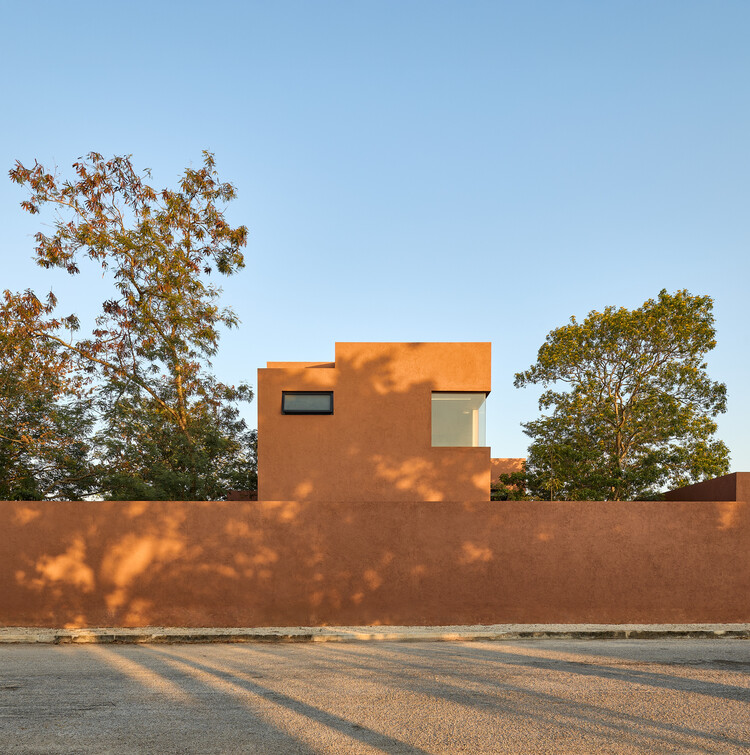
K’ab House by Lessmore Group: A Serene Family Retreat Blending Nature and Modern Architecture

Located in Mérida, Yucatán, this residential sanctuary redefines harmony between built spaces and the natural environment.
Project Overview
Designed by Lessmore Group (lead architects Román González Garramillo and Edmundo Fernández Virus), K’ab House is a 421 m² family residence nestled on a 1,226.35 m² plot in Mérida’s northern outskirts. Completed in 2023, the home embodies tranquility, leveraging its secluded location to create a refuge from urban chaos while fostering a deep connection with nature.
Key Features & Design Philosophy
- Integration with Nature:
- The design prioritizes open spaces, gardens, and courtyards, blurring boundaries between indoors and outdoors.
- Native vegetation and minimalist landscaping enhance the sense of serenity.
- Architectural Details:
- Clean lines, locally sourced materials, and passive cooling techniques reflect Yucatán’s vernacular architecture.
- Expansive windows and cross-ventilation optimize natural light and airflow.
- Spatial Harmony:
- The layout emphasizes privacy and communal areas, catering to family life without sacrificing aesthetic cohesion.
Technical Specifications
- Location: Mérida, Yucatán, Mexico
- Plot Area: 1,226.35 m² | Built Area: 421 m²
- Construction: Taller de Construcción (General Contractor)
- Photography: Eduardo Loeza
Why This Project Stands Out
K’ab House is a testament to biophilic design, proving that modernity and nature can coexist seamlessly. Its thoughtful orientation and material choices reduce environmental impact while elevating livability a model for sustainable residential architecture in tropical climates.
✦ ArchUp Editorial Insight
K’ab House masterfully captures the essence of a retreat, blending Mérida’s natural beauty with disciplined modern design. The architects’ emphasis on passive strategies and local materials is commendable, though the project could benefit from further transparency about its sustainability metrics (e.g., energy efficiency ratings or water recycling systems). Despite this, the home’s poetic balance of solitude and connection to the landscape sets a compelling precedent for rural residential projects. Its quiet elegance reminds us that architecture’s highest purpose is to frame not compete with the environment.
Brought to you by the ArchUp Editorial Team
Inspiration starts here. Dive deeper into Architecture, Interior Design, Research, Cities, Design, and cutting-edge Projectson ArchUp.