Kasi Namoda: The Embodiment of Color and Cultural Identity in Contemporary Photographic Art

Kasi Namoda and the Embodiment of Colors in Photographic Art
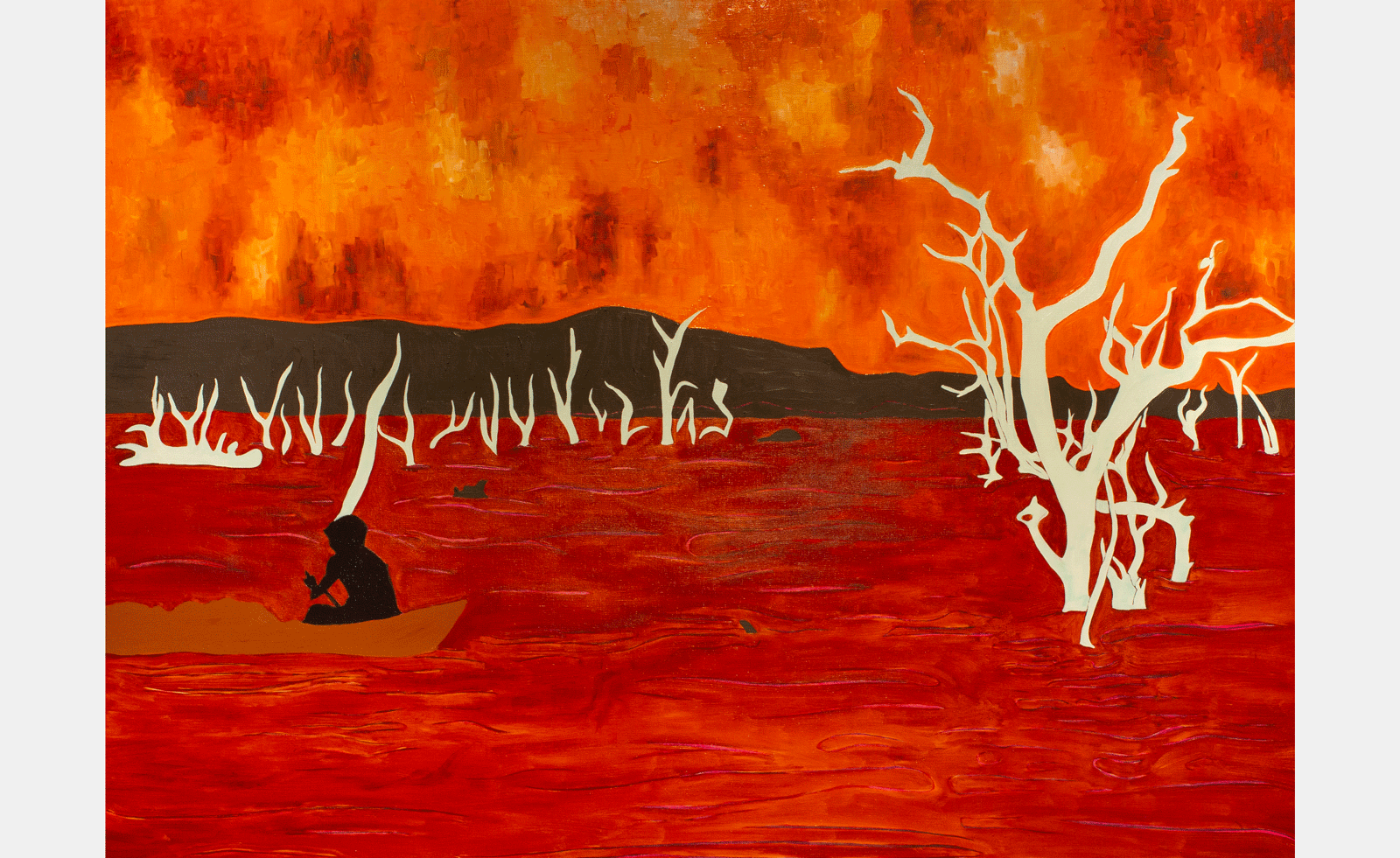
Kasi Namoda’s photographic works are characterized by their use of bold blocks of color that impart a vibrant warmth. These paintings combine details of everyday relationships with imaginative symbols, reflecting a diverse cultural and artistic depth.
The Interaction between Mythology and Postcolonial Identity
A significant part of Namoda’s output focuses on the postcolonial landscape of Mozambique. Here, she employs a blend of Western myths and indigenous African religions to explore identity and history. Additionally, she incorporates touches of pop culture and literature, giving her works a contemporary and dynamic dimension.
Stained Glass Window: An Artistic Reimagining at Turner Contemporary
In her first institutional work in the UK, Namoda reimagined one of her famous paintings as a stained glass window made of vinyl at the Turner Contemporary in Margate. This serene artistic installation allows visitors to enjoy a direct view of the beach. The window is located in the Sunley Gallery.
Margate: A City Gateway to a Different World
During a Zoom talk midway through the installation process, Namoda described Margate as having a unique quality. She likened it to a gateway to a bizarre dimension. She recounted watching jet skiers crossing the misty sea, with some wearing heavy jackets and others appearing nearly naked. This scene reminded her of the rhythm of an eccentric jazz tune with deep existential sensations.
Social and Ritual Contrasts in Margate
While planning this project, Namoda visited the British coastal town across three different seasons. This gave her the opportunity to reflect on the social divides present there. Through her artwork, she sought to express the visible contrasts within the local community. These contrasts reflect a clear diversity of human experience in this city.
Dissonance and Harmony: The Relationship Between the Artwork and the City
Kasi Namoda describes her work and the city that inspired it as two magnets repelling each other. The original painting’s title, What Are You Doing at My Sea?, evokes a sense of conflict and ownership. Namoda explains that the painting is not filled with joy. Instead, the title carries a rhetorical tone, reflecting her contemplations on the surrounding social and political context.
Symbolism of the Painting and the Window Composition
The stained glass window depicts an active flock of birds flying in a yellow sky. A female figure stands to one side of the scene, gazing far out to sea, lending a contemplative tone to the work. At the bottom of the frame, the face of a man is cut off below the eyes by the artistic composition. This suggests a severed head, which intensifies the sense of drama and conflict.
Heartfelt Conflict and Abstraction in Expression
Namoda points to a central conflict within the work that originates from the heart. There is a clear feeling that the female figure has suffered a broken heart. Unlike the original painting that highlights a sunset, in the window installation she chose to leave the sky abstract. This choice enhances the character’s sensation of “looking into nothingness.” It also allows natural light, the sun, and the changing sea view to interact dynamically with the artwork.
Spiritual and Historical Influences in the Inspiration
In her research, Namoda drew inspiration from stained glass windows created by other artists, particularly the Chapelle du Rosaire by Henri Matisse in southern France. She describes it as a spiritual “pilgrimage” site. She is also drawn to historic devotional paintings in France and Italy, where she currently resides.
Relationship with Religious Symbols and Artistic Darkness
Namoda explains that she has always created spiritual works bearing common symbols found in religious paintings. She draws on her early experience with Catholic church architecture and crucifixion stories. Her work addresses the darkness pervasive in religious imagery, referencing early Flemish painting. Artists like Pieter Bruegel, whose severed heads are reflected in her artistic compositions, also influence her work.
A Space for Reflection and Serenity
Kasi Namoda views Henri Matisse’s chapel as a tranquil place that allows visitors to “sit and reflect.” This feeling is something she aimed to evoke in her work at Turner Contemporary. She added locally sourced wooden benches inside the gallery to encourage visitors to relax and spend quiet moments in front of the artwork. She describes this moment as a “sacred moment” that enables one to contemplate and feel deep admiration.
The Interaction of Light and Its Impact Between Day and Night
The work takes on a different dimension at night compared to the day, as people on the beach can see the stained glass window fully illuminated. Namoda points out that “the most exciting part is watching it in the evening, when the window is completely lit.” During the day, the scene is soft and delicate, with natural light interacting with the sea to bring vitality to the piece. At night, the situation changes so the viewer comes into direct contact with the image, granting the work a powerful visual impact.