

Khalid Bin Sultan City by Zaha Hadid Architects: Redefining Urban Living in the UAE Desert

Zaha Hadid Architects (ZHA) has unveiled a visionary masterplan for Khalid Bin Sultan City in Sharjah, United Arab Emirates, that promises to transform desert urbanism with a bold fusion of organic design, sustainability, and social inclusivity. Located east of Sharjah International Airport and adjacent to ZHA’s award-winning Beeah Headquarters, the project will create a vibrant mixed-use city characterized by seven residential neighborhoods organically shaped by the forms of desert dunes.
The design concept prioritizes harmony with the local environment, encouraging pedestrian mobility, integrating lush green spaces, and providing diverse amenities to foster a healthy and connected community. At its heart is a two-kilometer-long public park that winds through the city, offering a sanctuary of nature amid the urban fabric. This innovative approach addresses the challenges of desert living while setting a new benchmark for sustainable development in the Gulf region.
For anyone looking for a reliable and up-to-date architectural resource, ArchUp offers fresh content covering projects, design, and competitions.
Contextual Design Responding to the Desert Landscape
Khalid Bin Sultan City’s architectural language is deeply informed by the surrounding desert landscape. The city’s residential neighborhoods feature curvilinear building forms that mimic the smooth contours of desert dunes, creating an organic rhythm across the urban plan. This biomimetic approach ensures that the city visually and functionally responds to its harsh climate, blending seamlessly with the natural terrain.
The two-kilometer-long central park acts as a green spine that connects all neighborhoods, integrating running and cycling tracks, sculpture gardens, wildlife ponds, and community courtyards. The park’s width varies strategically to create intimate pockets for diverse activities, from tranquil nature retreats to vibrant social spaces. This thoughtful design encourages residents to engage with their environment and neighbors, fostering a sense of place and belonging.
Prioritizing Walkability and Reducing Car Dependency
A key objective of Khalid Bin Sultan City’s masterplan is to minimize reliance on private vehicles, a major contributor to urban heat and pollution in many Gulf cities. Instead, Zaha Hadid Architects designed an extensive network of shaded pedestrian pathways lined with native trees and colonnades to provide comfortable, walkable connections between neighborhoods and amenities.
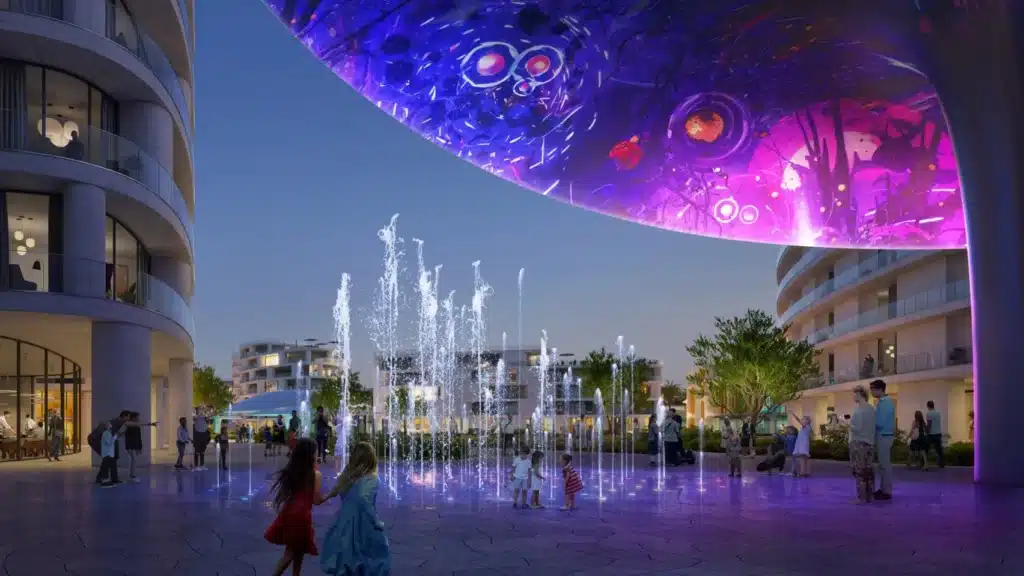
Water features incorporated throughout the landscape further help mitigate the urban heat island effect, cooling the microclimate naturally. By promoting active transportation such as walking and cycling, the development supports healthier lifestyles while reducing carbon emissions.


Amenities for All Generations and Lifestyles
Khalid Bin Sultan City is planned as a truly inclusive city catering to diverse age groups and needs. Alongside residential buildings, the masterplan incorporates a wide range of facilities to enhance quality of life. A cultural center positioned adjacent to the Beeah Headquarters is designed as a creative hub for design and business activities, providing spaces for exhibitions, workshops, and community events.
Additional public buildings within the central park include a sports complex, a mosque with contemporary architectural elements, and a shopping center. Wellness centers and dedicated children’s spaces will further support the physical and mental well-being of residents.
The design intentionally encourages social interaction and community building by creating a variety of spaces — from sheltered outdoor sports areas to quiet gardens — that support different lifestyles and preferences.
Materiality and Environmental Strategies
In response to the harsh desert climate, the design incorporates locally appropriate materials and sustainable technologies. Landscaping uses native vegetation to reduce water demand, while architectural shading devices and colonnades limit solar gain on building facades. Water features serve a dual purpose of aesthetic enhancement and passive cooling.
The integration of green roofs, porous pavements, and energy-efficient systems underscores the project’s commitment to environmental stewardship. By avoiding car-centric planning and fostering nature connections, Khalid Bin Sultan City aims to set a new paradigm for sustainable desert urbanism.
✦ ArchUp Editorial Insight
Khalid Bin Sultan City exemplifies a forward-thinking approach to desert city planning that transcends traditional development models in the Gulf region. By embedding environmental sensitivity into every design decision—from the curvilinear forms inspired by desert dunes to the extensive network of shaded, walkable corridors—Zaha Hadid Architects offer a blueprint for healthy, climate-responsive urbanism.
This project is notable for its holistic focus on social well-being, integrating amenities and public spaces that support diverse community needs while fostering connectivity and engagement. The park’s design as a meandering green spine is especially significant, providing a continuous, accessible natural environment that encourages physical activity and interaction with nature.
Importantly, the masterplan challenges the prevailing car-centric urban typologies by prioritizing pedestrian circulation and active transportation. This shift is critical in reducing urban heat and pollution and contributes to the city’s resilience in a climate increasingly impacted by global warming.
Khalid Bin Sultan City also demonstrates how contemporary architecture can merge bold aesthetic expression with ecological and cultural context. The project balances the visionary organic forms for which Zaha Hadid Architects are known with pragmatic strategies that enhance liveability and sustainability. In doing so, it positions itself as a model for future developments not only in the UAE but in arid regions worldwide facing similar environmental and social challenges.

Conclusion
Khalid Bin Sultan City stands as a landmark initiative that reconceptualizes urban life in the desert through an integrated approach to design, ecology, and community. Its ambitious masterplan, inspired by the natural topography and driven by sustainability goals, sets a new standard for how cities can adapt and thrive in challenging environments.
By prioritizing walkability, nature integration, and social inclusivity, this project aims to improve quality of life while mitigating climate risks. It embodies a vision of a resilient, healthy, and vibrant city where residents of all ages can live, work, and connect in harmony with their environment.
As the Gulf region continues to urbanize rapidly, Khalid Bin Sultan City provides a compelling example of how architecture and urban planning can respond innovatively and responsibly to both local context and global imperatives.
Explore More with ArchUp
ArchUp documents the evolving profession of architects worldwide, from career insights and research to project profiles and industry news. Our editorial team publishes global salary trends, career advice, and opportunities for emerging talents. Learn more on our About page or Contact us to collaborate.
The images are by Tegmark.


