
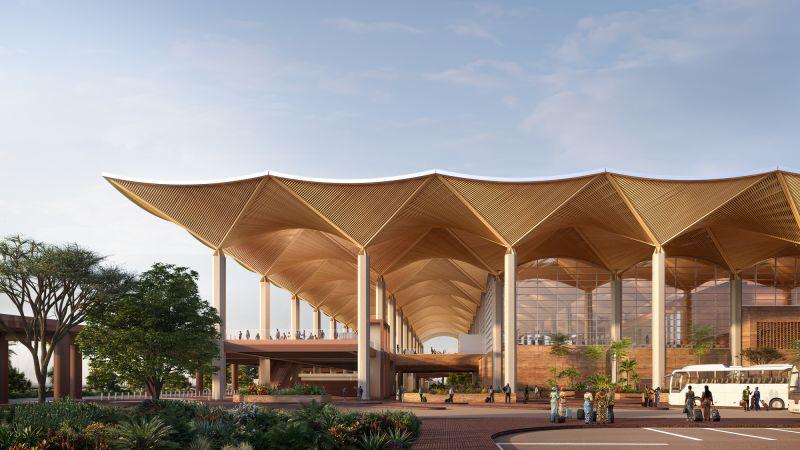
N’djili International Airport Terminal to Transform Kinshasa Into Central African Aviation Hub

Kinshasa will receive a new international airport terminal by 2028. The project at N’djili International Airport aims to modernize the Democratic Republic of Congo’s primary gateway. Developer INFRAROSE commissioned the facility to replace outdated infrastructure and boost regional connectivity.
Modern Terminal Designed for Growth
The new terminal will serve as a critical piece of urban planning for Central Africa’s aviation network. The facility targets capacity for 5 million passengers annually by 2050. This expansion supports the national airline’s development and strengthens connections across regional and global routes.

Moreover, the architecture focuses on scalability and long-term adaptability. The design replaces aging buildings with contemporary infrastructure suited for decades of service. Therefore, the terminal positions Kinshasa as a competitive hub within the continent’s evolving transportation landscape.
Economic Impact and Regional Connectivity
The airport terminal represents more than upgraded passenger facilities. The project aligns with the DRC’s broader national development strategy and economic growth objectives. Meanwhile, improved aviation infrastructure enables better trade routes and business opportunities throughout Central Africa.

The construction timeline extends to 2028, allowing for phased implementation of modern systems. However, planners designed the terminal with future expansion in mind. This approach ensures the facility can adapt to changing aviation demands and passenger volumes over coming decades.

Strategic Infrastructure Development
The terminal project emerged from recognized needs for improved international connectivity. Current facilities cannot adequately serve the region’s growing passenger numbers and cargo demands. Subsequently, the new terminal addresses these limitations through contemporary design and efficient operational systems.

Furthermore, the project incorporates principles of sustainability alongside functional requirements. The facility will utilize modern building materials and systems appropriate for tropical climate conditions. This infrastructure investment reflects the DRC’s commitment to establishing world-class aviation facilities that serve both national and regional interests.
A Quick Architectural Snapshot
The N’djili International Airport Terminal replaces outdated facilities in Kinshasa with modern architecture designed for 5 million annual passengers by 2050. Completion is scheduled for 2028. The project strengthens Central African aviation connectivity and supports regional economic development through improved infrastructure and scalable design systems.
✦ ArchUp Editorial Insight
Airport terminal projects in developing nations rarely emerge from architectural ambition alone. The N’djili terminal reflects specific economic pressures facing the Democratic Republic of Congo. The country requires modernized infrastructure to compete for regional aviation traffic and foreign investment.
Several factors drive this development. First, aging facilities create operational bottlenecks that limit passenger capacity and airline partnerships. Second, neighboring countries have upgraded their airports, creating competitive pressure across Central Africa. Third, national airlines cannot expand routes without adequate terminal infrastructure to support increased operations.
The 2050 capacity target of 5 million passengers reveals calculated projections about economic growth and urbanization trends. Moreover, the phased construction approach indicates budget constraints typical of large-scale infrastructure projects in emerging economies.
This project is the logical outcome of regional aviation competition + national economic development priorities + the operational limitations of outdated infrastructure.



