
Kodak Flik X20: From Imaging Heritage to Big-Screen Home Entertainment

Kodak: From Freezing the Moment to Broadcasting the Image
The name “Kodak” is directly linked in memory to moments of the past: sepia-toned photos, the click of the shutter, and the tactile feel of printed photographs. For decades, this brand carried an identity tied to a fundamental idea: capturing light and freezing time. In this way, it became an authentic part of global visual culture.
But with technological shifts, our relationship with images has changed. Screens are now everywhere, and physical media have started to fade, becoming mere memories evoked by nostalgia.
A Shift in the Brand’s Trajectory
In this context, Kodak did not merely remain confined to the boundaries of the past. Instead, it moved toward redefining itself through new tools. One example of this is the Kodak Flik X20 projector, which represents a clear departure from the company’s traditional image.
From Capturing the Moment to Displaying It
What distinguishes this device is not its price or marketing aspect, but the core idea: moving from the function of capturing to the function of broadcasting and displaying. Images and videos that we used to store on paper or small screens are here transformed into large-scale scenes projected onto a wall or empty surface, like vibrant digital canvases.
Interpreting the Significance
This shift reveals a broader trend in the industry:
- Technology no longer merely preserves memories but revives and shares them.
- Kodak, despite its rich heritage, seeks to adapt to a rapidly changing world where tangibility recedes in favor of interactive experiences.
Projectors: The Rise of a Flexible Alternative to TV
Projectors have long been considered an attractive option for home cinema enthusiasts. They are portable, require no permanent wall installation, and offer the ability to transform any room into a fully equipped screening space.
The Traditional Challenge Facing Projectors
Despite these advantages, a fundamental obstacle persisted for years: cost. Televisions often provided good screens at a lower price compared to projectors. This price gap kept the dream of a home cinema out of reach for many.
A Shift in the Cost Equation
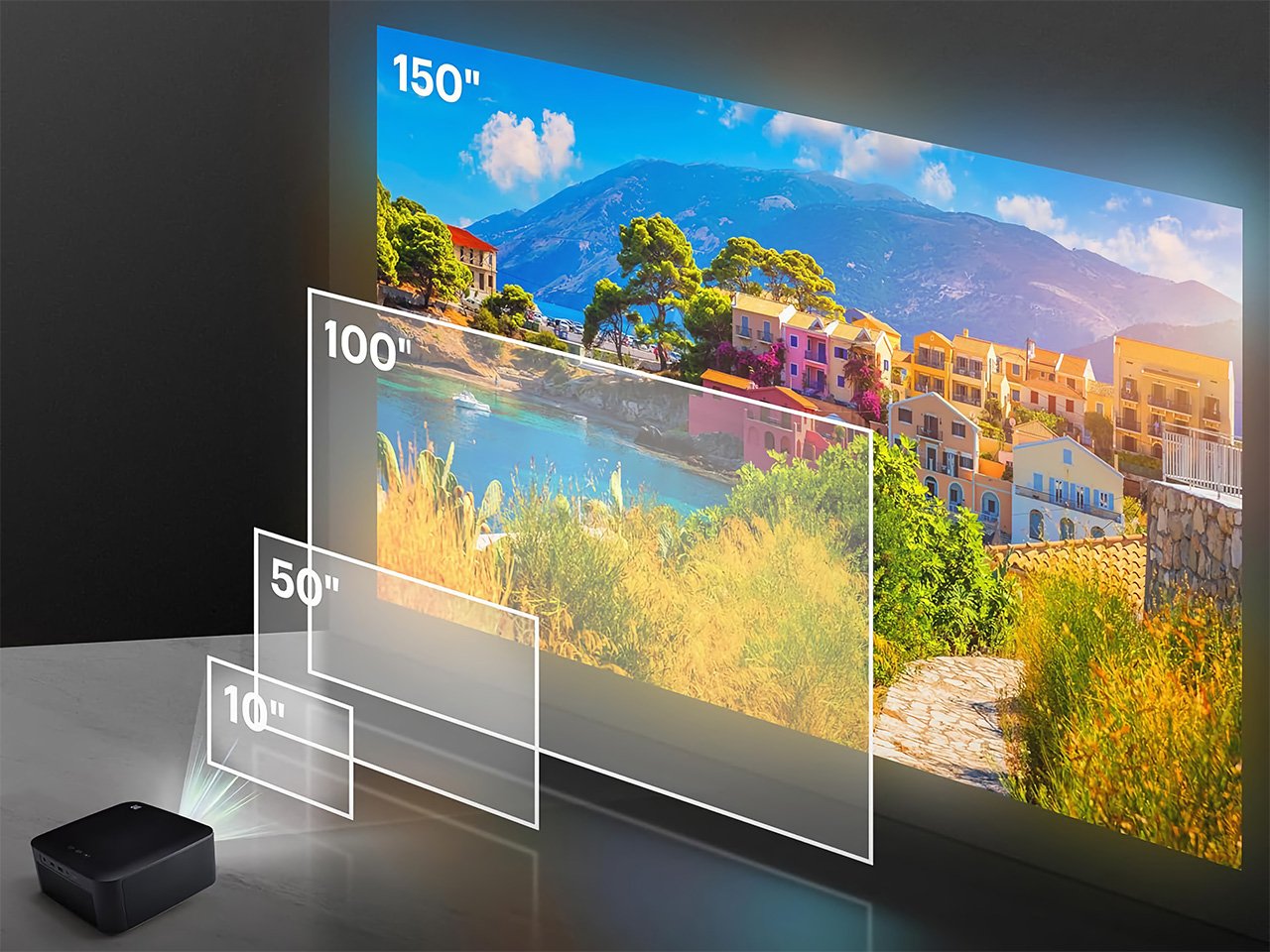
However, the picture has begun to change over the past decade. With technological advancements and lower component costs, it is now possible to get a projector that delivers a massive screen experience of up to around 100 inches, at a price close to that of a budget smartphone.
Interpreting the Trend
This shift highlights an important trajectory:
- The projector is no longer exclusive to auditoriums or affluent groups.
- The cinematic experience has become more accessible and democratic, entering the realm of daily home use.

Design and Technical Content
Behind the simple and elegant appearance of the X20 device lies a set of technical specifications that reveal a notable advancement in the projector market.
Image Clarity and Display Resolution
The device supports native 1080p Full HD resolution, providing clear and sharp images that enhance the sense of immersion during viewing. With HDR10+ support and the ability to receive content up to 4K resolution, users can enjoy a wide dynamic range and fine details, whether in movies or games.
A Visual Experience Beyond the Conventional
When this level of resolution is combined with a screen size of up to 100 inches, the experience becomes entirely different. Viewers gain a massive display area that easily surpasses what most traditional TVs can offer, especially in terms of perceived size and immersion.

Brightness: Understanding Usage Limits
The projector operates at an ANSI brightness of 300 lumens. While this is not the highest in the projector category, it is sufficient when used in the appropriate context.
Brightness Isn’t Everything
It is important to clarify that this level of brightness is not intended for work environments or brightly lit meeting rooms, where strong lighting such as fluorescent lights is expected to interfere with the image. It is primarily designed for different scenarios, such as:
- A living room with dim lighting.
- A dark bedroom.
- Outdoor nighttime projection in the garden.
Visual Experience in Suitable Environments
In these settings, the 300 ANSI lumens are sufficient to produce a clear and enjoyable image. Colors appear vibrant, and details remain visible without strain, making the viewing experience comfortable for watching movies or favorite shows.

Integration with Google TV
The projector comes equipped with a built-in Google TV system, bringing it closer to a complete entertainment hub. This addition reduces the need for external streaming units or multiple remote controls, providing a unified interface to access digital libraries.
Ease of Use and Smart Recommendations
One of the system’s standout features is its ability to offer personalized recommendations based on viewing habits, along with a simple user interface that allows smooth navigation between apps and content. This highlights how today’s viewing experience is increasingly linked to software and user interfaces, not just technical components.
Netflix Support: A Hurdle Overcome
Many smart projectors face issues with the native Netflix app, forcing users to rely on complex workarounds or additional devices. In this case, however, the projector comes with officially supported Netflix integration, allowing direct playback without extra steps.
Seamless Setup Thanks to Auto-Adjustment
The Flik X20 projector features a set of automatic adjustment tools that make setup extremely easy:
- Auto Focus: Ensures the image is always sharp without manual adjustment.
- Auto Keystone Correction: Adjusts the image to be perfectly square even when the device is placed at an imperfect angle.
- Object Avoidance: Automatically adjusts the image to avoid lamps or picture frames that may obstruct the projection on the wall.
- Zoom Range (50% – 100%): Allows resizing the image without moving the device itself, offering flexibility in choosing the projection location.
These features reflect the goal of modern projectors: providing a TV-like experience, where all you need to do is turn on the device and start watching without continuous adjustments.
Integrated Audio Experience
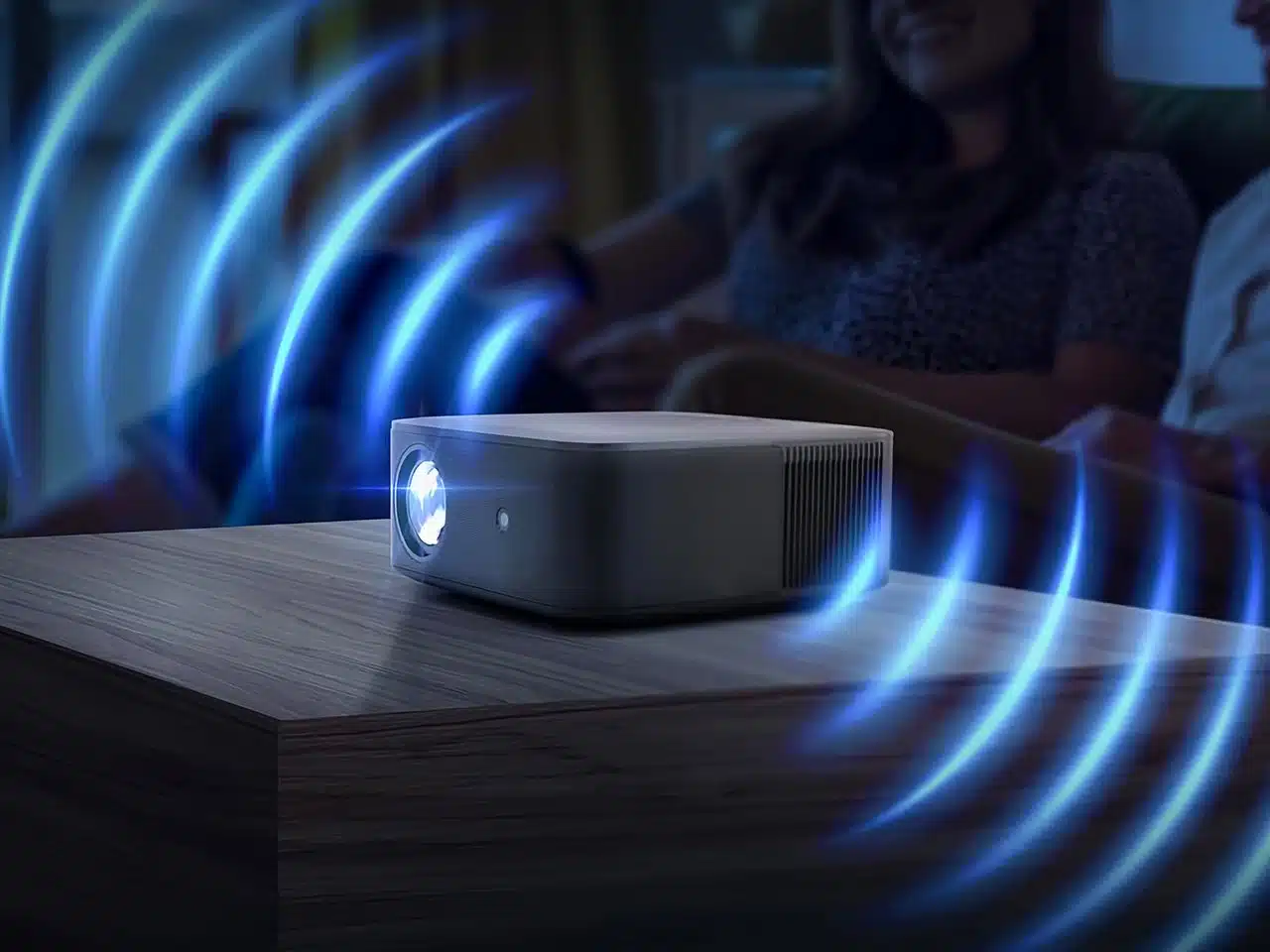
The device includes two 3W speakers with Dolby Digital Plus support, delivering a suitable audio experience for daily viewing. For those seeking more powerful sound:
- An external audio port allows connection to speakers or a home theater system, making the experience scalable based on environment and preferences.
Ports and Connectivity: A Multimedia Gateway
The X20 comes equipped with multiple ports and wireless protocols to support diverse usage:
- HDMI 2.1: For gaming consoles and high-bandwidth Blu-ray players.
- USB 2.0: To play media directly from storage drives.
- Dual-Band Wi-Fi: Ensures stable and fast streaming.
- Bluetooth 5.0: For wireless pairing with headphones or external speakers.
These capabilities make the X20 a complete multimedia gateway, suitable for both individual and group viewing.

Portability and Flexibility in Use
High portability is one of the standout features of the Flik X20. Weighing less than 4 pounds, it is light enough to be easily carried between rooms, placed in a backpack for a short trip, or taken outdoors for a movie night in the garden.
This compact design, combined with a robust set of features, makes the device suitable for multiple scenarios such as:
- College dorm rooms.
- RV trips.
- Transforming any empty wall into an instant projection space.
It can be said that the device expands access to the large-screen experience, making it available almost anywhere.
Light Source and Lifespan
The X20 uses an LED light source with a long lifespan of up to 30,000 hours. For example, watching a two-hour movie daily could last for decades before the light source needs replacement, reflecting the sustainability of modern technological solutions.
Internal Design and Component Protection
The device also features a sealed optical engine, a practical engineering choice that reduces dust accumulation on internal components. This is crucial for maintaining image quality over the long term, especially in environments where projectors may be exposed to dust or frequent use.

Value for Money
Considering the price, the projector offers a 1080p viewing experience at a cost close to that of a budget smartphone or roughly equivalent to 20 movie tickets. This comparison helps illustrate the practical and economic feasibility of using projectors at home.
Brand Heritage and Industry Expertise
The X20 comes from a prestigious brand like Kodak, which has nearly 140 years of experience in imaging. This long history demonstrates the company’s deep understanding of the world of visuals and related technologies, which is reflected in the design and engineering of the device.
User Convenience and Experience
The integration of Google TV, official Netflix support, and automatic image adjustment features make the device suitable for a wide range of users:
- Beginners who want to try projectors for the first time without complications.
- Projector enthusiasts seeking an additional, cost-effective option for a bedroom or children’s room.
In short, the X20 represents a projector model that combines ease of use with performance flexibility in a home or small-scale environment.
✦ ArchUp Editorial Insight
The Kodak Flik X20 demonstrates strong capability in transforming any empty surface into a large projection screen, which could open interesting possibilities for designers and architects during initial project presentations or when discussing designs with clients visually. It can be used to display 3D designs or high-resolution images of models, making meetings more interactive and adding a practical dimension to presentations.
However, some limitations remain when considering professional application in the field of architecture. The 300 ANSI lumens brightness makes the device less suitable for brightly lit rooms or large spaces. While the screen size and clarity are good, they cannot compete with professional-grade displays or projectors designed for large conferences or open halls. Additionally, relying on Google TV and digital streaming features is excellent for entertainment content but may be excessive or unnecessary in a professional context focused on engineering details or precise material colors.
Therefore, the X20 can be considered an excellent device for home use or preliminary presentations in small offices or low-light indoor environments. Architects, however, need to carefully assess their requirements before relying on it for official presentations or large-scale projects. This example highlights how advanced consumer products offer new possibilities but do not always replace specialized professional solutions.
Prepared by the ArchUp Editorial Team
Don’t miss the chance to explore more from Architecture, Archive, and Buildings on the ArchUp website.


