
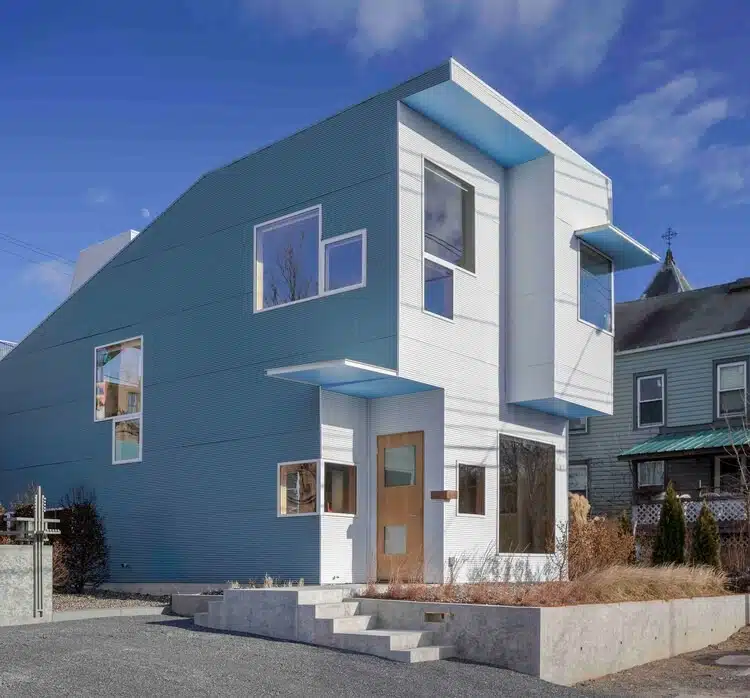
L-Shaped House Design Exploring the Interaction Between Light and Interior–Exterior Spaces

Home Design and Orientation
The simple L-shaped form, crafted from corrugated aluminum, frames a south-facing green courtyard, enhancing natural sunlight exposure and creating a comfortable outdoor environment.
Site and Urban Fabric
This 1,700-square-foot residence is proposed on a vacant lot, allowing it to integrate seamlessly with the refined urban fabric of Hudson, New York. The site offers a balance between privacy and openness to the surrounding cityscape.
Function and Space
The house is designed to combine living and working spaces, thoughtfully accommodating the needs of mid-century modern collectors. Its architectural design demonstrates a keen understanding of residents’ lifestyles, providing interconnected spaces that enable a smooth flow between different activity zones.


The Legacy of Mid-Century Modern Design
Mark MacDonald is often regarded as the “godfather” of mid-century modern design, having played a pivotal role in reviving interest in classic furniture by Marcel Breuer, Alvar Aalto, and Charles and Ray Eames. His influence reflects a profound understanding of design history and an ability to integrate iconic pieces within a contemporary context.
Home Content and the Personal Gallery Experience
The residence houses a curated selection of the owner’s design collection, including a rare 1910 piece by Frank Lloyd Wright and furniture designed by Rudolph Schindler. This diversity allows visitors and residents alike to experience a living history of twentieth-century design, offering opportunities to study the innovative details and stylistic approaches of each designer.

Exterior Envelope and Light Interaction
The building is clad in a corrugated aluminum skin with finger-width panels and a powder-coated finish. This exterior envelope is cost-effective, maintenance-free, and interacts dynamically with sunlight, creating a continuous play of shifting shadows that change with the angle of light and time of day.
Colors and Cultural Symbolism
The inner surfaces of the L-shape are painted in a soft blue-green hue, while the outer façades feature a pure white finish. The undersides of the projecting canopies are coated in a gentle blue tone, a tribute to the Southern tradition of “haint blue,” believed to ward off evil spirits. This thoughtful color selection, combined with the metallic cladding, reflects a deep cultural and aesthetic awareness embedded in the design.

The “L” Shape and Its Functions
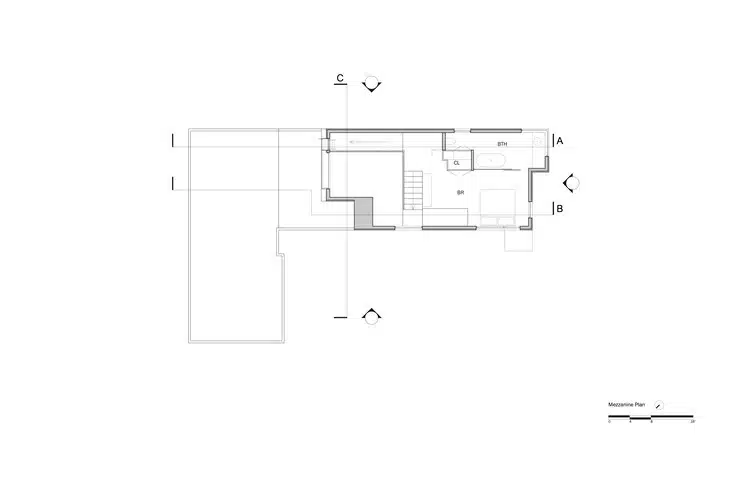
The L-shaped layout forms a west-facing garden and connects living and working spaces at its ends, enabling seamless interaction between activities while enhancing visual continuity with the surrounding landscape.
Natural Light and Views
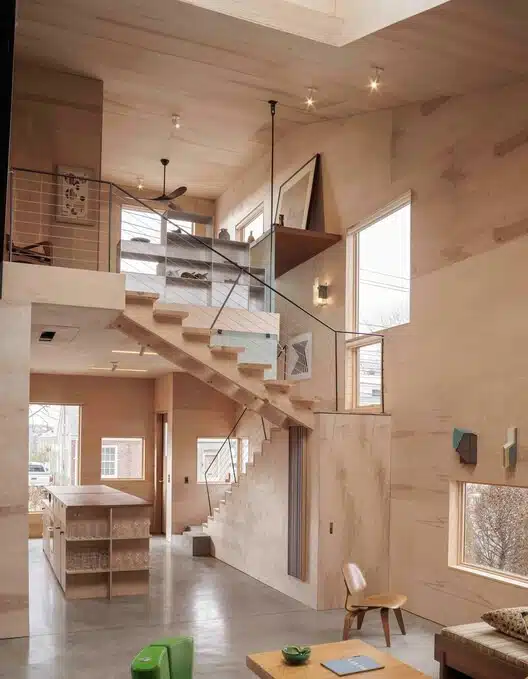
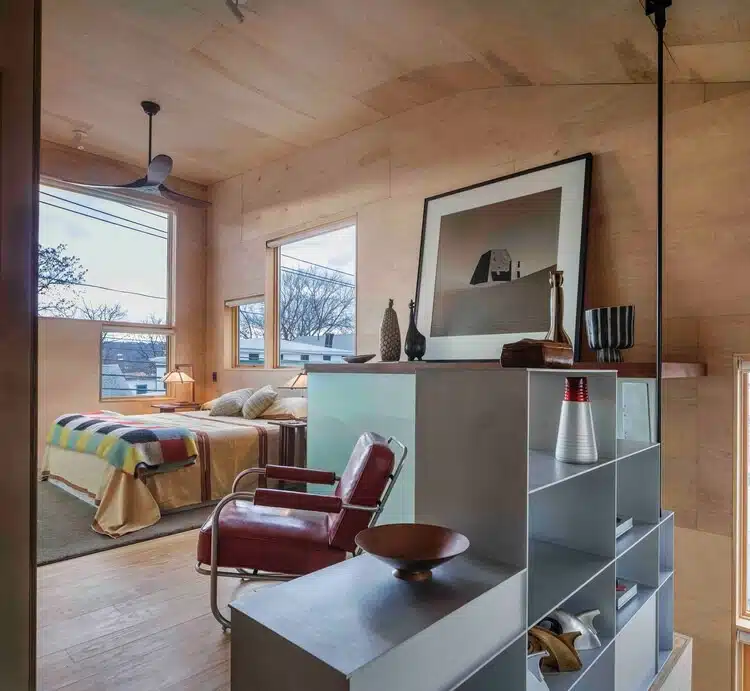
An upper walkway leads to an operable sky screen, introducing additional natural light and providing access to a flat rooftop with views of the Catskill Mountains, famously captured by painters of the Hudson River School. The wood-clad interior spaces receive daylight from all directions, with carefully framed views, including a south-facing sleeping area that overlooks the historic Terry Gillette House.
Materials and Visual Backdrop
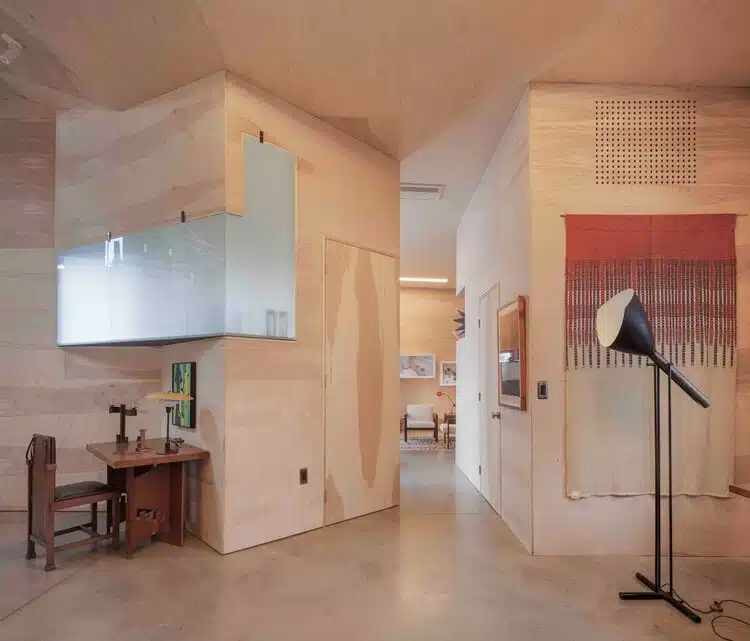
Birch plywood covers the open interior areas, serving as a neutral backdrop that highlights the carefully curated furniture collection of MacDonald and Resnick. This creates a balanced visual harmony, allowing attention to focus on the design details of each piece.
Blending Precision and Playfulness in Design
Subtle yet playful elements are woven into the design to enhance the home’s distinctive character, maintaining a harmonious balance between functionality and aesthetics.
Guest Room and Geometric Angles
The compact guest room is positioned at the inner corner of the L-shape, tilted at a 45-degree angle to act as a pivot point between the home’s public and private zones. The rectangular door placement and a wraparound corner window emphasize the room’s geometric nature, creating a dynamic visual experience.
Light and Openness
A suspended frosted glass panel connects this area to an exterior window, heightening the sense of openness and promoting a gradual diffusion of natural light, establishing a smooth visual transition between interior and exterior spaces.
Artistic Elements and Light
A custom brass light fixture, designed in the shape of the “Hudson L,” mirrors the architectural form of the house through its folded composition and diffused LED illumination. This design enhances the harmony between interior lighting and architectural structure, creating a cohesive visual experience.
Interaction with Nature
A sculptural fountain, composed of two folded brass forms shaped like the letter “L,” channels rainwater movement into the courtyard pool. These elements emphasize the integration of natural forces within the design, blending motion and reflection into the overall composition of the home and adding a lively, ever-changing dimension to the outdoor space.

Energy Sustainability
The house features a state-of-the-art geothermal heating and cooling system, significantly reducing energy consumption and reflecting a sustainable approach aligned with the latest environmental efficiency standards in modern construction.
Integration with Nature
A rainwater collection pool strengthens the home’s connection to natural water cycles, adding a practical ecological dimension that enables the sustainable reuse of resources within the overall design.
Harmony Between Design and Environment
The house remains intimate yet dynamic, where furniture, architecture, and landscape harmonize in a continuous dialogue between past and present, art and nature. This sense of harmony reflects a design philosophy that unites aesthetics with functionality, offering a living experience that is both visually and environmentally balanced.

✦ ArchUp Editorial Insight
While the project’s organizational concept is clearly articulated through the “L” shape, which serves as a formative element connecting function and meaning, a closer architectural reading raises questions about the long-term adaptability of this form to contextual and functional changes. Although the design successfully achieves a smooth spatial flow between interior and exterior areas, its strong focus on formal symbolism at times seems to come at the expense of flexibility and spatial diversity.
The corrugated metal cladding gives the building a distinct visual character, yet it also raises concerns about material and visual integration within its urban surroundings, particularly in a small city like Hudson, known for its cohesive historic fabric. Meanwhile, the use of locally inspired colors is a clever cultural gesture that links the architecture to its regional identity, though its aesthetic presence occasionally outweighs its functional role.
Overall, the project can be viewed as a case study exploring the boundaries between symbolic form and everyday function, as well as between modernity and spatial memory. In this sense, the house offers architects and researchers an opportunity to reflect on how historical references can be integrated into contemporary contexts without falling into formalism or detachment from the urban fabric.
Prepared by the ArchUp Editorial Team
Don’t miss the chance to explore more from Architecture in fields like Design and Buildings on the ArchUp website.


