
Vietnam’s 135,000-Seat Stadium Set to Become World’s Largest Football Venue

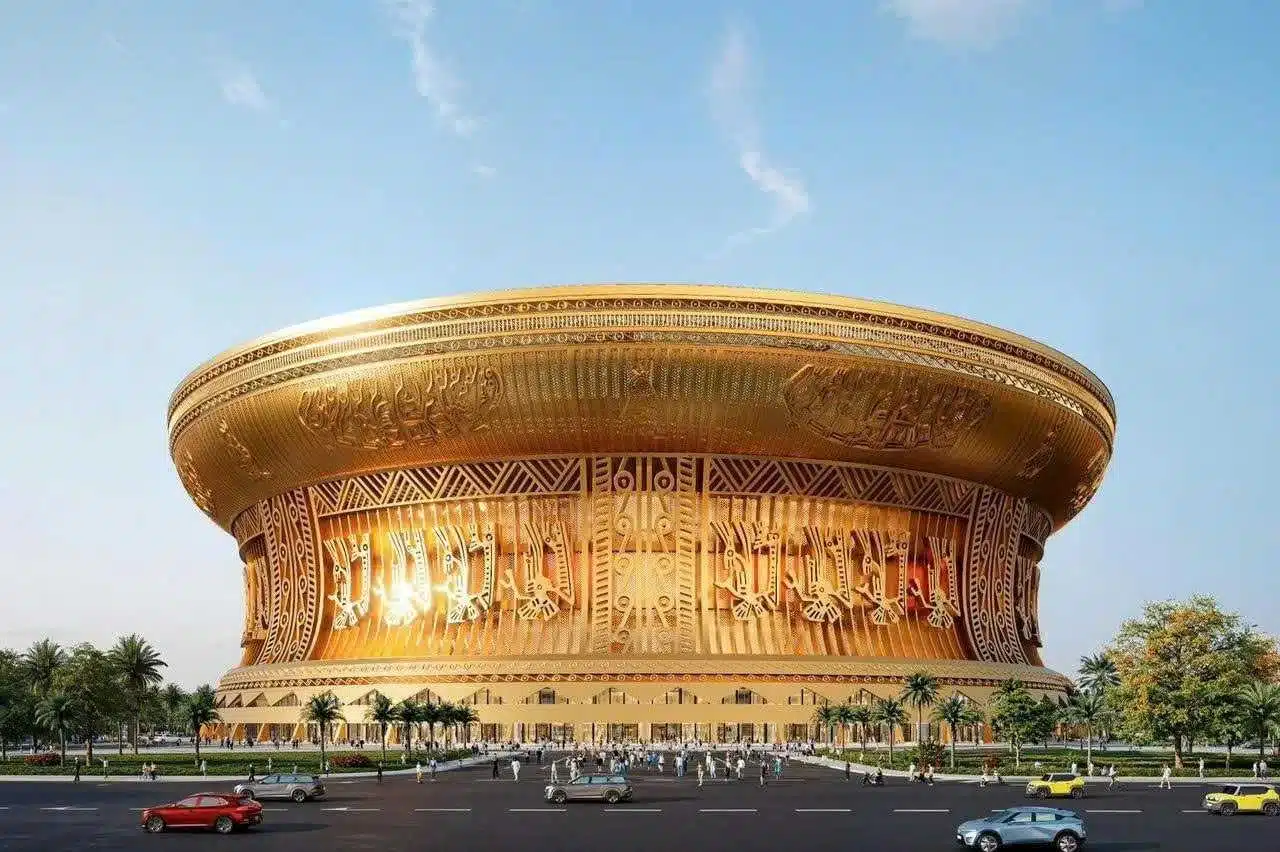
Vietnam has launched construction of the Trong Dong Stadium, a massive football venue designed to become the world’s largest football stadium by spectator capacity. Located on the southern outskirts of Hanoi, this ambitious construction project is reshaping global standards for sports architecture.
Record-Breaking Capacity and Design
The stadium will accommodate approximately 135,000 spectators. This capacity will surpass current record holders, including North Korea’s Rungrado 1st of May Stadium and India’s Narendra Modi Stadium. Consequently, Vietnam will claim the title for the world’s largest football stadium once construction completes.
Named after Vietnam’s ancient bronze drums, the venue integrates cultural heritage with modern engineering. The façade features Lạc bird motifs and elements inspired by Đông Sơn drums. These design choices ground the massive structure in Vietnamese visual identity while maintaining international standards.
Advanced Engineering Features
The stadium incorporates a retractable roof and a movable pitch system. These features enable rapid transformation between sporting events and large-scale cultural shows. Moreover, the movable pitch can retract within hours, providing event planners with flexible configuration options.
Advanced telecommunications infrastructure and support systems will be integrated from the outset. This approach ensures the venue meets international broadcasting and operational requirements. Additionally, the design reflects a global trend toward multipurpose cultural hubs rather than single-use sports arenas.

Part of Broader Urban Development
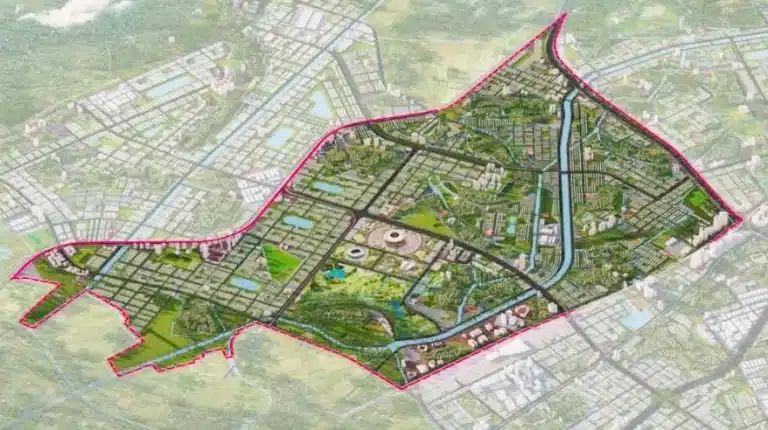
Trong Dong Stadium forms the centerpiece of Hanoi’s Olympic Sports Urban Area. This urban planning initiative spans over 9,000 hectares and includes housing for roughly 750,000 residents. Furthermore, the development incorporates transport links, healthcare facilities, and complementary sports venues.
The total estimated investment exceeds USD 35 billion. This massive undertaking aims to elevate Hanoi’s global profile and attract major international competitions. Therefore, the project could open doors to hosting future Asian Games or Olympic qualifiers.
Construction Timeline and Regional Context
Construction officially began in December 2025 following a groundbreaking ceremony. Project planners are targeting August 2028 for stadium completion. If timelines hold, Trong Dong will showcase Vietnamese architectural design on a global scale.
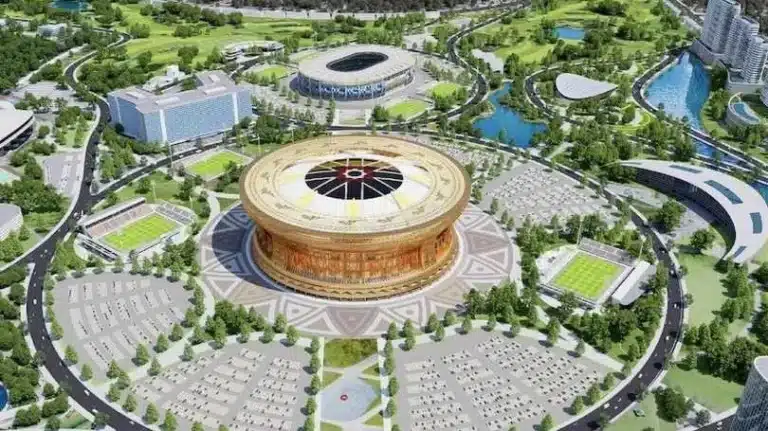
The region is rapidly expanding its sports infrastructure. Other new venues include Hanoi’s PVF Stadium and the Rach Chiec Stadium in Ho Chi Minh City. However, Trong Dong stands apart for its unprecedented scale and technical ambition.
This project represents a bold statement about Vietnam’s aspirations in global sports and urban planning. The world’s largest football stadium will serve as both a functional venue and a symbol of national identity.
What impact will this record-breaking stadium have on Vietnam’s position in international sports hosting?
A Quick Architectural Snapshot
The Trong Dong Stadium spans a site on Hanoi’s southern outskirts within a 9,000-hectare development zone. The structure features a retractable roof system, movable pitch technology, and a cultural façade incorporating traditional drum motifs. Construction utilizes advanced building materials and engineering solutions to support 135,000 spectators across multiple levels.
✦ ArchUp Editorial Insight
A 135,000-seat stadium does not emerge from sporting demand alone. It emerges from a specific convergence: sovereign image-building ambitions, surplus infrastructure investment capacity seeking visible deployment, and competitive positioning against regional rivals accelerating their own mega-venue pipelines.
The decision to embed the stadium within a 9,000-hectare urban zone housing 750,000 residents reveals the operative logic. The stadium is not the product. The real estate ecosystem surrounding it is. The venue functions as an anchor asset designed to justify land value escalation across an entire district, a pattern repeated from Lusail to Gangnam to Stratford.
A movable pitch and retractable roof signal awareness that single-use mega-venues carry existential financial risk. These features are not innovation. They are insurance against the well-documented obsolescence cycle that follows every host city after the ceremonies end and the broadcast contracts expire.
The architectural outcome, monumental scale wrapped in cultural motifs, is the logical product of national branding ambitions multiplied by available capital, divided by the political urgency of a 2028 delivery deadline.

★ ArchUp: Technical Analysis of the Trung Dong Olympic Stadium in Hanoi
Technical Analysis of a Large-Scale Sports Facility:
This article provides a technical analysis of the Trung Dong Stadium in Hanoi as a case study in the design of large-scale, multi-purpose sports facilities.
The stadium has a total capacity of 135,000 spectators, making it the largest in the world upon completion. Construction officially began in December 2025 and is scheduled for completion in August 2028.
The technical system features a retractable roof and a movable floor that can be retracted within hours to facilitate rapid switching between sporting and cultural events.
Relevant Link: Please refer to this article for an in-depth look at the design of major sports facilities:
Olympic Stadium Architecture: Between National Identity and Functional Flexibility.





✅ Official ArchUp Technical Review completed for this article.