LAX Opens 150,000-Square-Foot MSC South Terminal Ahead of LA28

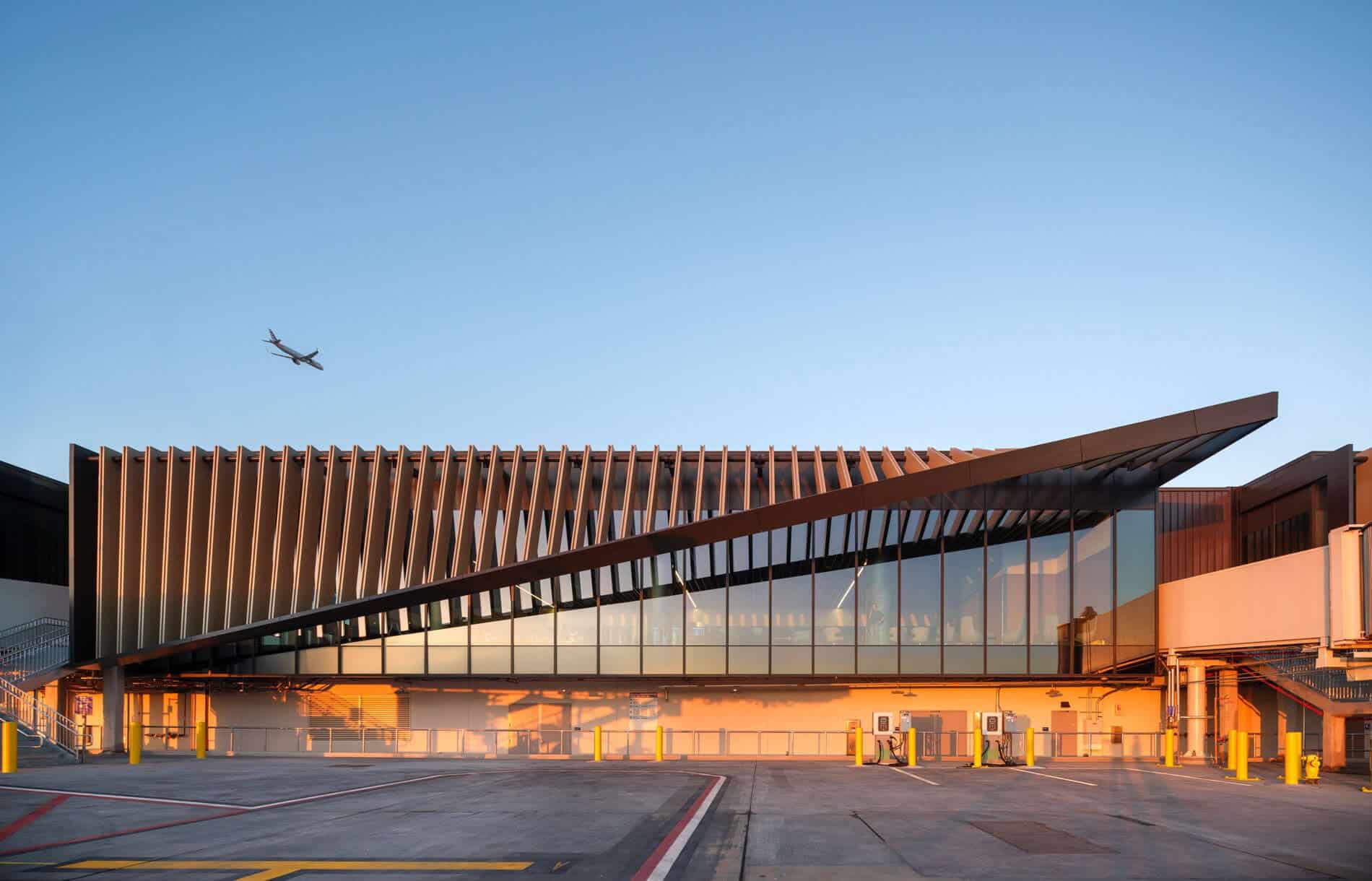
Los Angeles International Airport has completed the Midfield Satellite Concourse South terminal in Los Angeles. The 150,000-square-foot facility adds eight gates for narrowbody aircraft. The expansion increases capacity before the 2028 Olympic and Paralympic Games and supports rising passenger demand at Tom Bradley International Terminal.
Expanding Capacity for a Global Event
The new terminal strengthens airport infrastructure ahead of LA28. It introduces eight additional gates dedicated to narrowbody aircraft operations. Therefore, airport officials expect smoother passenger flow during peak travel periods.
The project forms part of broader aviation upgrades across the city. Meanwhile, other transportation improvements continue to reshape mobility networks in major cities. The terminal also complements the recently opened LAX/Metro Transit Center, which improves regional connectivity.
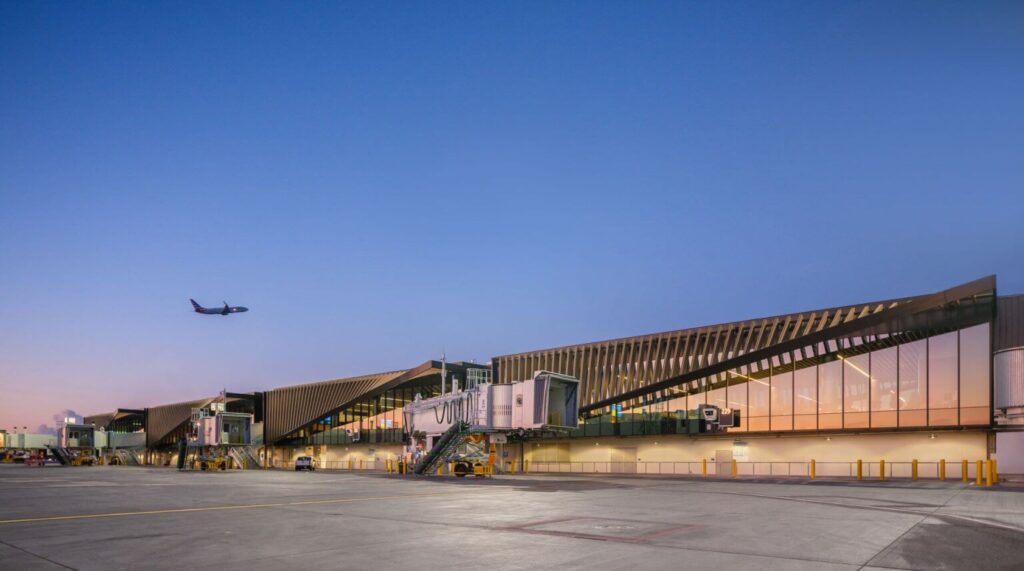
This expansion reflects a growing focus on efficient airport architecture that responds to global event pressures. It prioritizes circulation clarity and operational flexibility without expanding the airport footprint excessively.
Offsite Construction Accelerates Delivery
The project team relied on offsite fabrication to speed up delivery. Crews manufactured major building segments away from the airfield. They then transported the components nearly two miles for final assembly.
This method reduced on-site disruption and improved cost control. Moreover, offsite construction allowed parallel workflows that shortened the overall timeline. Such strategies increasingly influence large-scale public buildings where time constraints shape decision-making.
The approach also improved quality control under controlled factory conditions. As a result, installation progressed with fewer delays compared to conventional methods.
Climate-Responsive Facade and Daylit Interiors
The terminal features angled brise-soleil across its facade. These shading elements reduce glare and limit solar heat gain. However, the design preserves extensive glazing to maintain visual openness.
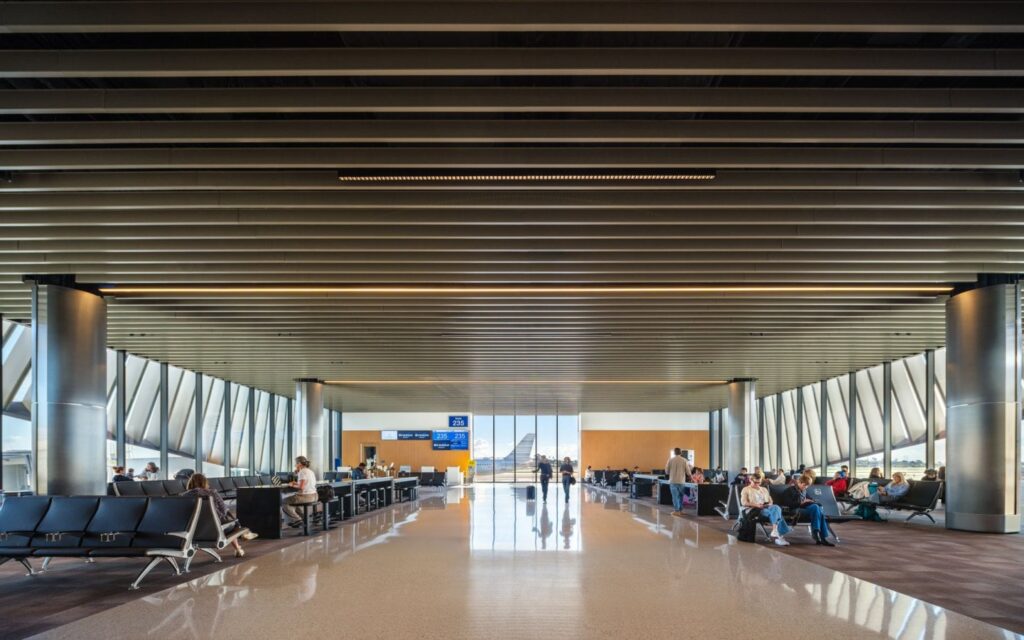
Floor-to-ceiling windows bring natural light deep into the interior. The shading system partially shields glazing while maintaining outward views. This strategy supports environmental performance and aligns with current sustainability benchmarks.
Inside, horizontal ceiling slats define the passenger areas. The linear pattern continues across mullions and facade elements. Consequently, the terminal presents a cohesive spatial language rooted in Californian modernism. The emphasis on light and proportion also shapes the overall interior design experience.
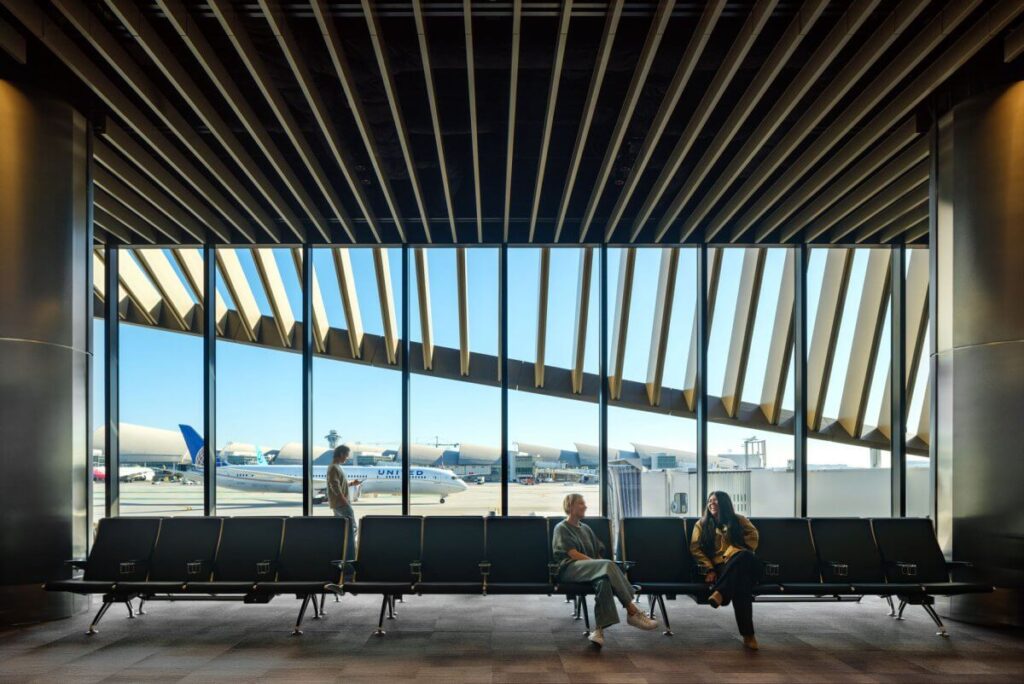
Project leaders aim to secure LEED Silver certification, reinforcing environmental targets through material selection and energy strategies.
A Quick Architectural Snapshot
A 150,000-square-foot airport terminal in Los Angeles. Eight new gates for narrowbody aircraft. Offsite fabrication reduced timeline and disruption. Angled brise-soleil control glare and heat. Floor-to-ceiling glazing maximizes daylight. LEED Silver target underscores sustainability goals ahead of LA28.
✦ ArchUp Editorial Insight
The completion of MSC South reflects shifting priorities in global aviation infrastructure. Airports now operate under event-driven deadlines, capacity pressure, and stricter environmental targets. Therefore, decision-makers increasingly adopt offsite construction to compress timelines and reduce operational disruption.
Moreover, large cities compete to position themselves as efficient global gateways. This pressure influences terminal expansions more than architectural ambition. The focus moves toward throughput, flexibility, and measurable sustainability metrics rather than iconic form.
Meanwhile, climate regulations and energy costs push airports to integrate shading systems and daylight optimization as standard practice. These strategies respond to long-term operational economics, not stylistic preference.
MSC South demonstrates how infrastructure adapts to mega-events, mobility growth, and environmental compliance simultaneously.
This project is the logical outcome of Olympic deadlines + aviation growth + sustainability mandates.