Lenovo ThinkPad X1 Fold 2025: Is It Still the Leader in Foldable Laptops? A Comparison with Huawei MateBook Fold Ultimate Design

Why Reconsider the Lenovo ThinkPad X1 Fold in 2025?
Rapid Evolution in Foldable Computing Technologies
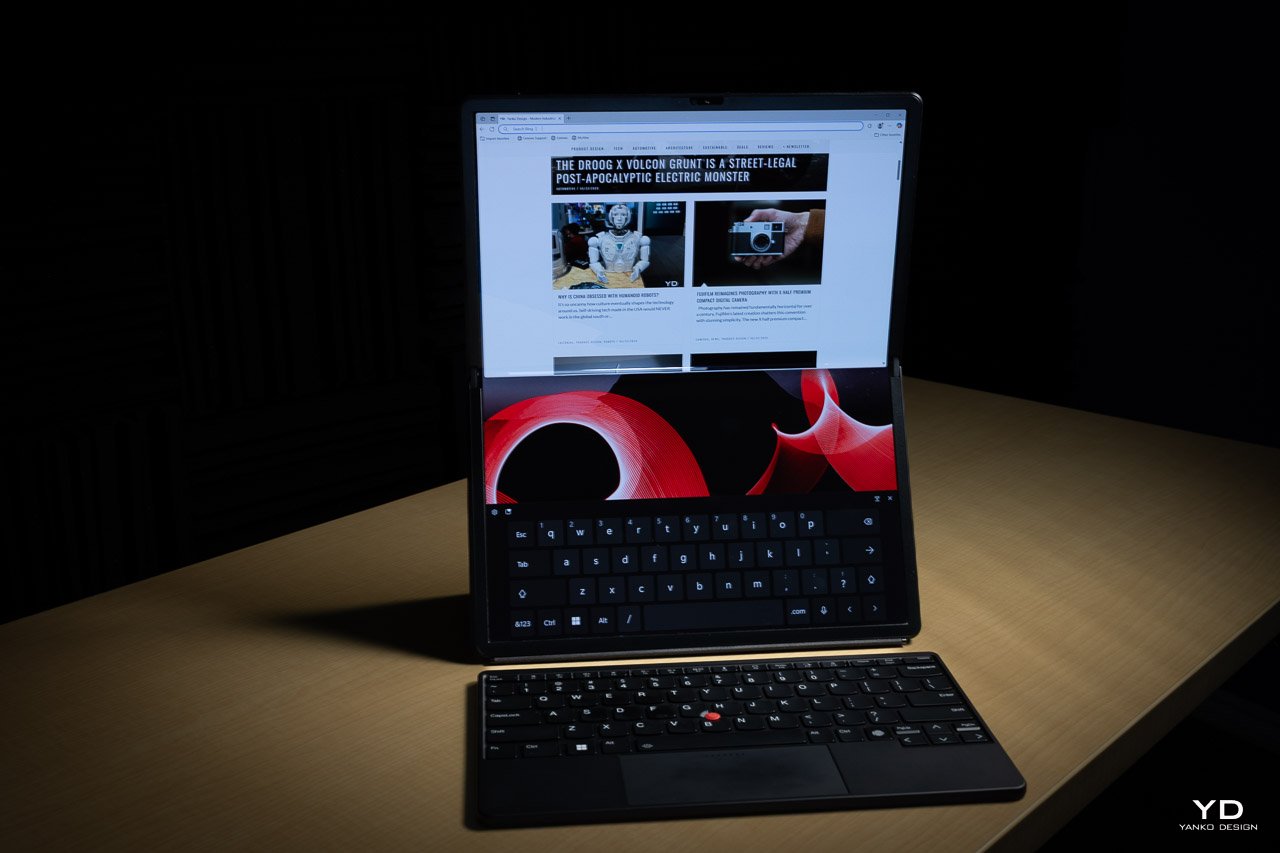
The past few years have witnessed significant leaps in the world of computing, especially in the foldable devices category. When Lenovo unveiled the second generation of the ThinkPad X1 Fold, it seemed to represent the pinnacle of what could be achieved within this emerging segment. The device featured a 16.3-inch flexible OLED display and a design that combined durability with elegance, supported by the familiar Windows operating system.
New Standards in Quality and Design
What made the X1 Fold stand out in 2024 was its ability to integrate several advanced elements into a single device:
• Flexible display with rich colors and fine details.
• Engineering design ensuring stability and portability.
• Full compatibility with software commonly used on traditional computers.
This combination helped raise quality standards and expectations in the foldable PC market, pushing other companies to rethink their strategies.
Huawei Enters the Competition: A Completely New Challenge
MateBook Fold Ultimate Design: A Game Changer
But the scene did not remain static. At the start of 2025, radical shifts emerged in the competition, most notably Huawei’s announcement of its new device: the MateBook Fold Ultimate Design. This device raises serious questions about the limits of what this technology can offer.
Key features of the device include:
- An 18-inch foldable screen that folds down to 13 inches.
- Thickness not exceeding 7.3 mm when opened, making it one of the thinnest devices in its category.
- A custom operating system designed specifically for foldable devices, fundamentally rethinking the user experience.
A New Era for Mobile Computing
With these developments, foldable computers no longer appear as mere prototypes or futuristic concepts; they have become real productivity tools that address the needs of the modern user.

Design Philosophy and Physical Presence
ThinkPad Approach: Design Serving Functionality
In the design of the 2024 ThinkPad X1 Fold, Lenovo’s classic approach is clearly evident—balancing practicality and reliability. The device does not merely aim to catch the eye but to deliver a durable and dependable user experience, consistent with the spirit of the ThinkPad series since its inception.
Carefully Selected Materials for a Specific Purpose
Lenovo chose manufacturing materials that reflect this direction; the frame is made from magnesium alloys known for their lightness and strength, while the device is covered with recycled PET fabric, giving it both an eco-friendly touch and a professional appearance simultaneously.
The fully foldable hinge is designed to close the device without leaving any gaps, providing genuine protection for the screen and maintaining a clean, cohesive design aesthetic.
Dimensions and Weight: A Balance Between Durability and Portability
Although the device measures 8.6 mm thick when open and 17.4 mm when closed—thus not the thinnest on the market—these dimensions indicate a clear focus on build quality and stability during use.
Regarding weight, it weighs about 2.9 pounds without accessories and up to 4.3 pounds when the keyboard and stand are attached. While this may not be ideal for constant mobility, it reflects Lenovo’s philosophy of delivering a solid device built to endure intensive usage.

Huawei Enters with a Different Approach: Lightweight Design and Powerful Performance
Smaller Dimensions, Greater Elegance
Huawei offers a completely different vision in the design of the MateBook Fold Ultimate Design. The device features a thickness of only 7.3 mm when opened and 14.9 mm when closed, making it noticeably slimmer than Lenovo’s X1 Fold. This slimness does not come at the expense of performance or durability; rather, it is achieved through advanced engineering solutions.
Lightweight Despite Large Screen Size
The base device weighs just 1.16 kg (2.56 lbs), rising to 1.45 kg when the keyboard is added. These figures are impressive considering the device houses an 18-inch foldable display.
This achievement is credited to the use of lightweight yet durable materials such as:
- Carbon fiber for the device’s frame.
- Zirconium-based liquid metal for manufacturing the hinge.
The Hinge: “Water Drop” Design and Practical Efficiency
One of Huawei’s standout innovations in this model is its 285 mm long hinge, known as the “Water Drop Hinge.”
This hinge provides a smooth folding experience, enhanced by what the company describes as:
• A 400% increase in torque compared to traditional designs.
• Improved wear resistance and long-term stability.
Accessories: A Fundamental Difference in User Experience
Here lies the most practical difference between the two devices.
While Lenovo requires a separate stand to support the device during desktop use—adding bulk and complicating portability—Huawei integrated a strong built-in stand within the MateBook Fold design.
This internal stand:
- Reduces the number of components the user needs to carry.
- Allows for multiple usage positions with ease.
- Contributes to making the daily experience smoother and more flexible.

Daily User Experience: Size Makes Its Presence Felt
Multiple Modes… But with Varying Experiences
Although both the ThinkPad X1 Fold and the MateBook Fold Ultimate Design support multiple usage modes, such as tablet mode and laptop mode, the physical size difference between them directly impacts the quality of the user experience.
When Folded: From 12 Inches to 13 Inches… Does It Really Matter?
- When folded, the X1 Fold transforms into a laptop with a 12-inch screen, a size that may be considered limited for tasks requiring multiple windows or wide workspaces.
- The MateBook Fold, on the other hand, offers a 13-inch screen when folded, providing users with extra space that might seem minor on paper but significantly improves productivity tasks such as writing, browsing files, or running multiple applications simultaneously.
A Small Difference… With a Tangible Impact
Although the difference is no more than one inch, it actually affects:
- Comfort during long work sessions
- The ability to split the screen between two applications
- Ease of reading and writing without interface shrinkage
In short, the smart design of the screen size in laptop mode makes the MateBook Fold more flexible in mobile work scenarios.

Material Philosophy: Between Sustainability and Luxury
Lenovo: An Environmentally Conscious Design
In the ThinkPad X1 Fold, Lenovo chose to follow a sustainable approach by using a recycled PET fabric cover and plastic-free packaging.
This approach not only serves the growing environmental concerns of organizations but also gives the device a warm and distinctive feel, moving away from the cold metallic look typical of most traditional laptops.
Huawei: Focus on Lightness and Luxury
In contrast, Huawei opted for advanced, high-performance materials such as metal alloys and lightweight composites, enabling it to achieve exceptional thinness without sacrificing rigidity.
The result is a device with a sleek, modern appearance targeting an audience that values both luxurious design and practical lightness simultaneously.
Different Priorities… Different Outcomes
Ultimately, each device reflects a different philosophy:
• Lenovo prioritizes sustainability and environmental identity.
• Huawei focuses on design performance and material innovation.
This leads to a distinct overall look and tactile experience that caters to different tastes.
Visual Experience: Where the First Impression Is Made
X1 Fold Display: A Balance Between Productivity and Visual Quality
Lenovo’s device relies on a 16.3-inch OLED display with a resolution of 2560 × 2024 and a 4:3 aspect ratio, ideal for reading, writing, and multitasking.
The screen features:
• A standard brightness of up to 400 nits, increasing to 600 nits with HDR content.
• Support for DisplayHDR True Black 600 and Dolby Vision technologies.
• Full color coverage of the DCI-P3 gamut at 100%.
• An anti-smudge coating that helps maintain cleanliness and image clarity during daily use.
Focus on Details
What distinguishes this screen is not just its technical specifications, but also the color uniformity and deep blacks thanks to the OLED technology, enhancing both viewing and productivity experiences.
MateBook Fold: A Stunning Display with Advanced Performance
Bigger and Brighter Screen
Huawei’s MateBook Fold Ultimate Design pushes the boundaries of display experience with an 18-inch LTPO OLED screen at a resolution of 3296 × 2472, maintaining the 4:3 aspect ratio like Lenovo’s device.
The difference, however, lies in the details:
• An astonishing brightness of up to 1600 nits, more than double that of the X1 Fold.
• Support for a variable refresh rate between 1 and 120 Hz, enabling smoothness whether browsing or watching videos.
• Dual-layer LTPO technology reduces power consumption by up to 30% compared to traditional OLED displays.
Visual Performance That Captivates
This combination of ultra-high brightness, energy efficiency, and refresh rate flexibility makes the MateBook Fold a more attractive choice for users who highly value visual experience, whether for creative work or entertainment.
Screen Folds: The Difference Between Seeing and Using
The Visual Presence of the Fold
As with most foldable displays, a visible central crease appears on both devices.
• Lenovo’s hinge minimizes the prominence of the crease when fully opened, though it remains clearly visible from certain angles.
• Huawei uses the “Water Drop” hinge, which claims to reduce the crease’s visibility, though independent tests of its effectiveness remain limited.
The Real Impact?
Practically, users quickly adapt to the fold, which becomes a natural part of the device’s design and does not affect everyday use.
Color Accuracy and Contrast: Huawei’s Superiority
With an astounding contrast ratio of 2,000,000:1, the MateBook Fold delivers vibrant images and detailed scenes in both dark and bright areas.
While the X1 Fold provides an excellent display experience, factors such as:
- Higher brightness
- Greater resolution
- Better color accuracy
all tip the scale in favor of the MateBook Fold—especially for users in fields like design, video editing, or high-quality media consumption.

Touch Response and Pen Support: A Flexible Interactive Experience
Both the X1 Fold and MateBook Fold offer support for multi-touch input and pen input, with some differences in details.
For instance, Lenovo uses the Precision Pen, which features:
- High pressure sensitivity that enhances accuracy in drawing and note-taking
- An anti-smudge coating that reduces fingerprint marks without affecting the smoothness of scrolling or writing
On the other hand, Huawei provides similar support, but:
- Detailed specifications regarding pressure levels and palm rejection have not yet been widely published
- The actual performance appears promising, but more detailed testing is awaited for confirmation
Touch and Gestures
Both devices support multi-touch gestures, making navigation through apps, zooming in/out, and multitasking smoother and more intuitive.
Aspect Ratio: Enhancing Productivity
4:3 — A Practical Choice for Professionals
Both devices use a 4:3 aspect ratio, which is:
- Ideal for displaying documents and productivity applications
- Provides more vertical space compared to the wider 16:9 screens
- Makes web browsing, programming, and office work more comfortable
Video Playback
Although black bars appear when watching widescreen videos, the large screen size—especially on the MateBook Fold—compensates for this, delivering a visually immersive experience.
Performance and Capabilities: Between Stability and Technological Freshness
Lenovo X1 Fold: Reliable Performance with Proven Components
The Lenovo device comes with 12th-generation Intel processors such as:
- Core i5-1230U and Core i7-1260U vPro
- These processors feature 10 cores and 12 threads
- They offer sufficient performance for daily tasks and productivity
However, it is important to note that these processors are considered previous-generation technology by 2025, indicating that the device might not keep pace with the latest innovations available today.
Memory and Storage
- Up to 32GB of LPDDR5 memory
- Fast PCIe Gen 4 SSD storage with a capacity of 1TB
Graphics
- Relies on Intel Iris Xe, an integrated graphics solution that delivers adequate performance for office tasks but is not designed for heavy graphical workloads

MateBook Fold Performance: Integrated ARM Processor and Advanced Cooling System
Huawei takes a completely different approach in its processor choice by using the Kirin X90 chip, which is based on ARM architecture. This chip is specifically designed to work optimally with the HarmonyOS operating system and to suit the foldable nature of the device.
- Equipped with 32GB of RAM and storage options up to 2TB, providing ample capacity for multitasking and intensive storage needs.
- Due to the architectural differences between the Kirin processor and Intel processors found in Lenovo devices, direct performance comparisons are challenging. However, the Kirin processor demonstrates quick responsiveness and efficiency when running HarmonyOS applications, benefiting from tight hardware-software integration.
Thermal Management: Lenovo’s Silent Design vs. Huawei’s Efficient Cooling
- The Lenovo ThinkPad X1 Fold features a fanless design focused on:
- Delivering a completely silent working experience
- Minimizing thermal throttling during prolonged use
- This design results in limited performance during heavy or extended tasks since the device cannot dissipate heat effectively.
- In contrast, Huawei’s MateBook Fold incorporates an advanced cooling system including:
- A vapor chamber for heat distribution
- Dual diamond-cut aluminum fans for effective cooling
- This slim cooling solution enables the device to sustain continuous performance of up to 28 watts while maintaining low temperatures and minimal noise levels.
Thanks to these innovations, the MateBook Fold is better equipped to handle intensive processing tasks without compromising user comfort or design quality.

Battery Life, Storage, and Memory
Battery life in both devices reflects a delicate balance between hardware choices and software optimizations.
- The Lenovo ThinkPad X1 Fold features a dual battery setup with a total capacity of 64Wh, delivering approximately 8 hours and 51 minutes in laptop mode, and around 7 hours and 27 minutes in tablet mode under realistic usage conditions.
- On the other hand, Huawei’s MateBook Fold houses a larger 74.69Wh battery and benefits from LTPO screen technology, which significantly reduces power consumption. Although independent verification of Huawei’s “all-day” battery claims is not yet available, the combination of a bigger battery and more efficient display technology suggests the MateBook Fold can offer longer battery life in similar usage scenarios.
Storage
Both devices utilize high-speed SSD storage solutions, though implemented differently:
- Lenovo employs a PCIe Gen 4 SSD with sequential read speeds up to 5000 MB/s, ensuring fast application loading and smooth access to large files.
- Huawei has not yet released detailed storage performance data for the MateBook Fold, but flagship devices generally rely on similarly high-performance storage solutions.
- Both models offer storage options ranging from 256GB up to 2TB, covering a wide spectrum of professional storage needs.
RAM
- Both devices support configurations with up to 32GB of LPDDR5 RAM, providing ample capacity for multitasking and intensive productivity tasks.
- However, the RAM in both devices is soldered onto the motherboard and cannot be upgraded later, requiring users to carefully consider their memory needs before purchase.
Operating Systems and Software Experience
The most significant difference between the two devices lies in their operating systems:
- The Lenovo ThinkPad X1 Fold runs Windows 11 Pro, offering a comprehensive environment with well-known productivity tools and broad compatibility with applications and enterprise systems. This makes it an ideal choice for professional use in traditional business settings.
- However, Windows 11 faces challenges in smoothly supporting foldable devices, where issues like mode switching glitches and occasional improper resizing of apps may occur when transitioning between different screen configurations.

Operating System and Software Experience on the MateBook Fold
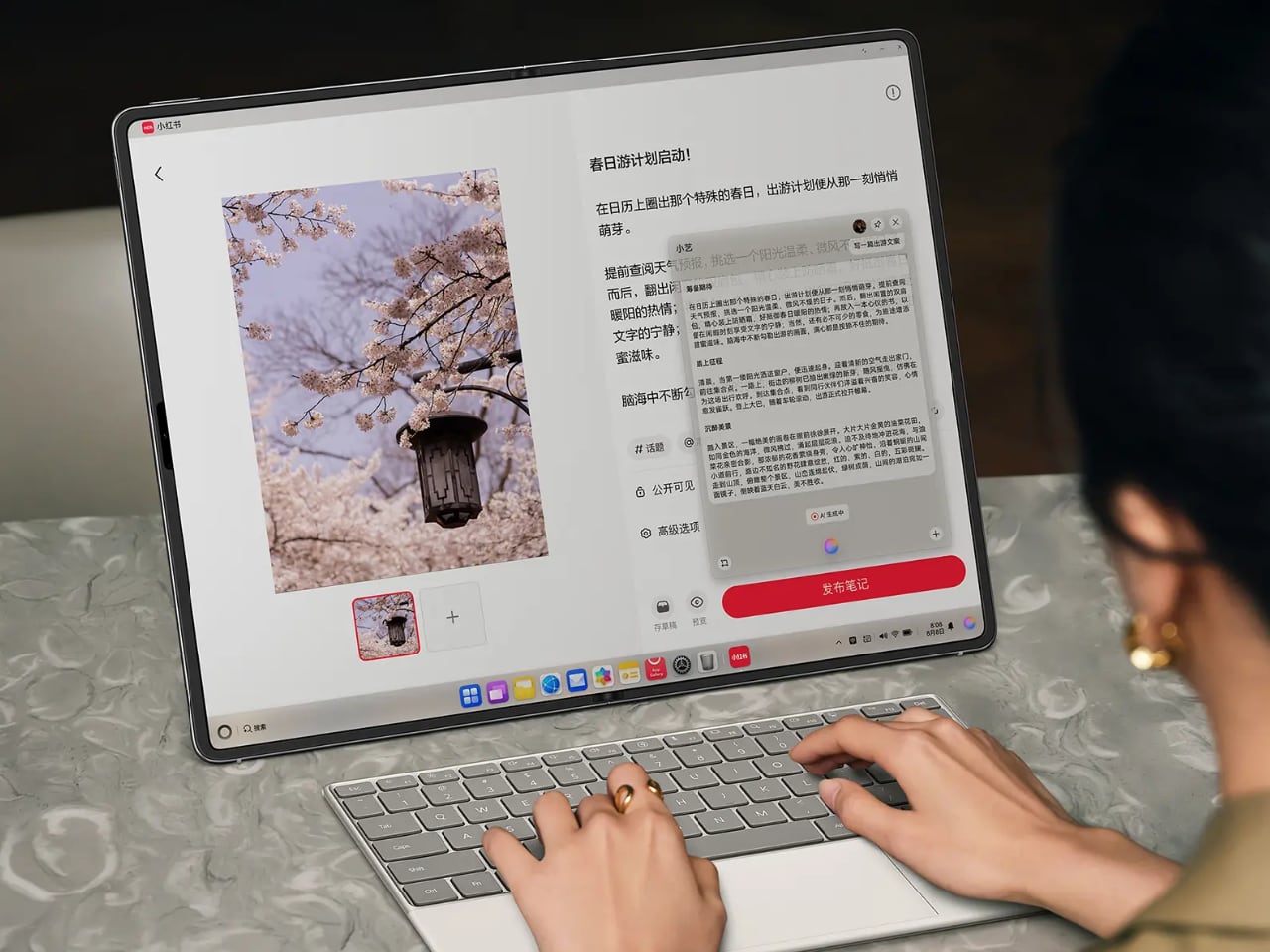
The Huawei MateBook Fold runs on HarmonyOS 5, a custom operating system designed by Huawei to seamlessly integrate with its ecosystem of devices. HarmonyOS offers several advantages tailored for foldable devices, including:
- Faster boot times and more efficient resource management.
- Advanced integration with other Huawei products, enabling smooth collaboration across devices.
- Seamless transfer of running applications between Huawei phones, tablets, and the MateBook Fold without interruption, enhancing a multi-device user experience.
- AI-powered features such as document summarization, real-time translation, and context-aware smart suggestions via the Xiaoyi assistant.
The operating system and software environment are key considerations for buyers. While Windows 11 provides access to millions of diverse applications across productivity, creativity, and development fields, HarmonyOS currently offers over 1,000 apps optimized specifically for foldable devices, with expectations to exceed 2,000 apps by the end of 2025.
Despite its rapid growth, this number remains limited compared to what Windows offers, and HarmonyOS along with its app ecosystem is primarily focused on the Chinese market, which reduces its appeal for international users.
Security Features
The security features differ significantly between the Lenovo ThinkPad X1 Fold and the Huawei MateBook Fold, reflecting each company’s distinct design philosophies:
- Lenovo offers a comprehensive security suite called ThinkShield, which includes:
- Windows Hello facial recognition technology for fast and secure login.
- A human presence detection system using Computer Vision technology to enhance privacy and prevent unauthorized access.
- Software and hardware solutions tailored to meet enterprise requirements for data security and identity management.
- Huawei relies on a proprietary security architecture known as StarShield, which provides deep protection at the kernel level and across various operating system layers, enhancing defense against sophisticated attacks and maintaining overall system integrity.
Despite the strong protection offered by both solutions, organizations that depend on traditional Windows security protocols and software may find Lenovo’s solutions more familiar, easier to adapt to, and integrate within existing work environments.

Multitasking and User Experience
The multitasking capabilities of both systems deserve special attention, especially for foldable devices that require smooth transitions between different modes:
- Windows 11 offers features like Snap Layouts and multiple virtual desktops, which utilize the large screen of the ThinkPad X1 Fold effectively when fully unfolded. However, the user experience may feel cramped in laptop mode due to the smaller screen size compared to traditional devices.
- HarmonyOS 5 is specifically designed for foldable devices, featuring a multitasking system based on intuitive gestures for split-screen, floating windows, and quick app switching, creating a more fluid and seamless experience when switching between device modes.
Update Policies and Long-Term Support
- Windows 11 receives regular security updates and improvements from Microsoft, with a clear and stable support lifecycle, providing business users with greater confidence in long-term compatibility and security maintenance.
- HarmonyOS is a newer system with less predictable update patterns, but Huawei commits to periodic improvements. Nevertheless, the level of certainty may be lower compared to Windows for users planning to use their devices for many years.
Keyboard and Input Methods
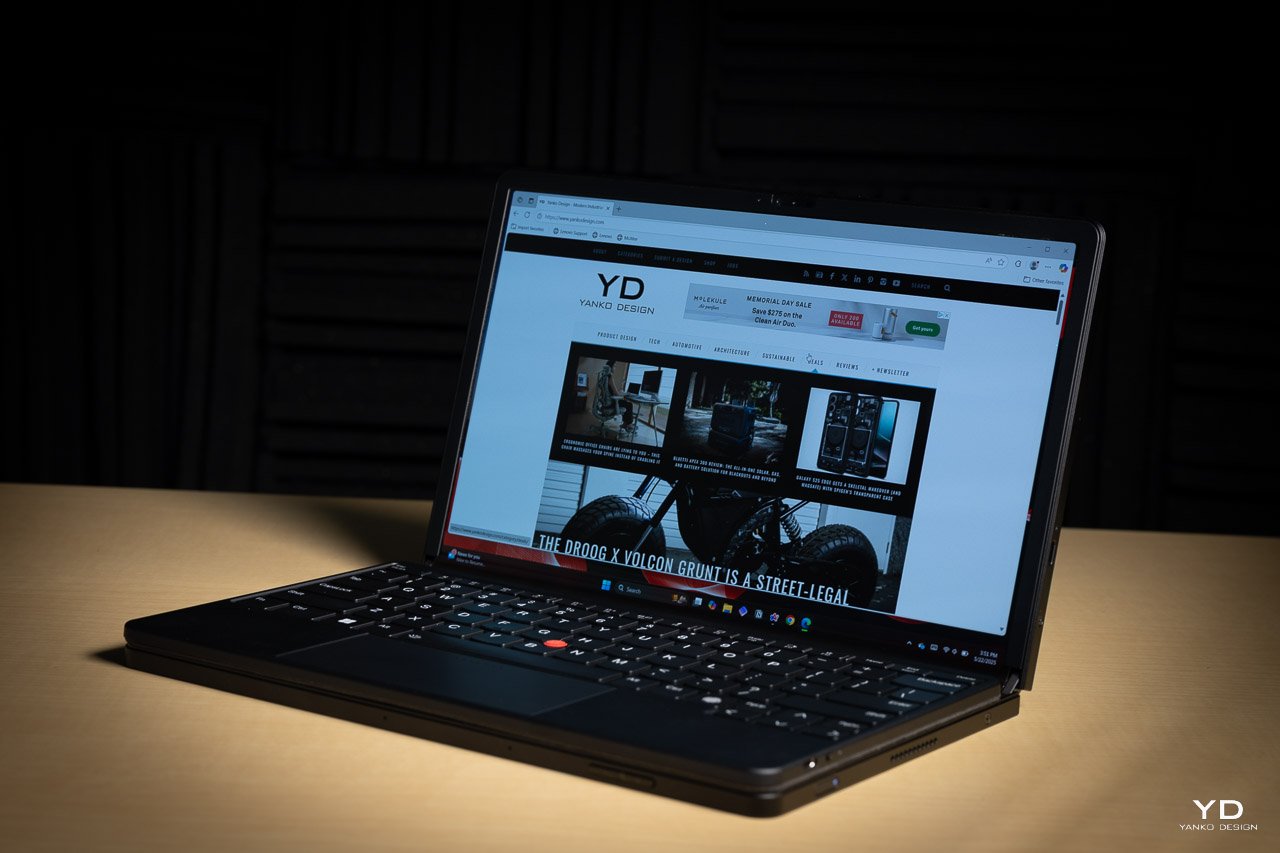
- Lenovo offers the ThinkPad Bluetooth TrackPoint Keyboard Folio as an optional accessory, preserving the classic ThinkPad experience with good key travel and the famous TrackPoint control.
- However, the keyboard feels narrower compared to traditional ThinkPad keyboards, and the touchpad is relatively small, which might affect comfort during extended use.
- The keyboard magnetically attaches to the bottom half of the folded device, adding approximately 1.38 pounds of extra weight to the device.
Keyboard and Input Methods
- Lenovo offers the ThinkPad Bluetooth TrackPoint Keyboard Folio as an optional accessory, preserving the classic ThinkPad experience with a good key travel distance and the iconic TrackPoint pointing device. However, the keyboard is relatively narrow compared to standard ThinkPad models, and the touchpad is small, which may affect comfort during extended use. The keyboard magnetically attaches to the lower half of the folded device but adds an extra weight of approximately 1.38 lbs.
- Huawei includes a wireless aluminum keyboard, 5 mm thick, with the MateBook Fold, providing a key travel distance of 1.5 mm and a responsive touchpad. Weighing only 0.64 lbs, this keyboard adds minimal bulk to the device and can be positioned flexibly away from a fixed location, offering a more comfortable workspace.
- Both devices support a stylus: Lenovo provides the Precision Pen for note-taking and drawing, with magnetic attachment to the screen. Huawei offers a similar pen, although details about it are less clear in the current documentation.
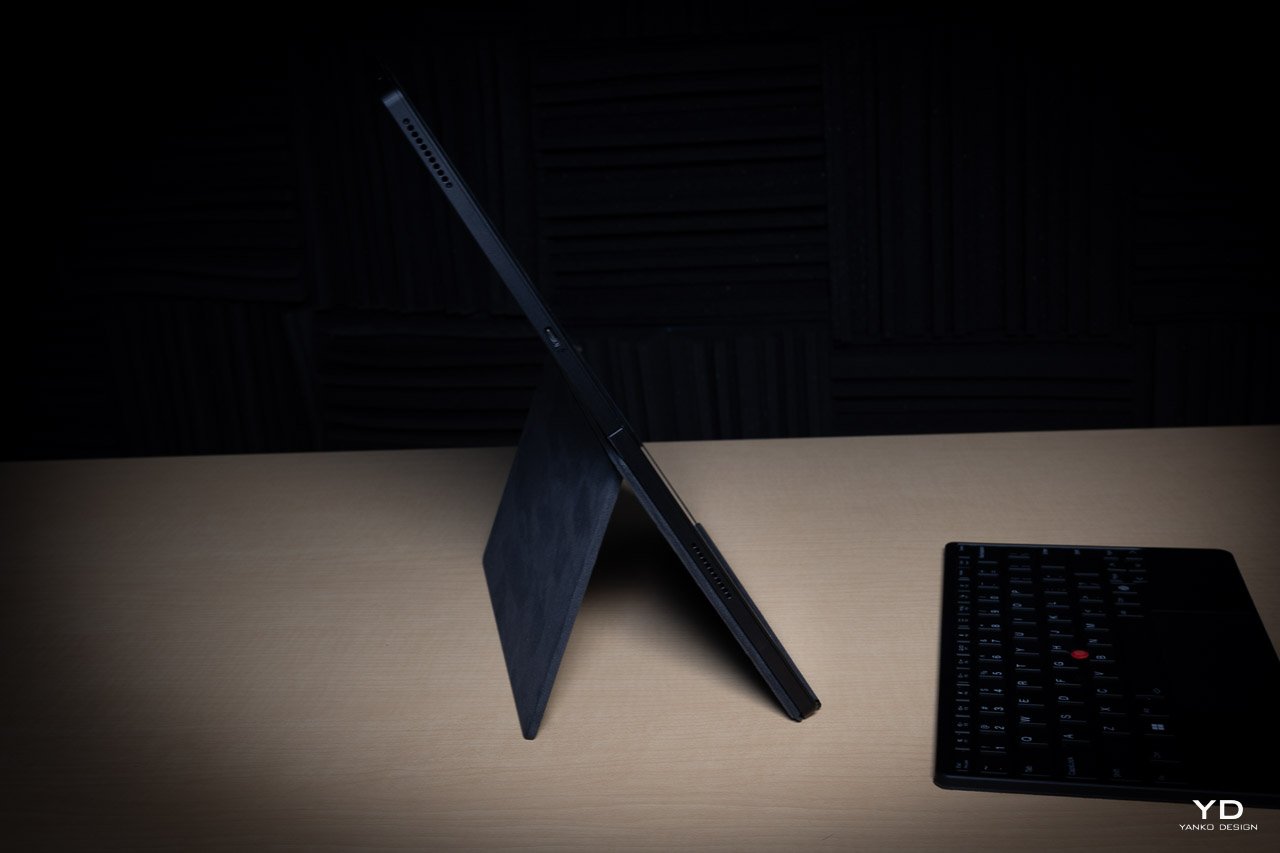
- A notable difference in accessories is the stand design: Lenovo requires a separately purchased adjustable stand for desktop use, adding an extra component to manage. In contrast, Huawei integrates the stand directly into the MateBook Fold, providing immediate stability, simplifying the user experience, and reducing setup time.
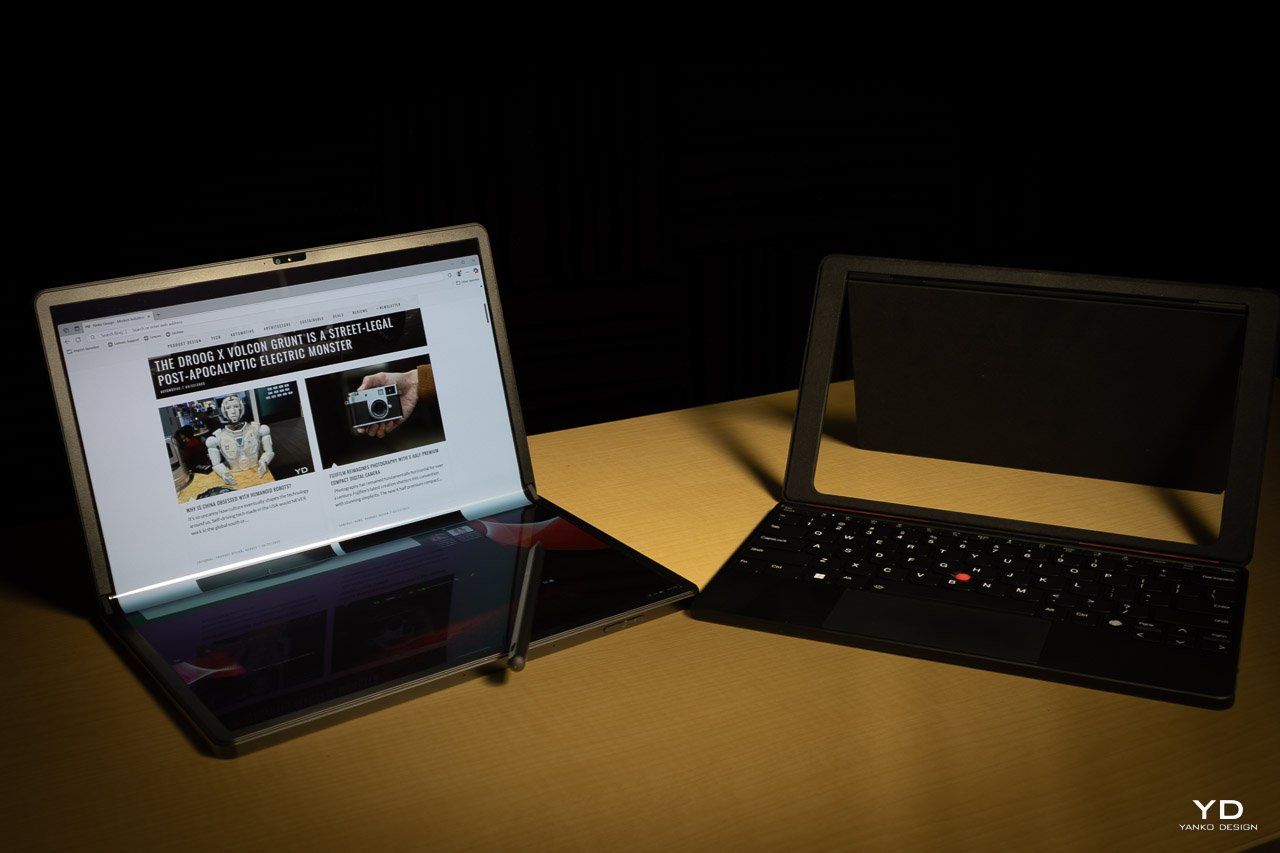
- Regarding virtual keyboards, both devices feature touch keyboards on the lower part of the folded screen, delivering a laptop-like experience without physical accessories. The Windows 11 virtual keyboard offers acceptable accuracy but lacks haptic feedback, whereas the HarmonyOS virtual keyboard is integrated with the system, featuring customizable layouts and advanced smart suggestions. These virtual keyboards are suitable for quick tasks but not a full substitute for prolonged typing.
Accessory Ecosystem
- Lenovo leverages the ThinkPad legacy by offering docking stations, covers, and compatible adapters designed for professional use, making it a preferred choice for enterprises and business clients.
- Huawei focuses on multi-device accessories that work harmoniously within its device ecosystem, providing an integrated experience for users who benefit from various Huawei products, reflecting the company’s direction toward a cohesive ecosystem.
Audio Capabilities and Camera
- The Huawei MateBook Fold excels in audio performance thanks to its six speakers, compared to only three in the Lenovo ThinkPad X1 Fold, delivering clearer and richer sound that enhances the multimedia experience.
- Both devices feature quad-array microphones to ensure clear voice capture and high-quality sound during video calls and online meetings.
- The MateBook Fold also outperforms in camera quality, equipped with an 8-megapixel sensor, compared to the 5-megapixel camera on the X1 Fold, which is a significant difference especially for users who frequently participate in video calls or create visual content.
External Display Support
- Lenovo’s device offers two Thunderbolt 4 ports, allowing connection to multiple high-resolution monitors and supporting advanced multi-display desktop setups with ease, ideal for professionals who need expanded workspace or multiple display outputs.
- Huawei’s USB-C ports support external display output but offer less versatility for connecting multiple screens simultaneously, which might limit expansion options for some professional users.
Wireless Connectivity Standards
- The X1 Fold supports Wi-Fi 6E, which includes the less congested 6 GHz band, improving connection speed and stability in crowded environments such as offices or urban areas.
- The MateBook Fold also uses strong Wi-Fi 6 technology, but lacks support for the 6 GHz band, potentially affecting connection quality in similar environments.
Future Expansion Capabilities
- The X1 Fold’s Thunderbolt 4 ports provide high compatibility with modern and future accessories, offering large bandwidth for connecting multiple advanced devices.
- The MateBook Fold uses standard USB-C ports, which offer good compatibility but lack the advanced features and high speeds of Thunderbolt technology, potentially limiting future expansion capabilities.
Price, Availability, and Value
- The Lenovo ThinkPad X1 Fold starts at approximately $2,499 for the base model with an Intel Core i5 processor, 16 GB RAM, and 256 GB storage.
- Prices rise to about $3,900 for higher-end configurations with Core i7, 32 GB RAM, and 1 TB storage.
- Typically, these prices do not include the keyboard accessory and adjustable stand, which add an additional $250 to $300 to the total cost — an important consideration when evaluating value for money.

Price, Availability, and Global Support
The Huawei MateBook Fold Ultimate Design is priced between 24,000 and 27,000 Chinese Yuan (approximately $3,300 to $3,700 USD) depending on the configuration. The price includes the wireless keyboard, making the total cost close to that of the Lenovo ThinkPad X1 Fold version with all accessories.
However, the MateBook Fold is currently available only in the Chinese market, with no announced plans for an international release. This limited availability reduces its potential impact and adoption outside Asia.
Regarding support and maintenance, Lenovo maintains a wide network of service centers worldwide, providing reliable support for travelers as well as global companies and enterprises. In contrast, Huawei’s support network is less extensive outside China, which may pose challenges for users needing repairs or maintenance in regions lacking official service centers.
Target Audience and Value Proposition
The Lenovo ThinkPad X1 Fold targets professionals and work environments, where users prefer Windows compatibility, global support, and seamless integration with existing enterprise systems. The ThinkPad brand enjoys high trust in corporate markets due to its reliability and security, which are often more critical than just advanced technical specifications.
On the other hand, the Huawei MateBook Fold appeals to tech enthusiasts and creative professionals who value high screen quality, innovative design, and integration within Huawei’s digital ecosystem. Due to its limited availability and reliance on the HarmonyOS operating system, it may be less suitable for traditional enterprise use but offers attractive value for foldable device users seeking cutting-edge technology.
Financing Options and Leasing Programs
Lenovo offers corporate leasing programs that allow organizations to deploy X1 Fold devices without large upfront capital expenditures, including service, support, and upgrade agreements aligned with corporate device refresh cycles.
Huawei’s business services are less developed outside China, which may limit financing and leasing options for international customers interested in purchasing the MateBook Fold.
Conclusion: The Future of Foldable Computing
Both the Lenovo ThinkPad X1 Fold 2024 and the Huawei MateBook Fold Ultimate Design represent two different visions for the future of foldable computing.
Lenovo focuses on durability, Windows compatibility, and global availability, making the device a complete and seamless choice for professional and enterprise environments.
Meanwhile, Huawei pushes the boundaries of engineering design by offering a thinner, lighter device with a larger screen and a customized operating system optimized for foldable hardware, positioning it as an innovative choice for tech enthusiasts and creative professionals.

Summary for Professional Users and Future Comparison
- For business users who require full compatibility with the Windows operating system and reliable global support, the Lenovo ThinkPad X1 Fold remains the most practical choice.
- Although it is thicker and uses processors that might be considered somewhat outdated compared to the latest generation, this device is known for its proven durability and features suited to enterprise environments.
- It represents a safer investment for organizations aiming to adopt foldable device technology within a stable and reliable work environment.
- The device also offers great flexibility in switching between tablet, laptop, and desktop modes, with minimal compromises in performance and user experience.
- On the other hand, creative professionals and early adopters may find the Huawei MateBook Fold more attractive due to:
- Its high display quality,
- Slimmer design,
- Larger screen size,
which together offer a more advanced, futuristic user experience. - However, its availability remains geographically limited to China, and challenges with adapting to the HarmonyOS system restrict its broader adoption in traditional professional settings.
Future Prospects for Foldable Computers
Current devices highlight key areas for necessary improvements in future generations of foldable computers, with expected developments including:
- Utilizing the latest processors with AI acceleration technologies to enhance performance and energy efficiency.
- Reducing weight while maintaining structural durability to improve portability and daily usability.
- Integrating built-in kickstands to provide greater stability and ease of use.
- Offering larger and more comfortable keyboards to improve the typing experience during extended use.
- Enhancing display technologies to include higher refresh rates, improved crease resistance, and increased power efficiency.
- Advancing software to support smoother and smarter transitions between multiple modes, while boosting multitasking capabilities and optimizing the use of foldable device features.

The competition between Lenovo and Huawei represents a positive factor for consumers, as it accelerates the pace of innovation and highlights different approaches to addressing the challenges of foldable computing.
As these technologies mature and their prices decrease over time, foldable devices will evolve from mere symbols of executive prestige to practical tools widely used across diverse user groups.
The X1 Fold and MateBook Fold devices mark significant steps in this evolution, each offering valuable lessons that will form the foundation for the next generation of flexible, foldable computing devices.
The ideal foldable device will be a seamless integration that combines Huawei’s hardware innovations with Lenovo’s software compatibility and reliable global support.
It will be slim and lightweight, featuring high display quality as seen in the MateBook Fold, alongside enterprise-grade security and advanced connectivity options characteristic of the X1 Fold, plus an operating system that smoothly adapts to multiple usage modes.
Although neither of the current devices achieves this perfect balance, both represent remarkable engineering achievements that push the boundaries of what foldable laptops can offer.
Looking ahead, the success of foldable computing will not depend solely on hardware specifications, but rather on developing innovative software experiences that truly leverage the unique capabilities of these flexible displays.
The device that will ultimately dominate this category is the one that can most effectively bridge the gap between technological innovation and practical usefulness, creating user experiences unattainable with traditional laptops or tablets.
Both Lenovo and Huawei have made significant strides in this direction, and their ongoing competition acts as a catalyst to accelerate progress toward foldable devices with a truly transformative impact on the future of computing.