Long Life, Low Energy: Designing for a Circular Economy

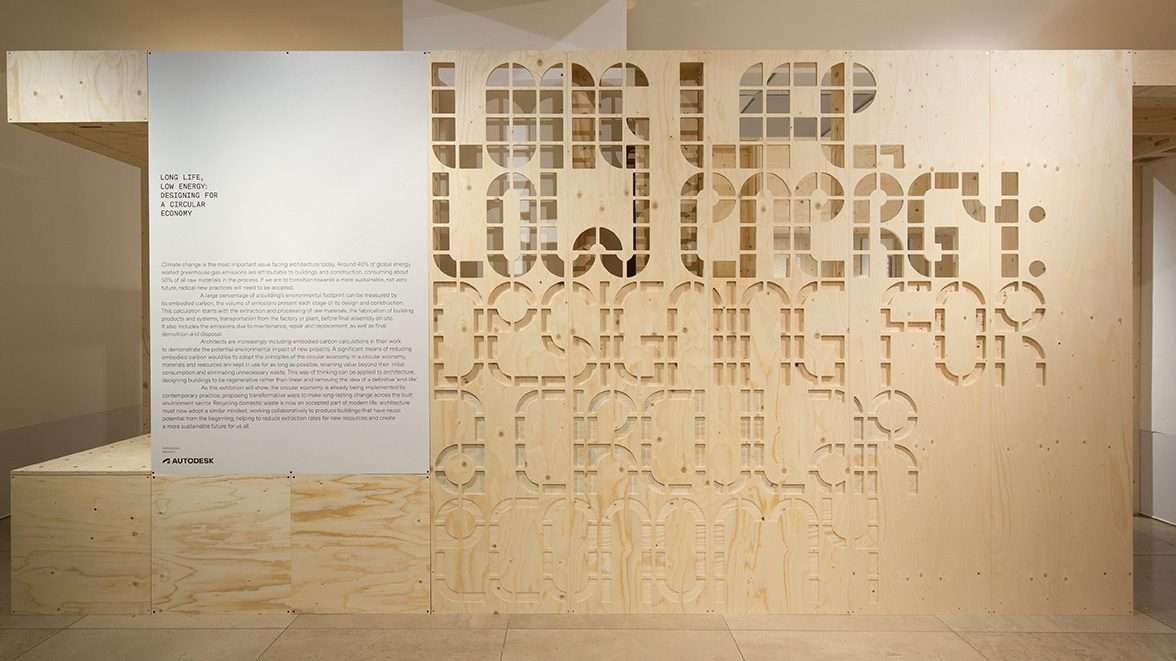
Long Life, Low Energy: Designing for a Circular Economy
This exhibition demonstrates how the principles of the circular economy can help create more sustainable, net-zero architecture for the future.
RIBA’s Built for the Environment report shows that 40% of global greenhouse gas emissions are attributable to buildings and construction. Consuming about 50% of all raw materials worldwide in the process. In addition, over 50,000 buildings are demolished each year across the UK, many of which could have been repurposed. The circular economy offers ways to reduce these unsustainable figures. Seeking to eliminate waste by reusing buildings and their material components wherever possible.
Divided into three sections, the exhibition will draw on the RIBA Collections to reveal the nature and recent history of demolition. It will then showcase innovative and skillful approaches that practices such as Wilkinson Eyre, Ian Chalk Architects, and Featherstone Young have adopted to move beyond a single-use approach to construction. Imagining new uses for redundant factories, offices, and car parks – before concluding with six key approaches to circular design.
Long Life, Low Energy: Designing for a Circular Economy
Case study projects will highlight both new and ancient methods of material reuse. From Phoenix House in Windsor by CSK Architects, which follows the tradition of salvage, using stone and bricks from places of ruin and abandonment to two new London projects by Sheppard Robson and HawkinsBrown where developer Fabrix has purchased 140 tonnes of steel from the demolition of One Broadgate.
The show will also explore new technologies that allow architects to create ‘material passports’ to gather information about a building before deciding if we reuse components. Like that applied by Orms Architects and the Crown Estate, alongside practical solutions like Feilden Fowles’ demountable studio in Waterloo.
Consideration of the specific way that we select and source materials forms a crucial aspect of the circular economy framework. The show will address this through two schemes by BakerBrown Studio where materials have been sourced from the immediate environs of the site to reduce the embodied carbon from transportation.
The exhibition structure itself also follows these same principles. Designed and built by U-Build – aided by members of the RIBA Youth Forum during the installation process. The modular, demountable structure will be reused in several domestic and exhibition projects at the end of the show, all frames have also been sourced from previous RIBA exhibitions. Ensuring that waste is to an absolute minimum.
Finally, read more on Archup:
Saudi Arabia’s “Vision 2030” plan: a challenge for the Kingdom’s economic sustainability
Sustainability and community participation to achieve a circular economy in urban design