Louvre Pyramid: A Modern Architectural Icon

Introduction
The Louvre Pyramid is a contemporary architectural landmark located in the heart of Paris. Designed to serve as the main entrance to the Louvre Museum, it harmoniously blends modern architecture with the historic surroundings. Its transparent glass structure allows unobstructed views of classical buildings while providing a functional, welcoming entry. The pyramid reflects a careful balance between design innovation and respect for heritage, showcasing a synergy between structural engineering, material science, and urban planning. Its presence demonstrates how thoughtful projects can redefine the visitor experience without overpowering historical landmarks.
Historical Context and Urban Background
Constructed in the late 20th century, the pyramid transformed the Louvre complex into a more navigable space. Previously, visitors experienced congestion and confusing pathways. The project’s conception emphasized integrating modern architecture within a centuries-old urban context. This context required architects and engineers to develop innovative solutions to reconcile modern construction with historical preservation. The result is a structure that respects the heritage of the museum while serving contemporary functional needs. Its introduction set new standards for design in heritage-sensitive projects.
Structural Design and Engineering
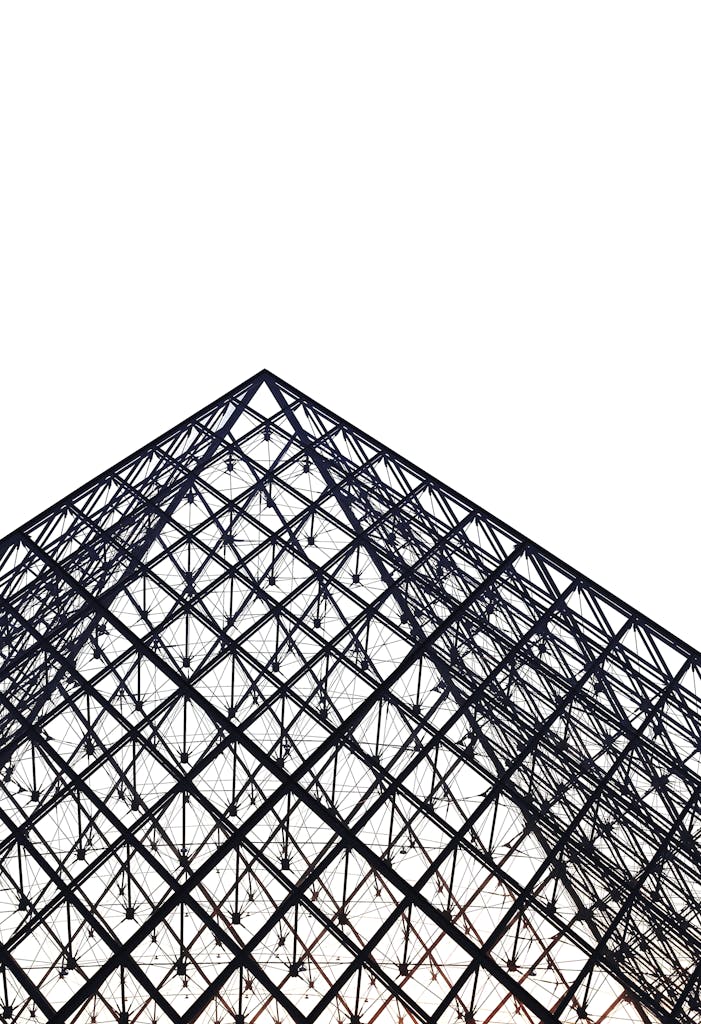
The pyramid’s frame consists of a precisely engineered steel skeleton supporting 673 triangular glass panels. Engineers employed cross-bracing and custom nodes to ensure stability. Each glass panel was fabricated with exact measurements, allowing the structure to remain transparent while distributing weight efficiently. The combination of steel and glass showcases advanced construction techniques, highlighting the value of precision engineering. Collaboration between architects, engineers, and specialists in building materials was essential to achieve the project’s structural and aesthetic goals.
Visitor Circulation and Interior Layout
Visitors enter through the pyramid into a spacious underground hall connecting to various galleries. The interior design optimizes circulation, minimizing congestion and ensuring a natural flow between spaces. Signage and pathways are thoughtfully arranged to guide visitors intuitively. Natural lighting penetrates the interior through the glass, enhancing spatial perception and visual comfort. The interior plan reflects a seamless integration of functional design and iconic architecture, proving that practical use and visual impact can coexist.

Urban Integration
The pyramid sits within the Cour Napoléon without obstructing the surrounding Louvre façades. Its transparent geometry allows pedestrians and visitors to maintain visual connections with historic buildings. The plaza surrounding the pyramid guides circulation naturally, creating a harmonious interface between contemporary design and historic urban fabric. This project demonstrates that modern architecture can complement heritage sites when careful attention is given to urban planning and projects.
Engineering Innovations
The pyramid introduced several groundbreaking techniques. Laminated glass panels, precision-engineered steel nodes, and meticulous assembly methods allowed for structural transparency while maintaining stability. Engineers had to balance aesthetic goals with practical constraints, ensuring that the pyramid could withstand loads, wind, and temperature variations. These innovations illustrate how construction and material science can collaborate effectively in complex building projects.
Maintenance and Sustainability
The Louvre Pyramid requires regular maintenance to preserve its glass panels and steel structure. Cleaning protocols, structural inspections, and climate control systems protect the materials and ensure visitor comfort. Sustainability considerations guided material selection and energy use. These measures reflect best practices in sustainable architecture and long-term projects management.
Cultural and Symbolic Significance
The Louvre Pyramid has become a global icon of modern cultural architecture. Its presence demonstrates that contemporary design can coexist with centuries-old heritage without compromising aesthetic or functional value. Visitors perceive a seamless connection between the underground halls and historical galleries, which highlights the thoughtful integration of projects and urban context. The pyramid serves both practical and symbolic roles, representing transparency, openness, and innovation while enhancing the urban environment.
Materials and Construction Techniques
Engineers selected steel and glass to create a durable yet visually light structure. The glass panels are laminated for safety and clarity, while steel nodes and cross-bracing ensure rigidity and load distribution. The choice of materials demonstrates careful consideration of both sustainability and longevity. Modern building materials allowed the team to achieve minimal visual obstruction while maintaining structural integrity.
Structural Load and Stability Analysis
The pyramid’s triangular geometry distributes weight efficiently, reducing stress on individual nodes. Engineers conducted simulations to ensure resistance against wind, seismic activity, and environmental pressures. Structural calculations account for maximum occupancy loads and daily usage patterns. These analyses exemplify how construction and engineering practices integrate safety and functionality into iconic projects.
Visitor Experience and Accessibility
The underground halls connected to the pyramid provide intuitive visitor paths to galleries. Natural lighting from the glass enhances spatial perception, creating a welcoming environment. Accessibility measures ensure smooth navigation for people with mobility limitations. Signage, circulation design, and wayfinding strategies reflect best practices in interior design and visitor experience management. The overall flow demonstrates the successful combination of aesthetic impact and functional architecture.
Statistics Table
| Feature | Details | Notes |
|---|---|---|
| Glass Panels | 673 | Triangular laminated glass |
| Steel Nodes | 603 | Custom-engineered cross-bracing |
| Pyramid Height | 21.6 meters | Structural stability |
| Base Width | 35.4 meters | Triangular footprint |
| Visitor Capacity | ~1,200 per hour | Flow managed through underground halls |
| Sustainability Score | High | Energy-efficient lighting and climate |
Integration with Urban Context
The pyramid enhances the Cour Napoléon plaza without overshadowing the historic Louvre façades. Its transparent design allows unobstructed views and encourages pedestrian movement through the plaza. Integration with the urban grid demonstrates careful planning, where modern architecture coexists with historic surroundings. The project sets a precedent for urban design in heritage-sensitive areas, proving that projects can enhance rather than dominate existing environments.

Technological Innovations and Precision Engineering
The pyramid required precise fabrication and installation of materials. Steel connections, custom nodes, and triangulated glass panels were installed with millimeter-level accuracy. This approach minimized deflection and ensured long-term stability. Precision engineering illustrates the potential of modern construction methods in achieving iconic architectural projects.
Sustainability and Environmental Considerations
Materials were selected for durability and minimal environmental impact. Glass and steel enable natural light penetration, reducing artificial lighting needs. Climate control and visitor circulation were optimized to reduce energy consumption. These strategies exemplify principles of sustainable architecture and long-term management of high-traffic projects.
Challenges and Long-Term Maintenance
Maintaining transparency and structural integrity requires routine inspections and cleaning. Specialized teams monitor glass panels, steel nodes, and underground circulation systems. Adaptations over time ensure safety and enhance visitor experience. This ongoing attention reflects a broader philosophy of long-term care in building maintenance and functional design for iconic projects.


Conclusion
The Louvre Pyramid stands as a remarkable example of modern architecture that respects historical context while implementing innovative design. The project integrates advanced materials, structural engineering, and sustainability to create a functional, symbolic, and aesthetic landmark. Lessons from the pyramid’s construction inform future heritage-sensitive projects and demonstrate the potential of modern construction in enhancing cultural landmarks worldwide.
✦ ArchUp Editorial Insight
The Louvre Pyramid in Paris is an icon of Late Modernist Architecture, designed by I. M. Pei to serve as the main entrance to the historic Louvre Museum. Its Structural Ingenuity lies in the framework built from high-precision transparent steel, which supports 673 laminated glass panels. This design ensures lightness and complete transparency, allowing a distinct pyramid shape to be integrated within the classical Cour Napoléon without obstructing the façades of the historic palace. The Pyramid’s Functional Success is not just aesthetic, but is rooted in its role as an engineering solution to Visitor Congestion, efficiently transporting guests to a highly effective underground distribution hall. The initial Aesthetic and Historical Critique the project faced centered on the Striking Juxtaposition of modern geometry (the pyramid) and the classical surroundings (the palace). However, this contradiction has since evolved into a symbol of innovative integration between history and contemporary design.
A deeper Architectural Discussion within modern Architecture explores how innovative Design and advanced Construction methods reshape global Projects in the pursuit of sustainability and human-centered environments.