
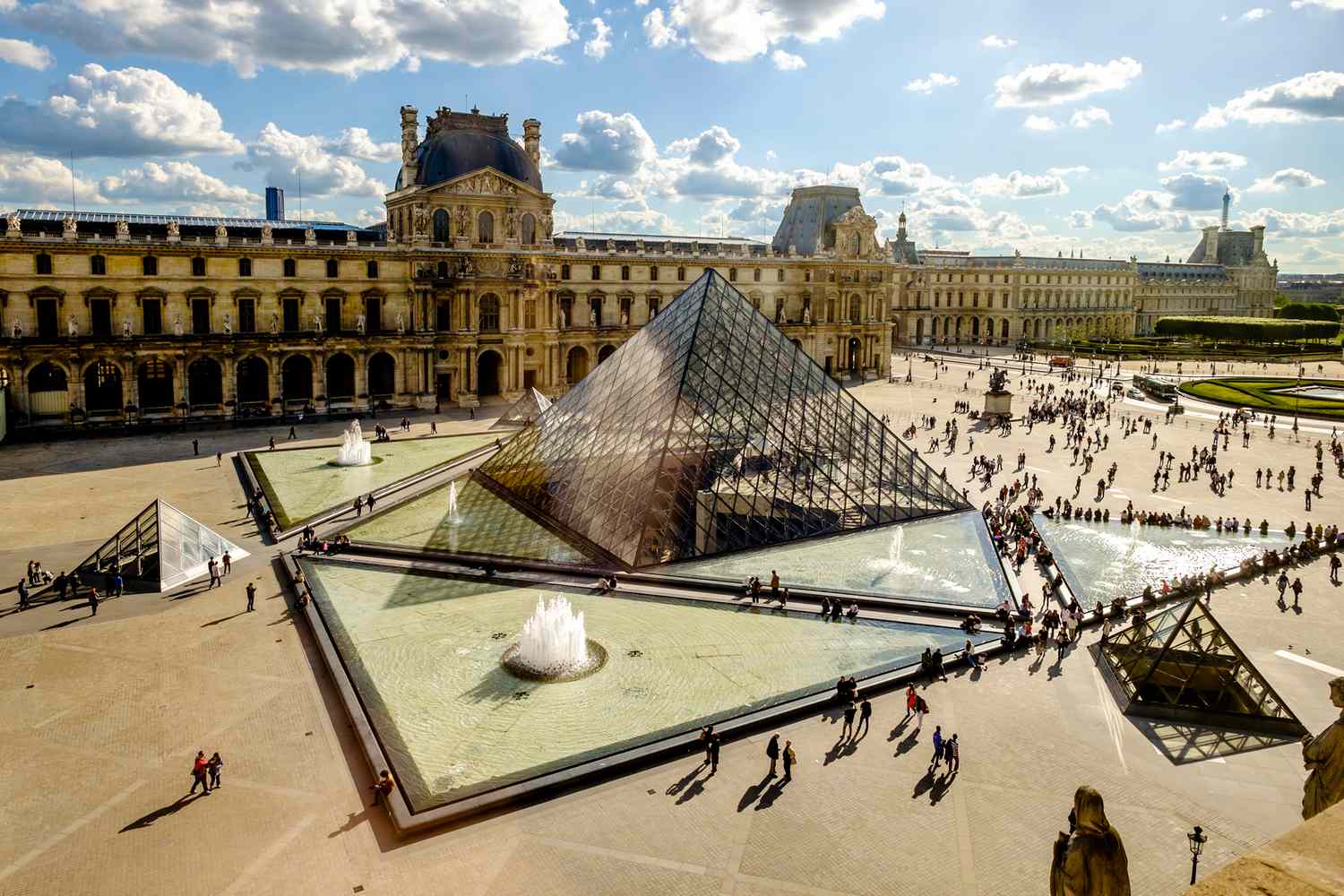
Louvre Redevelopment Protests Escalate Over €700M Plan

The Louvre redevelopment plan has triggered sustained staff protests. Workers cite deteriorating conditions and misallocated resources. They argue funds should fix climate systems, security infrastructure, and aging structures not fund architectural spectacle.

Escalating Internal Action
Staff voted overwhelmingly to resume strike action. Chronic understaffing and excessive workloads drove the decision. Deferred maintenance added to their concerns. The protest disrupted daily operations and visitor access. Earlier rolling strikes had already closed galleries temporarily. A recent theft exposed serious gaps in security infrastructure.
Employees across departments report accelerated degradation of facilities. An official audit confirmed this trend. A water pipe failure recently damaged archival materials. The incident occurred in the Egyptian antiquities wing. It highlighted risks from neglected upkeep of the buildings envelope.
Renewal cannot precede stabilization.

Conflict Over Priorities
The dispute centers on the New Renaissance initiative. Museum leadership backs the plan. It proposes a new eastern entrance and expanded underground galleries. A dedicated chamber for the Mona Lisa aims to reduce congestion. The design addresses pressure on the central glass pyramid. This structure remains a key example of modernist intervention in historic urban fabric.
An international design competition launched recently. Preliminary studies received €100 million. Essential repairs got only €15 million. Staff call this gap a breach of trust.
Management claims preservation and innovation can coexist. Employees insist safety must come first. The tension reflects wider issues in heritage conservation. Visibility often overshadows stewardship in such cases.
Negotiations with the relevant government authority made minor wage progress. Talks remain deadlocked on the redevelopment timeline. The museum now operates under strain. One vision sees it as a dynamic public space. The other treats it as a heritage asset needing foundational care. Experts warn that neglect could permanently damage original building materials. They urge an integrated approach. It must balance functional interior design with urban demands. The success of the Louvre redevelopment depends on structural integrity. Without it, the plan becomes spectacle without substance and risks triggering renewed Louvre redevelopment protests.
Architectural Snapshot
Grand scale renewal without foundational care turns cultural monuments into hollow shells.

✦ ArchUp Editorial Insight
The Louvre redevelopment conflict reflects a recurring institutional pattern: capital allocation favors visibility over operational continuity. Funding frameworks reward projects with symbolic and public impact, while maintenance is deferred because its return is non-spectacular and politically opaque.
Chronic understaffing, postponed repairs, and accumulating risk point to a management logic optimized for project delivery rather than long term asset stewardship. Audits, security breaches, and infrastructure failures reveal timelines that privilege future narratives over present system stability fueling the Louvre redevelopment protests.
Procurement practices separate renewal from repair, treating them as parallel tracks instead of interdependent conditions. Regulatory tolerance enables this divide, while cultural pressure prioritizes expansion, access management, and visitor flow over material care.
The architectural outcome becomes inevitable: new spatial layers absorb congestion, while the operational substrate erodes. The redevelopment is not an architectural ambition, but the logical outcome of institutional prioritization, financial signaling, and deferred risk.

★ ArchUp Technical Analysis
ArchUp: Technical Analysis of the Development vs. Maintenance Conflict at the Louvre Museum
This article provides a technical and critical analysis of the ongoing protests surrounding the Louvre Museum’s development project, as a case study in managing architectural heritage and the clash between preservation and innovation priorities. To enhance its archival value, we present the following key technical and financial data:
The distribution of resources between innovation and operations reveals a stark disparity. The total budget for the New Renaissance Plan (LNR) is 700 million euros, of which 100 million euros are allocated for preliminary studies and an international design competition. In contrast, the amount allocated for essential repairs to the museum’s vital systems is only 15 million euros, creating a funding gap with a ratio of 85:1 in favor of the development project over fundamental maintenance.
Operational concerns center on the historical building’s systems. A failure in old water pipes caused damage to archival materials in the Egyptian Antiquities department, exposing the deteriorating state of the infrastructure. Urgent demands include repairing the crucial climate control systems for art preservation, updating security infrastructure following a theft that revealed vulnerabilities, and maintaining the structural fabric of the building itself, which dates back to a 12th-century royal palace.
The proposed project focuses on expanding capacity and improving visitor flow. The plan involves creating a new eastern entrance and expanding underground exhibition spaces, with the primary aim of alleviating congestion around the central glass pyramid (designed by I.M. Pei and inaugurated in 1989) and enhancing the visitor experience. However, protesters argue that this addresses access and display issues while leaving fundamental conservation and security problems unresolved.
Related link: Please review this article for an analysis of a similar conflict between architectural preservation and development pressures in a living heritage context:
The Historic Fortress in Istanbul: A Clash Between Tourism and Preservation





✅ Official ArchUp Technical Review completed for this article.