Magnifica Air: A New Vision Redefining the Luxury Flying Experience

Overview of the New Design
Welcome to the new interior design of Magnifica Air’s fleet of Airbus A220-300 and A321neo aircraft.
This emerging luxury airline is preparing to enter the aviation world in 2027, offering a travel experience that lies between premium business class and private aviation, without reaching the level of full aircraft ownership or exclusive subscription services.
Magnifica Air Vision
The company aims to bring enjoyment back to the flying experience by combining comfort, environmental sustainability, and serene interior design.
Its approach is based on the concept of fully dedicated spaces, making the cabin feel as if it were custom-designed for business travelers in terms of privacy and comfort, yet within a more flexible framework regarding cost and operations.
Cabin Details
To achieve this vision, Magnifica Air explains that each Airbus aircraft will be equipped with 45 to 54 seats, along with 2 to 4 private suites within the cabin.
This layout aims to create a balance between the number of passengers and the level of comfort, while maintaining a sense of spaciousness and fluidity in the interior design.
Aircraft Allocation and Their Uses
The A321neo aircraft is dedicated to long-haul flights, featuring four private suites that offer the highest levels of privacy and comfort, while the A220-300 is used for medium-haul journeys with only two suites.
This allocation reflects the company’s vision of providing a balanced experience that combines luxury with operational efficiency, tailored to the nature and duration of each flight.
Private Suite Design
The private suites feature configurable facing seats, giving passengers the freedom to adjust the space according to their needs, whether for relaxation or in-flight meetings.
The rest of the cabin includes reclining business class seats arranged along both sides of the central aisle.
At the rear of the cabin, there is a bar area designed to encourage social interaction and provide moments of relaxation before or after meals.
Comprehensive Pre-Flight Experience
Magnifica Air strives to make the flying experience seamless from the moment passengers arrive at the airport.
Passengers are allowed to arrive just 30 minutes before departure, thanks to expedited procedures including luxury “white-glove” baggage handling, simplified security checks, and an elegant lounge featuring gourmet food and beverages along with quiet, well-designed relaxation areas.
Comfort After Landing
The luxury experience does not end upon landing; the airline promises baggage delivery within just ten minutes of arrival, along with private drivers waiting at the curbside to ensure passengers’ ground journeys are smooth and effortless.
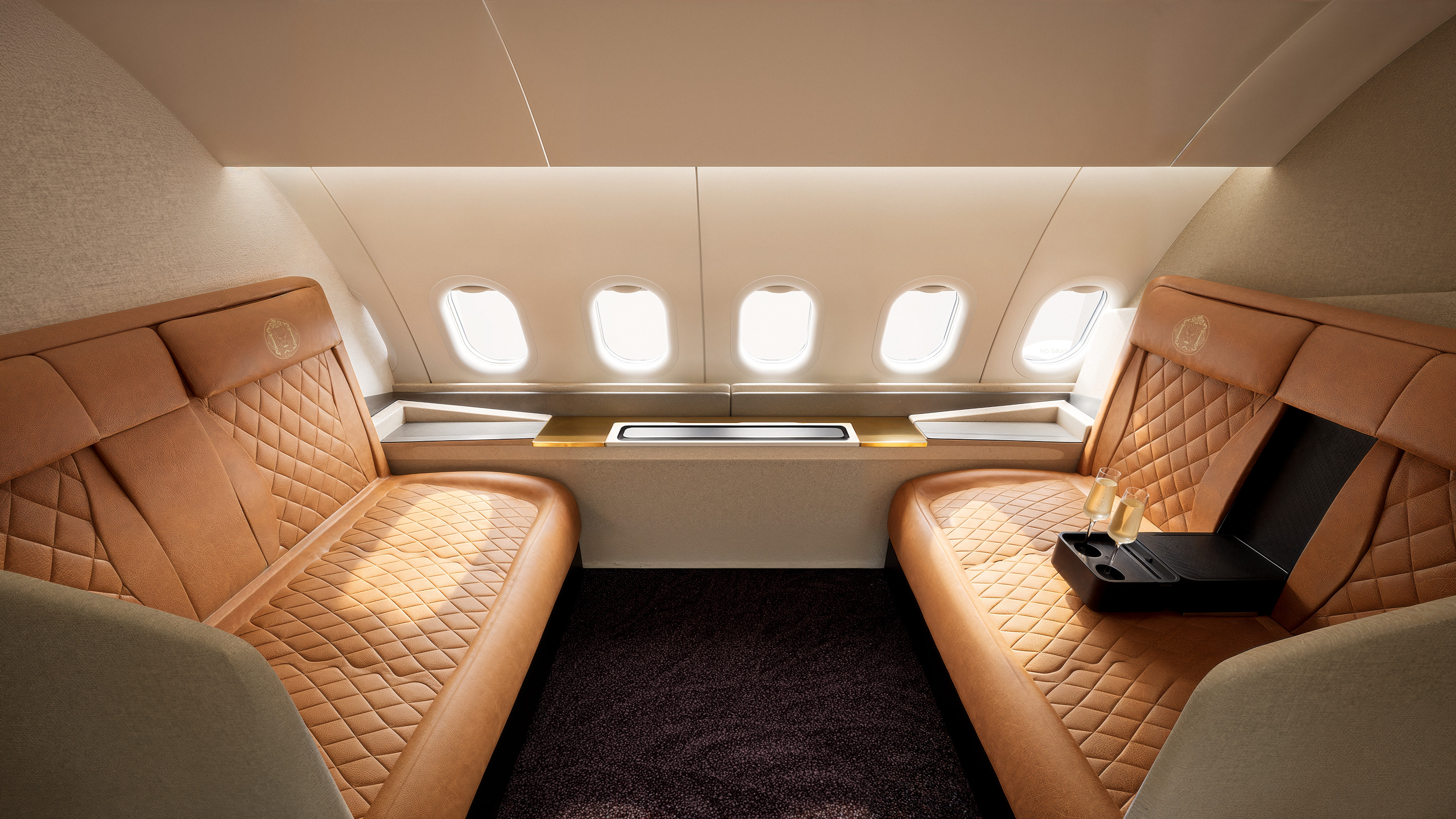
Critical Review of the Interior Design
Despite Magnifica Air’s meticulous attention to creating a comprehensive travel experience, the cabin interior design raises some questions regarding its alignment with the spirit of innovation promoted by the airline.
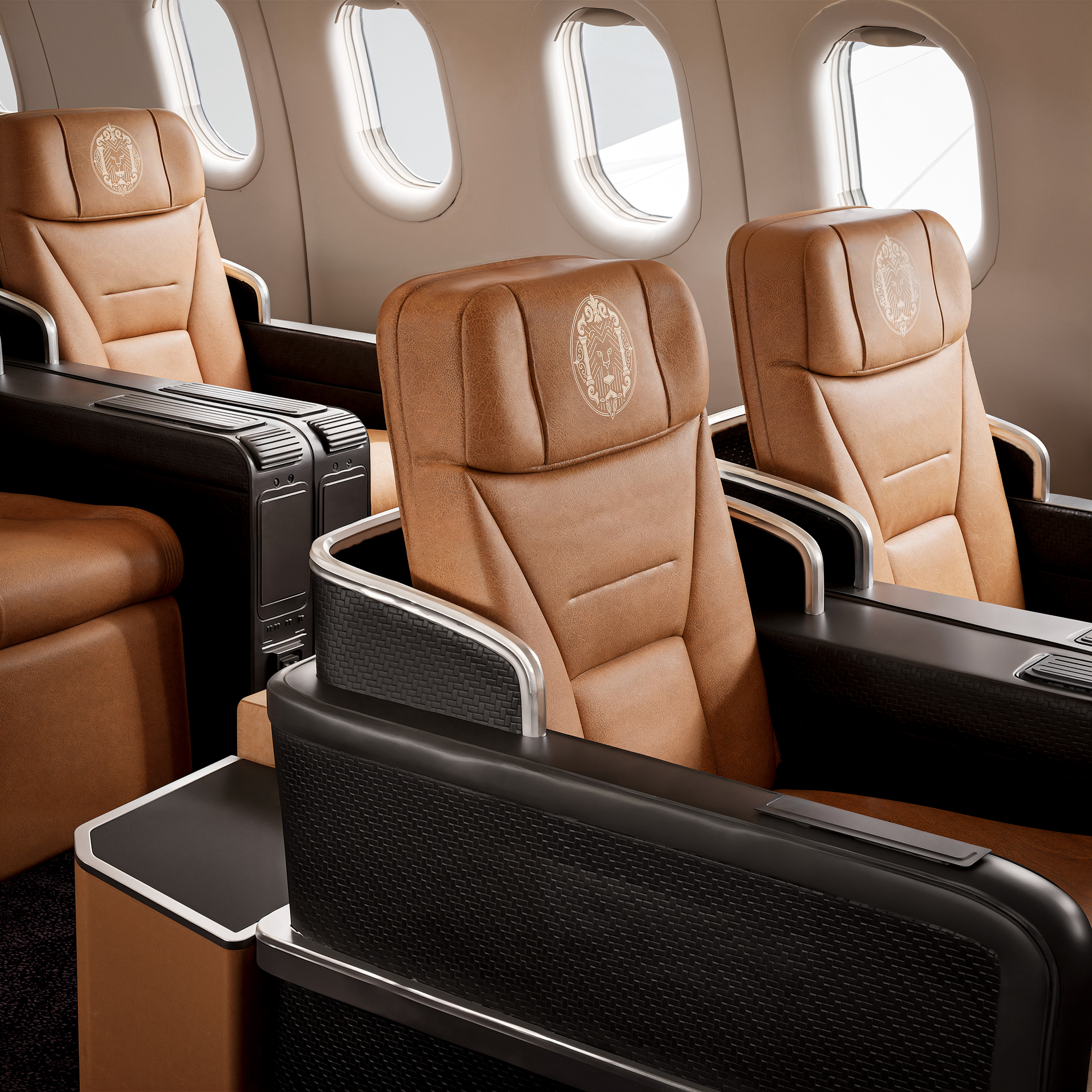
The throne-like seats make a strong visual statement, yet at the same time, they appear restrictive in terms of movement and comfort. Additionally, the level of privacy they offer is lower than what passengers typically expect in traditional business class cabins.
A Missed Design Opportunity
Given the ample space available on board, the design could have drawn inspiration from the golden age of aviation in the 1960s and 1970s, when cabins were renowned for their luxurious details and visual richness.
Instead, the company opted for subdued shades of brown and beige, colors that provide a sense of calm and privacy but lack the distinctive artistic touch that could have more strongly highlighted Magnifica’s new identity.
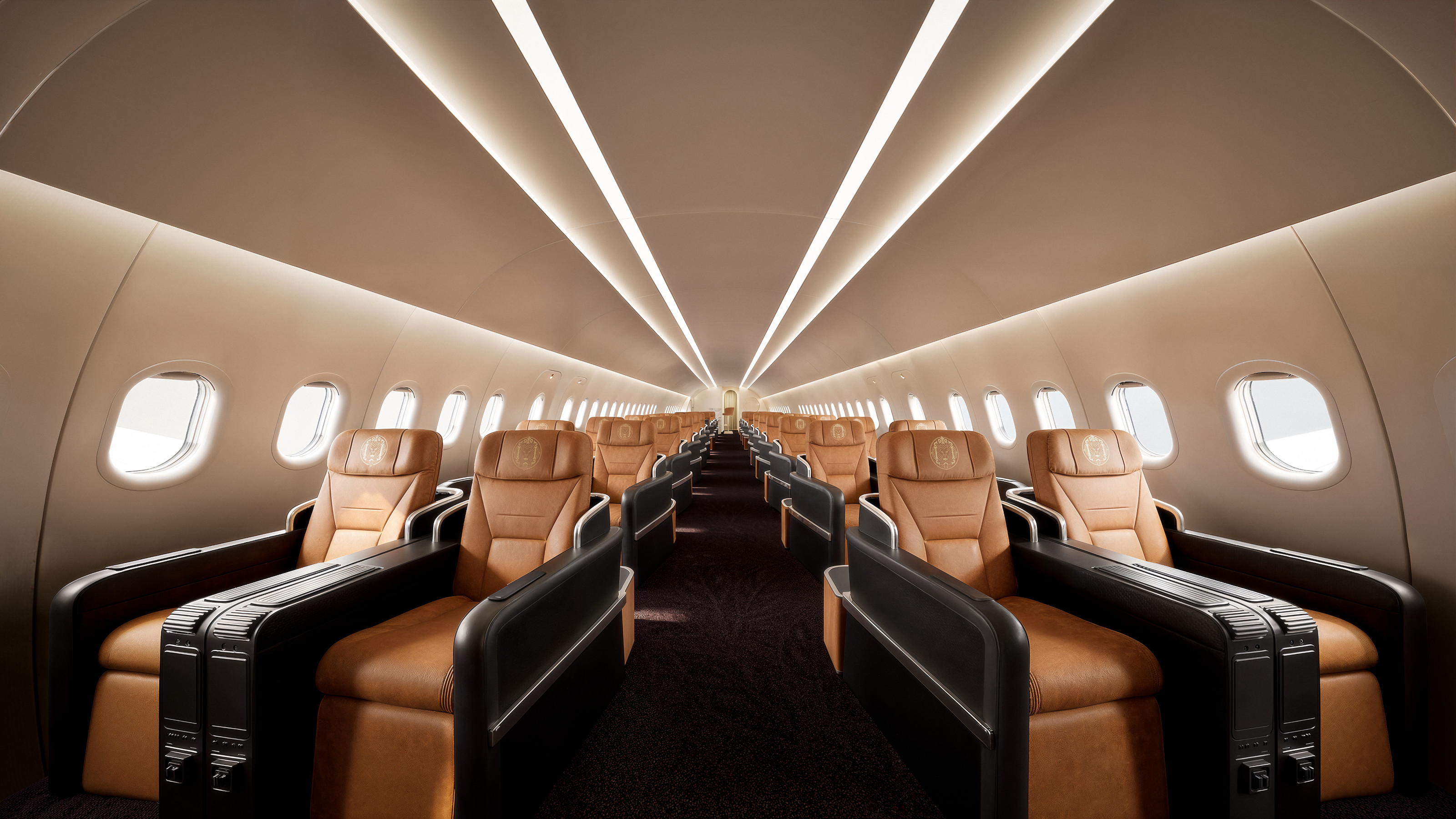
Enhanced Engineering Details
Despite some design observations, the cabin benefits from the absence of overhead luggage bins, providing a greater sense of spaciousness and visual fluidity.
The airline also relies on advanced air purification systems and modern surface-cleaning technology in an effort to create a healthy and pristine cabin environment, enhancing passenger comfort on long-haul flights.
Leadership Vision
According to Magnifica Air CEO, Wade Black, the company aims to combine the privacy and intimacy of private jets with the operational range and organizational expertise of global airlines.
Black stated:
“This is more than just a means of transport; it is a transformative experience that redefines the way distinguished passengers enjoy flying through the skies.”
Destinations and Launch Schedule
Magnifica Air will establish its headquarters in the state of Florida, with plans to officially commence operations in 2027.
The airline intends to operate daily flights connecting major cities such as Miami, New York, Los Angeles, Dallas, Houston, and San Francisco, strengthening its presence on key U.S. travel routes.
Additionally, the company will offer seasonal flights to premium destinations like Napa Valley and the Caribbean, alongside the option of charter flights for full bookings, providing flexibility to meet the needs of a diverse range of upscale travelers.
✦ ArchUp Editorial Insight
From an interior architectural standpoint, the Magnifica Air project can be seen as an innovative attempt to create a luxurious and comfortable space within a confined environment, integrating elements of privacy and comfort that approach the experience of private aviation.
Among its strengths, the cabin’s fluid layout, the distribution of private suites, and the airline’s focus on providing open spaces and comprehensive pre- and post-flight services stand out, reflecting an advanced sense of comfort and user experience in interior design.
However, several aspects warrant closer examination and could inform future design projects. Despite the cabin’s spaciousness, the seat design and cabin color palette limit the rich visual impression and architectural luxury that such large spaces could offer. Moreover, the level of privacy and flexibility in use falls short of expectations compared to established standards in luxury interior design.
From an architectural perspective, this project can serve as a case study in balancing space and function, managing engineering and operational constraints, and emphasizing the enhancement of the visual and artistic experience of a space in line with user comfort. Consequently, the project provides an opportunity to learn how to blend functional innovation with elements of luxurious interior design in confined environments like aircraft cabins, without excessively increasing space or operational costs.
Prepared by the ArchUp Editorial Team
Don’t miss the chance to explore more from Architecture in fields like Design and Interior Design on the ArchUp website.