MASONPRINCE Store in Guangzhou: An Architectural Narrative Across Three Eras

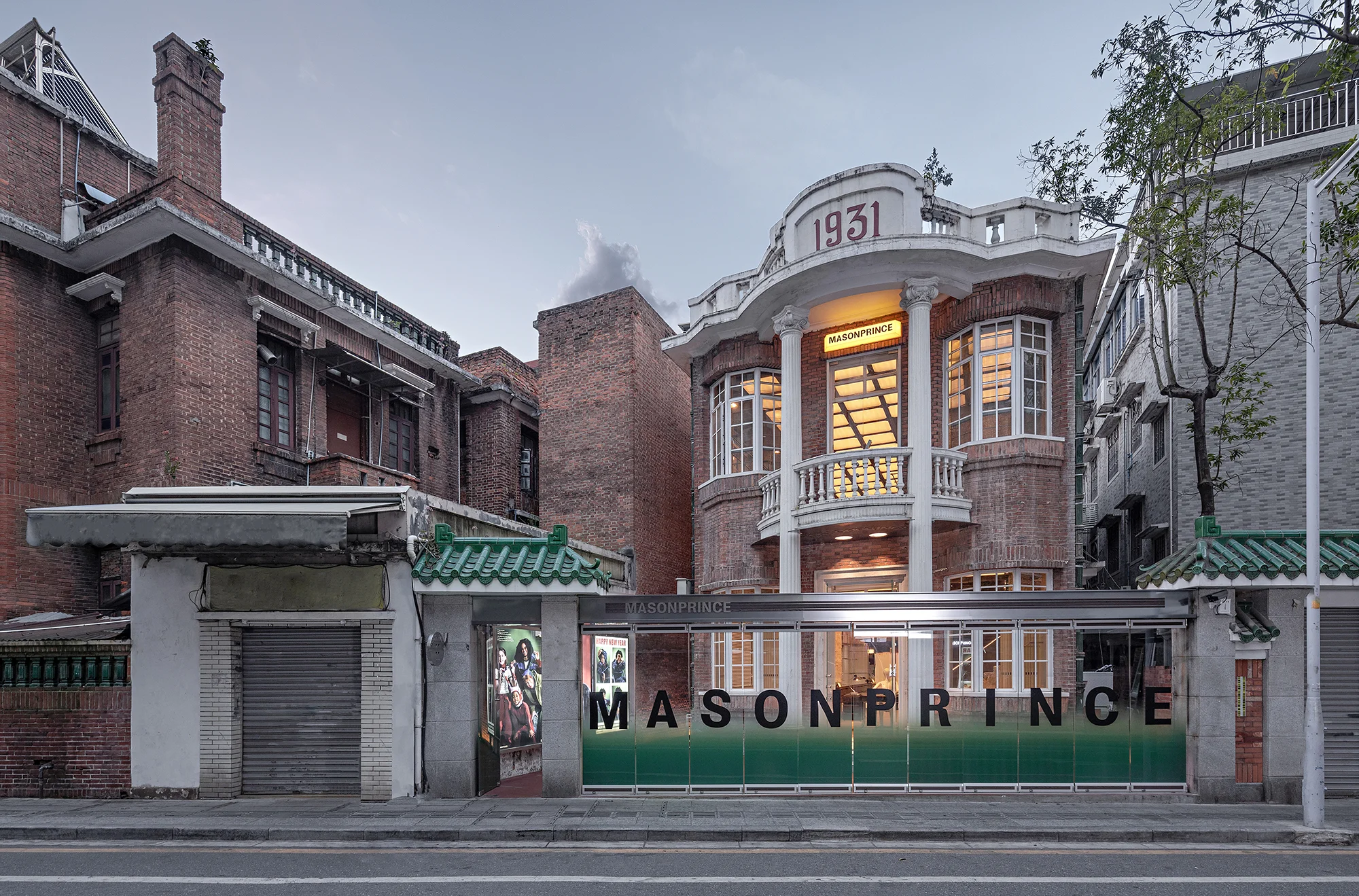
In the heart of Guangzhou’s historic Dongshankou district, where stone walls breathe with a century of memories, the MASONPRINCE store stands as a testament to an unconventional architectural dialogue. TOMO DESIGN took a heritage building from 1931 and transformed it into more than merely a retail space; they created a sensory journey that transcends time, weaving the brand’s narrative with the city’s historical fabric and a speculative future glimpsed from the year 2231.

From Historic House to Narrative Theatre: The Pivotal Transformation
Converting the Western-style building into the sleek MASONPRINCE store was not a simple restoration or renovation but a redefinition of space and its purpose. The designers approached the building not as a relic to be preserved in amber, but as an open story waiting for new chapters. Here, the concept of the store shifts from a place of commerce to an interactive theater, where the visitor becomes part of a performance embodying the brand’s philosophy of breaking boundaries and transcending the conventional. The historic structure becomes a vessel for new layers of meaning, creating a non-traditional shopping experience that piques curiosity and draws the visitor into the brand’s world.

A Gradiated Facade: The Threshold Between Reality and Imagination
The temporal dialogue begins the moment the visitor lays eyes on the store from the outside. The facade features a gradiated glass installation that acts as a visual marker, separating the contemporary hustle of the street from the speculative world within. This semi-transparent barrier does not hide the history behind it but adds a layer of mystery and modernity. The visitor then enters through a front garden, arriving at a “bus station,” designed as the starting point for their non-linear journey through overlapping timelines, transforming shopping from a simple consumer act into an exploratory voyage.
Internal Stations: Anatomy of a Journey Through Time
The interior design is divided into a series of functional areas reimagined as narrative stations:
· The Reception as a “Time Mailbox Station”: This area frames the visitor’s experience within the narrative from the very beginning, where the act of payment is treated like sending a message across the ages.
· The Fitting Rooms as “Time-Space Elevators”: This clever transformation turns the functional process of trying on clothes into a moment of reflection and symbolic passage, reinforcing the idea of transitioning between different states.
· Transforming a Bathroom into a “Time Archive”: This is one of the most daring interventions, converting one of the most utilitarian spaces into an expressive, imaginative one, pushing the boundaries of design.
· The Staircase as a Bridge Between Eras: The main staircase represents both a physical and symbolic transition. Positioned between a rough wall telling the story of the original material and a smooth wall representing the present, it becomes a physical embodiment of the ongoing dialogue between past and present.

Materials and Details: A Silent Dialogue Across Time
TOMO DESIGN deepens the project’s narrative through intelligent material choices. The designers did not attempt to conceal or erase the building’s history but instead added new layers onto it. Modern metallic finishes, engraved with the MASONPRINCE logo, appear as parasitic yet harmonious elements on the historic walls. This stark material contrast between the rough old and the shiny new creates a stimulating visual dialogue, where modern techniques and authentic architectural heritage coexist without one overpowering the other. The use of dim lighting and video screens expands the sensory perception of the space, positioning the displayed products as artifacts suspended between past and future.

Conclusion: More Than a Store
The final outcome of the MASONPRINCE store project far exceeds the concept of a traditional retail space. It is a model of an architectural environment that successfully integrates the brand’s deep identity, the collective memory of the place through its architectural history, and an ambitious future vision. The project offers not just products for sale, but an immersive experience that provokes thought and stimulates the senses, creating a landmark in the annals of global store design and confirming the power of architecture to narrate stories and shape contemporary human experience.
✦ Archup Editorial Insight
This project tackles the conversion of a heritage building into a retail store through a temporal dialogue that merges the past with the future. The design raises questions about the clarity of the relationship between the original structure and the new interventions, where the theatrical nature of the visual narrative may weaken the sense of spatial authenticity. The project relies heavily on symbolism and imaginative labeling of spaces, which can create a gap between the perceptual experience and the space’s primary function as a store. Furthermore, the reliance on low lighting and added futuristic elements presents challenges related to highlighting the commercial products and making them clearly visible to the customer. However, the project maintains a distinguished kinetic flow that guides the visitor through a clear hierarchy of spaces, from the semi-open public area towards the more intimate spaces inside.
Brought to you by the ArchUp Editorial Team
Inspiration starts here. Dive deeper into Architecture, Interior Design, Research, Cities, Design, and cutting-edge Projectson ArchUp.